Top

AliExpress Partners With ‘The Moment3!’ NFT Project

Web3 & Enterprise·June 09, 2023, 11:33 PM

AliExpress, the renowned global e-commerce platform and subsidiary of China’s Alibaba Group, is making its entry into the world of non-fungible tokens (NFTs) through a newly announced partnership with The Moment3!, a Web3 project. The collaboration aims to release a collection of 5,555 NFTs later this month.
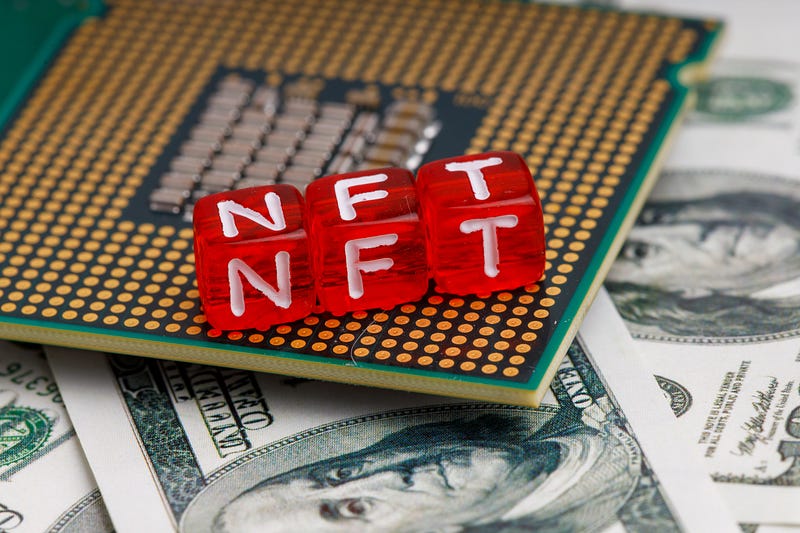
Photo by Andrey Metelev on Unsplash


What is ‘The Moment3!’?

Oddly, we know very little about the project. Its Telegram channel has just been established, it doesn’t have a website, while its Discord and Twitter channels are also recently established with modest followings. Anonymity is a feature in Web3 and perhaps that’s the approach this project is taking. Whatever the background, it has to be said that there must be some talent behind the project for it to secure the backing of an entity like AliExpress by way of this partnership.

This recent announcement was initially made on AliExpress’ official Twitter account but that tweet has since been removed. The project itself tweeted out news of the partnership on Thursday. The Moment3!’s mission, as stated in its Twitter bio, revolves around utilizing NFTs to immortalize special moments on the blockchain.

According to the project’s Discord channel, The Moment3! aims to connect with real-world businesses and provide NFT owners with benefits and exclusive rights beyond the collectible value.


NFT debut

This marks AliExpress’ initial venture into the NFT market, although its parent company, Alibaba, has previously explored the Web3 space. In September 2022, Alibaba’s luxury shopping platform, Tmall Luxury Pavilion, introduced an immersive shopping metaverse experience and introduced the Meta Pass, granting users free access to virtual experiences.


Alibaba-Centric Web3 projects

There have been several other Web3-related investments and developments related to Alibaba Group companies in recent months.

Last month, Alibaba Cloud, one of the world’s largest cloud computing companies, joined forces with the Avalanche layer one blockchain project to introduce “Cloudverse,” a launchpad facilitating the creation of personalized spaces within the metaverse for businesses.

In April Alibaba Cloud was the co-organizer of the Web3 Festival, an event held in Hong Kong to showcase the autonomous Chinese territory for the development of the Web3 sector. The four-day event attracted 10,000 attendees.

In early May, Artifact Labs, a Hong Kong-based start-up company that specializes in metaverse and Web3 product offerings, raised $3.25 million in a funding round led by Blue Pool Capital. The investment firm is the personal investment vehicle of Alibaba founders Jack Ma and Joe Tsai.


NFT warning

AliExpress, owned by Alibaba Group, is a global e-commerce platform that does not cater to customers in mainland China, despite being headquartered in China. The Chinese government prohibited all cryptocurrency transactions in September 2021. NFTs remained legal although authorities recently issued a warning on their use, together with some guidelines.

With its new collaboration, AliExpress is expanding its reach into the Web3 space and exploring the potential of NFTs. As the release date approaches, anticipation grows to witness the specific features and benefits offered by the 5,555 NFTs that will soon be available to the public.


More to Read
View All
Policy & Regulation·

Oct 20, 2023

US Treasury Sanctions Gaza-Based Crypto Operator

US Treasury Sanctions Gaza-Based Crypto OperatorThe Office of Foreign Assets Control (OFAC) of the United States Department of the Treasury has imposed sanctions on a crypto operator allegedly linked to the Palestinian militant group Hamas.The move by OFAC comes as a result of greater scrutiny of terrorist financing following an attack by Hamas on Israel in early October, in which a number of Israelis lost their lives.Photo by Karolina Grabowska on Pexels“Buy Cash Money and Money Transfer Company”The entity targeted by these sanctions is a Gaza-based virtual currency exchange known as the “Buy Cash Money and Money Transfer Company.” It is operated by Khan Yunis, a resident of Gaza. According to the Treasury Department, both the exchange and Khan Yunis are alleged to have ties to Hamas. Ahmed M.M. Alaqad, the owner of the business, has also been named in the sanctions.The primary objective of these sanctions, as stated by the Treasury Department, is to disrupt the sources of revenue for Hamas. The attack on Israel served as a trigger for these actions. Treasury Secretary Janet Yellen emphasized the determination to prevent Hamas from raising funds for further acts of terror and violence against the people of Israel.This includes imposing sanctions and cooperating with international allies and partners to identify, freeze, and seize any assets related to Hamas in their respective jurisdictions. Yellen stated:“The United States is taking swift and decisive action to target Hamas’s financiers and facilitators following its brutal and unconscionable massacre of Israeli civilians, including children.”Crypto sector riskIt’s not the first time that crypto platforms have been implicated where terrorist financing is concerned. Earlier this year it emerged that Bitfinex Turkiye, the Turkish local exchange business of global crypto platform Bitfinex, was alleged to have been used for the purposes of money laundering by Hamas. Additionally, leading crypto platform Binance has found itself facing similar allegations.In the immediate aftermath of the recent attack, Israeli authorities moved to close down accounts they claimed were linked with Hamas on crypto platforms like Binance and elsewhere. The Israelis have continued where they left off in this respect, with a report emerging earlier this week that over one hundred accounts on Binance have been ordered to be shut down, with a further two hundred accounts facing scrutiny.While crypto may not account for a sizable proportion of terrorist financing means, these events open up a point of attack for those who oppose the further roll-out of decentralized money and systems.Fighting illicit finance through sanctionsNotably, the US Treasury has been employing sanctions as a tool to cut off financial support to entities suspected of being involved in terrorism or other illicit activities. In a similar vein, earlier in October, the Treasury announced sanctions against crypto wallets associated with Chinese chemical manufacturers, concurrently with an indictment from the Department of Justice related to the production of the drug fentanyl.Earlier this year, blockchain analytics firm Elliptic indicated that most Chinese suppliers of fentanyl precursors were accepting payments for the illicit material in cryptocurrency.It’s worth mentioning that this move by OFAC not only targets Hamas but also includes other entities allegedly connected to the Buy Cash Money and Money Transfer Company, including an al-Qaeda affiliate and the Islamic State of Iraq and Syria (ISIS).

news
Policy & Regulation·

Oct 11, 2024

Dubai regulator takes action against unlicensed crypto firms

The Virtual Assets Regulatory Authority (VARA), the regulatory body which oversees the digital assets market within the emirate of Dubai in the United Arab Emirates (UAE), has taken corrective action against seven unlicensed crypto entities. Fines issuedAccording to an enforcement notice, published to the VARA website on October 8, the agency issued fines relative to a number of firms that it found were engaging in unlicensed virtual asset-related trading activity. The fines ranged from between 50,000 to 100,000 UAE dirhams (AED), equivalent to between $13,600 and $27,200 in U.S. dollars. The agency outlined that it was taking this corrective action in order to continue its enforcement efforts so as to safeguard Dubai’s virtual asset ecosystem. In its enforcement notice, the regulator did not disclose the names of the entities that have been sanctioned. The agency said that its investigations are ongoing, in partnership with local law enforcement.  A statement from the Regulatory Affairs and Enforcement division within VARA was provided, stating: “VARA will not tolerate any attempts to operate without appropriate licenses, nor will we allow unauthorized marketing of virtual asset activities. Our marketing regulations further emphasize Dubai’s commitment to ensuring transparency and always protecting stakeholder interests.”Photo by Alex Block on UnsplashCease and desist ordersIn addition to fines, VARA also issued the seven firms with cease and desist orders for breaching marketing regulations. Marketing by crypto firms is an area the regulator has been focusing on recently. Last month, VARA published a press release, outlining that it had updated its crypto regulations to specifically deal with marketing-related matters. Alongside that update, it issued a guidance document, clarifying the responsibilities of virtual asset service providers (VASPs) relative to marketing practices. A schedule of fines was provided in the case of a breach of the regulations, while the update set out a need for a mandatory disclaimer on marketing material to indicate that virtual assets are volatile and may lose their value, fully or partially. The Dubai regulator is not the first to home in on the marketing activities of crypto businesses. In the UK, the Financial Conduct Authority (FCA) enforced additional rules related to crypto marketing in late 2023. Some crypto businesses found the requirements too arduous and left the UK market as a direct consequence. Public warningIn its enforcement notice, the Dubai regulator also had a message for the trading and investing public, stating: “This public warning is VARA’s market notice to all to avoid engaging with any unlicensed firms.” The regulator added that interacting with unlicensed entities exposes both individual investors and institutions to both financial and reputational risk.  Furthermore, it warned of “potential legal consequences” for regulatory violations. “Only firms licensed by VARA are authorised to provide virtual asset services in/from Dubai, and the Authority remains steadfast in its commitment to protect consumers and investors, and to preserve market integrity,” the regulator further asserted. 

news
Policy & Regulation·

Oct 24, 2023

Hong Kong Adapts Crypto Regulations to Broaden Market Access

Hong Kong Adapts Crypto Regulations to Broaden Market AccessHong Kong’s financial regulator has taken a further regulatory step in its evolving stance on cryptocurrency trading, widening the scope of retail access to digital assets through intermediaries.Photo by Chapman Chow on UnsplashResponding to growing demandThe move follows a surge in interest in spot Bitcoin exchange-traded funds (ETFs) and recent investigations into the unlicensed operations of the JPEX exchange. In a circular published by the Securities and Futures Commission (SFC) on Friday, the regulator explained that the policy shift was prompted by changing market dynamics and growing inquiries from the industry.The new guidelines aim to extend access to a broader clientele and facilitate the direct deposit and withdrawal of virtual assets through intermediaries, all while maintaining stringent safeguards. The circular states:”The policy is updated in light of the latest market developments and enquiries from the industry seeking to further expand retail access through intermediaries and to allow investors to directly deposit and withdraw virtual assets to/from intermediaries with appropriate safeguards.”Cautionary notesDespite this welcome expansion, there are a couple of cautionary notes included within the circular. Hong Kong remains circumspect about overseas virtual asset (VA) products, deeming them “complex” and, as a result, riskier. The circular emphasizes that “VA-related products considered complex should only be offered to professional investors.” For instance, an overseas VA non-derivative ETF is likely to fall into this category.The other condition pertains to potential clients, who will be required to undergo a one-off test to assess their knowledge of investing and ensure they possess the financial wherewithal to manage the risks associated with virtual asset trading. Furthermore, intermediaries must furnish clients with comprehensive risk disclosure statements.The regulator also places an onus on the intermediary to set a limit for each retail client, to ensure that a retail client’s exposure to virtual assets is reasonable. The circular outlines that deposit and withdrawal of client funds should only happen through the use of segregated funding accounts on an SFC-licensed platform.Crypto sector aspirationsThis shift in regulation underscores Hong Kong’s ongoing aspirations to solidify its position as a hub for virtual assets. The territory embarked on a new regulatory regime in June, enabling applications for crypto trading platform licenses. By August, the first batch of licenses was granted, allowing exchanges to cater to retail customers. This marked a notable turnaround from Hong Kong’s prior 18 months of skepticism and hostility toward the cryptocurrency sector.The timing of these regulatory changes coincides with surging interest in spot Bitcoin ETFs, with JPMorgan even suggesting that approval in the US could materialize within months. This shift in regulatory perspective in Hong Kong also follows the investigation and accusations made against the JPEX exchange for conducting unlicensed operations, leading to arrests and the promise to disclose details of licensed applicants. The JPEX scandal has also dampened public confidence in crypto in Hong Kong more recently.Hong Kong is adapting its crypto regulations to be more inclusive while maintaining a cautious approach toward complex overseas virtual asset products. This regulatory shift underscores the region’s determination to foster its status as a leading hub for virtual assets, following a change of heart from its previous stance of skepticism and reluctance towards the crypto industry.

news
Loading