Top

Chinese Pull Crypto TV Video Following Binance CEO’s Comments

Policy & Regulation·May 25, 2023, 11:41 PM

Earlier this week, a Chinese state-owned TV channel featured a segment shedding light on Bitcoin, emphasizing its surging popularity and widespread adoption. The piece, broadcast on China Central Television (CCTV) on Wednesday, was met with enthusiasm from crypto proponents. However, on Thursday the video was removed from the TV broadcaster’s platform.

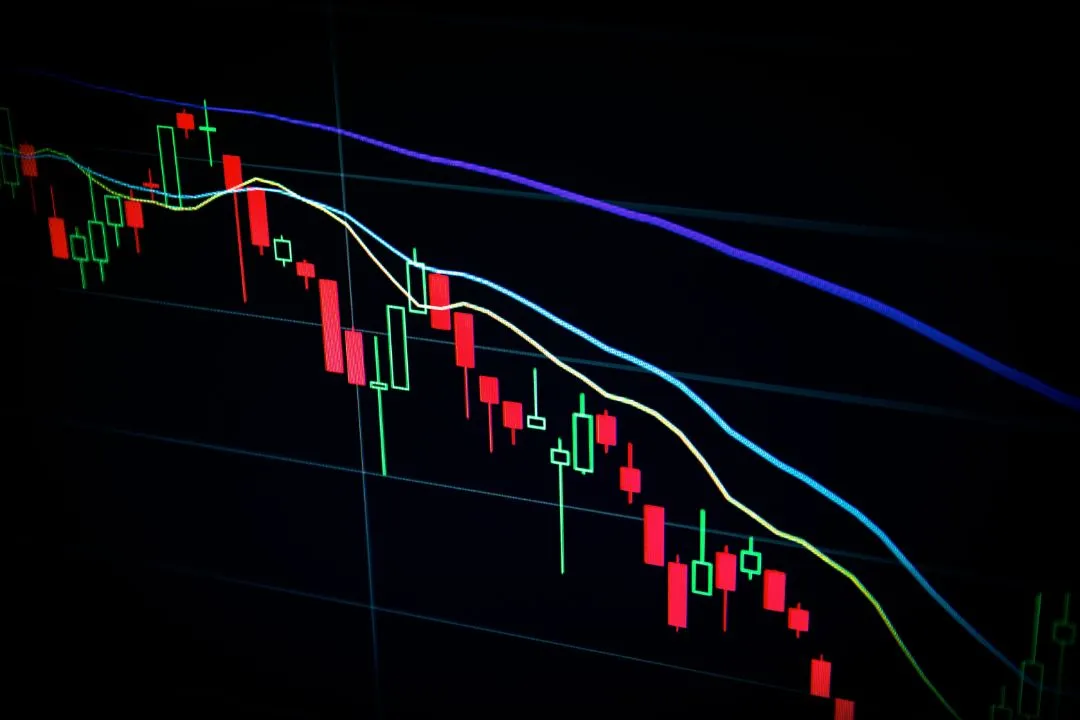
Photo by Road Trip with Raj on Unsplash


A perceived policy shift

The segment sought to provide viewers with a comprehensive overview of digital assets, their diverse applications, and potential benefits. The reaction of Changpeng Zhao (CZ), CEO of global crypto exchange Binance, stoked up further community interest. Taking to Twitter, CZ stated:

“CCTV (China Central Television) just broadcasted crypto. It’s a big deal. The Chinese speaking communities are buzzing. Historically, coverages like these led to bull runs.”

CZ’s tweet reverberated throughout the crypto space, leaving many curious about his perspective on the TV segment’s significance. A highly influential personality in the crypto sector, CZ later clarified his stance, asserting that the segment signaled a shift in China’s approach to cryptocurrencies. He proposed that the state media’s coverage reflected a more positive sentiment and hinted at a potentially evolving regulatory landscape.


Video removal

Soon after CZ’s comments, the Chinese state media broadcaster removed the video segment focusing on Bitcoin. This development raised eyebrows and fueled speculations regarding the motives behind its removal. Within the crypto community, many speculated that CZ’s mention of the segment might have prompted Chinese authorities to take it down. However, the precise reasons behind the removal remain uncertain.

One of the events that triggered the video segment appears to have been news earlier this week that Hong Kong is moving to enable crypto trading at a retail level. There’s been significant reporting on crypto developments related to Hong Kong over the course of the past six months. There has been a notable policy shift, and it appears that Chinese authorities are happy to see Hong Kong compete openly to become a regional hub for the crypto sector.

There’s no doubt that people in the crypto sector would like to see signs of a softening of the approach to crypto in mainland China too. Many might have perceived this TV airtime as an indicator of that. However, it’s more likely that the Chinese are pursuing a dual-pronged strategy. They’re very cleverly participating in the developing innovation in digital assets via the Chinese autonomous territory of Hong Kong, while at the same time, maintaining a hardline stance against crypto on the mainland.

The crypto sector continues to progress, and the regulatory landscape is ever-changing within various jurisdictions. On that basis, and given the importance of the Chinese market, it’s worthwhile to continue to closely monitor China’s actions. Any changes in the country’s approach to cryptocurrencies can have far-reaching consequences for the industry.

Whether this recent event signals a more optimistic outlook or merely underscores the persisting regulatory uncertainty, it serves as a reminder that the crypto landscape is in constant evolution, holding surprises around every corner.

More to Read
View All
Web3 & Enterprise·

May 20, 2025

Ripple expands in UAE with new partners Zand Bank and Mamo

Ripple, the blockchain company behind the XRP token, announced in a May 19 press release that it has added two new customers in the United Arab Emirates (UAE)—Zand Bank and Mamo. Both institutions will use Ripple Payments, the company’s blockchain-based platform for cross-border transactions. Photo by Dmytro Demidko on UnsplashExpanding under Dubai license obtained in MarchThis partnership comes after Ripple’s obtainment of a license from the Dubai Financial Services Authority (DFSA) in March to offer regulated crypto payments and services in the Dubai International Finance Centre (DIFC). Ripple Payments facilitates end-to-end payment management for its customers. The platform enables funds to be transferred globally around the clock, with payments settled within minutes. Ripple’s latest move follows growing demand for blockchain-powered payment solutions in the Middle East. Ripple’s 2025 New Value Report shows 64% of Middle East and Africa (MEA) finance leaders see faster payments as the main reason to adopt blockchain for cross-border transactions. “Our new partnerships with Zand Bank and Mamo are testament to the momentum that the license has created for our business,” said Reece Merrick, Managing Director for the Middle East and Africa at Ripple. Zand Bank, the UAE’s first fully licensed all-digital bank, will leverage Ripple’s technology to enhance its payment solutions. “Our collaboration with Ripple highlights our commitment to empowering global payment solutions through blockchain technology. Moreover, we are excited to soon launch an AED-backed stablecoin,” said Chirag Sampat, Head of Treasury and Markets at Zand Bank. Meanwhile, Mamo, a company that helps businesses consolidate payment collection, corporate cards and expense management, sees the partnership as an opportunity to support the UAE’s growth. “The UAE is on an incredible growth path, with over a million businesses expected to call it home by 2030. At Mamo, we're proud to be at the forefront of this journey making global payments simpler and more accessible for everyone,” said Imad Gharazeddine, CEO and co-founder of Mamo. Ripple faces legal setback in U.S.While Ripple continues to expand its business globally, it is facing ongoing legal challenges in the U.S. On May 15, U.S. District Judge Analisa Torres rejected a joint request by Ripple and the U.S. Securities and Exchange Commission (SEC) to approve a proposed $50 million settlement. The settlement would have reduced Ripple's fine from $125 million to $50 million, effectively concluding a four-year legal dispute. The case began in December 2020, when the SEC accused Ripple of raising $1.3 billion through unregistered XRP sales. In July 2023, Judge Torres ruled that Ripple’s institutional XRP sales violated securities laws, while sales on exchanges to retail investors did not. Despite the SEC easing its crypto enforcement activities under the Trump administration, Judge Torres rejected the proposed settlement, calling it “procedurally improper.” Ripple’s bid to acquire USDC issuerIn a related development, Ripple made an offer to acquire Circle, the issuer of the USDC stablecoin. Circle, which is preparing for an initial public offering (IPO), is also exploring a potential sale and has reportedly engaged in informal discussions with both Coinbase and Ripple, seeking a valuation of $5 billion. However, Ripple’s offer was reportedly turned down. Meanwhile, XRP is trading at $2.39, up 2.57% over the past 24 hours, according to CoinMarketCap data at the time of publication.

news
Policy & Regulation·

Jan 02, 2024

Singapore Prime Minister issues warning on AI-generated crypto scam

In a recent announcement on Facebook, Singapore Prime Minister Lee Hsien Loong has raised alarm bells about a new form of cyber scam that exploits deep-fake technology. Deep-fake technologyThe Prime Minister highlighted the emergence of deceptive videos utilizing artificial intelligence (AI) to create false portrayals of him endorsing cryptocurrency scams. This development underscores the escalating sophistication of online scams and the deployment of advanced technology to mislead the public. Deep-fake technology has emerged as a powerful tool for scammers, enabling them to manipulate genuine footage to produce highly convincing yet entirely fabricated content. In the latest incident, a deep-fake video features Prime Minister Lee Hsien Loong endorsing a nonexistent crypto investment platform purportedly associated with entrepreneur Elon Musk. This video, a manipulated version of an interview on CGTN, showcases the concerning level of realism achievable with deep-fake technology. The incident emphasizes the growing trend of utilizing AI in perpetrating scams. Prime Minister Lee underscored the deceptive nature of these videos, articulating the potential damage they could inflict by leading unsuspecting individuals to invest in fraudulent schemes. The Singaporean government maintains a vigilant stance on such scams, consistently urging citizens to exercise caution and verify information from official sources.Photo by Guo Xin Goh on UnsplashPrevious issuesThe exploitation of public figures in financial scams is not a new phenomenon. Prime Minister Lee has been a recurrent target of such scams, dating back to 2018. At that time, the government issued public warnings about Bitcoin investment scams falsely claiming the Prime Minister’s endorsement. More recently, in July, another fake video featuring Lee Hsien Loong surfaced, prompting renewed public warnings. In 2021, the Prime Minister’s name and photograph were used without his consent in an effort to sell cryptocurrency. The data was taken from his X (formerly Twitter) profile. At the time, Lee wrote:“The site’s creators are anonymous, but I have sent an open tweet out to ask that my name and photo be removed from the site immediately, as I have nothing to do with the platform. I urge everyone to remain vigilant when dealing with cryptocurrency platforms.” That was a much less sophisticated identity-related scam. More often than not, scammers and fraudsters tend to be early adopters of technology. That’s proving to be the case with the use of deep-fakes in this instance. A need for cautionAs he did in 2021, Prime Minister Lee has urged the public to exercise caution in light of this more recent incident. He advises against responding to scams promising guaranteed investment returns or giveaways. There’s every sign that the Prime Minister’s warning is warranted. In September it emerged that six Singaporeans lost more than $100,000 when a scammer tricked them into buying tokens on a cryptocurrency trading platform. More recently, five Americans were conned out of $10 million in a scam that involved a spoofed domain of the former Singapore International Monetary Exchange (Simex). This call for public vigilance is part of a broader government effort to address the surge in cyber fraud. These repeated incidents underscore the challenges posed by digital technologies in spreading misinformation and financial fraud.   

news
Markets·

Jun 16, 2023

Survey Reveals Favorable Public Opinion on Binance’s Acquisition of Korean Exchange Gopax

Survey Reveals Favorable Public Opinion on Binance’s Acquisition of Korean Exchange GopaxCratos, a South Korean blockchain-based polling app, conducted a survey from June 12 to June 14 to gauge public opinion on whether the Financial Services Commission (FSC) should approve the request of Korean cryptocurrency exchange Gopax’s operator Streami to change its representatives, as reported by local news outlet The Stock. This change is necessary for global crypto exchange Binance to acquire Gopax.The survey, which involved 2,093 participants, revealed that 64.6% of respondents favored approving the acquisition, while 35.4% opposed it. More than half of the participants believed that approving the acquisition would safeguard investors’ assets deposited in Gopax.Photo by Heesang Park on PexelsSurvey resultsWhen analyzed by age group, the survey found that respondents in their teens and 20s were more likely to disagree with the acquisition, with 69.4% and 52.3%, respectively. However, those in their 30s were more inclined to support it. Notably, over 70% of respondents in their 50s agreed with the acquisition.Among those who favored Binance’s acquisition, 55.5% chose investor protection as their reason. 33.5% believed there were no legal grounds to refuse the acquisition (33.5%), and 11.0% expressed concerns about the potential shrinkage of the crypto market (11.0%).On the other hand, the most common reason given by respondents for opposing the acquisition was the risk of Binance’s opaque business and financial structure (45.8%). This was followed by the ineligibility of executives, representatives, and other major shareholders (37.4%) and the risk of disrupting the crypto market (16.8%).Consensus on investor protectionCratos CEO Kang Dong-won explained that the crypto winter, characterized by declining crypto asset values, has been prolonged due to a series of negative news at home and abroad, including the US Securities and Exchange Commission’s (SEC) lawsuits against Binance and Coinbase, poor performance of crypto exchanges, and controversy over a Korean lawmaker’s alleged holding and investment of crypto assets. Kang believes that the survey findings reflect falling crypto yields, leading to a growing consensus on the need for investor principal protection and victim relief.On March 7, Streami submitted a report to notify the Financial Intelligence Unit (FIU) under the FSC about the change of its representatives. However, the Korean financial watchdog has been pending its decision amid Binance’s legal issues.The concern is that if Binance fails to acquire Gopax, investors could suffer losses since their assets worth KRW 56.6 billion are held in GoFi, the exchange’s crypto deposit service. On June 8, GoFi users sent a public inquiry to the FIU regarding the reasons for the delay in approving the exchange operator’s request. In the meantime, Streami is exploring ways to address this challenge by announcing its board meeting scheduled for next week. The meeting will discuss changing its CEO from Leon Sing Foong, Asia Pacific Head at Binance, to Lee Joong-hoon, Gopax’s current Vice President, as it is believed that appointing a Korean national as the CEO would facilitate smoother communication with the government.

news
Loading