Top

BitMEX Launches Bespoke Service in Hong Kong

Web3 & Enterprise·May 24, 2023, 1:52 AM

Seychelles-based cryptocurrency exchange and derivative trading platform BitMEX announced on Monday that it is launching a dedicated virtual asset service for its Hong Kong customers.

The exchange published a blog post to its website in which it said that it is in the process of launching “BitMEX Hong Kong,” a dedicated service offering that will be set up on a transitional basis initially. The company is currently in the process of securing a virtual asset service provider (VASP) license from the Hong Kong regulator, the Securities Futures Commission (SFC). Licensing becomes effective in the Chinese autonomous territory on June 1.

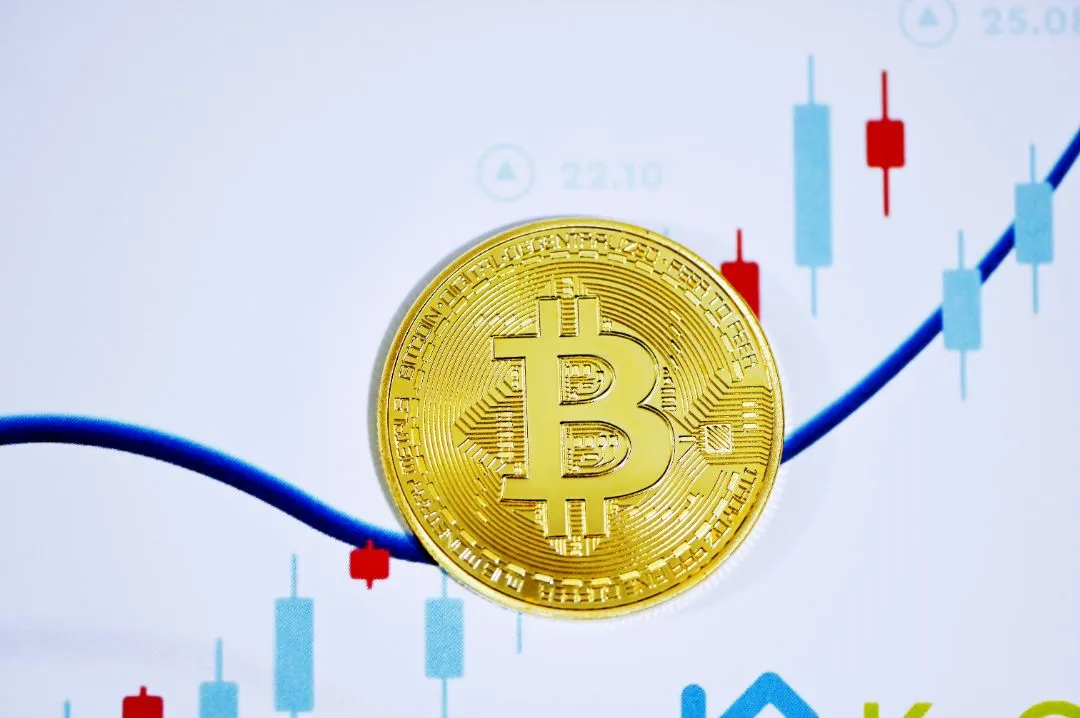
Photo by Karolina Grabowska on Pexels


Dedicated mobile app

Among the features the exchange intends to offer its Hong Kong-based customers is a bespoke app, catering specifically to users in the city. The platform will offer Hongkongers the ability to buy and sell cryptocurrencies with eleven spot trading pairs. From an on-boarding and off-boarding perspective, the firm will facilitate the conversion of cryptocurrencies into over thirty fiat currencies.

The company is looking to add value by offering additional services such as portfolio management and real-time deposits and withdrawals. BitMEX plans to enable additional functionality such as watchlists and detailed real-time data. Both of these features will enable service users to identify and follow crypto market trends.


Licensing preparations

While the offering attempts to meet the specific needs of Hongkongers, it's likely that the main motivation relates to VASP licensing. The regulatory requirements in Hong Kong are likely to have distinct facets that would necessitate the company to tease out its service to Hong Kong citizens from its global platform.

The SFC has indicated on Tuesday that it will enable crypto trading for retail investors. Notwithstanding that, it’s not doing that without the incorporation of several measures to protect the interests of retail users. Any promotions or incentives that lead a marketing effort with free gifts, and this will likely include token airdrops, will be prohibited.

Minimum capital liquidity requirements are being set. Furthermore, client assets will have to be segregated from exchange assets, although the Commission doesn’t mind if the VASP simply segregates said funds itself or does so by way of using an escrow service.

Stephan Lutz, acting CEO and group CFO at Bitmex, commented on the development: “We are optimistic that Hong Kong will achieve its ambition of becoming a world-leading Web3 role model city and potentially the Web3 hub for China in years to come.”

On May 29, the firm will transfer existing Hong Kong-based customers from its global platform to its new affiliated Hong Kong entity, HDR BMEX Limited. Remaining account balances will be transferred over on that date. There will be no requirement for Hong Kong-based users to undertake additional KYC (know-your-customer) checks or account verification.

Earlier this month, the exchange added two additional digital assets ($SUI & $PEPE) to its range of available perpetual contracts.

More to Read
View All
Policy & Regulation·

Aug 29, 2023

OKX and Bybit Exclude Sanctioned Russian Banks from P2P Services

OKX and Bybit Exclude Sanctioned Russian Banks from P2P ServicesIn response to the mounting pressure on crypto firms to improve general compliance standards, prominent digital asset exchanges OKX and Bybit, based in the Seychelles and Dubai, have decided to delist sanctioned Russian banks from their peer-to-peer (P2P) services.Photo by Eduardo Soares on UnsplashThe move by the two exchange platforms, brought to light by Russian media reports, comes just days after Binance had done the same.Tinkoff Bank and Sberbank, two significant Russian financial institutions, have been expunged from the P2P platforms of OKX and Bybit. This effectively removes the option for Russian crypto users to exchange their assets for fiat through these banks. The decision sees the exchanges fall into line with Western sanctions imposed on the banks due to Russia’s actions in Ukraine.Enforcement difficultiesWhile the removal of these banks from the platforms is a significant step, the nature of P2P transactions introduces complexities in enforcing such bans comprehensively. Reports indicate that certain users are still engaging in P2P transactions with these banks through private channels, showcasing the challenges in regulating this decentralized method of exchange.In the case of OKX, at the time of publication, the platform still allows Russian users to receive fiat through accounts held with the Russian Standard Bank and the Russian branch of Raiffeisen Bank.This action aligns OKX and Bybit with Binance, which faced a similar scenario last week. Binance came under scrutiny when it continued to list the sanctioned banks as part of its payment methods. Following a report by The Wall Street Journal, Binance eventually removed the banks from its platform.Binance’s compliance effortsA spokesperson from Binance conveyed that while the banks have been delisted, the company remains committed to ensuring compliance by continuously updating its systems.“We regularly update our systems to ensure compliance with local and global regulatory standards,” they said. “When gaps are pointed out to us, we seek to address and remediate them as soon as possible.”Despite this stance and the latest action it has taken, users on Binance’s P2P platform are still posting ads for the sale of crypto using the “green bank,” referring to the sanctioned banks, as the preferred method of payment.Western-imposed sanctions have led to significant economic challenges in Russia, pushing individuals and institutions towards cryptocurrencies as a potential solution. In a country that has previously banned private cryptocurrencies, the attraction of decentralized digital assets has grown stronger as a means to break through the sanctions-induced financial stranglehold.Sanctions impactReports from Russian financial institutions reveal dramatic declines in profits, some as high as 90%, as they find themselves cut off from the global payments network SWIFT. Tinkoff Bank, for instance, reported a substantial decline of 67% in the second quarter of 2022, attributing the drop to escalating global tensions.In April, the Bank of Russia introduced a bill that could potentially allow cryptocurrencies to be used in international trade, a measure aimed at mitigating the impact of sanctions. While this could potentially open doors for cross-border transactions involving cryptocurrencies, the restrictions on local transactions remain intact.

news
Web3 & Enterprise·

Oct 16, 2023

SK Planet Teams Up with T1 for LoL NFT Event: ‘The Hero’s Journey’

SK Planet Teams Up with T1 for LoL NFT Event: ‘The Hero’s Journey’SK Planet, the data and tech subsidiary of South Korean conglomerate SK Group, announced last week that it is conducting a non-fungible token (NFT) event called “The Hero’s Journey.” This event is a collaborative effort with T1 Entertainment and Sports, the company behind League of Legends (LoL) team T1. T1 Entertainment and Sports is a global esports joint venture established by American company Comcast Spectacor and SK Telecom, the telecommunications subsidiary of SK Group.This event coincides with the 2023 League of Legends World Championship (Worlds 2023), taking place in Korea from October 10 to November 19 (local time).Photo by RDNE Stock project on PexelsMission-based adventureThe NFT promotion, running until December 3, promises a unique and rewarding experience for users. LoL and NFT enthusiasts are encouraged to complete five missions and earn NFTs at various physical locations related to T1, a participant in Worlds 2023.These locations include T1’s headquarters, Base Camp, Café & Arena, and HiKR Ground. To complete their missions, visitors can collect stamps from each site, sign up for a T1 membership, and either attend a Worlds 2023 game at the stadium or join the viewing party.Anyone who has downloaded UPTN Station, the digital wallet launched in June by SK Planet, can join this promotional event, with the chance to receive rewards for each completed mission. Rewards include NFTs of LoL players like Lee “Faker” Sang-hyeok and Choi “Zeus” Woo-je, discounts on T1 memberships, vouchers for the T1 HQ SHOP, and free drink coupons.Upon completing all five missions, participants will automatically be entered for a chance to win various prizes. These include AVAX tokens, player-signed jerseys, tickets to T1 CON — a fan meet-up with T1 players — and a T1 Bap invitation, which gives fans the opportunity to tour the T1 headquarters and enjoy a meal on-site.SK Planet’s NFT commitmentLately, SK Planet has been actively undertaking NFT endeavors. In June, it introduced an NFT membership program named “Road to Rich,” capitalizing on OK Cashbag, which is the popular customer rewards program of SK Planet. This was followed by the debut of a blockchain-centric ticketing service, developed in partnership with layer 1 blockchain protocol Avalanche. Looking ahead, SK Planet aims to provide an even broader range of practical utility NFTs.Commenting on their latest project, Kim Kyo-soo, who leads the customer experience division at SK Planet, shared his excitement about collaborating with T1, one of the world’s most popular esports teams. He sees the use of NFTs in this event as a meaningful way to connect with fans in person. Kim anticipates a strong response and active participation from the esports community.

news
Policy & Regulation·

Feb 24, 2025

Hong Kong strives for crypto hub status through ‘ASPIRe’

The Hong Kong Securities and Futures Commission (SFC) has unveiled a new roadmap for digital asset regulation titled “ASPIRe.” The authorities in the Chinese autonomous territory have been working towards crypto hub status in recent years. This latest ASPIRe roadmap initiative has been formulated in an effort to future-proof Hong Kong’s status as a location that has been optimized for crypto businesses to form and develop. The ASPIRe roadmap was announced by the SFC on Feb. 19 with comprehensive details on the plan published to the regulator’s website. Photo by Skull Kat on UnsplashFive pillarsA-S-P-I-Re details five pillars that the regulator is focusing on in order to address challenges to strengthen Hong Kong’s crypto hub status going forward. The “A” pillar refers to “access,” with a focus on fostering an ecosystem that’s aligned with a regulatory regime that enables global participation. The regulator wants to attract “qualified participants,” while enhancing investor choice and integrating Hong Kong’s digital assets sector with global liquidity. The “S” pillar stands for “safeguards” with the objective of adopting risk-proportionate oversight, promoting regulatory clarity and aligning compliance requirements such that a balance is struck between core regulatory objectives and providing flexibility for the adoption of new technology. “Products” forms another pillar, with a focus on expanding the range of digital asset products and services offered by regulated service providers in Hong Kong. “Infrastructure” is another aspect that the plan homes in on. The focus in this regard is on modernizing reporting, surveillance and cross-agency collaboration through infrastructure building and the use of new technology.  The final pillar, “relationships” (Re), focuses on the empowerment of both investors and the industry in general through education, engagement and transparency. Influencing modern financeThe Hong Kong regulator is putting forward this plan with the understanding that the global virtual asset market was valued at $3 trillion in 2024. It suggests that the sector “has significantly influenced modern finance.” At Consensus Hong Kong 2025 this week, a crypto conference held in the Chinese autonomous territory, SFC CEO Julia Leung suggested that this plan will put Hong Kong in a strong position to secure its role as a crypto industry hub going forward. Hong Kong Financial Secretary Paul Chan Mo-po also delivered a keynote speech at the conference. He said that Hong Kong would “remain a stable, open and vibrant market for digital assets,” adding that Hong Kong is “investing heavily in the related infrastructure and talent development.” Mo-po went on to assert that Hong Kong’s Cyberport Web3 network and the Hong Kong Science and Technology Park are “vibrant hubs for Web3 innovation and fintech.” He also claimed that industry partnerships and the city’s universities are bringing through blockchain expertise.  The Financial Secretary understands the importance of appropriate regulation. He stated: “The key to success lies in maintaining an open, fair, balanced and forward-looking regulatory approach that is conducive to the sustainable and responsible development of financial innovation, including Web3.”

news
Loading