Top

WEMIX token leads gaming crypto asset market

Markets·December 12, 2023, 9:05 AM

WEMIX, a cryptocurrency issued by blockchain gaming company Wemade, has been marked as having the largest constituent weight in terms of market capitalization in the gaming sector in the latest Crypto Sector Indices released by Sygnum, a global digital asset banking group headquartered in Switzerland and Singapore.

Photo by Christian Wiediger on Unsplash


Unveiling insights

Sygnum’s Crypto Sector Indices is a comprehensive report analyzing the world’s leading crypto asset projects to allow investors to view real-world use cases, compare market capitalizations and identify more influential or promising assets with greater constituent weight proportions. It is divided into seven core sectors — Layer 1, Layer 2, Centralized Finance (CeFi), Decentralized Finance (DeFi), Web3, Gaming and Metaverse.


WEMIX’s continued success

According to the banking group’s analysis of the world’s gaming cryptocurrencies by market capitalization, WEMIX has the largest share at 16% — up from 10% in January — beating out other game tokens like The Sandbox and Gala. Axie Infinity also has a 16% share. Out of more than 21,000 protocols, only those that constitute at least 0.01% of the total crypto market capitalization are eligible for inclusion in the indices.

WEMIX has thus proven itself as one of the leading cryptocurrencies in the global blockchain gaming industry. Last month, Wemade also hosted the world’s first blockchain-assisted golf tournament, WEMIX Championship 2023, where the prizes for winning golfers were distributed in WEMIX.

More to Read
View All
Web3 & Enterprise·

Dec 27, 2023

Kyber Network implements workforce reduction following exploit

In the aftermath of a substantial security breach in November that resulted in a confirmed loss of over $48 million, Kyber Network, the multi-chain decentralized exchange (DEX) aggregator, has taken decisive steps to restructure its operations.Photo by kate.sade on UnsplashWorking towards recoveryCEO and co-founder Victor Tran posted a lengthy message on the X social media platform on Christmas Eve to announce a 50% reduction in the firm’s workforce. The move marks a pivotal moment in the company’s efforts to recover and rebuild. As part of its strategy to ensure sustainability, Kyber temporarily suspended its liquidity protocol initiatives and KyberAI. Despite these challenging measures, the core aggregator and limit order functions remain fully operational. Tran emphasized the company’s commitment to persist and evolve, highlighting its determination to navigate through recent adversities. Despite these challenging measures, the core aggregator and limit order functions remain fully operational. Tran emphasized the company’s commitment to persist and evolve, highlighting its determination to navigate through recent adversities. Zap API additionIn an effort to enhance its services, Kyber Network disclosed plans to introduce the Zap API. This new offering aims to provide decentralized applications, crypto wallets and other DeFi projects with a seamless means to connect their users to liquidity protocols. Tran also revealed that in an effort to support its workforce during the transition, the firm has established a “voluntary database” to assist departing employees in finding new career opportunities. This initiative seeks to connect these individuals with peer projects in the industry. Exploit fall-outKyber Network took to social media on Nov. 22 to advise its KyberSwap Elastic user base of a security incident. With that notification, it advised users to withdraw their funds immediately. Over the next few days, it became clear that $48 million had been exploited on the platform by a hacker. In the immediate aftermath of the incident, the hacker posted a message on the blockchain, stating: “Negotiations will start in a few hours when I am fully rested.” He/she progressed to issuing unusual demands, including gaining complete operational control of the company and temporary ownership of the KyberDAO governance mechanism. The nature of these demands sets this particular exploit apart from others. The Kyber team, however, chose to reject these demands. It chose to respond with a blockchain message of its own, outlining that it was cooperating with law enforcement in an effort to track the hacker. The company, which operates from offices in Hanoi, Ho Chi Minh City and Singapore, also offered the hacker a carrot of a 10% bounty if the hacker agreed to return 90% of users’ funds. Instead, the firm pledged to compensate affected users through the KyberSwap Elastic Exploit Treasury Grant Program. On Dec. 20, the firm provided further details on that grant program, outlining how affected users would be refunded. Furthermore, Kyber Network is actively collaborating with authorities to identify the hacker and recover the stolen funds.Earlier this month, blockchain security firm CertiK issued an alert on social media, outlining that the hacker had moved BNB tokens to the value of $338,000 into decentralized crypto tumbler Tornado Cash.

news
Web3 & Enterprise·

Sep 02, 2025

Korean crypto exchanges list Trump-linked cryptocurrencies

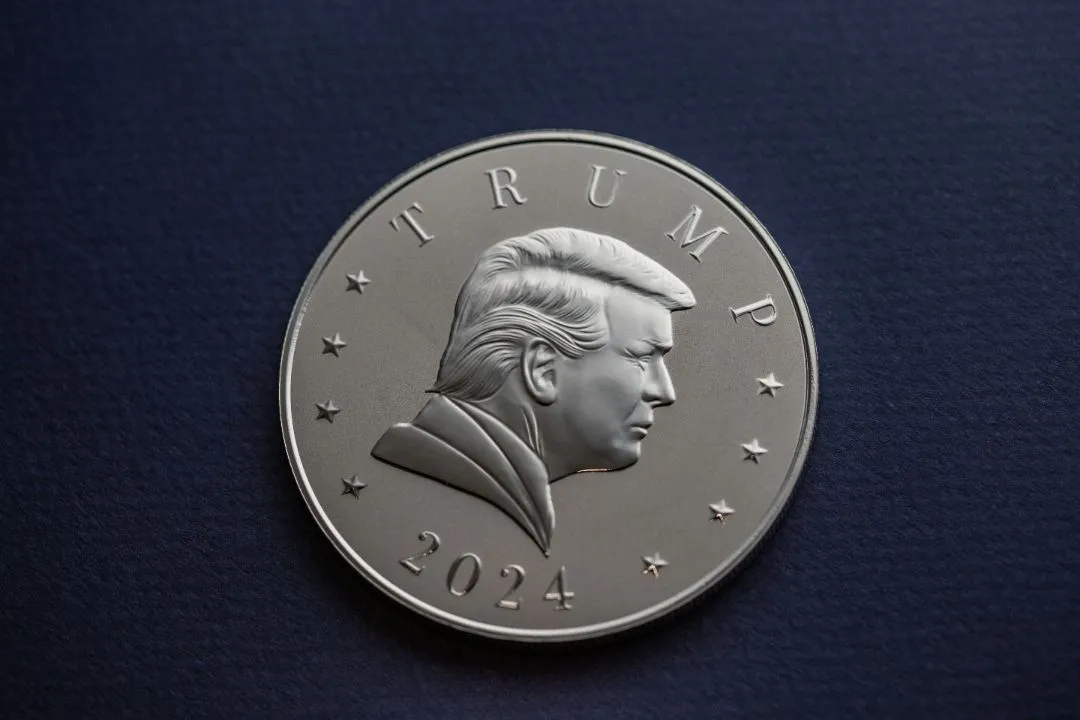
Cryptocurrencies tied to the family of U.S. President Donald Trump began trading on South Korea’s major exchanges on Monday. Upbit, the country’s largest exchange, listed WLFI—the native token of World Liberty Financial, a DeFi platform backed by the Trump family—and World Liberty Financial USD (USD1), a stablecoin the platform says is pegged 1:1 to the U.S. dollar and backed by dollars and government money market funds. Bithumb also listed both WLFI and USD1, while Coinone listed WLFI only.Photo by Scottsdale Mint on UnsplashFrom global listings to a volatile debutWLFI’s first session was volatile. It opened on Upbit at a floor price of 433.76 won ($0.31) and, roughly 17 hours later, was down about 25% at 323 won ($0.23) at the time of publication.Source: WLFI/KRW spot trading pair on UpbitThe Korean launch comes alongside listings on major global venues, including Binance and Coinbase. Until its exchange listings, WLFI holders had been unable to trade their tokens. The Wall Street Journal estimated the Trump family’s holdings, representing less than a quarter of the supply, to be worth close to $5 billion after the listing. Trump’s three sons are named as co-founders of World Liberty, which says tokens allocated to founders and team members will remain locked. President Trump is described as the project’s “co-founder emeritus.” Political controversy over crypto and holdingsThe project has drawn criticism from those who argue it could serve as a conduit for influence, with partners and investors seeking political favor. In April, Democratic lawmakers Senator Elizabeth Warren and Representative Maxine Waters warned the U.S. Securities and Exchange Commission that the family’s stake posed “an unprecedented conflict of interest” in oversight of the crypto industry. Later, White House press secretary Karoline Leavitt said, “Neither the President nor his family have ever engaged, or will ever engage, in conflicts of interest.” Controversy over public officials’ crypto exposure is not new. Recently, it was reported by The Chosun Ilbo that as of Aug. 14, Lee Eog-weon, nominee to chair South Korea’s Financial Services Commission (FSC), held 10 shares of Strategy, a Nasdaq-listed Bitcoin treasury company with 632,457 BTC in reserves. The disclosure indicates no legal violation because the holdings predate his nomination, but it highlights tension with his public views. In a letter to parliament ahead of his confirmation hearing, Lee questioned crypto’s intrinsic value and argued its volatility undermines its utility as a store of value or medium of exchange. If Lee were not seeking a government post, his holdings of crypto-related stocks would hardly surprise South Koreans. According to Money Today, citing data from the Korea Securities Depository (KSD), Korean investors increased purchases of crypto-related U.S. equities amid expectations of U.S. rate cuts. Bitmine Immersion Technologies—a Bitcoin miner that also accumulates Ethereum as a treasury asset—was the second-most purchased U.S. stock by Koreans in August, with net buys of $252.77 million, or 7.6% of all purchases among the top 50 U.S. stocks. Stablecoin issuer Circle ranked 10th at $92.62 million, and the GraniteShares 2x Long COIN Daily ETF, which delivers twice the daily price movement of Coinbase, ranked 11th at $90.74 million. In total, crypto-related stocks and ETFs accounted for 30.4% of the top 50 U.S. equity holdings by value. South Korea weighs spot ETFs amid investor surgePolicy is moving in tandem with market interest. Spot crypto ETFs have recently been elevated to South Korea’s national agenda, opening the door to potential approval. Analysts say such products could repatriate demand that has been flowing overseas. Kim Jin-young of Kiwoom Securities argues that expanded regulatory approval could reshape Korea’s capital market by widening investor access, drawing in institutional capital, stabilizing prices, and diversifying available crypto-linked products. 

news
Policy & Regulation·

Apr 11, 2023

Singapore Gets with Banks to Provide Guidance on Crypto Businesses

Singapore Gets with Banks to Provide Guidance on Crypto BusinessesIn a move to provide clarity and guidance to financial institutions dealing with cryptocurrencies, the Monetary Authority of Singapore (MAS) is reportedly working with banks to develop new vetting procedures for crypto clients.According to a recent Bloomberg report, the MAS plans to provide more detailed guidance to banks on how to properly screen and monitor customers involved in cryptocurrency transactions.©Pexels/PixabayRegulatory clarityThe decision to provide guidance on crypto businesses comes as regulators around the world struggle to keep up with the rapidly-evolving digital currency industry. Many governments have been grappling with how to regulate cryptocurrencies in the face of concerns over money laundering, fraud, and other illicit activities.Singapore, however, has taken a more progressive stance on digital currencies, with the MAS recently announcing plans to create a regulatory framework for crypto derivatives trading. The country’s financial watchdog has also been working to improve AML (anti-money laundering) and CFT (combating the financing of terrorism) measures relative to crypto transactions.The MAS’s efforts to provide guidance to banks on crypto businesses are part of this broader push to promote responsible use of digital currencies in Singapore. By providing clear and detailed guidance to financial institutions, the regulator hopes to prevent illegal activities from taking place while also promoting the growth of the crypto industry.The MAS’s approach is seen as a positive development for the crypto industry, as it provides a clear framework for financial institutions to work within. This could help to boost confidence in the crypto market, potentially leading to increased investment and adoption.Striking the right balanceAt the same time, however, some industry observers have expressed concerns that overly strict regulations could stifle innovation and limit the potential of cryptocurrencies. They argue that a balance must be struck between protecting consumers and promoting innovation in the digital currency industry.Despite these concerns, the MAS’s efforts to provide guidance on crypto businesses are likely to be welcomed by financial institutions and industry participants alike. As the use of digital currencies continues to grow, it is becoming increasingly important for regulators to provide clear and comprehensive guidance on how to operate within this rapidly-evolving industry.Previous failuresSingapore hasn’t always gotten its approach to cryptocurrency right. In 2021, the MAS put global crypto exchange Binance on its investor alert list. Binance felt compelled to curb its service offering in the city state. The consequence of that action was that a disproportionate number of Singaporeans proceeded to open accounts with FTX only later to get caught up in the collapse of the exchange.The Monetary Authority of Singapore’s decision to provide guidance on crypto businesses is bullish for the digital currency industry. By providing clear and detailed guidance to financial institutions, the regulator is promoting responsible use of cryptocurrencies in Singapore while also boosting confidence in the market. However, there is a need to strike a balance between protecting consumers and promoting innovation in the industry, as overly strict regulations could stifle growth and limit the potential of cryptocurrencies.

news
Loading