Top

Wintermute Asia executes inaugural options block trade via CME

Web3 & Enterprise·November 23, 2023, 12:42 AM

Wintermute Asia Pte. Ltd, the digital asset derivatives trading arm of the well-known algorithmic trading firm and crypto market maker Wintermute Group, has successfully executed its first options block trade through the CME Group.

The BTC/USD block trade was conducted in collaboration with U.K.-based liquidity and data solutions specialist TP ICAP. It was successfully cleared by ABN AMRO, marking a significant milestone for Wintermute Asia in the digital assets space.
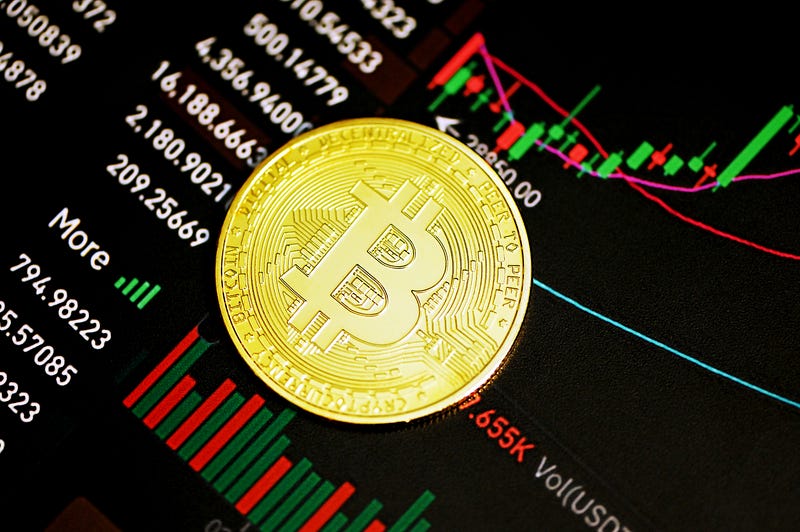
Photo by Kanchanara on Unsplash


Meeting institutional investor needs

Institutional interest in secure and alternative avenues for exposure to digital assets continues to build momentum. It’s likely with that in mind that Wintermute Asia is strategically expanding its derivatives product offerings with this latest move. It’s also no surprise that Wintermute’s Singapore-based team was involved in this development, given a recent expansion of its Singapore base and the fact that its derivatives business is dealt with in Singapore.

Presently, Wintermute Asia provides vanilla options in BTC, ETH and various altcoins, featuring expiration periods ranging from 1 day to 6 months. The platform also caters to more sophisticated needs with the inclusion of exotic options.

Evgeny Gaevoy, CEO of Wintermute Group, expressed enthusiasm about Wintermute Asia’s evolving product offering, stating:

“Wintermute Asia is excited to offer a range of OTC derivatives solutions to our counterparties that can accommodate all of their trading needs. Our growing suite of derivative instruments allows investors to easily hedge and manage risks, generate yield, and gain synthetic exposure to the underlying digital assets.”

The move towards facilitating options block trades aligns with the increasing diversification of institutional portfolios into the digital asset sector. Giovanni Vicioso, Global Head of Cryptocurrency Products at CME Group, emphasized the significance of the partnership with Wintermute Asia. He commented:

“We are pleased to provide Wintermute and its counterparties with access to our highly liquid, regulated suite of benchmark cryptocurrency futures and options on bitcoin and ether.”


Involving TradFi heavyweights

CME is a cornerstone TradFi financial derivatives exchange, first established in 1898 and headquartered in Chicago in the United States. Its CEO Terry Duffy pushed back against proposals from convicted fraudster and FTX Founder Sam Bankman Fried in 2022 to alter the futures clearing model on the basis that such a move would introduce significant risk into the financial system. A year on from the failure of FTX and many other crypto platforms, a move towards involving established TradFi firms like CME, as Wintermute is doing, is far more appealing to institutional investors.

Sam Newman, Digital Assets Head of Broking at TP ICAP, acknowledged Wintermute as another participant in block trading CME Group cryptocurrency products. TP ICAP, a key player in digital asset broking services since 2020, has been instrumental in price discovery and liquidity through global coverage on regulated exchanges. Newman expressed excitement about witnessing crypto-native firms like Wintermute accessing traditional products and services, indicating the market’s maturation.

Earlier this year, CME Group upgraded its BrokerTec Stream from version 1.5 to 2.0. The upgrade aims to enhance performance and reduce latency for clients, introducing features such as sweepable matching and firm price improvements. Recently, CME became the second largest bitcoin futures exchange, second only to global crypto exchange Binance.

More to Read
View All
Policy & Regulation·

Mar 05, 2024

Korean crypto exchanges to face new crypto accounting standards

As the Virtual Asset User Protection Act is set to take effect in July, South Korean virtual asset services providers (VASPs) are preparing themselves for new crypto accounting standards. This development is pushing crypto businesses to take consultation services from accounting firms, local media outlet Yonhap Infomax today reported.  Pronounced last year, the new crypto accounting guideline is scheduled to be applied to VASPs starting this July. Rather than providing clear and explicit standards, the guideline requires crypto businesses to interpret it on their own based on “reasonable grounds.” One accountant in the crypto industry said that individual crypto exchanges are wrapping their heads around the new crypto accounting standards, pondering over numerous issues such as whether to manage customer assets in a single record-keeping system. Photo by Volkan Olmez on UnsplashThe most significant concern among VASPs is that the new standard will highly likely recognize crypto assets entrusted by customers as either assets or liabilities. So far, local crypto exchanges haven’t recognized custodial tokens as assets; instead, they have been including these tokens in the footnotes. Only the money users deposited in Korean won has been acknowledged as “customer deposit liabilities.” Dunamu, the operator of crypto exchange Upbit, stated in the footnotes of its previous quarterly report that virtual assets entrusted by customers do not meet the accounting definition of an asset, leading the exchange to exclude its users’ custodial tokens from the asset category.  Varying interpretation of ‘control over custodial assets’ A lot is at stake depending on how individual crypto exchanges interpret the new guideline. If crypto exchanges are deemed to have control over custodial assets, they must meticulously document the details of the assets in custody on their financial statements, including the total amount of custodial assets and how they are managed under what policies.  These details would serve as decisive factors in determining who bears the liabilities in the event of future incidents.  Crypto businesses’ accounting dilemmaThe Korean financial regulators have explained that the new guideline is not the ultimate golden rule, implying that there could be a leeway for crypto businesses if they have reasonable grounds for not following the new accounting standard. However, regulators said they will conduct thorough examinations on the financial statements following their publishment, to ensure that custodial assets are not left out in the documents. This is where VASPs face a difficult choice between two different options; they can either classify custodial tokens as something other than an asset and undergo thorough examinations, or they can recognize them as an asset and risk being included in the “mutual investment-restricted group.” This is a group consisting of large local firms with over nearly KRW 10 trillion ($7.5 billion) in total assets. The companies listed in the group are subject to strict government regulations.  Previous recognition of Dunamu as ‘big firm’ raises concerns among VASPsThe local regulatory authority previously classified Dunamu as part of the mutual investment-restricted group in 2022.  At the time, Korean won deposits made by Upbit users, categorized under the customer deposit liabilities, were recognized as part of its assets by the Korea Fair Trade Commission (KFTC). The KFTC determined that Dunamu had controlling power over the customers’ deposits. This judgment by the KFTC led the company to fall under the mutual investment-restricted group. Once the new accounting standard takes effect in July, the likelihood is that the exchange’s custodial tokens, currently valued at KRW 20.2 trillion, will also be recognized as assets. Meanwhile, another prominent crypto exchange Bithumb is reported to have KRW 4.5 trillion in total assets.   Another accountant in the crypto industry expressed concerns, saying that VASPs will have to deal with more regulations if incorporated into the mutual investment-restricted group. The person added that recognizing custodial tokens as assets could further heighten the management risks for crypto businesses. 

news
Web3 & Enterprise·

Oct 18, 2024

Euroclear takes stake in Marketnode entering Asian market

Euroclear, a Belgium-based financial services company that specializes in post-trade services relative to the clearing and settlement of securities, has announced that it has invested in Singaporean digital market infrastructure firm Marketnode. The investment, which the firm announced via a press release published to its website on Oct. 17, is the company’s first in the Asian market. Established with a distributed ledger technology (DLT)-based financial infrastructure, Marketnode offers its services via two distinct platforms. The company claims that through its Gateway platform it offers a one-stop issuance, data, workflows and tokenization services.  Meanwhile, Fundnode streamlines fund transactions, processing and record-keeping, while using blockchain technology in doing so. Euroclear’s CEO for the Asia-Pacific (APAC) region, Philippe Laurensy, set out the company’s thinking in making this strategic investment, stating: “Partnering with Marketnode demonstrates our shared commitment to developing a new generation of funds market infrastructure by leveraging Euroclear’s global footprint, established fund infrastructure and digital capabilities. This first strategic investment in Asia also reinforces the region’s importance to Euroclear’s positioning and business growth. We are excited to join Marketnode’s pioneering journey in the rapidly growing area of digital assets and support the company’s international service expansion.”Photo by Thomas Somme on UnsplashProminent backersMarketnode is backed by Temasek and the Singapore Exchange Group (SGX), having been established in 2021 as a joint venture by the two firms. Notable financial firms such as Citi, HSBC, Deutsche Bank and State Street joined the pilot phase of Marketnode’s Fundnode platform in 2022.  Back in May, HSBC doubled down on its involvement, leading Marketnode’s Series A investment round. HSBC also partnered with Marketnode and Singaporean bank UOB in 2023, in the build-out of an end-to-end, issuance-to-distribution wealth management product infrastructure, run on blockchain rails. That project formed part of Project Guardian, a collaborative initiative led by the Monetary Authority of Singapore (MAS), designed to explore tokenization and network interoperability. Marketnode CEO Rehan Ahmed spoke about what this latest investment means for the company. He stated: “Euroclear’s global connectivity, operational expertise and market-leading position as a trusted financial market infrastructure will catalyse the growth of Marketnode’s platforms, especially Fundnode.” Ongoing blockchain interestWhile this may be Euroclear’s first foray into the Asian market, it’s not its first step into the world of blockchain and tokenization. The European clearinghouse launched a tokenized securities issuance service in 2023. The Digitally Native Notes (DNN) service enables the issuance, distribution and settlement of fully digital international securities, running on R3’s Corda blockchain. The first DNN was issued using the system by the World Bank, raising €100 million to finance its sustainable development activities. Earlier this month, it emerged that Euroclear, alongside the World Gold Council and international law firm Clifford Chance, had collaborated on a pilot project led by real-world asset (RWA) tokenization firm Digital Asset. The project concerned itself with the tokenization of UK bonds (gilts), Eurobonds and gold, using the Canton Network protocol.

news
Policy & Regulation·

Sep 03, 2024

Qatar’s QFC launches digital assets framework

The Qatar Financial Centre (QFC), a business and financial center located in the Qatari capital, Doha, has announced that the Qatar Financial Centre Authority (QFCA) and the Qatar Financial Centre Regulatory Authority (QFCRA) have launched the QFC digital assets framework. In a press release published to the QFC website on Sept. 1, the project set out details of its QFC Digital Assets Framework 2024.Photo by 拜耳 闫 on UnsplashIndependent economic zoneThe QFCA and the QFCRA both act in a regulatory capacity relative to the financial center. The QFC is an economic zone, which operates independently from the rest of the country. With that, it has its own legal, tax, regulatory and business framework. The initiative is similar in this respect to projects located within its Middle Eastern neighbors, the United Arab Emirates (UAE), such as RAK DAO in Ras al Khaimah and Abu Dhabi’s international financial center, the Abu Dhabi Global Market (ADGM). The QFC incentivizes international startups to base themselves within the economic zone by allowing full foreign ownership and 100% repatriation of any profits made by the established entity, with a low rate of 10% taxation applied to those profits. In its press release, the QFC claimed that the framework establishes the legal and regulatory foundation for digital assets, including the process of tokenization, legal recognition of property rights in tokens and their underlying assets, custody arrangements, transfer and exchange.  Providing for a transparent ecosystemAdditionally, the framework provides for the legal recognition of smart contracts. The QFC claims that the framework will ensure a “secure and transparent digital asset ecosystem,” in accordance with international standards and best practices.  The financial center established its Digital Assets Lab in October 2023. Since then, it has welcomed in more than 20 startups, with those entities at various stages in terms of developing, testing and commercializing their products and services. The project outlined that the digital assets framework was developed simultaneously, alongside the operation of the QFC Digital Assets Lab, with industry engagement and collaboration arising as a consequence, having played a role in the framework’s development. His Excellency, Sheikh Bandar bin Mohammed bin Saoud Al Thani, the Qatari Central Bank governor, commented on the development, stating: “Launching the 2024 Digital Assets Regulations marks a significant milestone in our journey towards realising the Third Financial Sector Strategy.” The central bank governor added that the project was aligned with Qatar’s endeavor to achieve specific digital transformation goals. Sovereign wealth fund rumorsRumors had emerged in December 2023 that Qatar’s sovereign wealth fund was driving a Bitcoin price surge. While those rumors weren’t substantiated subsequently, this latest development has once again led to some market commentators considering the prospect of one of the world’s largest sovereign wealth funds investing in Bitcoin. Pseudonymous crypto influencer “MartyParty,” who has over 110,000 followers on X, commented on the development, adding that “[The Qatar Investment Authority (QIA) has] been very interested in #Bitcoin and other digital assets and are huge investors in technology.” Back in 2021, QIA CEO Mansoor Bin Ebrahim Al Mahmoud stated at the Qatar Economic Forum that crypto needed to mature before the $500 billion wealth fund would establish a view about investing in the space.

news
Loading