Top

Chinese police bust 1.9 billion USDT banking operation

Policy & Regulation·May 21, 2024, 7:26 AM

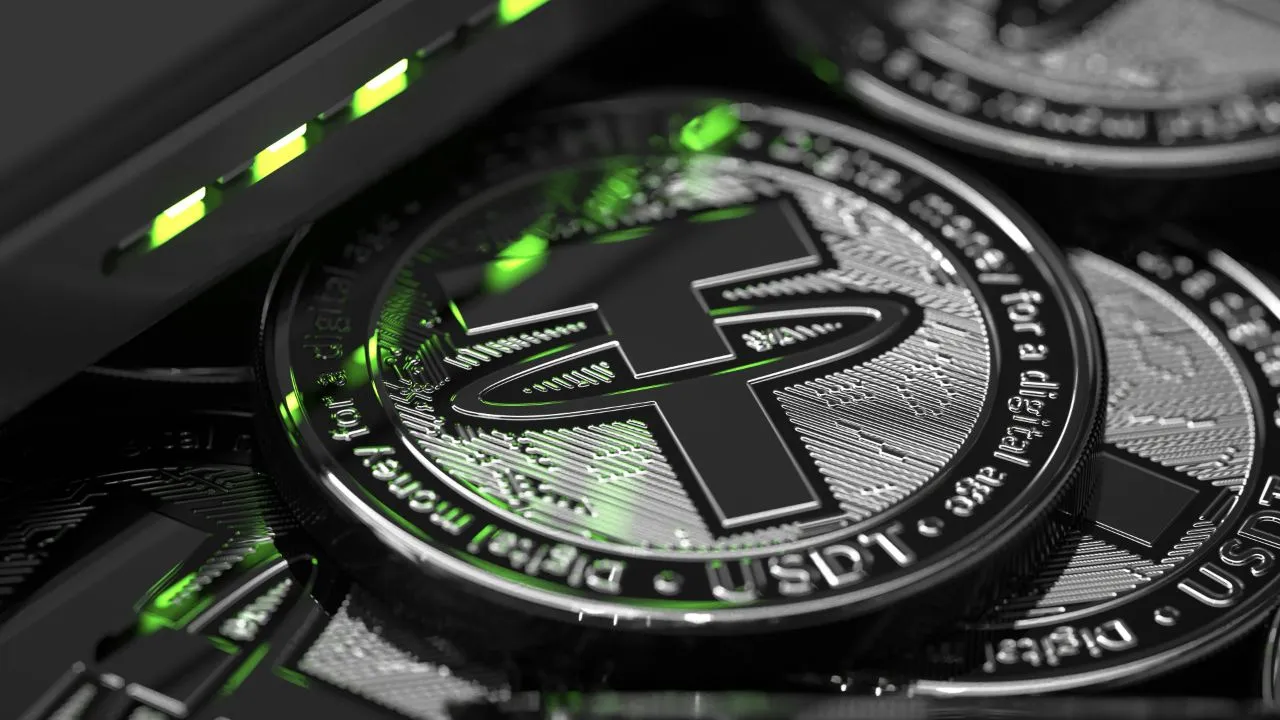
In a major crackdown, the Chengdu Public Security Bureau announced on May 15 the dismantling of an extensive underground banking network, resulting in the arrest of 193 suspects across China in an operation that unveiled illegal businesses using the U.S. dollar stablecoin, Tether (USDT).
https://asset.coinness.com/en/news/cd1bcc8fa6cc50d3d0bf670d4113d21d.webp
Photo by DrawKit Illustrations on Unsplash

Unauthorized foreign exchange settlements 

These activities involved illicit transactions amounting to approximately 13.8 billion yuan ($1.9 billion). The investigation began in November 2022 when authorities detected suspicious activities involving underground banks in Chengdu’s Longquanyi district. In response, a specialized task force was formed, integrating experts from various police departments, including economic investigation, cyber security and legal affairs. This team uncovered unauthorized foreign exchange settlements that bypassed national regulations.


On June 1 of last year, acting on instructions received from the Ministry of Public Security, the task force conducted coordinated raids in several major cities, such as Shanghai and Shenzhen. These efforts led to the capture of key figures in the criminal syndicate, involving the arrest of 25 suspects. Law enforcement seized numerous bank cards, payment instructions and other digital payment instruments tied to the illegal operations during these raids. A broader investigation across 26 provinces has resulted in 193 suspects being arrested.


Using USDT to evade regulation

Further investigations revealed that since January 2021, the syndicate exploited its import and export business to facilitate illegal activities. By using USDT as a medium, they bypassed official foreign exchange channels to service clients needing to transfer funds internationally. Moreover, these operations were intricately linked to other illicit activities, including financial fraud and smuggling.


In a related development, on May 13, BeInCrypto reported that the Chinese government arrested six individuals responsible for illicit crypto transactions worth $295 million. These arrests highlight the challenges and risks associated with cryptocurrency in unregulated environments.


Additionally, the Hong Kong police recently apprehended three men at a currency exchange shop following a deceptive transaction involving Tether’s USDT. The suspects allegedly showed a customer ceremonial "hell money" before deceitfully persuading him to transfer about $128,073 worth of USDT, only to refuse the agreed-upon cash exchange afterward. 


According to the South China Morning Post (SCMP), hell banknotes are a form of ceremonial paper money burned as an offering to ancestors or deities in traditional Chinese culture.


Late last year, USDT was used by a gang of gold smugglers in Nepal, who received $16 million in the Tether stablecoin in exchange for the precious metal. A joint investigation carried out by the authorities in Nepal and China led to the arrest of two Chinese and 13 Nepalese nationals in connection with the illicit activity.


Over the course of the weekend, it emerged that two Chinese nationals had been charged by the authorities in the United States with money laundering through Bahamas-based Deltec Bank. Deltec acts as the primary banker for Tether, prompting longstanding Tether critics to suggest illicit activity relative to the stablecoin issuer’s dealings with the bank.


This series of arrests and discoveries underscores the ongoing efforts of Chinese authorities to clamp down on illegal cryptocurrency activities. The activity also poses problems for Tether in its efforts to maintain compliance and stamp out illicit use in the face of ever-increasing regulatory scrutiny worldwide.




More to Read
View All
Policy & Regulation·

Nov 18, 2025

Japan to classify crypto as financial instruments, seeks 20% tax rate

Japan’s financial authority has decided to regulate cryptocurrencies under the Financial Instruments and Exchange Act, classifying them as financial instruments. According to a report by The Asahi Shimbun, the Financial Services Agency (FSA) intends to include this reclassification in an amendment scheduled for submission during next year’s regular Diet session. Under the revised framework, local crypto exchanges will be required to provide detailed disclosures on the 105 tokens they handle. This includes the existence of issuers, underlying technologies such as blockchain, and price volatility risks. The proposed regulations will also subject these classified cryptocurrencies to insider trading rules. Issuers and individuals affiliated with exchanges will be prohibited from trading based on material non-public information, such as the suspension of trading or an issuer’s potential bankruptcy.Photo by Karola G on PexelsToken coverage in JapanAlthough the regulatory list contains 105 tokens, data from the Japan Virtual and Crypto Assets Exchange Association (JVCEA), cited in a New Economy report, indicates that Japanese exchanges currently list 119 cryptocurrencies, leaving unclear how the remaining digital assets will be regulated.  To enhance investor protection, the FSA will mandate specific disclosure requirements for issuers that use token launches for fundraising. These entities will be required to report on their latest business activities and future issuance plans annually. This legislative push follows a discussion paper published by the FSA in April, which proposed dividing crypto assets into two distinct categories. The first category includes tokens issued for raising capital, while the second comprises established cryptocurrencies that are not primarily used for issuer fundraising, citing Bitcoin (BTC) and Ethereum (ETH) as primary examples. Tax cut from 55% to 20%In parallel with these regulatory changes, the FSA plans to request tax reforms similar to those applied to traditional stock trading. Under Japan’s current tax code, taxes on cryptocurrency gains can reach as high as 55%. The agency proposes reducing this rate to a flat 20% in next year’s tax reform. Responding to the news on X, Changpeng Zhao, the founder and former CEO of Binance, welcomed Japan’s initiative to lower crypto taxes. However, he noted that the proposed 20% rate remains high compared to other jurisdictions, many of which do not levy capital gains taxes on crypto at all. Crypto ETF CFDs set to closeThe government’s move to tighten regulations is already reshaping the financial product landscape. One immediate impact is visible in contracts for difference (CFDs) linked to crypto ETFs. As reported by FinanceFeeds, IG Securities, the Japanese subsidiary of the London-listed IG Group, announced changes to its offerings. The firm will stop accepting new orders for CFDs tied to BlackRock’s iShares Bitcoin Trust and its Ethereum equivalent on Dec. 1. Open positions are scheduled to be automatically closed on Jan. 31 of next year. If clients do not settle their holdings prior to this date, the final settlement will be calculated based on the official closing price of that final day. This discontinuation adheres to an FSA decision that derivatives referencing Bitcoin or Ether ETFs must be regulated as crypto-related derivatives rather than standard ETF products. These instruments, now under the crypto-related derivative classification, fall under stricter rules regarding investor protection, operational oversight, and licensing. Japan’s latest regulatory and tax initiatives reflect a broader effort to bring clarity and investor protection to the country’s growing crypto market. As the framework evolves, the industry will be watching how the new rules influence participation and market structure. With lower taxes and stricter oversight on the horizon, both investors and exchanges may need to adjust, potentially reshaping liquidity and Japan’s overall appeal while prompting trading platforms to rethink their product offerings. 

news
Web3 & Enterprise·

Dec 19, 2023

Coinone adds new security features

Coinone adds new security featuresSouth Korean cryptocurrency exchange Coinone has recently added two new features — “Change Phone Number” and “Lock Account” — on its website and mobile app to bolster user security and convenience, according to local news site Greenpost Korea on Tuesday (KST). This comes after the platform recently rolled out plans to terminate its existing authentication services — identity verification via the Coinone PASS app was suspended on Dec. 4, and the service on the Kakao Pay platform will also be suspended on Dec. 28.Photo by FLY:D on UnsplashRobust protection measures“As the number of malicious smishing and phishing attempts to access customer accounts is increasing, it is essential to strengthen customer security. We will continue to implement security features that allow customers to use our services conveniently and safely,” said Myung-hoon Cha, CEO of Coinone.Enhanced user controlAccording to the exchange, users can change their phone number after completing the identity verification process in the “Change Information” option on the “My Page” tab. Notably, if a user’s account information is unintentionally disclosed, they can utilize the Account Lock feature to protect their account. These two features have been added to Coinone’s mobile app in its latest version upgrade.After announcing plans to suspend authentication via Kakao Pay, Coinone instead introduced authentication services via the KakaoTalk app on Dec. 14, which is generally more commonly used by Koreans. By registering a KakaoTalk mobile certificate on the “Additional Channel Authentication” tab, users can undergo identity verification without the hassle of logging in separately. This latest authentication channel was added as yet another option along with Naver, which was added earlier in August.

news
Policy & Regulation·

May 03, 2023

Incheon City to Host Blockchain Conference Showcasing its Vision

Incheon City to Host Blockchain Conference Showcasing its VisionIncheon City will host a blockchain conference, Incheon Metanomics 2023, to showcase its vision at the Songdo Convensia Convention Center on May 9.The event will present the city’s goal of building a blockchain ecosystem and fostering digital economy growth. About 150 blockchain experts from around the world are expected to attend, according to Block Media.Insightful talksProminent industry figures, including Leon Sing Foong, the head of Asia-Pacific operations at cryptocurrency exchange Binance; Steve Park, Asia-Pacific head of public policy at online game platform Roblox; and Justin Kim, a solutions architect at semiconductor company AMD, will speak at the event. Foong will talk about the collaboration between crypto exchanges and governments, Park will provide insights into the future of the metaverse, and Kim will address upcoming trends in decentralized storage systems.Registration for the conference is free and open until May 4 through Event Us, with a live stream of the event available on YouTube.Incheon and DubaiIncheon has been working towards establishing a special digital economy zone within the city by utilizing blockchain technology. In March, Incheon Mayor Yoo Jeong-bok met with Ahmed Bin Sulayem, the executive chairman of the UAE’s Dubai Multi Commodities Centre (DMCC), to discuss cooperation in the blockchain industry and digital economy.The DMCC, a free trade zone in Dubai, hosts over 65,000 workers from more than 21,000 companies across 180 countries. Notably, the DMCC crypto center is home to a community of over 500 crypto firms, fostering the Web3 and blockchain economy.Similarly, Incheon operates a free trade zone that connects 147 cities with populations exceeding 1 million within a three-hour flight radius. The Incheon Free Economic Zone is appealing to global blockchain companies as it offers flexible business operations for foreign entrepreneurs.© Pexels/joon young, Park

news
Loading