Top

Bithumb surpasses Upbit in 24h trading volume for first time in four years

Web3 & Enterprise·December 28, 2023, 5:46 AM

The trading volume of South Korean cryptocurrency exchange Bithumb exceeded that of its competitor Upbit as of 10:30 a.m. UTC on Wednesday, as reported by the local news outlet Etnews, which cited data from CoinMarketCap. This shift occurred for the first time in four years.


According to CoinMarketCap, as of the specified time, Bithumb's 24-hour trading volume reached KRW 4.93 trillion (approximately $3.8 billion), surpassing Upbit, which recorded a volume of KRW 4.37 trillion. Until 2019, Bithumb was the leading exchange in Korea. However, it ceded its top position to Upbit, which gained a competitive edge through its collaboration with the internet-only bank, Kbank.
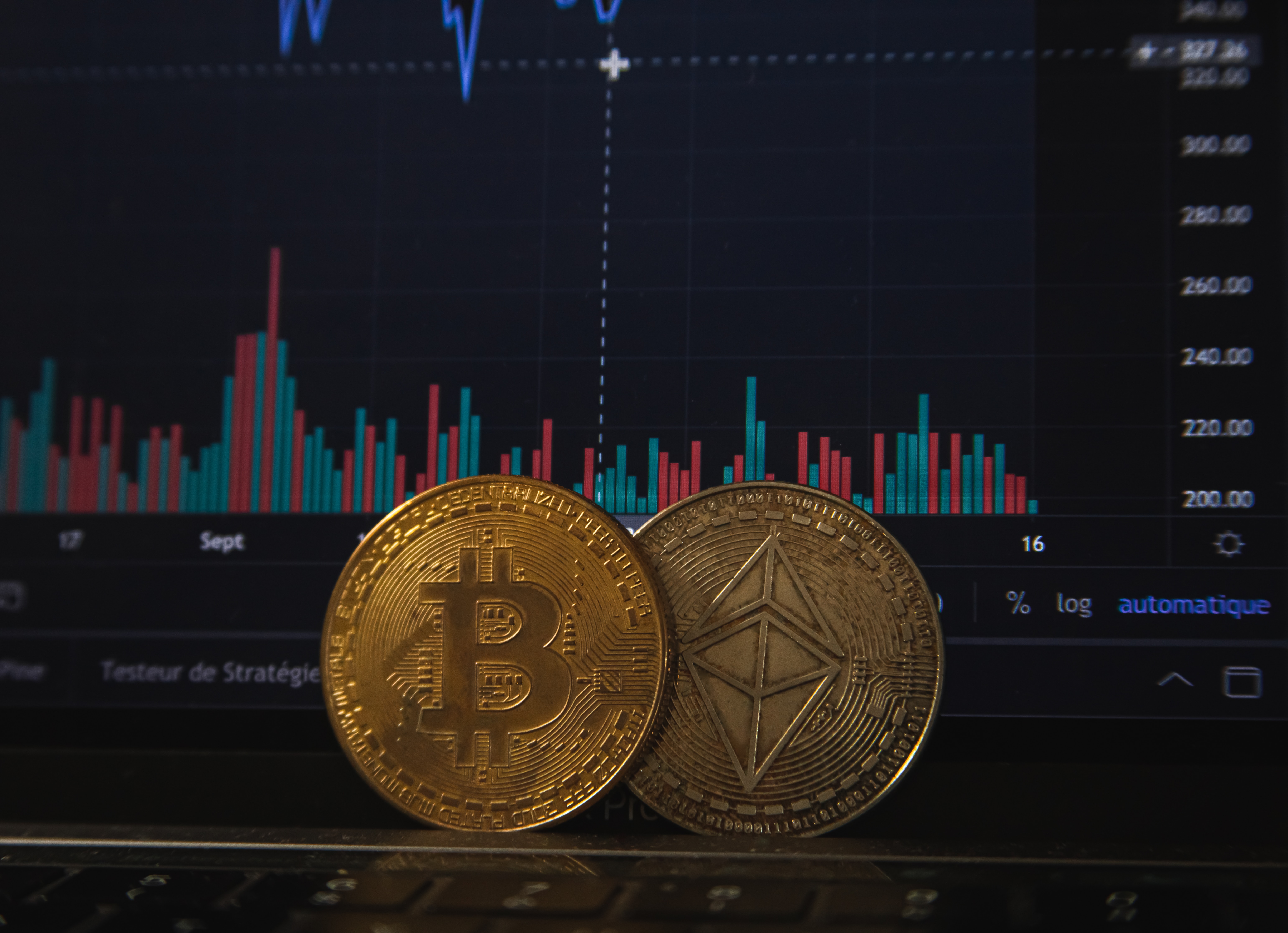
https://asset.coinness.com/en/news/16902f23d0ccba899e5016370ba8434a.jpg
Photo by Pierre Borthiry - Peiobty on Unsplash

Zero trading fees and new crypto listings

Earlier in the year, Bithumb initiated a strategic plan with the objective of boosting its trading volume in order to increase its market share in the domestic market to 25%. To achieve this goal, the exchange implemented several key initiatives. One of the significant steps taken was the elimination of trading fees, aimed at attracting more users and increasing transaction volumes. Additionally, Bithumb broadened its cryptocurrency offerings by listing prominent cryptocurrencies such as Tether (USDT) and WEMIX.


Questioned sustainability of strategies

In anticipation of crypto winter giving way to crypto spring, trading platforms are gearing up for more intense competition to increase their market shares. However, there are concerns about the sustainability of strategies like implementing zero trading fees. Critics argue that such policies, while they may temporarily shift market shares, are unlikely to be successful in the long term. This skepticism is largely due to the fact that cryptocurrency exchanges heavily rely on trading fees as a primary source of revenue. 


An industry expert has pointed out that unless the cryptocurrency exchanges currently lagging behind develop innovative, paradigm-shifting strategies capable of significantly impacting the market landscape, there's a high likelihood that the ranking order will revert to the previously established, entrenched market order. 


In fact, at the time of this publication, Upbit upended Bithumb in 24-hour trading volume, recording KRW 4.4 trillion compared to Bithumb's KRW 3.2 trillion. This data underscores Upbit's strong position in the market, illustrating its continued dominance.


More to Read
View All
Policy & Regulation·

Jul 06, 2023

Korea’s Virtual Asset User Protection Act to Take Effect in July Next Year

Korea’s Virtual Asset User Protection Act to Take Effect in July Next YearThe Virtual Asset User Protection Bill was passed during the South Korean National Assembly’s plenary session last Friday, according to a report by news agency Newsis. The legislation aims to safeguard customer assets, establish regulations against unfair trading practices, and enforce penalties. The act is scheduled to take effect one year after its passage.Photo by KS KYUNG on UnsplashDefinition of virtual assetsUnder the act, a virtual asset is defined as a digital representation of economic value that can be digitally traded or transferred. It’s important to note that central bank digital currencies (CBDCs) are not considered virtual assets. Virtual assets with characteristics of securities will initially fall under the jurisdiction of the Capital Market Act.Roles of Korea’s central bankThe act grants the Bank of Korea (BOK) the authority to request data and information from virtual asset service providers (VASPs). This provision is deemed necessary for the Korean central bank to formulate monetary and financial policies, despite virtual assets not being equivalent to traditional currencies.Responsibilities of VASPsMoreover, VASPs are obligated to segregate users’ virtual assets from their own holdings. VASPs are also required to reserve the same type and quantity of virtual assets entrusted by users and maintain a certain proportion of these assets in a cold wallet, which is an offline storage solution.Unfair trading practices will be regulated in a similar manner as outlined in the Capital Market Act. The act specifically prohibits the use of undisclosed information, price manipulation, fraudulent transactions, and trading of self-issued virtual assets. VASPs are barred from suspending deposits and withdrawals without legitimate reasons. They are also mandated to monitor suspicious transactions and take appropriate measures to safeguard users. Any suspected unfair trading practices must be promptly reported to financial authorities. Violators of these rules may face criminal penalties, liability for damages, and potential class action lawsuits.Powers of financial authoritiesThe act also clarifies the powers of financial authorities in supervising, inspecting, and taking action against virtual asset operators. Unfair trade practices can result in imprisonment for more than one year (up to 10 years for violations related to self-issued virtual assets) or fines ranging from three to five times the illicit gains. Assets acquired through unfair trade practices will be confiscated, or an equivalent value will be charged if confiscation is not feasible.Impact on crypto investigationsThe absence of legislation directly addressing unfair trading practices in the virtual asset market has posed challenges for prosecutors. They had to rely on existing statutes related to fraud, the capital market, and financial investments. Once the new act takes effect, prosecutors will no longer need to determine whether a virtual asset qualifies as a security or not.Regarding this development, a prosecutor told local legal news outlet Law Times that the implementation of the new act will escalate prosecutorial investigations into cryptocurrency incidents.Meanwhile, the individuals behind the crash of Terraform Labs’ stablecoin TerraUSD and its sister coin Luna will not be subject to this act due to the legal principle of nulla poena sine lege, which prevents the retrospective enforcement of criminal laws. Do Kwon, co-founder of Terraform Labs, was recently sentenced to four months in prison by a Montenegrin court for passport forgery after being arrested in March. The other co-founder, Daniel Shin, has been indicted by prosecutors in Korea.

news
Policy & Regulation·

Apr 21, 2025

South Korean central bank eyes P2P transaction tests for CBDC pilot in October

South Korea’s central bank, the Bank of Korea (BOK), plans to begin testing peer-to-peer (P2P) transactions with its central bank digital currency (CBDC) in October, according to the Seoul Economic Daily. This will mark the second phase of its ongoing CBDC pilot, Project Hangang, which currently allows 100,000 citizens to use digital tokens for payments at both online and offline stores. In the fourth quarter, the pilot will also introduce voucher programs enabling local governments to distribute welfare benefits.Photo by Mathew Schwartz on UnsplashSandbox deadline pressureThe BOK originally planned to gather feedback from participants in the first phase and refine the system before proceeding. However, the central bank decided to speed up the timeline, as the broader project is operating under a regulatory sandbox program that provides two years of regulatory flexibility. A BOK official noted, “Since the current test ends in June, we can’t wait too long to move forward. Also, the fourth quarter timeline is still tentative.” While the BOK focuses on its CBDC, Korean commercial banks are accelerating efforts to develop stablecoin infrastructure and launch related pilot projects, Edaily reported. These initiatives reflect growing expectations that stablecoins will become a key tool for cross-border payments. Banks see this as an opportunity to attract new customers and earn fees from crypto exchanges by facilitating stablecoin transfers through their own networks. One example is Project Pax, a joint initiative involving Shinhan Bank, Nonghyup Bank and Kbank, which is testing stablecoin transfers between South Korea and Japan. Led by Japan’s digital asset platform Progmat, along with Korea’s Fair Square Lab and Korea Digital Asset Custody, the project enables Korean banks to send won-based stablecoins to Japanese financial institutions and receive yen-pegged stablecoins in return. Rising stablecoin useAn executive at a local bank expressed concern that South Korea is falling behind in stablecoin adoption. He predicted faster uptake, noting that consumers can save time and money by avoiding traditional foreign exchange processes. He also cautioned that, without action, the private sector could take the lead in building cross-border payment networks, bypassing the traditional SWIFT system. Another banker urged financial authorities to establish clear regulations for stablecoins, stressing the need for oversight as stablecoins are increasingly used to move foreign currencies out of Korea. Contrasting perspectivesHowever, BOK Governor Rhee Chang-yong remains skeptical of stablecoins, arguing that CBDCs offer far greater transparency. He pointed to the volatility of unregulated stablecoins and warned that their widespread use—especially if issued by private financial institutions—could undermine the central bank’s role as the sole issuer of legal tender. That said, financial authorities appear to be exploring a regulatory framework where CBDCs and stablecoins can coexist. Sharing his personal view, one official noted that while the future of stablecoins is uncertain, it’s important to remain open to various possibilities. He added that agencies are also reviewing recent changes in U.S. federal law, along with regulations in Japan and the EU. 

news
Web3 & Enterprise·

May 24, 2023

BitMEX Launches Bespoke Service in Hong Kong

BitMEX Launches Bespoke Service in Hong KongSeychelles-based cryptocurrency exchange and derivative trading platform BitMEX announced on Monday that it is launching a dedicated virtual asset service for its Hong Kong customers.The exchange published a blog post to its website in which it said that it is in the process of launching “BitMEX Hong Kong,” a dedicated service offering that will be set up on a transitional basis initially. The company is currently in the process of securing a virtual asset service provider (VASP) license from the Hong Kong regulator, the Securities Futures Commission (SFC). Licensing becomes effective in the Chinese autonomous territory on June 1.Photo by Karolina Grabowska on PexelsDedicated mobile appAmong the features the exchange intends to offer its Hong Kong-based customers is a bespoke app, catering specifically to users in the city. The platform will offer Hongkongers the ability to buy and sell cryptocurrencies with eleven spot trading pairs. From an on-boarding and off-boarding perspective, the firm will facilitate the conversion of cryptocurrencies into over thirty fiat currencies.The company is looking to add value by offering additional services such as portfolio management and real-time deposits and withdrawals. BitMEX plans to enable additional functionality such as watchlists and detailed real-time data. Both of these features will enable service users to identify and follow crypto market trends.Licensing preparationsWhile the offering attempts to meet the specific needs of Hongkongers, it's likely that the main motivation relates to VASP licensing. The regulatory requirements in Hong Kong are likely to have distinct facets that would necessitate the company to tease out its service to Hong Kong citizens from its global platform.The SFC has indicated on Tuesday that it will enable crypto trading for retail investors. Notwithstanding that, it’s not doing that without the incorporation of several measures to protect the interests of retail users. Any promotions or incentives that lead a marketing effort with free gifts, and this will likely include token airdrops, will be prohibited.Minimum capital liquidity requirements are being set. Furthermore, client assets will have to be segregated from exchange assets, although the Commission doesn’t mind if the VASP simply segregates said funds itself or does so by way of using an escrow service.Stephan Lutz, acting CEO and group CFO at Bitmex, commented on the development: “We are optimistic that Hong Kong will achieve its ambition of becoming a world-leading Web3 role model city and potentially the Web3 hub for China in years to come.”On May 29, the firm will transfer existing Hong Kong-based customers from its global platform to its new affiliated Hong Kong entity, HDR BMEX Limited. Remaining account balances will be transferred over on that date. There will be no requirement for Hong Kong-based users to undertake additional KYC (know-your-customer) checks or account verification.Earlier this month, the exchange added two additional digital assets ($SUI & $PEPE) to its range of available perpetual contracts.

news
Loading