Top

Indian Web3 industry body campaigned for ‘level playing field’

Policy & Regulation·January 03, 2024, 2:42 AM

An industry advocacy body for crypto and Web3 in India had urged the Indian government to take action against nine offshore exchanges, prompting the government to issue show cause notices and block URLs recently.


Native industry pushback

According to CoinDesk, the publication has seen a copy of a letter that was sent in mid-December by the Bharat Web3 Association (BWA), addressed to the Indian Finance Ministry’s Department of Revenue Secretary, Sanjay Malhotra.


The letter was penned by BWA Chairman Dilip Chenoy. Chenoy has been in the role since March of last year having a number of years of leadership experience within Indian industry bodies under his belt, with time spent previously as Secretary General of the Indian Chambers of Commerce and Industry and as Chairman of the board of Sant Longowal Institute of Engineering and Technology.


According to its LinkedIn profile, the BWA seeks to “advocate for the collaboration between the regulatory bodies and the Industry for creating awareness about the new age technology and the emerging [Web3/crypto] asset class.”


‘Show cause’ notices

It emerged last week that India’s Financial Intelligence Unit (FIU) had issued “compliance show-cause” notices to a number of overseas crypto platforms who have otherwise been active within the Indian market. The FIU is a national body tasked with liaising with and providing information to enforcement agencies where suspected illicit transactions are concerned.


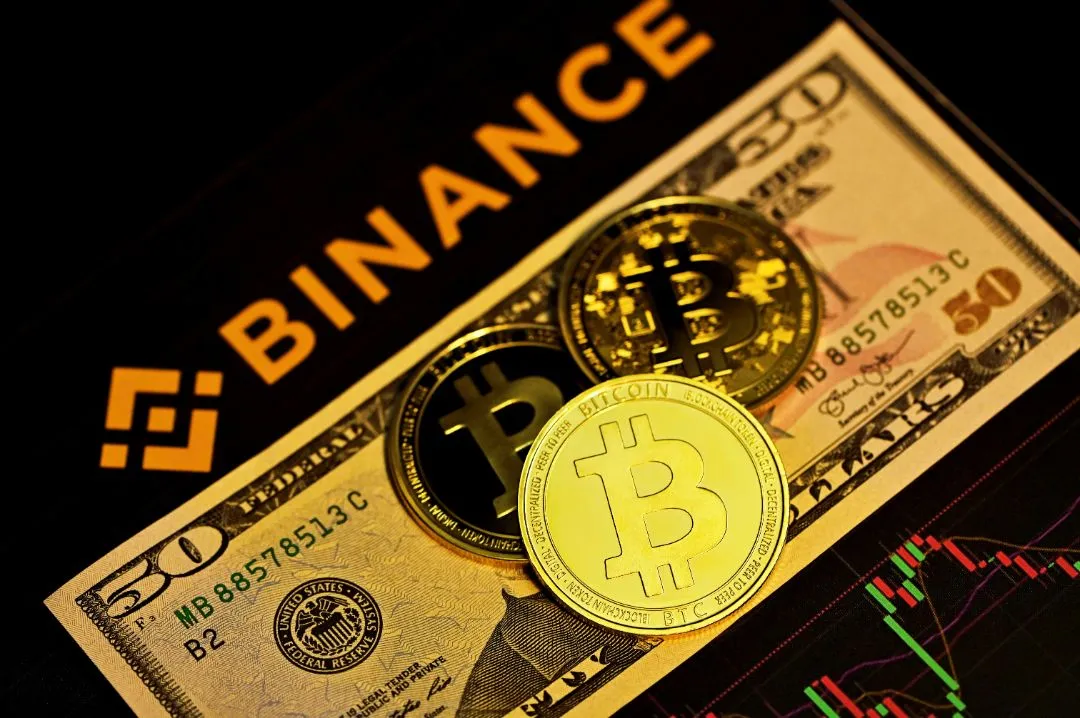
The offshore exchanges, including Binance, KuCoin, Huobi, Kraken, Gate.io, Bittrex, Bitstamp, MEXC Global and Bitfinex, have been given a two-week deadline to respond to the show cause notice. This notice questions why regulatory actions should not be taken against them, aiming to ensure compliance with the country's financial regulations. It’s understood that the BWA's letter requested a one-month grace period for offshore exchanges to register with the FIU.


It remains unclear whether the government's actions were solely prompted by the BWA's letter or if it would have taken place independently. Notably, the BWA's letter aligns with the government's earlier mandate in March, requiring crypto businesses to register with the FIU and adhere to anti-money laundering processes under the Prevention of Money Laundering Act (PMLA). Since then, 31 domestic entities have registered with the FIU.

 

https://asset.coinness.com/en/news/c3b66d7fe28e336f0aeee7820783d08c.jpg
Photo by Peter Glaser on Unsplash

Ensuring a fair game

The BWA's letter also proposes that offshore exchanges establish an Indian subsidiary, deposit the applicable tax deducted at source (TDS) from July 1, 2022 and face restrictions, including potential access blocks on mobile app stores and IP addresses, for non-compliance. While it's unclear if all these requests feature in the show cause notices, the BWA emphasizes the need for fair competition.


Rajagopal Menon, Vice President of leading Indian crypto exchange WazirX, stressed that “all we are asking for is a level playing field." The BWA's letter also urges the government to grant Indian retailers a 30-day window to withdraw assets before implementing any restrictions.


The fledgling BWA industry body recently celebrated its first anniversary with its founding member, CoinSwitch founder Ashish Singhal, stating that he got involved with the BWA “to help build an effective regulatory framework for Web3 and digital assets in India.” Singhal added that the BWA’s mission is “to help India realize its vision to be the leading digital economy.”

 

More to Read
View All
Web3 & Enterprise·

Jan 31, 2024

NEOPIN teams up with Drive-to-Earn app GREEVER to expand blockchain’s role in sustainability

CeDeFi protocol NEOPIN has agreed to work with GREEVER, the developer of an eco-friendly Drive-to-Earn (D2E) app that rewards users for their efforts towards sustainable driving, marking an accelerated move towards forging a greener economy, according to an official Medium post on Wednesday (KST).Photo by why kei on UnsplashFostering green innovation“NEOPIN is actively collaborating with the government of Abu Dhabi to establish a DeFi regulatory framework. It is also recognized as a pioneer in Permissioned DeFi. On the other hand, GREEVER is distinguished by its strong commitment to public interest initiatives like promoting eco-friendly and safe driving,” said Ethan Kim, CEO of NEOPIN. “Through this partnership, our goal is to demonstrate our achievements in the blockchain space, emphasizing key themes such as compliance, eco-friendliness, and sustainability.” NEOPIN and GREEVER plan to integrate their platforms to expand their respective user bases. Specifically, the NEOPIN digital wallet will be integrated into the GREEVER app. They also intend to introduce NEOPIN’s DeFi products by linking them with GVL, GREEVER’s governance token. Through their collaboration, both companies aim to popularize blockchain on a global scale, especially by leveraging Busan’s technological expertise in the technology.  Driving towards sustainabilityGREEVER resides at the Blockchain Innovation Technology Center at the Busan International Finance Center. The GREEVER D2E platform was launched last September as South Korea’s first blockchain service for eco-friendly driving. It rewards drivers based on their safe and eco-friendly driving habits while promoting the adoption of blockchain technology in different areas of daily life. The team responsible for developing and operating the app is led by CEO Yun In-kyu, a Director of the Busan IT Partners Association and a General Manager who spearheaded various blockchain education initiatives tailored for Busan in 2021. “GREEVER is actively engaged in socially responsible projects with government organizations. Our alliance with NEOPIN is a pivotal move towards sustainability that aligns perfectly with GREEVER’s mission of enhancing accessibility and public interest,” said Yun In Kyu, CEO of GREEVER.

news
Web3 & Enterprise·

Aug 04, 2023

Nomura’s Laser Ventures Invests in Singapore’s Solv Protocol

Nomura’s Laser Ventures Invests in Singapore’s Solv ProtocolSolv Protocol, a Singapore-based DeFi startup, has revealed a significant stride forward with a $6 million funding round, drawing support from Laser Digital, the digital asset subsidiary of Japanese global financial services conglomerate Nomura.The project team provided details on the funding round via a blog post published to its website earlier this week. Accompanying Laser Digital in the funding round, Singapore’s UOB Venture Management also participated, alongside investors such as Matrix Partners, Bing Ventures, Mirana Ventures, Apollo Capital, Bytetrade Labs, and others.Photo by Towfiqu barbhuiya on Unsplash$14 million cumulative fundingThis injection raises its cumulative funding to an impressive $14 million. The innovative Solv Protocol has been developed to facilitate on-chain fund management within the realm of public blockchains.Delving into the intricacies of the Solv asset management protocol, Olivier Dang, COO of Nomura Securities’ wholesale digital office, expanded on its transformative potential, stating: “Solv has built a trustless institutional DeFi platform integrating brokers, underwriters, market makers, and custodians to create the first fund infrastructure on the blockchain to bridge DeFi, CeFi, and TradFi liquidity.”$100 million in trading volumeSolv Protocol is a DeFi infrastructure project that enables users to create and trade financial NFTs. The protocol concerns itself largely with ERC-3525, an Ethereum standard for semi-fungible tokens, the characteristics of which lend themselves well for financial use cases.At the heart of Solv’s business model lies a unique mechanism. Any fund utilizing its solution inherently allocates a portion of its assets under management. Inaugurated in the second quarter of this year, Solv has already facilitated over $100 million in trading volume.Semi-fungible token innovationThe origins of Solv are rooted in the pursuit of an optimal Ethereum token standard for effective fund management. Dissatisfied with existing standards, the founders, primarily Chinese technologists, forged an innovative path. Traditional ERC-20 fungible tokens weren’t deemed suitable due to the need for a new smart contract token for every customization. Similarly, non-fungible tokens (NFTs) posed limitations, being intrinsically designed as individual units not readily divisible, which is essential for issuing shares in a fund. The security token standard, ERC-1400, didn’t quite align either.Thus, Solv birthed the semi-fungible token through the development of ERC-3525, a groundbreaking solution to its unique challenge.While larger asset managers like Franklin Templeton and Ondo Finance have adhered to fungible tokens, a growing trend is emerging in the traditional asset management sector — a movement toward blockchain integration. UK-based Abrdn recently introduced a fund on the Hedera DLT network, while industry giant Schroders is exploring blockchain tokenization under Singapore’s Project Guardian initiative.It’s been an eventful week for Nomura’s Laser Digital. Alongside news of this investment, the company also announced its recent acquisition of a license from Dubai’s Virtual Asset Regulatory Authority (VARA). This regulatory green light bolsters its presence in the global digital asset sector.Nomura’s Laser Digital is amplifying its presence within the blockchain and digital asset domain, marking its sixth such investment within this year alone. Meanwhile, projects like Solv Protocol are pushing the boundaries of innovation through the development of semi-fungible tokens, extending the use cases of blockchain technology as it does so.

news
Web3 & Enterprise·

Jan 26, 2024

HashKey Capital and FTSE Russell introduce crypto index suite

HashKey Capital, a Singapore-based crypto fund manager, and FTSE Russell, a subsidiary of the London Stock Exchange Group (LSEG), have collaboratively launched a series of indices designed to track cryptocurrencies. Three indicesRevealed on the FTSE Russell website on Wednesday, these three indices provide traders with the ability to monitor diversified baskets of digital assets aligned with various investment strategies. They cater to nuanced preferences across different crypto segments and market capitalizations. The flagship index in this suite is the FTSE Custom Digital Asset Top 20 Index, tracking the top 20 crypto assets based on market capitalization. This index is positioned to accurately reflect more than 90% of the overall performance of the digital asset market, offering investors insights into the dynamics of the most significant players in the crypto space.Photo by Markus Winkler on UnsplashFocus on infrastructure and application layerBeyond tracking market capitalization leaders, the suite includes indices with a specific focus on the crypto ecosystem's infrastructure layer (FTSE Custom Digital Asset Infrastructure Index) and application functionalities (FTSE Custom Digital Asset Application Index). One of them, the infrastructure index, zeroes in on digital assets forming the infrastructure layer, including smart contract platforms, protocol interoperability and distributed computation and storage. Meanwhile, the FTSE Custom Digital Asset Application Index concentrates on digital assets associated with application functionalities, such as those linked to staking instruments and decentralized finance. From Wednesday, these indices have been made accessible on the FTSE Russell website, with plans for future availability through major data providers like Bloomberg, Factset, LSEG Data & Analytics, Morningstar and S&P Capital IQ. U.S. ETF approvalThe introduction of these indices follows the recent milestone approval by the Securities and Exchange Commission (SEC) of spot bitcoin ETFs in the United States. It’s likely that the milestone ETF approval in the largest capital market is having a knock-on effect, proving to be a catalyst for other such offerings implicating the intertwining of crypto and traditional finance on an international basis. These products offer investors a more accessible entry point into the crypto market's largest asset, currently boasting a market capitalization of approximately $780 billion. Industry watchers anticipate the potential approval of a U.S. spot ether ETF later in 2024, with the SEC expected to make rulings on proposed funds by May. Deng Chao, managing director of HashKey Capital, noted a significant surge in demand from investors seeking to diversify their portfolios beyond established cryptocurrencies. This move aligns with broader market trends, as investors increasingly explore opportunities in diverse crypto assets. Notably, these index launches follow FTSE Russell's partnership with Grayscale Investments in October, aimed at enhancing crypto diversification. The earlier collaboration focused on various crypto sectors, including currencies, smart contract platforms, financials, consumer and culture and utilities and services. This development comes on the heels of HashKey Group, the Hong Kong-headquartered parent company of HashKey Capital, securing $100 million in a Series A funding round at a $1.2 billion valuation. OKX Ventures participated in the funding round, signaling strong support for HashKey Group's plans to accelerate product diversification in its Hong Kong business and drive compliant and innovative development globally.   

news
Loading