Top

Hong Kong financial services platform plans spot Bitcoin ETF launch for Q1

Markets·January 20, 2024, 12:46 AM

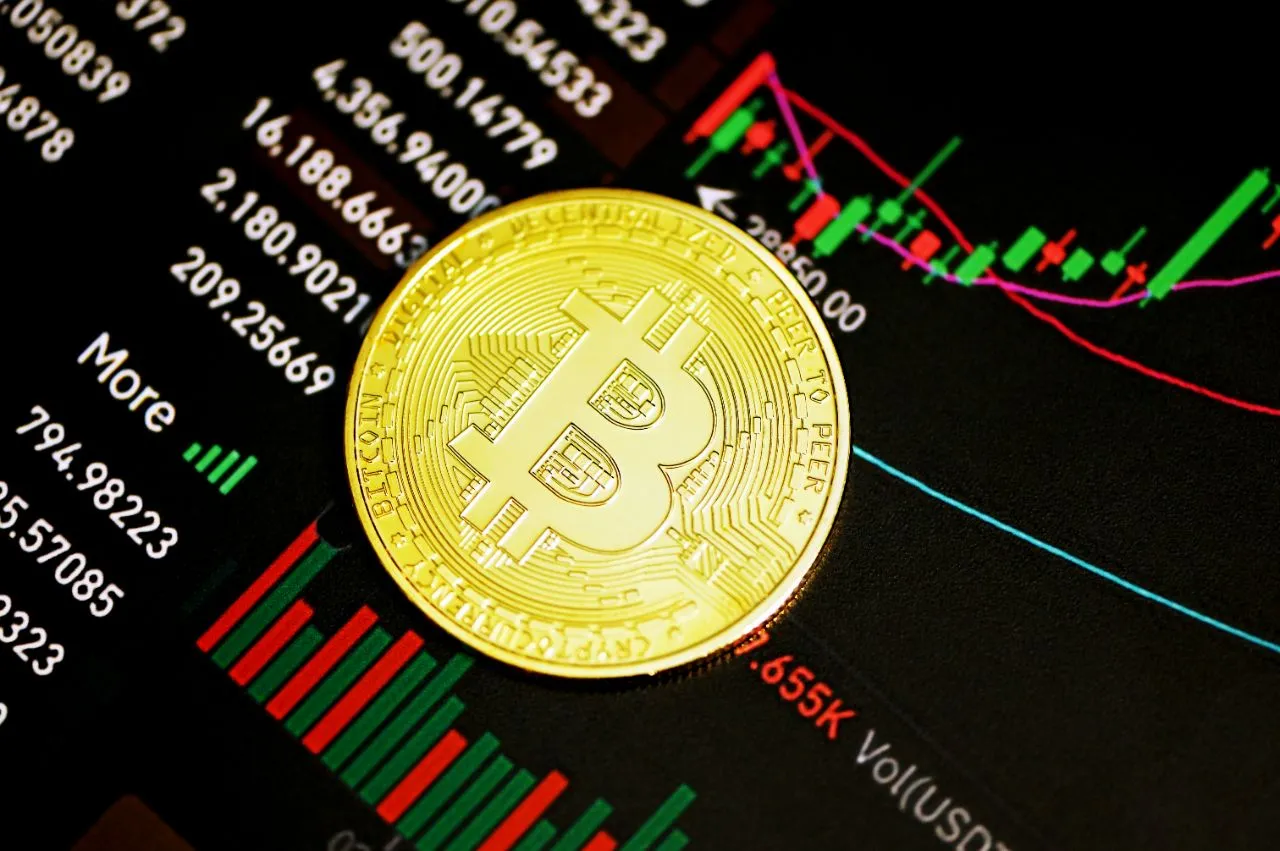
Venture Smart Financial Holdings Ltd. (VSFG), a Hong Kong-based financial services company, is gearing up to initiate an exchange-traded fund (ETF) directly investing in bitcoin in the first quarter of this year.
https://asset.coinness.com/en/news/480adf2970831c42aa4020d10400b1c6.webp
Photo by Kanchanara on Unsplash

That’s according to a report by Bloomberg on Friday. The move aligns with Hong Kong's strategic efforts to establish itself as a digital asset hub, and with that, the company plans to submit an application to the Securities and Futures Commission (SFC) for ETF approval.


Brian Chan, the group head of investment and product at VSFG, expressed optimism about the potential of this market, setting a goal of achieving $500 million in assets under management by the end of the year.


Long-term objective

While the firm has taken the decision to focus on spot crypto ETFs amid a backdrop of spot bitcoin ETF approval in the United States earlier this month, it’s an objective the firm has been working on for some time. In June of last year, crypto media reported that VSFG were planning the launch of such a product.


Notwithstanding that intention, the recent launch of several high-profile bitcoin funds in the United States, including offerings from BlackRock and Fidelity Investments, will likely assist the company in getting product approval in Hong Kong.


Immediately following U.S. approval, a Hong Kong lawmaker suggested that the Chinese autonomous territory should respond proactively. Johnny Ng outlined that Hong Kong had to respond to secure its global position in developing the digital assets space in Hong Kong.


Positive soundings

Towards the end of December, there appeared to be positive soundings on the possibility of spot bitcoin ETF approval in Hong Kong emerging from the local regulator. SFC CEO Julia Leung stated that the regulator was open to the notion of retail participation in spot crypto ETF products.


Her comment was followed shortly afterwards by a joint announcement from the SFC alongside the Hong Kong Monetary Authority (HKMA) that they were prepared to accept applications for such funds. The approval process for such products typically takes weeks to months, following the precedent of traditional ETFs.


Hong Kong presently permits futures-based crypto ETFs, with three already listed: CSOP Bitcoin Futures, CSOP Ether Futures and Samsung Bitcoin Futures. However, these funds have a combined asset value of around $50 million. Samsung Asset Management has not ruled out exploring the launch of a spot ETF, while CSOP Asset Management remains silent on the matter.


VSFG is one of Hong Kong's first SFC-approved virtual asset managers, offering both traditional and digital wealth management services. Aegis Custody, a digital asset custodian, is in discussions with four asset managers about listing spot crypto products in Hong Kong. The regulatory requirements in the city may lead issuers to impose higher fees compared to the low management levies seen in many new U.S. spot bitcoin ETFs.


Although bitcoin experienced substantial growth in anticipation of these U.S. products, it has seen a 10% decline since their trading commenced on Jan. 11. Nevertheless, many industry commentators expect a stronger bitcoin unit price in the medium to long term as a direct consequence of these products.
 

More to Read
View All
Web3 & Enterprise·

Nov 07, 2024

Paxos launches USDG stablecoin in Singapore

Regulated blockchain and digital asset solutions provider Paxos has announced the launch of its latest digital asset, the Global Dollar (USDG), a U.S. dollar-backed stablecoin. The company outlined in a press release published to its website on Nov. 31 that the USDG stablecoin is being issued by its local Singaporean corporate entity, Paxos Digital Singapore Pte. Ltd., with the product being regulated by the Monetary Authority of Singapore (MAS).Photo by Alexander Grey on UnsplashMAS compliant offeringThe company claims that the offering is “substantively compliant” with the stablecoin regulatory framework that MAS intends to roll out imminently. Paxos paved the way for this latest product offering back in July when it obtained a Digital Payment Token license from MAS, enabling it to issue U.S. dollar-backed stablecoins within the city-state. In terms of distribution, Paxos intends to partner with global crypto exchanges, wallets and platforms in an effort to get this new product out into the market.  DBS Bank partnershipIts first partnership with regard to the Global Dollar has already been struck with DBS Bank, Singapore and Southeast Asia’s largest bank based on assets held. DBS will play a role in the custody of USDG reserves and in cash management relative to the project.  Ronak Daya, Head of Product at Paxos, said that “USDG offers a trusted solution with a top-tier banking partner in DBS that will be the catalyst to drive stablecoin innovation and enterprise adoption at a global scale.” This latest product launch appears to be similar to the approach the company has taken in the Middle East. Back in June a United Arab Emirates (UAE)-based affiliate company launched the Lift Dollar (USDL), a yield-generating U.S. dollar-backed stablecoin under the regulatory oversight of the Financial Services Regulatory Authority (FSRA), the regulator within the Abu Dhabi Global Market (ADGM) free zone and international financial center. Running on EthereumThe USDL stablecoin started out on the Ethereum network, with it launching on the Arbitrum network in October. A similar roadmap has been set for USDG, with it launching on Ethereum while Paxos maintains that it “will be issued on more blockchains in the near term.” The Stellar network is likely to be one that it expands to in the future. In October the firm announced an integration with the Stellar Development Foundation, with a view towards expanding stablecoin adoption. Daya said that “enterprise interest in stablecoins has never been higher than it is today, but the market lacks a solution that combines regulatory compliance with real economic incentives for enterprises.” The company has developed an expertise in the issuance of digital assets, with USDG being its sixth such issuance. Last week Paxos outlined that it had launched a stablecoin payments platform with the objective of simplifying global transactions for payments providers and merchants. Paxos has also partnered with the Trump family venture, World Liberty Financial, which plans on launching a U.S. dollar stablecoin with the help of Paxos. The firm’s CEO, Charles Cascarilla, also encouraged both U.S. presidential candidates recently to embrace stablecoins as a mechanism through which to safeguard the continuing influence of the U.S. dollar on a global basis. 

news
Policy & Regulation·

Dec 23, 2023

3AC liquidators estimate 46% recovery while BVI court freezes $1B

3AC liquidators estimate 46% recovery while BVI court freezes $1BThe joint liquidators of the now-defunct Singaporean crypto hedge fund Three Arrows Capital (3AC) have provided creditors with an estimated 45.74% recovery rate for their claims in the bankrupt estate. Meanwhile, in parallel proceedings in the British Virgin Islands (BVI), a court has frozen $1 billion of founders’ assets.According to The Block, the details were disclosed in a December report to creditors by joint liquidators Russell Crumpler and Christopher Farmer of Teneo, the firm appointed to oversee the liquidation of the failed business.$1.16B in assetsAs of Dec. 18, the estimated value of 3AC’s assets was reported to be $1.16 billion, while claims totaling $2.7 billion are expected to be recognized for distribution. The liquidators highlighted that settlements in litigation against various parties, including DCG, Genesis and BlockFi, increased reported assets by an estimated $292 million. It’s important to note that the BlockFi settlement is still pending approval.A total of 154 claims, valued at $3.4 billion, were filed against the 3AC estate. The report indicates that $200 million of claims were not admitted for distribution, and $322 million in claims have either been rejected or are expected to be rejected. Additionally, $76 million in claims are currently under dispute. The report reveals that initial distributions to creditors are being planned for the first quarter of the upcoming year.Illiquid tokensThe breakdown of assets reveals that a large majority are illiquid tokens, subject to vesting periods, comprising 82% of the total. Only 6% of the portfolio is liquid, while equity and investments account for 6.9% and 4.8% is in cash. These illiquid tokens, totaling $563 million at current prices, consist of 13 different tokens with vesting schedules unlocking assets over the next three years, reaching $200 million by the end of 2024.To date, the liquidators have staked some of these tokens, resulting in $5.4 million in staking rewards. Liquidation efforts, including the sale of $34.5 million worth of liquid tokens and $15 million in NFTs, along with other asset sales, have generated a total of $66 million.Photo by Kemp Fuller on UnsplashFrozen assetsIn a related development, Bloomberg reported on Thursday that a British Virgin Islands court has frozen assets totaling $1.1 billion belonging to 3AC co-founders Su Zhu and Kyle Davies, along with Davies’ wife Kelly Chen. The liquidators filed a claim for insolvent trading against the founders for $1.078 billion, with additional claims against Davies for $66 million and Chen for $4.6 million.Teneo outlined the rationale behind the move in the following statement it made to Decrypt:“The worldwide freezing order has been sought in connection with claims that are being pursued by the liquidators that allege, amongst other things, that the Founders should be held responsible for causing 3AC’s position to deteriorate by an amount that is equivalent to the value of the freezing orders sought.”Su Zhu, who was under house arrest for the last few weeks, became free on Dec. 20. Zhu had been arrested in Singapore on Sept. 29 and sentenced to four months imprisonment, serving two-thirds of his sentence under house arrest.Throughout the bankruptcy proceedings, legal fees have accumulated to $49.7 million while the report suggests ongoing efforts to maximize creditor recovery.

news
Web3 & Enterprise·

Jan 17, 2024

$100M funding sees HashKey unlock unicorn status

HashKey Group, the operator of one of Hong Kong's two licensed crypto exchanges, declared its newfound unicorn status on Tuesday, having successfully raised nearly $100 million in a recent funding round.Photo by Markus Winkler on UnsplashSeries A funding roundThe term "unicorn" denotes privately held companies valued at $1 billion or more, reflecting the remarkable achievement for HashKey in the rapidly evolving crypto landscape. With a valuation now surpassing $1.2 billion, HashKey positions itself as a major player in the crypto space within East and Southeast Asia. It’s leveraging its activities that span trading platforms, venture funding, wealth management and asset management in key locations like Hong Kong and Singapore. Its Singapore arm was awarded a capital markets license by the local regulator in December. Undisclosed investorsThe fundraising initiative was first reported in May of last year and later announced by HashKey in August. It attracted contributions from both existing and new investors. While the company refrained from divulging specific investor names, it referred to them as "prominent institutional investors" and "leading Web3 institutions," signaling a mix of established entities and those already at the forefront of Web3 innovation. It was previously disclosed that the company has been backed by the support of OKX Ventures, the investment arm of the well-known OKX digital asset exchange. The funds secured will serve a dual purpose – fostering the development of a robust Web3 ecosystem and supporting licensed products in Hong Kong. HashKey's diverse business arms, including asset management, a blockchain node validation service, a tokenization service, and a Web3 incubation arm, are set to benefit from the fresh capital infusion. The allocation of funds towards these ventures aligns with HashKey's strategic vision to contribute significantly to the evolving crypto ecosystem. Hong Kong hubHong Kong, eager to establish itself as a digital asset hub, has been the backdrop for HashKey's growth. The city's dedicated virtual-asset regulatory framework, introduced in June, aims to attract companies while prioritizing investor protection. Under this framework, retail investors can trade major tokens such as Bitcoin and Ether on licensed exchanges, with HashKey Exchange and BC Technology Group Ltd.’s OSL currently leading the way. Despite the optimism surrounding Hong Kong's potential as a crypto hub, uncertainties linger. The city's ability to support multiple crypto exchanges and the long-term commitment of officials to the sector remain open questions, given its susceptibility to occasional scandals. Since commencing its retail trading service in late August, HashKey Exchange has garnered over 155,000 registered users. The platform's 24-hour spot trading volume is estimated at approximately $11 million, according to CoinMarketCap data as of this writing. While this figure may pale in comparison to Binance, the world's largest crypto platform, HashKey's focus on building a resilient and user-friendly ecosystem positions it as a strong contender in the crypto industry's ongoing evolution. The successful funding round and unicorn status attained by HashKey underscore the renewed optimism in the crypto venture capital landscape. Following a market slump in 2022 and various challenges faced by crypto startups, the recent resurgence in token prices has reignited hopes for a more favorable venture capital outlook.

news
Loading