Top

Tokyo's Relic launches fan-driven anime project using NFT and blockchain

Markets·May 16, 2025, 7:27 AM

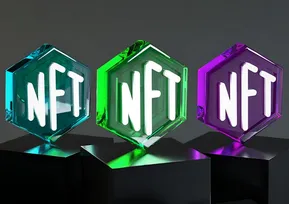
Relic, a Tokyo-based provider of business co-creation services, has launched a fan-driven short anime project using NFT and blockchain technology in collaboration with MetaMe, a metacommunication service developed by mobile carrier NTT Docomo.

https://asset.coinness.com/en/news/3df60bf71b5bb32d2e35bc2fe80d5ab6.webp
Photo by Dex Ezekiel on Unsplash

Fan empowerment through DAO and NFTs

According to a press release on PR TIMES, the project, set to officially launch on June 19, 2025, aims to be accessible even to newcomers to NFTs or Web3. It will strive to ensure sustainability through transparent fund management and community-driven decision-making.


The project introduces a new anime production model called "Anime DAO," starting with a near-future anime set in Neo Tokyo in 2050 that features characters and the world of the popular NFT collection "NEO TOKYO PUNKS." Funding will be raised through crowdfunding and the sale of celluloid art NFTs. Supporters will have the opportunity to vote on production decisions and own iconic scene NFTs once the anime is completed.


The finished anime will premiere on MetaMe, followed by exclusive streaming on d-anime Store, while also integrating with the blockchain game GT6551, where fans can use anime characters and vehicles. This cross-media project combines anime, NFTs and e-sports, enhancing both fan engagement and user experience.


Growing blockchain adoption in anime

This further demonstrates how the animation industry is embracing blockchain technology. In January, the Animecoin Foundation—whose early key contributors include Los Angeles-based NFT project Azuki—introduced the ANIME token on Ethereum and Arbitrum. Its tokenomics indicate a total supply of 10 billion tokens. The Foundation aims to connect the global anime fan base to blockchain, enabling creators to gain clearer insights into fan engagement and attribution, potentially unlocking new revenue models to support their intellectual property (IP).


Although established in March 2024, the Animecoin Foundation traces its origins to Azuki’s mission of building an open anime universe. Azuki focuses on using blockchain technology and community involvement to develop decentralized anime IP and enrich the fan experience. 


In a separate development, South Korea’s blockchain gaming platform WEMIX inked a memorandum of understanding (MOU) with Japan’s Toei Animation late last year. Known for producing iconic titles such as Dragon Ball, One Piece and Slam Dunk, Toei Animation brings its storytelling and IP expertise, while WEMIX provides blockchain technology. The partnership aims to create an innovative blockchain-based gaming experience for a global audience.

More to Read
View All
Policy & Regulation·

Apr 25, 2024

Spot BTC, ETH ETFs to commence trading on April 30 in Hong Kong

The first tranche of spot Bitcoin and Ether exchange-traded funds (ETFs) have been officially approved to start trading in Hong Kong on April 30. Announcement from regulatorHong Kong’s Securities and Futures Commission (SFC) announced the official approval of the first batch of spot Bitcoin and Ether ETFs on April 24 via a press release seen by CoinTelegraph. The regulator first provided outline approval for these products on April 15. Additionally, some of the fund management firms themselves have come out to outline product trading commencement at the end of the month. The first batch of approved Hong Kong-based ETFs include China Asset Management’s (ChinaAMC) Bitcoin and Ether-based ETFs.  In a press release, the firm verified that its products will begin trading on April 30. HashKey Capital and Bosera Asset Management have partnered to offer similar spot products. A spokesperson for HashKey told Bloomberg that they’re ready to commence trading of the product at the end of the month.Photo by Ruslan Bardash on UnsplashIn-kind vs. cash-only approachHarvest Global Investments is the third fund manager that intends to launch such a product offering. The launch of these three spot Bitcoin and Ether-based ETFs on April 30 signals a new era for digital asset investment in Hong Kong. Unlike their counterparts in the U.S., which rely on a cash creation model, these ETFs in Hong Kong embrace an in-kind creation mechanism. This approach holds the potential to significantly boost assets under management (AUM) and trading volume, as highlighted by Bloomberg ETF analyst Rebecca Sin. The unique dynamics of Hong Kong's ETF creation model present an opportunity for market growth and innovation, positioning the region as a key player in the global digital asset landscape. By providing a regulated framework for retail and institutional investors, along with the ease of converting digital assets into fully regulated ETFs, ChinaAMC aims to cater to a growing demand for such offerings. China Asset Management’s Head of Digital Assets, Thomas Zhu, emphasized in the firm’s press release the in-kind creation feature. Potential fee warAs the ETF market in Hong Kong gains momentum, competition could result in downward pressure on fees. With issuers vying to offer the most competitive fees to attract customers, the stage is set for a potential battle of pricing strategies. Harvest, for instance, has already entered the fray with a full fee waiver and the lowest fee at 0.3% after the waiver, Bloomberg ETF analyst James Seyffart outlined on the X social media platform. This competitive landscape bodes well for investors, with fees for the first ETFs proving to be lower than expected, as noted by Eric Balchunas, senior ETF analyst at Bloomberg. All eyes will be on the performance and impact of these financial products relative to the crypto market in the Asian region and further afield.

news
Web3 & Enterprise·

Feb 13, 2024

SUI hits new ATH following blockchain academy collaboration

The SUI token has surged to an all-time high (ATH) price after the revelation of the project’s partnership with the American University of Sharjah (AUS) in the United Arab Emirates (UAE) to establish the AUS-Sui Blockchain Academy. SUI is the native token of the Sui blockchain, a layer one blockchain network and smart contract platform that’s striving to make digital asset ownership private, secure and accessible. The AUS-Sui Blockchain AcademyAccording to a press release published via regional news media outlet Zawya on Monday, the AUS-Sui Blockchain Academy is situated within the multidisciplinary Center of Entrepreneurship, Innovation and Sustainable Development, within the AUS. It’s been set out to align with the principles of entrepreneurship, innovation and sustainability with the objective of fostering responsible and impactful technological advancement relative to blockchain. The Academy aims to equip the next generation of leaders and innovators with the necessary knowledge to harness Web3 technology so as to address future global challenges. Dr. Greg Siourouni, Managing Director of the Sui Foundation, expressed enthusiasm for the blockchain education initiative, emphasizing its role in advancing Sharjah's goal of becoming a leading educational and research hub.Photo by Ainur Kamaev on UnsplashPrice surgeIn response to the announcement, SUI's token price has surged. While it’s up 4% over the course of the past 24 hours, the token is now standing at a record-high unit price of $1.79 since its launch in May 2023. The positive momentum in SUI's price underscores market enthusiasm for the layer-1 blockchain platform's educational initiatives. However, other in-roads being made by the project may also be playing a role. Last September the project launched zkLogin, a Web3 authentication solution that enables dApp users to login using social media accounts. The following month, the Sui Foundation announced a $50 million ecosystem fund in an effort to bolster growth relative to the Sui network. AUS and SUI blockchain education initiativesThis latest initiative is part of Sharjah's vision to position itself as a regional powerhouse for education and research, particularly in the realm of technology and blockchain. It’s not the first blockchain-centric collaboration that the university has engaged in. In June of last year, Dubai-headquartered crypto spot and derivatives trading platform Bybit partnered with AUS to establish a scholarship fund of $272,000. That endeavor is supporting fintech and blockchain studies for the benefit of 20 students. The Sui Foundation too has established a track record where educational initiatives are concerned. It has previously introduced several programs, including a Web3-focused curriculum at the Wheeler Institute for Business and Development at the London Business School. Additionally, it awarded $400,000 in Sui Academic Research Awards (SARAs) to 15 universities worldwide and introduced a Web3 curriculum for high school students. SUI's partnership with AUS to establish the AUS-Sui Blockchain Academy reflects its commitment to advancing education and innovation in the blockchain space, while its price surge is suggestive of market optimism for its future endeavors. 

news
Policy & Regulation·

Nov 09, 2023

UAE strengthens regulatory oversight of virtual asset service providers

UAE strengthens regulatory oversight of virtual asset service providersThe Central Bank of the United Arab Emirates (CBUAE) and other relevant authorities in the Middle Eastern country have issued new joint guidance for virtual asset service providers (VASPs) operating within the UAE.Photo by Thomas Drouault on UnsplashPushing back against unlicensed VASPsThese guidelines aim to prevent VASPs from operating without proper licenses in the jurisdiction, demonstrative of the country’s efforts in fighting financial crimes and maintaining the integrity of its financial system.The document outlines the penalties for VASPs operating in the UAE without a valid license. They will face civil and criminal sanctions, including financial penalties against the entity, its owners and senior managers. Moreover, the guidance cautions that licensed financial institutions (LFIs), designated non-financial businesses and professions (DNFBPs) and licensed VASPs that engage with unlicensed VASPs will be subject to law enforcement actions.The National Anti-Money Laundering and Combating Financing of Terrorism and Financing of Illegal Organizations Committee (NAMLCFTC) is the specific entity responsible for having issued the guidance in conjunction with the central bank.VASP ‘red flags’As part of those guidelines, a list of “red flags” for VASPs has been included. Through reliance on these indicators, it’s hoped that bad acting VASPs can be identified by consumers and other industry stakeholders. The document refers to red flags such as the lack of regulatory licensing, no physical presence in the UAE, pressure being applied by a platform to invest quickly and a lack of regulatory disclosure as items to look out for.Otherwise, the guidance encourages stakeholders to be suspicious of unsolicited contact being employed as a means of operation by a platform, the lack of a record of compliance, poor website and communications and the offer of unrealistic promises.Lastly, the document suggests that people should be observant of any illicit use of virtual currency, the use of fake wallets, engagement in terrorist financing and a lack of consumer protection as red flag items.The new guidance instructs all LFIs, DNFBPs and licensed VASPs to report transactions involving suspicious parties. The guidance also emphasizes that information related to unlicensed virtual asset activities can be reported through whistleblowing mechanisms.Exiting FATF ‘grey list’The release of these guidelines is part of an effort by the UAE to be removed from the Financial Action Task Force’s (FATF) “grey list.” The grey list indicates deficiencies in a country’s anti-money laundering (AML) and counter-terrorist financing (CTF) regimes.Improving control mechanisms relative to crypto has been a theme for several countries who are similarly looking to exit the FATF grey list. Last week, it emerged that Turkey is crafting new regulations governing crypto in an effort towards “grey list” removal. Earlier this year, Pakistan announced a renewed ban on cryptocurrency, as part of its efforts to remain off the grey list it had been listed on over an extended period.The UAE was placed on the FATF’s grey list in March 2022 due to AML and CTF deficiencies. However, the country made a commitment to work with the global watchdog to improve its regulatory frameworks in these areas.

news
Loading