Top

Kazakhstan’s sovereign wealth fund to invest in crypto

Policy & Regulation·July 16, 2025, 7:53 AM

With Kazakhstan having recently indicated that it would create a national crypto reserve, the administrators of Kazakhstan’s existing sovereign fund now want to invest in crypto assets as well.


According to a report published by Kursiv, a business media outlet covering Central Asia, the Kazakhstani authorities are planning to invest a portion of the country’s existing gold and foreign exchange reserves in crypto assets. The publication outlined that this was conveyed by Timur Suleimenov, governor of the National Bank of Kazakhstan, in a recent press conference. 

https://asset.coinness.com/en/news/1a422890c0f6f61eba8e3d18d066b2de.webp
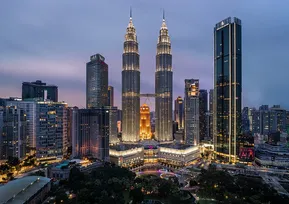
Photo by ANSAR ARCHITECTS on Unsplash

Following an international investment trend

He stated that the country has a portfolio of alternative investments, which includes gold and foreign exchange reserves. Within that particular portfolio, more aggressive investment strategies are pursued in an effort to generate higher investment returns. He added:


“We looked at the experience of the Norwegian fund, the American experience, and the experience of Middle East funds. They have certain investments in either crypto assets directly, or in ETFs and shares of companies that are closely related to crypto assets. They are very small.”


In 2024, it emerged that Norway’s sovereign wealth fund had indirect exposure to 2,446 Bitcoin. By January of this year, the sovereign fund had increased its indirect exposure further through an investment in pioneering American Bitcoin treasury firm Strategy (formerly MicroStrategy).


In the Middle East, the Abu Dhabi Investment Authority (ADIA), which manages the Abu Dhabi sovereign wealth fund, has been exposing the fund to Bitcoin indirectly through investments in BlackRock’s spot Bitcoin exchange-traded fund (ETF), IBIT.


Considering asset volatility

While moving towards a crypto investment within the alternative investments portfolio, Suleimenov struck a cautious note, stating:


“This is not an easy question, so there is no need to rush here. Yes, such assets can bring high returns, but at the same time they are characterized by high volatility.”


This latest development in Kazakhstan coincides with the release of a report by German multinational investment bank, Deutsche Bank. The research report has found that Bitcoin has reached a new all-time-high unit price amid a dramatic drop in the volatility of the leading digital asset when compared with times past. 


The bank explained that this was a sign of a maturing market, while suggesting that Bitcoin’s volatility is likely to decline further as adoption grows. Reduced volatility is making crypto assets like Bitcoin more appealing to long-term capital allocators like sovereign wealth funds and pension funds.


In an interview with Bloomberg back in May, Mike Novogratz, founder and CEO of American digital assets firm Galaxy Digital, said that he has had conversations with heads of large sovereign wealth funds that have said “if America is buying Bitcoin, we’re buying Bitcoin.”

In March, U.S. President Donald Trump issued an executive order setting out the establishment of a strategic Bitcoin reserve in the United States. In moving to establish a crypto reserve in Kazakhstan recently, Suleimenov suggested that international practice demonstrates that such a reserve may include confiscated crypto-assets, with Kazakhstan planning to proceed with the formation of the reserve on that basis.

More to Read
View All
Web3 & Enterprise·

Nov 01, 2023

Backpack crypto wallet secures VASP license for crypto exchange in Dubai

Backpack crypto wallet secures VASP license for crypto exchange in DubaiThe Dubai Virtual Assets Regulatory Authority (VARA) recently granted a Virtual Asset Service Provider (VASP) license to the Backpack crypto wallet project. This development has paved the way for the launch of Backpack Exchange, a crypto trading platform.Details of the licensing approval and exchange launch were provided via a press release published by Backpack on Tuesday. The VASP license obtained by the fledgling startup is specific to crypto exchange services within the Dubai jurisdiction. Although it restricts Backpack from offering other virtual asset products and services, the company is embracing the opportunity via the newly launched exchange.Photo by Wael Hneini on UnsplashBackpack ExchangeThe new exchange, Backpack Exchange, incorporates cutting-edge technologies such as zero-knowledge (ZK) proof-of-reserves, multi-party computation (MPC) for custody and low-latency order execution, among other features. These technologies are poised to enhance the security, privacy and efficiency of the exchange in an effort to set it apart in the competitive crypto market.By all accounts, this will not be the last licensing announcement from Backpack. Over the past five months, Backpack Exchange has been working to secure operational licenses across multiple jurisdictions worldwide. This global expansion showcases the company’s interest in taking its product offering in the form of a secure and transparent trading experience further afield.Fiat-to-dApp bridgeWhile the wallet currently operates without specific regulatory oversight, it serves as a bridge for users to transition seamlessly from fiat to on-chain applications. Armani Ferrante, CEO and Co-Founder of Backpack, expressed his ambition to bring greater transparency to the crypto exchange sphere. He emphasized the importance of trust and verification in a sector often shrouded in opacity.Ferrante believes that leveraging cryptographic techniques such as zk-proofs, MPC, and state machine replication can elevate industry standards. Backpack Exchange aims to set a precedent by providing users with the tools and knowledge to verify transactions, ultimately fostering trust and confidence within the crypto community.Dubai’s VARA regulator has been actively enhancing its crypto-friendly regulatory environment. In February 2023, the regulator issued guidelines for VASPs operating within the emirate, emphasizing the importance of adhering to marketing, advertising, and promotion regulations. Violators may face fines ranging from 20,000 UAE dirhams ($5,500) to 200,000 dirhams, with repeat offenders potentially incurring fines as high as 500,000 dirhams.Solana ecosystem projectBackpack is very much a Solana-centric project. As a lead developer of the layer one blockchain, Ferrante is bullish in terms of future development on the Solana blockchain. His Mad Lads NFT project is the top-rated collection by market cap within the Solana ecosystem.In a podcast earlier this year, he outlined that the prospects for the blockchain are bright going forward. Backpack was first established by crypto infrastructure firm Coral, the creator of Anchor, one of the most popular smart contract developer frameworks for Solana.For existing Backpack and Mad Lads users (Mad Lads is a collection of 9,966 NFTs created by Ferrante), exciting prospects are on the horizon via the new exchange. Initial access to Backpack Exchange will be granted starting in November, with full public availability anticipated in Q1 2024. During this interim period, Backpack plans to introduce various trading functionalities, including derivatives, margin trading and cross-collateralization.

news
Web3 & Enterprise·

Jun 05, 2023

Korean Firms Join Forces to Expand the Security Token Market

Korean Firms Join Forces to Expand the Security Token MarketSouth Korean tech firm AIITONE announced today that it signed a memorandum of understanding (MOU) with real estate developer Korea Asset Development to expand security token businesses, according to a report by news agency Newsis.Photo by Shubham Dhage on UnsplashVentures into fintechAIITONE is renowned for its expertise in applying extended reality (XR) technology to smart defense and metaverse projects. In their latest strategic move, they have hired a blockchain tech group to venture into fintech sectors, with a specific focus on security tokens.Real estate expertiseKorea Asset Development, a real estate developer engaged in multiple projects nationwide, is currently involved in the development of upscale housing in Seoul and Busan, high-end residences in Songdo, as well as luxury resorts in Chungcheong and Gangwon Provinces.Through their collaborative endeavors, AIITONE and Korea Asset Development seek to capitalize on their respective technological expertise and knowledge. They plan to share their know-how and establish a comprehensive cooperation framework, specifically targeting content development associated with security tokens. Furthermore, both parties have committed to consistently exploring new areas of cooperation.Security token opportunitiesIn particular, the two companies have identified real estate due to its relatively easier valuation compared to other assets. The market for real estate security tokens in Korea is projected to reach 34 trillion KRW ($26 billion) by 2024. It is estimated that financial services, including real estate, account for approximately 70% of the total security token market size.AIITONE CEO Lee Jin-yup underlined the importance of cooperation with a range of players that bring diverse resources, considering that the security token market involves high-value tangible assets such as real estate, music, and artworks. He said the partnership with Korea Asset Development will help the company secure a competitive edge in the burgeoning real estate security token market.Development in JapanNot just South Korea, but other East Asian nations too are experiencing significant strides in the security token market. Japan serves as a case in point, with companies like Mitsui & Co. Digital Asset Management (Mitsui & Co. DAM) exploring the potential of this emerging market.Mitsui & Co. DAM last month introduced a platform that allows retail investors to access security tokens backed by real-world assets. This initiative opens up previously inaccessible investment opportunities to a broader range of participants.Moreover, the Tokyo Metropolitan Government has taken an active role in supporting security token businesses within its jurisdiction. From May 31, 2023, to February 29, 2024, the government runs a subsidy program for security token projects based in the capital city. Under this program, eligible businesses can receive subsidies of up to 5 million yen ($36,000) per project.

news
Policy & Regulation·

Oct 10, 2023

Malaysia Ushering in Fifth Digital Asset Exchange

Malaysia Ushering in Fifth Digital Asset ExchangeKuala Lumpur-headquartered crypto platform Hata has become the latest entrant in the local digital asset exchange (DAX) business, securing licensing and regulation from the Securities Commission Malaysia (SC).The brainchild of David Low, former Asia Pacific General Manager at Luno, Hata Digital Sdn Bhd, is now the recipient of conditional approval from the SC, enabling it to facilitate cryptocurrency trading once it fulfills the regulator’s stipulated requirements over the next six to nine months. The firm now joins Luno Malaysia, MX Global, Sinegy DAX, and Tokenize Technology to become the fifth regulated DAX to trade within the Southeast Asian country.Photo by Esmonde Yong on UnsplashFirst digital brokerOne interesting aspect of Hata’s approval is that it also marks the first DAX to receive digital broker status from the SC. This unique status allows Hata to display trade orders from other exchanges on its website or mobile application, giving users access to a broader spectrum of trading opportunities.Hata can match its users’ trades with those available on other exchanges or provide them with cryptocurrency prices from these exchanges. However, it is essential that the exchanges Hata collaborates with are licensed by authorities in “competent jurisdictions,” such as the Monetary Authority of Singapore (MAS), and gain approval from the SC.Low shared his vision, stating:“With the goal of challenging the existing norms, we plan to make digital assets investing easier for institutional investors, businesses, and high-net-worth individuals in Malaysia. And we look forward to launching the platform soon.”Luno competitorLow’s departure from Luno adds an intriguing dynamic to Malaysia’s digital asset industry, given his pivotal role in expanding Luno’s presence in Malaysia and Southeast Asia. At the time of his departure, Luno was widely acknowledged to have commanded over 90% of the local cryptocurrency trading market share, with some estimating it as high as 98%.Low is now stepping into the realm of competition with his former colleagues and company, where he had previously invested significant effort and resources to foster growth.Hata boasts two other Co-Founders, Darien Ng, Chief Revenue Officer, and Chong Kwai Kun, Chief Technology Officer, both with extensive expertise in blockchain technology and software development in Malaysia since 2018.Low stated that the “SC’s decision to grant us conditional approval to operate a DAX represents a vote of confidence in us and the digital asset industry. This is a significant milestone for my team and I at Hata, after months of extensive efforts.”One-stop crypto platformHe continued: “Hata wants to enable safe and effortless cryptocurrency access and we look forward to being a one-stop and reliable platform for our customers, with our suite of products and services.”Low emphasized their goal of challenging existing norms, making digital asset investing more accessible to institutional investors, businesses, and high-net-worth individuals in Malaysia.The exchange’s founder also commended the SC’s efforts in expanding the regulated market operator framework to allow DAXs to operate as digital brokers. In addition, Hata has obtained a money broker license from the Labuan Financial Services Authority, reinforcing its efforts to operate as a compliant and secure platform.

news
Loading