Top

Yunfeng Financial buys 10K ETH as Hong Kong firms deepen push into digital assets

Web3 & Enterprise·September 05, 2025, 7:56 AM

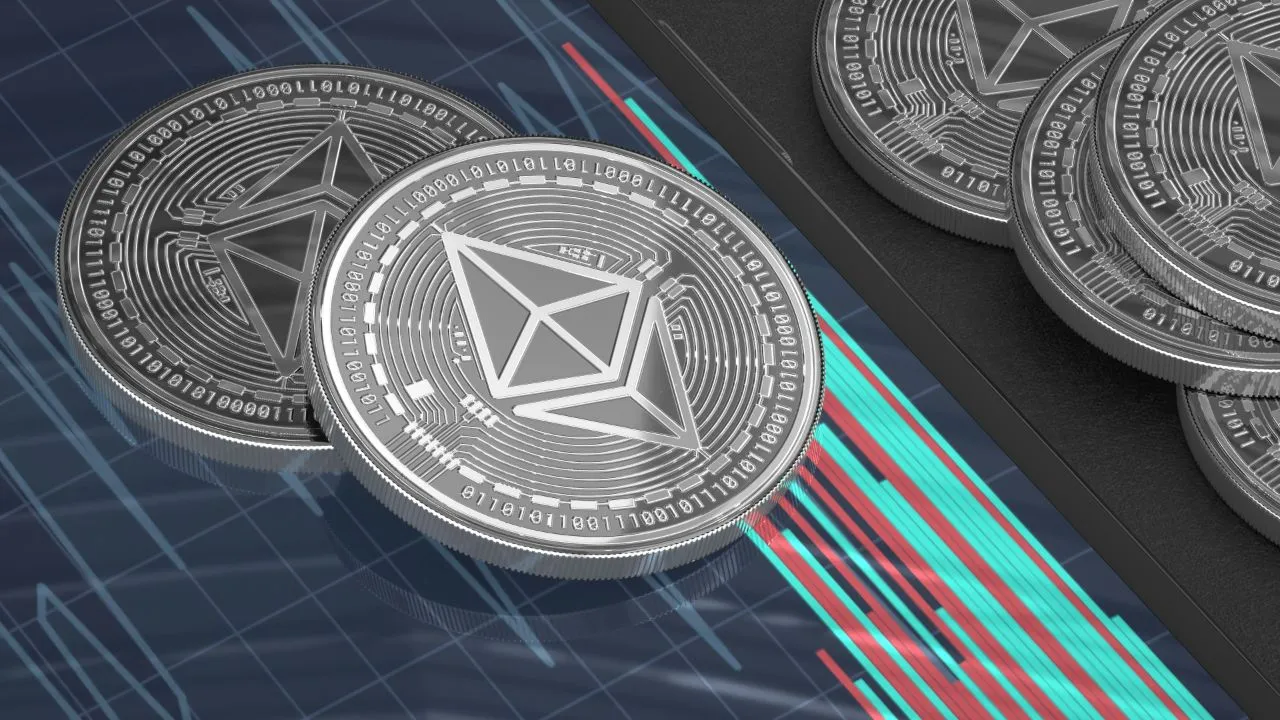
Yunfeng Financial Group has purchased 10,000 Ethereum (ETH) on the open market for $44 million, the Hong Kong–listed fintech said in a Sept. 2 statement. The company described the move as part of a broader plan to increase exposure to digital assets, joining firms such as Bitmine Immersion Technologies and SharpLink Gaming that have incorporated ETH into corporate treasuries.
https://asset.coinness.com/en/news/5fa82465787c9ef40322fc21d6ebdf30.webp
Photo by DrawKit Illustrations on Unsplash

ETH backs RWA strategy, inflation hedge

The acquisition follows Yunfeng’s July outline to expand into Web3, real-world asset (RWA) tokenization, artificial intelligence, and ESG-linked assets aimed at net-zero goals. Yunfeng said ETH could support its Web3 and RWA businesses, help optimize assets, and provide a hedge against traditional currencies. It is also exploring ways to incorporate ETH into insurance products. The RWA market has grown in recent months, with on-chain RWAs totaling $28.19 billion at the time of publication, up 7.37% from a month earlier, according to data from RWA.xyz.


Yunfeng noted it may adjust the size of its ETH reserves in line with market conditions, regulation, and its financial position. The company said the purchase falls below Hong Kong Stock Exchange disclosure thresholds: all five percentage ratios—assets, profits, revenue, consideration, and equity capital—remain under 5%. It stated it will meet disclosure requirements if future transactions push holdings beyond the relevant limits.


Institutions drive ETH momentum

The announcement comes amid heightened interest in ETH. CryptoRank data show a 30% year-to-date price increase, and Tom Lee, Fundstrat’s head of research and chair of BitMine, has forecast a near-term range of $4,000 to $5,450. He argued that Ethereum is well placed to serve institutional use cases, pointing to its role in hosting more than half of the roughly $250 billion stablecoin supply and its prominence in asset tokenization.


Hong Kong continues to position itself as a regional hub for blockchain and digital assets despite Mainland China’s 2021 ban on crypto trading. In a separate development, Fosun Wealth Holdings launched tokenized shares of Sisram Medical, an Israeli med-tech company listed in Hong Kong. The tokens, representing about $328 million in market value, were deployed across Vaulta, Solana (SOL), Ethereum, and Sonic. Fosun said it plans to tokenize additional corporate bonds and shares, without naming issuers or setting a timeline.


Other local companies have also disclosed crypto exposure. Linekong Interactive Group reported holdings of 92.07 BTC, 943.63 ETH, and 6,091.7 SOL as of June 30 after purchases in the first half of the year, with cumulative unrealized gains of roughly $7.5 million. Linekong said it views crypto as a long-term investment and may increase its holdings pending board and shareholder approval.

 

More to Read
View All
Policy & Regulation·

May 29, 2025

Thailand plans to enable tourists to spend crypto

The Thai government is planning to enable tourists to spend crypto via credit card, according to information revealed by Thailand’s finance minister on May 26.Photo by rc.xyz NFT gallery on UnsplashPichai Chunhavajira, the Southeast Asian nation’s finance minister and deputy prime minister, delivered a keynote speech at an investment seminar in Bangkok in which he outlined that while some countries enable people to purchase goods directly with cryptocurrency, another option is to allow consumers to link their digital assets with other services such as credit cards.  In that way, the consumer can spend crypto through credit card services. English language news outlet The Nation reported that Chunhavajira confirmed that the government is preparing to launch a pilot project that would allow tourists to spend crypto in this manner within Thailand. Seamless conversion from crypto to fiatWith this system, merchants would still receive payment in Thai baht. From the point of view of the user, crypto could be spent but any exchange between crypto and fiat currency would happen seamlessly and automatically via the credit card service provider’s platform.Discussions between officials from the Bank of Thailand and the Ministry of Finance are ongoing with regard to the proposed scheme. It’s understood that similar existing models which have been introduced overseas are being examined. It’s likely that the pilot program is the same as the project that was announced by Chunhavajira in January when he alluded to a program enabled for foreign tourists visiting the Thai tourist resort of Phuket. At that time, it was envisaged that the scheme would adhere to existing legal frameworks and implicate identity verification through a third party service provider, with conversion from crypto to Thai baht to be enabled such that there would be no material difference experienced by merchants. Targeting touristsThis is not the first occasion in which tourists have been targeted by crypto-related initiatives. Earlier this month, it was announced that Binance Pay, a crypto payment service offered by global crypto exchange Binance, had partnered with the government of the Buddhist kingdom of Bhutan to launch the world’s first national-level crypto tourism payment system. In July 2024, the governor of Jeju Province in South Korea advocated for the use of non-fungible tokens (NFTs) and crypto as part of Jeju Island’s tourism strategy. Last December the province announced a digital transformation roadmap that sets out a cashless future. Plans include the introduction of a system for converting digital assets and facilitating payment methods from neighboring countries like China and Japan. However, not all governments have been keen to facilitate tourists in spending crypto. In May 2023, the governor of the province of Bali in Indonesia cautioned foreign visitors to the region against the use of cryptocurrencies as a means of payment for goods and services. Governor Wayan Koster warned that visitors using cryptocurrency for payments could face severe consequences, including criminal penalties and deportation.

news
Markets·

Jun 04, 2024

Hackers spirit away over $300M in Bitcoin from DMM Bitcoin

Japanese crypto exchange DMM Bitcoin announced on Friday that over $300 million worth of Bitcoin was stolen from its primary wallet, marking one of the digital asset industry's largest hacks in recent years.Photo by Kanchanara on UnsplashHack confirmed without further detail"At approximately 1:26 p.m. on Friday, May 31, 2024, we detected an unauthorized leak of bitcoin from our wallet," the company stated, based on an English translation of its original statement in Japanese, which had been posted on the firm’s website. DMM Bitcoin is a subsidiary of DMM Group, which incorporates businesses covering a broad spectrum of activities including solar energy, gaming, 3D printers, FX, e-books and software. The company has, as yet, not provided any further detail relative to the manner in which the hack occurred. Notwithstanding that, DMM Bitcoin did confirm that measures have been taken to prevent any repeat of the hack. Furthermore, the company outlined that a full investigation into the hack is ongoing right now. Buy orders and leverage trades suspendedThe company has moved to reassure platform users that their digital assets are fully guaranteed. It stated: "Please rest assured that all of your bitcoin deposits will be fully guaranteed, as we will procure the equivalent amount of BTC that was leaked with support from our group companies."  The exchange has taken the decision to temporarily suspend a number of activities, including spot trading buy orders and the opening of leveraged trading positions. A temporary halt has been imposed on crypto withdrawals while Japanese yen withdrawals are permitted, albeit that the exchange suggests that service users may experience delays. Blockchain security sector responseIn light of the hack, a number of well-known blockchain security firms have been giving the matter their attention. Beosin, a blockchain security specialist, outlined that it is continuing to monitor the wallet addresses implicated in the hack, with a view towards tracing any further movement of the funds. Meanwhile, blockchain analysis firm Arkham Intelligence has offered a 1,000 ARKM token bounty to anyone who may provide information leading to the identification of the perpetrators of the hack. Blockchain analysis firm Chainalysis described the hack as “the 7th largest crypto hack ever.” The company has labeled the stolen funds within its products. Broader industry implications and historical contextThis hack is a significant blow to the industry, given that a hack on this scale has not occurred thus far in 2024 or at any point during 2023. The crypto industry has faced numerous significant breaches in the past. In 2022, a series of large-scale exploits targeted layer-1 blockchains, crypto exchanges and DeFi protocols. The largest hack amongst them implicated the BNB Chain (formerly Binance Smart Chain), which resulted in the loss of $566 million worth of BNB. The latest hack is second only (within Japan) in size relative to the 2018 hack of Coincheck, one of the country’s largest exchanges, when over $550 million worth of XEM was stolen. Japan was also host to the most infamous Bitcoin hack, that of the Mt. Gox exchange, whose bankruptcy administrators moved $9 billion worth of its remaining Bitcoin holdings on the blockchain in recent days for the first time in many years. 

news
Policy & Regulation·

May 10, 2024

Taiwan proposes criminalization of crypto firms violating AML rules

Taiwanese authorities have unveiled plans to criminalize cryptocurrency firms failing to comply with anti-money laundering (AML) regulations. The Ministry of Justice has proposed amendments to existing laws, mandating both domestic and overseas crypto entities operating in Taiwan to register for AML compliance. Non-compliance could result in imprisonment for up to two years, according to Deputy Minister of Justice Huang Mou-hsin.Photo by Jack Brind on UnsplashStricter enforcement measuresCurrently, authorities can only impose administrative penalties on non-compliant crypto firms. However, with the proposed amendments, such violations would be deemed criminal offenses, potentially leading to prison sentences. Overseas crypto platforms would be required to establish local entities and apply for AML registration to avoid criminal penalties. Regulatory landscape and industry responseSince July 2021, Taiwan has mandated cryptocurrency service providers to adhere to AML laws introduced by the Financial Supervisory Commission. However, the crypto industry largely remains unregulated. Proposed amendments also aim to incorporate cryptocurrencies into existing AML laws, stipulating penalties of six months to five years in prison and fines of up to NT$50 million ($1.5 million) for money laundering using cryptocurrency. The amendments are set to undergo review by Taiwan's national parliament, the Legislative Yuan. Concurrently, Taiwan's crypto sector is in the process of forming an industry association, with the Ministry of the Interior approving the application in March. By establishing this association, crypto firms aim to develop self-supervisory rules aligned with FSC guidelines, with a deadline set for the end of June to finalize preparations and officially establish the association. 

news
Loading