Top

Crypto.com partners with Triple-A to enable direct crypto payments

Web3 & Enterprise·November 27, 2024, 3:45 AM

Crypto exchange platform Crypto.com and Triple-A, a company that enables businesses to pay and get paid in digital currencies, both Singapore-headquartered entities, have entered into a partnership to enable direct crypto payments.


Simplifying crypto payments

Crypto.com set out details of the partnership in a press release published to its website on Nov. 21. The firm stated that its partnership with Triple-A will give its global customer base “access to a diverse range of new global merchants.”


The duo have set out to simplify crypto payments for both merchants and users alike. Crypto.com users will shortly be enabled in making purchases from a range of e-commerce brands directly, using crypto held in their Crypto.com wallets.


Through Triple-A’s input, Crypto.com users will be spared the need to manually convert digital assets to fiat currency before making purchases. Furthermore, users won’t incur a fee for any conversion that takes place behind the scenes.
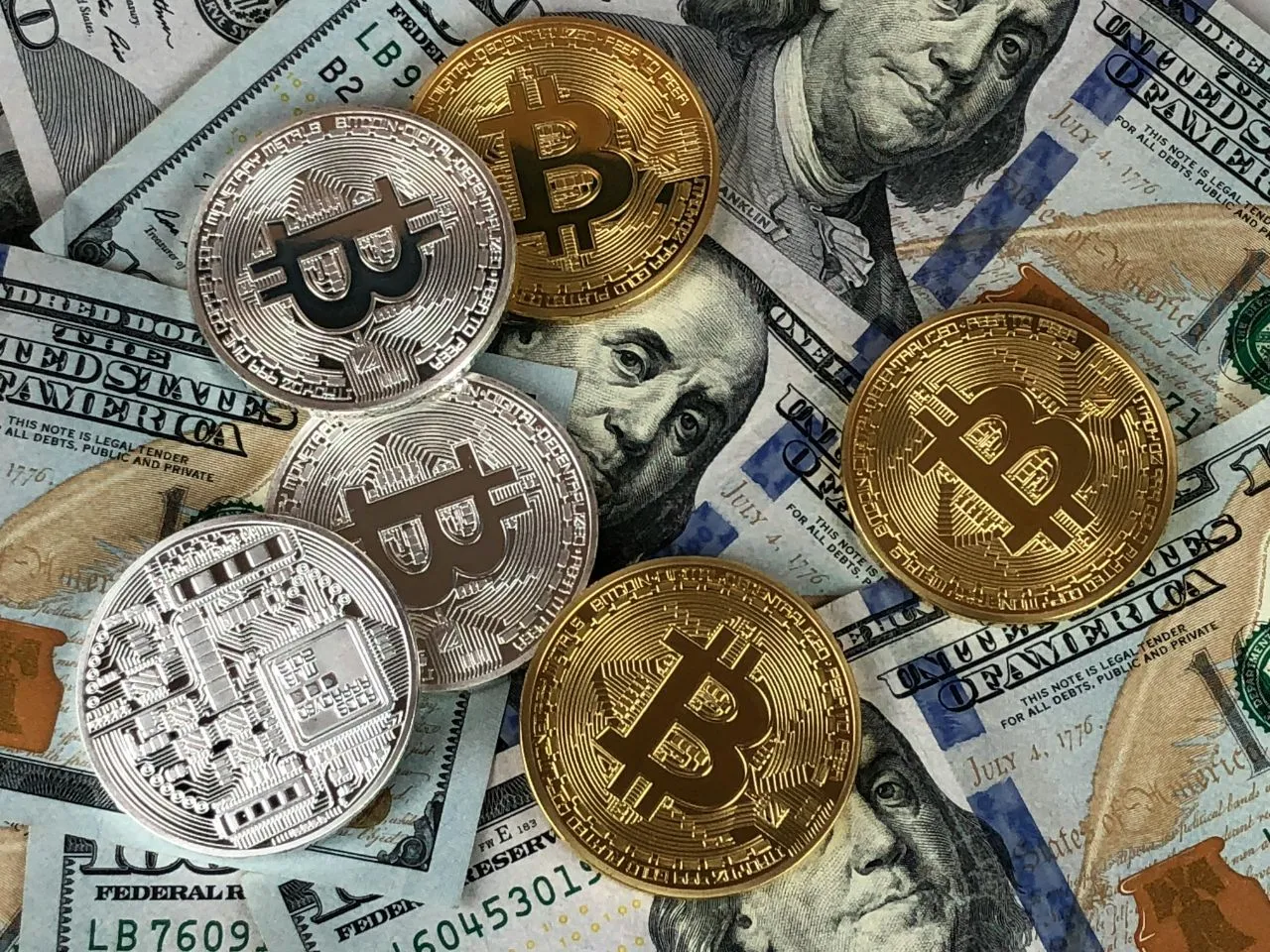
https://asset.coinness.com/en/news/cb86a36fdcfe9cb26dd49ccc28bbc699.webp
Photo by David McBee on Pexels

Cashback rewards

Once launched, with the service initially planned to launch in Singapore before further rollout elsewhere, Crypto.com users will also be in a position to benefit from rewards. Eric Anziani, the company’s president and chief operating officer (COO), spoke to this element of the offering, stating:


“Partnering with Triple-A enables us to do this by expanding crypto payments to a range of popular brands, creating a seamless shopping experience and providing an opportunity to earn cashback rewards to make spending crypto even more rewarding.”


Volatility protection

As part of the solution that has been put in place, Triple-A will ensure that merchants aren’t exposed to cryptocurrency volatility in accepting crypto as a payment method. The payments they receive from customers are instantly converted to their local fiat currency, with settlement occurring one day following the transaction.


This approach also means that merchants don’t have added difficulties in terms of the tax treatment of cryptocurrencies, their management or related reporting requirements.


With that in mind, Eric Barbier, CEO at Triple-A, said that the approach “allows merchants to provide Crypto.com users with an optimized digital currency payment user journey.”


Anziani said that Crypto.com is trying to “push boundaries when it comes to integrating crypto payments into real-world scenarios and enhance shopping experiences for [its] users.” 


In recent weeks, Crypto.com has been active in pursuing a number of initiatives in order to expand its reach. Earlier this week, the company launched a visa card in Latin America, enabling users within the region to earn rewards on purchases made via the card. On Nov. 14, it emerged that the company had acquired Australia-regulated brokerage firm Fintek Securities. It’s understood the acquisition was made in order to expand the range of financial products that Crypto.com can offer to its customer base.


At the end of October, Watchdog Capital, a U.S. Securities and Exchange Commission (SEC)-registered broker-dealer, was acquired by the company. 


Like many high profile crypto firms, Crypto.com has had its difficulties with regulators. Following the receipt of a Wells notice from the SEC earlier this year, the company responded by filing a lawsuit against the commission, alleging that the SEC had engaged in regulatory overreach in classifying crypto assets as securities. 

More to Read
View All
Policy & Regulation·

May 08, 2023

BNP Paribas Partners With Chinese in Digital Yuan Push

BNP Paribas Partners With Chinese in Digital Yuan PushThe Chinese authorities continue with their sustained efforts to promote use of the digital yuan, on this occasion by hooking up with French international banking group, BNP Paribas.According to the South China Morning Post (SCMP) on Friday, the partnership will see BNP Paribas collaborating with the Bank of China (BOC) to promote the digital yuan to its corporate clients. The digital yuan or e-CNY is a digital representation of the Chinese sovereign currency, issued by the BOC.Photo by Eric Prouzet on Unsplashe-CNY system accessAs part of the arrangement, BNP Paribas China will connect into the BOCs system, accessing an e-CNY management system. The BOC has authorized ten banks in China including the four state-owned banks, all of which are domestic lenders, to deal with its digital currency business.The direct e-CNY system access enables straight-through processing, allowing BNP Paribas to offer digital wallet functionality to its corporate clients relative to the digital yuan. Essentially, the system will allow BNP Paribas China’s corporate clients to link their bank accounts with an accompanying digital wallet. Other functionality that will be enabled as a consequence includes access to smart contract applications through the m-CBDC bridge (central bank digital currency).BNP Paribas China CEO CG Lai commented on the partnership: “While this collaboration can supplement the Bank’s offline payment collection capabilities and further optimize our clients’ account structure, this also reinforced the Bank’s commitment to the China market.” Lai outlined that the bank intends to enhance customer service capabilities by pursuing digital innovation that, like in this instance, contributes to China’s economic development.Louise Zhang, Head of BNP Paribas China Transaction Banking claimed that the partnership will “provide innovative, efficient cash management and trade financing services to local and multinational clients.”CBDC developmentThere has been a lot of activity in recent years when it comes to the development of CBDCs. The central banks of most nations have carried out some level of preparatory or investigative work relative to a digital currency. However, China has been by far the leader in its development of a CBDC.The BOC first began research into a digital currency in 2014. The country’s State Council approved the development of the digital yuan in partnership with China’s commercial banks in 2017. Beyond initial development, a testing phase began in 2019 with the project known as the Digital Currency Electronic Payment (DCEP) system emerging as the first version of the digital yuan after a number of years of development.In 2020, the BOC began more extensive testing of the digital currency in four Chinese cities — Shenzhen, Suzhou, Chengdu and Xiong’an. To promote use of the currency at that time, they offered free digital yuan to residents of those cities to spend, in that way, stepping up efforts to popularize the digital currency.Last month, the administrators of the Chinese city of Xuzhou announced that it was in the process of publishing a pilot scheme which will set out a means for promoting China’s e-CNY digital currency. Also in April, the eastern city of Changshu clarified that it is gearing up to commence paying state employees in the city in e-CNY. According to an announcement made by the city’s finance bureau the civil servants will start to receive e-CNY as payment in May.

news
Web3 & Enterprise·

Apr 13, 2023

Bitdeer Poised to Go Public Despite Delays

Bitcoin mining company Bitdeer Technologies Group is finally set to go public on the Nasdaq this Friday after a series of delays. The Singapore-based firm, which offers cloud mining services, has been in a special purpose acquisition company (SPAC) merger process with Blue Safari Group. Drawn-out merger processBlue Safari Group filed for three extensions within six months last year, the last extension being a year long. The deal was originally expected to close in November 2021. The stopping block for the latest extension was insufficient time to get shareholder approval. However, Bitdeer Technologies Group revealed in a statement that shareholder approval has now been filed with the SEC.The merger was finally approved at an extraordinary general meeting of Blue Safari’s shareholders on April 11. The results of the vote will be included in a current report on Form 8-K to be filed by Blue Safari with the SEC. The deal is expected to close on April 13, 2023. Upon closing, Bitdeer Technologies Group will remain as the combined company, and its shares will begin trading on the Nasdaq under the ticker symbol “BTDR” on April 14.Bitdeer CEO Linghui Kong said, “Today marks a significant milestone for Bitdeer, leaving us poised to list on the Nasdaq and equipped to seize the growth opportunities ahead of us. I am incredibly proud of what we have achieved so far and look forward to embarking on the next chapter of our journey.” The firm operates six mining data centers globally, with an aggregate electricity capacity of 775MW at the end of 2022. Surviving crypto winterBitdeer Technologies Group, backed by Bitmain founder Jihan Wu, offers cloud mining services, and is participating in a market that has been impacted by market volatility. However, miners that have survived are doubling down on expansion efforts. Yesterday, for example, the U.S. mining firm CleanSpark announced the purchase of 45,000 new mining machines for $144.9 million.Bitdeer will be part of a growing list of Bitcoin mining firms listed on Nasdaq, joining the likes of Riot Blockchain, Marathon Digital, and Canaan. Green miningRecently, the cryptocurrency mining industry has witnessed significant growth in green mining efforts. Terawulf, a US-based company, recently announced that its nuclear-powered mining facility, Nautilus, will come online soon. When fully operational, Nautilus is expected to have a hash rate of 1.6 exahashes per second (EH/s). The facility will run on nuclear power, which will significantly reduce the carbon footprint of the mining operations.The energy-use of crypto mining has been coming under scrutiny relative to its carbon footprint and the demands it places on the power grid. In what many in the crypto space have called a “hit piece” targeting mining, the New York Times took aim at the industry on Monday. Bitdeer took to Twitter to call out false claims made by the publication relative to its use of energy during a 2021 winter storm.Bitdeer’s journey to becoming a publicly-traded company has been fraught with delays, but with shareholder approval in place, the company is ready to enter the public markets.

news
Policy & Regulation·

May 17, 2023

Chinese Prosecutors Issue Warning on NFTs

Chinese Prosecutors Issue Warning on NFTsIn recent days, China’s top procuratorial agency, the Supreme People’s Procuratorate of China, issued a warning alongside some guidelines on non-fungible tokens (NFTs).The Supreme People’s Procuratorate is the highest office in China charged with the mandate of upholding legal integrity, safeguarding citizens’ rights, and where necessary, conducting criminal investigations. In a statement published on Monday, the agency set out an advisory, together with additional recommendations, pertaining to NFTs.Photo by Markus Winkler on PexelsNFT status in ChinaWhile all and sundry are aware of a multi-year crack-down by the Chinese authorities on crypto in recent times, exemplified by a ban on crypto trading and the operation of crypto mining facilities within the country’s borders, the status of NFTs has been discussed to a much lesser degree.NFTs remain legal within the country. When the crypto trading ban came into play in 2021, much of the local industry connected with that trading activity disappeared. However, in its place, a newly emergent trend came to the fore in the form of NFTs. With cryptocurrencies perceived as being high risk and sanctioned by the authorities, attention turned to NFTs and there has been a surge of adoption of the digital collectibles within China as a consequence.NFT risksThe procuratorial agency highlighted a number of attributes as well as risks in relation to NFTs in the report that it published. The agency finds the issue of ownership of NFTs as a troublesome one. It cites the fact that NFTs can be replicated and distributed at will on this basis as being particularly problematic. The legitimacy of the right source of the work itself is the decisive factor for the healthy and orderly development of digital works NFT transactions,” it states.It appears that the agency, like many in traditional professional circles before them, have a difficulty recognizing the model of asset ownership that NFTs incorporate. That ownership is not defined by civil law or in accordance with centralized systems but by simply the possession of the requisite private key pertaining to a given NFT within a decentralized system.Blockchain, not cryptoThe agency acknowledged that NFTs do present a novel application of blockchain technology. This is not surprising as while there might be an ongoing clampdown on decentralized cryptocurrencies in China, officials at a national level and in numerous instances within regional administrations, are demonstrating a strategy of leveraging blockchain technology for the betterment of the Chinese economy in the future.Public prosecutor Wang Xia-fen, one of the authors of the report, stated: “It’s widely recognized that digital collectibles have the potential to protect intellectual property rights, boost content creation and enrich the digital economy.” Wang encouraged public prosecutors to “find the distinction between real innovation and criminal activities” where NFTs are concerned.The upshot of its report though, is that the procuratorial agency is uncomfortable with the similarity of many of the attributes of NFTs when compared with decentralized cryptocurrencies. It issued a warning on that basis, emphasizing a need for risk assessment to be carried out and further consideration of the legal risks that are implicated.

news
Loading