Top

Circle sticks with dollar, euro stablecoins as Hong Kong’s crypto scene matures

Web3 & Enterprise·October 14, 2025, 5:50 AM

Financial technology firm Circle is taking a measured approach in Hong Kong, favoring focus over expansion. In an interview with the Hong Kong Economic Journal, cited by local financial content provider AAStocks, Yam Ki Chan, the company’s vice president for Asia Pacific, said there are no current plans to issue a stablecoin pegged to the Hong Kong dollar. Still, he noted the company’s openness to partnering with local initiatives, adding that Circle has been in discussions with several firms to share its expertise and insights. The firm hopes the Chinese special administrative region will evolve into a launchpad for stablecoins tied to the local currency alongside other major currencies.


Chan said Circle is doubling down on its two core products, the U.S. dollar stablecoin USDC and the euro stablecoin EURC. He pointed out that USDC has been catching on across the region, with more local corporations and professional investors starting to use it. His comments come after the Stablecoins Ordinance came into force on Aug. 1 in the city, setting up a mandatory licensing system for issuers under the Hong Kong Monetary Authority (HKMA). The regulator has said it does not plan to hand out the first licenses until early next year.
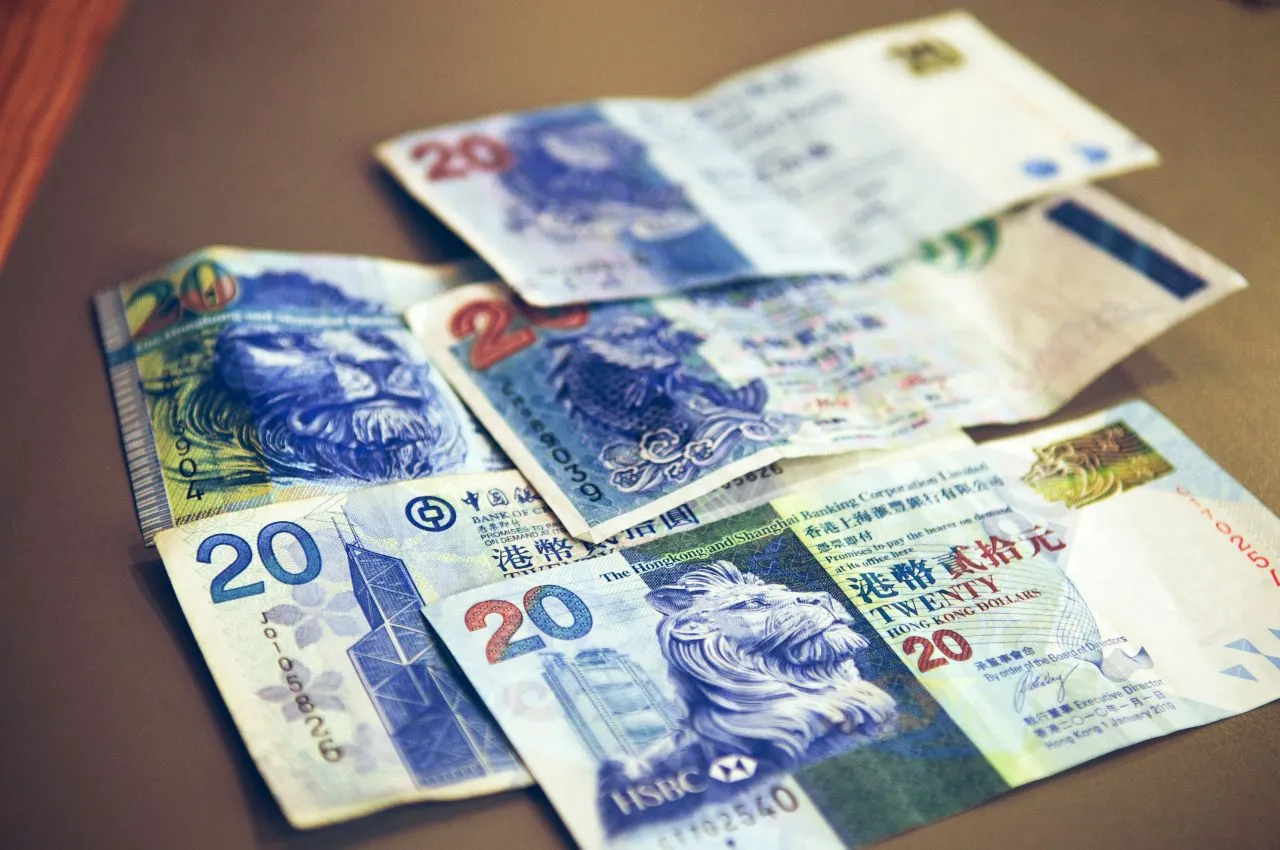
https://asset.coinness.com/en/news/094323db39297473900dd06a8da5a006.webp
Photo by tommao wang on Unsplash

Moving assets on-chain

While Circle continues to focus on stablecoins, other firms are finding new ways to bring traditional assets on-chain. DL Holdings, a Hong Kong-headquartered one-stop financial services group, is moving ahead with plans to tokenize about $40 million worth of its non-voting Class B membership interest in ONE Carmel, its luxury real estate investment project in California’s San Francisco Bay Area. The initiative, the firm’s first step into real-world asset (RWA) tokenization, will use blockchain-based smart contracts to automate distributions, transfers, and investor rights, allowing the company to pay out dividends to shareholders and give on-chain investors a chance to participate in ONE Carmel.


Insurance is another testbed for blockchain. Anthea Holding Limited, a crypto-fintech licensed by the Bermuda Monetary Authority, raised $22 million in a Series A led by Yunfeng Financial. The proceeds will fund what Anthea says is the world’s first life insurance policy denominated in Ethereum (ETH). Yunfeng Financial, listed in Hong Kong, has close ties to Alibaba founder Jack Ma.


Mainland firms deepen crypto exposure

Mainland companies are stepping into crypto investments. Hangzhou-based Jiuzi Holdings, a Nasdaq-listed operator of new energy vehicle stores, said it completed a private placement transaction settled in 100 Bitcoin. The company plans to allocate the proceeds to building a digital-asset custody platform and developing encrypted storage systems.


Separately, China Renaissance is seeking to raise around $600 million for a publicly listed vehicle designed to invest in BNB, the cryptocurrency tied to Binance, according to Bloomberg. Venture firm YZi Labs, formerly Binance Labs, is expected to join the effort. In an August filing, the Beijing-based investment bank said it would commit about $100 million of its own capital to BNB. If completed, the proceeds would establish a U.S.-based crypto treasury company to hold and manage BNB reserves.


Back in Hong Kong, momentum in the digital asset sector is now reaching the capital markets. HashKey Group, the financial services firm behind a licensed crypto exchange, has confidentially filed for an initial public offering in the city. Bloomberg reported the plan, citing a source familiar with the matter. The listing could take place as early as this year and raise up to $500 million.


Market bounces back on softer trade rhetoric

Amid these developments, crypto prices have rebounded from sharp losses linked to trade tensions between Washington and Beijing. The market had tumbled after U.S. President Donald Trump threatened to impose additional 100% tariffs on China. Sentiment shifted when Trump softened his stance on Truth Social, writing, “Don’t worry about China, it will all be fine!” and “The U.S.A. wants to help China, not hurt it!!!”


Bitcoin reflected that whiplash. The token dropped to $103,893.3 on Oct. 10 during what Investing.com described as the largest single-day liquidation in crypto history at nearly $19 billion in positions. It has since recovered to $112,608.31 as of publication time.

 

More to Read
View All
Web3 & Enterprise·

May 26, 2025

Bybit enables stock trading with USDT

Dubai-headquartered crypto derivatives trading platform Bybit has moved to enable stock trading on its platform.  The offering, initially featuring 78 stocks, is being provided via Bybit’s MT5 platform, which includes access to various financial instruments including forex, commodities, contracts for difference (CFDs) and crypto, according to an announcement made by the company last week.Photo by Ishant Mishra on UnsplashStock derivatives via CFDsIndividual stocks are being offered in a pairing with U.S. dollar stablecoin USDT. Bybit’s MT5 is a trading platform originally developed by software company MetaQuotes, facilitating the integration of various asset classes within one platform. Enabled through the use of CFDs, holders of such stock-derived CFDs can receive dividend adjustments based upon the ex-dividend events of the underlying stocks. A trading fee of 0.04 USDT has been set, with a minimum charge of 5 USDT per order. Access to leading global equitiesBybit users will now be able to gain exposure to leading U.S. equities such as Apple (AAPL), Amazon (AMZN), Meta (META), Microsoft (MSFT) and Nvidia (NVDA). By adding this product to its multi-asset trading platform, Bybit has reduced a degree of friction for market participants. In pairing these stocks with USDT, it means that there is no fiat onboarding required and transferring funds in fiat from outside the crypto ecosystem is not required. In a press release, the firm asserted that the development was a “landmark move bridging traditional and decentralized finance.” Bybit further asserted that with this product launch, it has become “the first and only major crypto exchange to unify crypto, stocks, and traditional assets under one roof.” Previous offeringsA few years ago, global crypto exchange platform Binance had offered tokenized stocks through a partnership with German global financial services firm CM-Equity AG. However, it withdrew that product offering in 2021 when faced with growing regulatory pressure.  Failed crypto exchange FTX also offered its users exposure to tokenized stocks, which was also facilitated by CM-Equity AG. That product offering came to an abrupt halt in November 2022 when the platform collapsed. With a more positive regulatory position having been adopted in the United States following the election of U.S. President Donald Trump, tokenized stock offerings are emerging once again. In March Coinbase CFO Alesia Haas said that the Securities and Exchange Commission (SEC) could facilitate such offerings going forward. The U.S. crypto exchange platform has revived plans to tokenize its own COIN stock, alongside other securities.Bernstein analysts recently predicted that the crypto sector is moving towards integrated platforms that offer both traditional financial products alongside digital assets. Further evidence of this approach emerged on May 22 with the news that global crypto exchange platform Kraken plans to add access soon to a range of tokenized stocks for its global user base.  The company’s U.S. clients can already access in excess of 11,000 stocks and exchange-traded funds (ETFs). Blurring the lines further between TradFi and the digital assets space, JPMorgan CEO Jamie Dimon indicated last week that the investment bank will facilitate Bitcoin trading for clients from now on.

news
Markets·

Dec 19, 2023

Analysts expect crypto market cap to triple or more next year

Analysts expect crypto market cap to triple or more next yearThe Korbit Research Center, affiliated with South Korean cryptocurrency exchange Korbit, published a report last Friday that provides projections for the crypto market in 2024.The paper includes contributions from its team, notably head of research Peter Chung, as well as research analysts Choy Yoon-young, Kang Dong-hyun and Kim Min-seung.Peter Chung predicts that the total market capitalization of cryptocurrencies could soar to $5 trillion, more than three times greater than its current level of $1.6 trillion. He attributes this potential growth to three key factors: the possibility of the U.S. Federal Reserve easing its monetary policy, the potential approval of spot bitcoin and ether exchange-traded funds (ETFs), and the anticipated Bitcoin halving event expected in April 2024.Photo by Pierre Borthiry — Peiobty on UnsplashFactors driving crypto market growth in 2024Peter Chung suggests that the growth of the crypto market will be driven by the expanding utility of virtual assets. He believes that once ETFs for bitcoin and ether are approved, these cryptocurrencies will become more versatile as investment options. This, in turn, is expected to enhance their reputation and foster wider adoption, having a significant influence on the broader crypto ecosystem beyond the two most dominant cryptocurrencies.Real-world assets and financial firmsChoy anticipates that the U.S. Securities and Exchange Commission (SEC) will approve spot bitcoin and ether ETFs by the first half of next year. On a different note, Kang focuses on the importance of blockchain technology, particularly emphasizing real-world assets (RWAs) and roll-up solutions. Kang highlights that since RWAs are closely linked with traditional financial institutions, an influx of capital from these entities is likely to boost the RWA market. This interaction between traditional finance and blockchain technology could be a key driver of growth in the sector.Regulatory changes and landscape shiftKim Min-seung, another analyst from the team, forecasts that upcoming regulatory developments could alter the dynamics of the cryptocurrency market. A notable development in this regard is the forthcoming implementation of the Virtual Asset User Protection Act in South Korea, set for July next year. According to Kim, these changes might result in a scenario where only competitive cryptocurrencies survive.Kim elaborates that the perception of virtual assets is poised for a shift. Currently, crypto investors tend to base their decisions on expectations of arbitrary cryptocurrency inflation. However, once new regulations are implemented, investors are likely to start assessing the actual value of virtual assets more critically. This shift in approach could lead to a more value-driven and stable cryptocurrency market, as speculative tendencies might decrease and a focus on intrinsic value increases.According to local news outlet website The Asia Business Daily, Peter Chung anticipates further growth in the cryptocurrency market next year, following its rebound this year. He suggests that this growth trajectory will not only continue but also attract increased attention from the public.

news
Policy & Regulation·

Jun 28, 2023

Hong Kong Web3 Companies Invest Millions in VASP Licenses

Hong Kong Web3 Companies Invest Millions in VASP LicensesWeb3 firms in Hong Kong are making significant financial investments to obtain Virtual Asset Service Provider (VASP) licenses.According to a report by Foresight News on Tuesday, the cost of these licenses is ranging between 20 million and 200 million Hong Kong dollars ($2.55 million and $25.5 million).Industry sources explained to the publication that the high costs are due to the lack of existing infrastructure in traditional financial institutions, requiring significant investments in various aspects such as products and teams. Even experienced cryptocurrency institutions find the cost of obtaining a license to be substantial.Photo by Daniam Chou on UnsplashEarly licenseesAnalysts at Foresight highlighted that several Hong Kong subsidiaries of exchanges, including OKX, BitgetX, HashKey Pro, OSL, and Gate.io, have already commenced operations. OKX, in particular, has witnessed impressive growth in Hong Kong, with 8,800 registered users and a cumulative trading volume of $150 million as of June 27.To regulate the cryptocurrency exchange industry, Hong Kong introduced new VASP licensing requirements on June 1.These requirements mandate firms to disclose user statistics and company financials to the Securities and Futures Commission (SFC) of Hong Kong for regulatory approval. Exchanges that fail to comply with the requirements will be compelled to halt operations in the special administrative region (SAR) by mid-next year.Virtual asset ratingsOn the same day, the Hong Kong Virtual Asset Consortium unveiled its virtual asset index, which encompasses major cryptocurrencies such as Bitcoin, as well as altcoins and privacy tokens. The consortium aims to offer ratings services and indexes to facilitate retail crypto trading in the SAR. Notably, it has received support from prominent players in the industry, including Huobi, KuCoin, Bitget, and others.The introduction of VASP licenses and the subsequent investments made by Web3 companies demonstrate the evolving regulatory landscape in Hong Kong. With the stringent licensing requirements, the industry aims to enhance transparency and accountability, ensuring the protection of investors and fostering a more secure environment for cryptocurrency trading.The involvement of established exchanges and the formation of the Hong Kong Virtual Asset Consortium further underscore the growing interest and support for cryptocurrencies in the region. These initiatives are designed to provide retail investors with reliable information.In that way, they enable them to make informed decisions while participating in the digital assets space. The consortium’s collaboration with industry leaders reflects a collective effort to promote the growth and adoption of cryptocurrencies in Hong Kong.Last week’s news of banking stalwart HSBC offering Hong Kong-based crypto exchange-traded funds (ETFs) to its banking customers has also delivered a shot in the arm to the development of crypto in the Chinese autonomous territory.As the regulatory framework continues to evolve and mature, it is expected that Hong Kong will attract more Web3 companies seeking to operate in a regulated and compliant environment.The investment in VASP licenses signals a commitment to long-term growth in establishing a base in Hong Kong. Ongoing developments in Hong Kong over the course of the past six months point to the recognition of the potential benefits that cryptocurrencies and blockchain technology can bring to the financial landscape of Hong Kong and level of the level of intent locally to progress the technology.

news
Loading