Top

StashAway opens access to Fidelity crypto ETFs in Malaysia

Markets·February 03, 2025, 5:26 AM

StashAway Malaysia, a Malaysian Securities Commission (SC)-licensed digital investment platform, has extended its market offering to include crypto exchange-traded funds (ETFs) within the Southeast Asian nation.


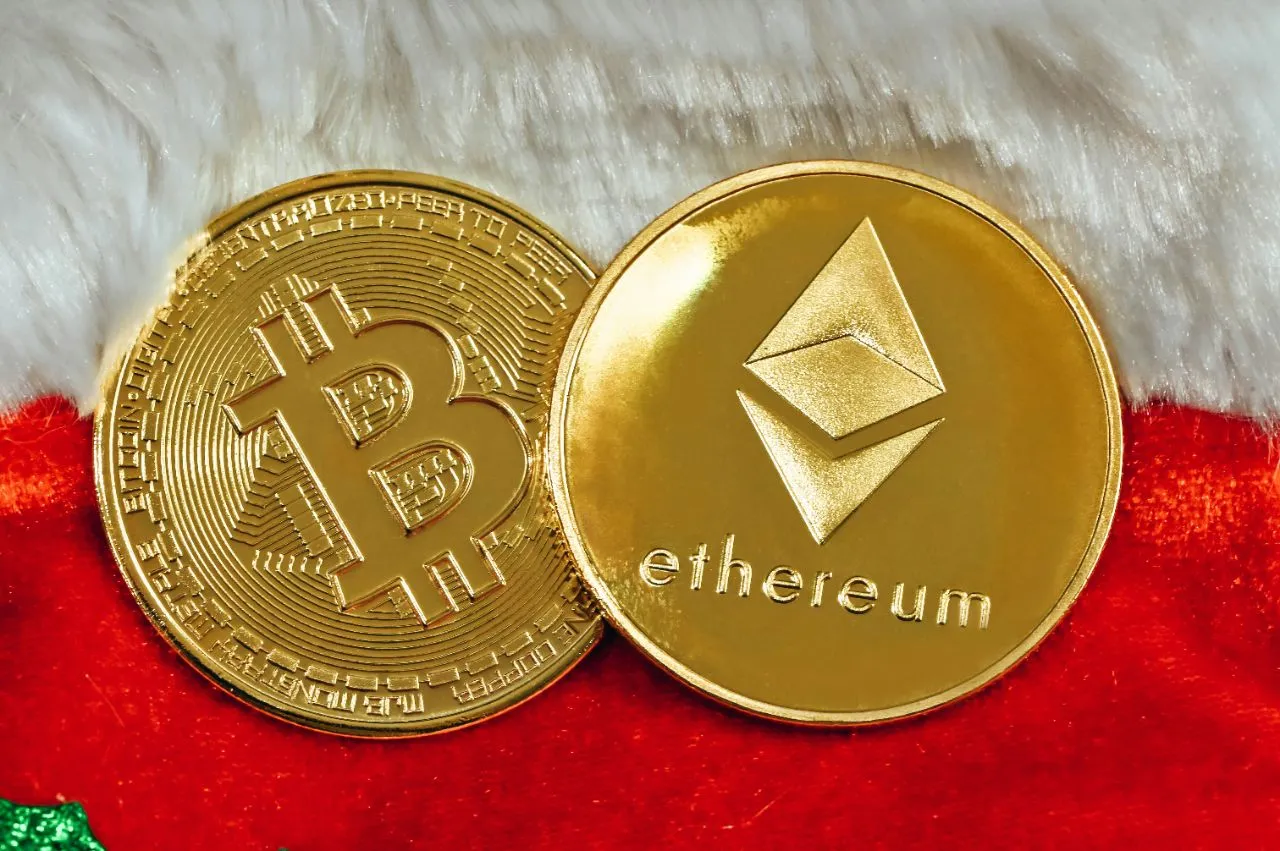
Malaysian daily English language newspaper the Sun reported on Jan. 22 that StashAway will enable Malaysians to invest in two top-tier cryptocurrencies, Bitcoin (BTC) and Ethereum (ETH), through its regulated platform.
https://asset.coinness.com/en/news/b3d65b012b23087826b8fa26858e0fd8.webp
Photo by Traxer on Unsplash

Fidelity products

The company is providing its Malaysian clientele access to crypto investment products offered by American multinational financial services company Fidelity Investments. These include the Fidelity Wise Origin Bitcoin Fund (FBTC) and the Fidelity Ethereum Fund (FETH).


StashAway Malaysia Country Manager Wong Wai Ken explained the company’s rationale in adding the two products. He stated:


“Many of our clients have expressed interest in the long-term potential of major cryptocurrencies like Bitcoin but have been hesitant because of security concerns or the complexities of navigating crypto exchanges. We’re now offering them a familiar and safe way to diversify their portfolios by incorporating crypto through a platform they already know and trust.”


On a previous occasion, Wong told the Sun that its role is to help investors to diversify their portfolios. Adding access to cryptocurrency fits that objective. The StashAway executive believes that while there may be growing mainstream adoption of cryptocurrency, many investors are turned off gaining exposure due to the risks involved with self-custody or the fees and counterparty risk involved with cryptocurrency exchanges.


StashAway charges management fees ranging from 0.2% to 0.8%. The Fidelity crypto ETF products will be offered with a 0.25% annual management fee. 


Last June, Malaysian commercial bank Affin Bank became the first entity to offer a crypto ETF in Malaysia. The bank partnered with local fund management company Cross Light Capital to launch the actively managed digital asset fund. Titled the “Performa Digital Asset Fund,” the product incorporates investment in Bitcoin and Ether exchange-traded products (ETPs), with the remaining third invested in blockchain-related equities.


The approval of eleven Bitcoin ETFs in the United States led to greater consideration for the approval and addition of such products internationally. However, in the first few months following the launch of these products, regulators, exchange platforms and asset management firms still remained cautious. 


In March of last year, Bursa Malaysia, Malaysia’s stock exchange, dismissed the notion of adding cryptocurrency to its multi-asset exchange. Within the region, regulators in Singapore and Thailand both dismissed the idea of enabling Bitcoin ETFs within their markets. 


Since then, Thailand’s regulator has moved closer in its consideration of such a product offering. In the case of Malaysia, earlier this month, the country’s Prime Minister, Datuk Seri Anwar Ibrahim, called for stakeholders such as the central bank to focus on cryptocurrency so that the Southeast Asian nation doesn’t get left behind.


StashAway is headquartered in Singapore. Besides Singapore and Malaysia, the company also serves investors in Thailand, the United Arab Emirates (UAE) and Hong Kong. The digital platform has 50,000 users in Malaysia, where it serves retail and accredited investors. The company was the first robo-advisor platform to acquire a Capital Markets Services License from the SC in Malaysia.


More to Read
View All
Web3 & Enterprise·

Jan 30, 2024

Binance Labs clarifies involvement in SkyArk Chonicles’ latest funding round

SkyArk Chronicles, a Singapore-based Triple-A gaming platform, recently announced the completion of a $15 million funding round that it suggested was led by Binance Labs, the venture arm of the leading global crypto platform. Binance has subsequently moved to clarify that it is not involved in the latest funding initiative.Photo by Laurin Steffens on UnsplashBacked by Binance since 2021The gaming ecosystem, which has enjoyed the backing of Binance since 2021, expressed excitement about the successful completion of the funding round. On Jan. 12, SkyArk posted on social media platform X, suggesting that Binance led the recent funding round but the project has since deleted that post. The post mentioned the participation of more than 40 institutions in the funding round, including Vividthree Productions, a Singapore-based company. It didn’t disclose the amount it claimed was invested by Binance Labs at that time. The announcement also highlighted contributions from other notable entities in the NFT and gaming space, such as GuildFi Global, Jambo Technology and BreederDAO. Additionally, individual investors like LayerZero CEO Bryan Pellegrino, Tangent Ventures Co-Founder Wangarian and Story Protocol CEO S.Y. Lee were all claimed by the project to have made noteworthy contributions to SkyArk's funding initiative. Binance Labs denialHowever, recent developments have introduced an element of uncertainty. Binance Labs, in an X post on Monday, distanced itself from SkyArk Chronicles' latest funding round. Contrary to the earlier announcement, Binance Labs clarified that it did not participate in SkyArk's $15 million funding round earlier this month. The venture arm reiterated its sole investment in SkyArk during the Incubation Season 3 program in 2021. This clarification from Binance Labs raised concerns about the accuracy of SkyArk Chronicles' earlier announcement, leading to SkyArk posting to confirm the information supplied by Binance. That post states: “We are very sorry for the miscommunication and appreciate the clarification from Binance Labs. We remain focused on making SkyArk a success and will continue working hard to achieve our vision.” Community reactionThe saga has caused some concern within the community, underscoring the need for transparency in the cryptocurrency and gaming industries. Web3 and NFT consultancy firm Vader Research commented on the development, stating:”SkyArk didn’t raise a new private round at all. They circulated the 2021 funding round announcement as if it recently occurred and used that to raise $11m from the public.” In a subsequent post, Vader added that Binance still has considerable leverage where SkyArk is concerned, as it retains the right to decide whether to list the SkyArk token on the platform. SkyArk Chronicles had a history of collaboration with Binance, dating back to 2021 when Binance selected SkyArk Studio for its prestigious Incubator Program Season 3. Out of over 1,000 applicants, SkyArk Studio was one of the nine teams chosen, emphasizing its potential in the blockchain and gaming space. In a follow-up post on Monday, SkyArk co-founder Kelvin Chua expressed his gratitude to Binance for its support over the past three years. The gaming platform, led by seasoned professionals in traditional mobile games, aspires to revolutionize the gaming sector worldwide. Their focus on launching Fully-On-Chain and Only-Assets-On-Chain games sets them apart, with a commitment to incorporating NFTs seamlessly into various gameplay styles. 

news
Web3 & Enterprise·

Jan 04, 2024

KuCoin invests in cross-chain inscription protocol

KuCoin, the Seychelles-based cryptocurrency exchange, has revealed a strategic move in its investment and incubation initiatives through the KuCoin Labs program. In a press release which was published on Tuesday, KuCoin announced its investment in ISSP, a project focused on developing an inscription protocol on the layer one Sui network, renowned for its throughput and scalability.Photo by Towfiqu barbhuiya on UnsplashFirst cross-chain inscription protocolISSP introduces the first cross-chain inscription protocol system, seamlessly integrating an inscription marketplace and inscription swap. The project is in its early stages. Last week ISSP took to social media to announce its inscription-related product launch. It stated:”We are launching the first multi-chain interoperability system for inscription protocols, focused on the BTC ecosystem to enable interoperability between BTC's inscription protocols and other chains.” With the launch, it’s introducing the Sui network’s first inscription protocol under the SUI-20 standard. Leveraging the unique Objects model of the Sui network, ISSP aims to naturally enhance inscription systems. Having already launched the SUI-20 inscription standard protocol on the Sui network, it is utilizing the built-in indexer of the network node to index inscription data. Seamless CEX inscription integrationTo ensure optimal performance and stability of inscription data, ISSP utilizes the indexer integrated into the Sui Chain node. Notably, ISSP facilitates the integration of inscriptions with centralized exchanges (CEX), eliminating the need for additional development to interface with inscription protocols. While the exact financial details of the investment remain undisclosed, ISSP plans to utilize the funds to expand its operations and further its development efforts. ISSP recently achieved a significant milestone by completing its Free Mint process, attracting 13,947 addresses and 2,002,186 transactions (TXs). The surge in user activity led to the Sui Chain's transactions per second (TPS) exceeding 1,000 for the first time. Sui-related investmentsThis marks KuCoin Ventures' continued interest in projects related to the Sui network. Last year, the exchange participated in a funding round for Cetus, a decentralized exchange (DEX) and concentrated liquidity protocol built on the Sui and Aptos blockchains. Alongside KuCoin Ventures, prominent investors such as Comma3 Ventures, AC Capital, Adaverse, Animoca Brands, Coin98 Ventures, IDG Capital, Leland Ventures, NGC Ventures and OKX supported Cetus. In April, the KuCoin crypto exchange actively promoted the SUI token as part of its Spotlight Token Program. The Sui Network seeks to distinguish itself as the first Layer 1 blockchain designed to cater to creators and developers targeting the next billion users in Web3. It provides horizontal scalability for diverse dApp development. Claiming to be a step-function advancement in blockchain technology, Sui prioritizes high throughput, instant settlement speeds, rich on-chain assets and user-friendly Web3 experiences. KuCoin's investment in ISSP underscores its commitment to supporting innovative projects on the Sui network, reinforcing the exchange's role in shaping the future of blockchain development. Similarly, the ISSP's product development demonstrates that following a big year for inscriptions in 2023, further progress is likely to unfold in 2024.

news
Web3 & Enterprise·

Nov 15, 2023

Aptos charts success in South Korea through bridging Web2 and Web3

Aptos charts success in South Korea through bridging Web2 and Web3Aptos, a major layer 1 blockchain network developed by the experts behind Meta’s canceled stablecoin payment system Diem, is growing in South Korea. In a recent Aptos Day conference held at the Hashed Lounge in Seoul, the Aptos team shared its vision for developing its ecosystem in Korea and attracting users by actively bringing content from Web2 to Web3, instead of simply focusing on cultivating a Web3-only ecosystem.Photo by GuerrillaBuzz on UnsplashDavid Wolinsky, a software engineer at Aptos and a former developer at Facebook, presented Aptos’ key advantages and achievements since its launch last year and outlined the blockchain’s future plans for growth.High-speed Web3 powerhouseIn particular, he highlighted Aptos’ high compatibility with social media, its solid security framework built with the Move programming language and a rapid processing speed of up to 200,000 transactions per second (TPS) — with a time to finality (TTF) of less than one second. Thanks to this impressive speed, Wolinsky explained, lots of projects have onboarded the network, which is anticipated to grow into a bigger ecosystem with more decentralized applications (dApps).Aptos has also carried out over 300 million transactions since its launch in October of last year, creating seven million unique addresses. Just two months following its launch, there were already over 200 projects on the blockchain. Aptos could thus play a significant role in revolutionizing Web3, which is currently dominated by the Ethereum virtual machine (EVM).Facilitating the transition from Web2 to Web3To grow the ecosystem further, Wolinsky emphasized the importance of bringing Web2 users to Web3 in an efficient and seamless manner. Aptos aims to achieve this by facilitating the creation of Aptos-based wallets through integration with platforms like Facebook, X (formerly Twitter) and Google, allowing users to enjoy various dApps.Wolinsky also noted that Aptos uses Move — an open-source programming language developed by Facebook for writing smart contracts on the Diem blockchain — which is designed to be developer-friendly, employing similar mechanisms that developers generally use to build applications on Web2. This language can attract not only Web2 users but also Web2 developers who are transitioning to Web3 without worrying about the complexity of the process. Aptos argues that Move is more secure than EVM’s Solidity language.Positive prospects in KoreaAptos also regards Korea as a key market for growth, as Korean developers are actively contributing to the Aptos ecosystem and providing helpful feedback. The blockchain disclosed that as of Q3 this year, Korea has 13 Aptos validators — second only after the U.S., which has 14.Christie Lee, Head of Business Development and Partnerships in Korea at Aptos, argued that Korea is innovating the most at the larger corporate level while also contributing to the ecosystem. Lots of endeavors are playing out in the Korean market, she said, as regulatory restrictions in fields like gaming, entertainment, finance and more are starting to loosen.She also added that the Korean market is not only driven by innovation from large companies but also by small developers who can contribute to the ecosystem, noting that the market is a favorable environment for developers to thrive. In addition, Korean users are sensitive to trends and adept at incorporating technology, which would allow them to quickly adopt Web3 culture.

news
Loading