Top

UBS extends crypto ETF access to clients in Hong Kong

Web3 & Enterprise·November 11, 2023, 1:08 AM

Multinational investment bank UBS Group AG has followed suit with competitors like HSBC, enabling its wealthy clients in Hong Kong to engage in the trading of select crypto-linked exchange-traded funds (ETFs).
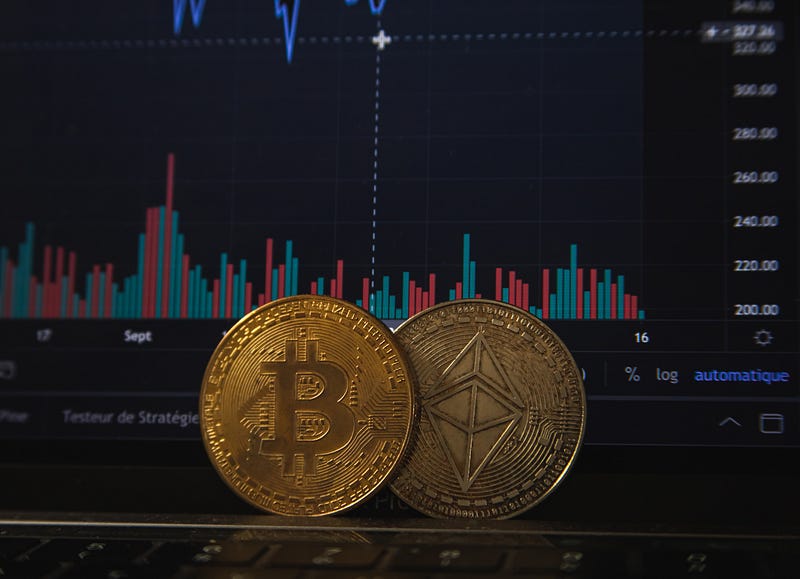
Photo by Pierre Borthiry — Peiobty on Unsplash


Regulatory approval to offer three ETFs

This move, reported by Bloomberg on Thursday, aligns with Hong Kong’s efforts to establish itself as a prominent digital asset hub. Citing an undisclosed source, Bloomberg outlined that three crypto ETFs, namely the Samsung Bitcoin Futures Active, CSOP Bitcoin Futures and CSOP Ether Futures, have received approval from the Securities and Futures Commission (SFC) and will be available on UBS’s Hong Kong platform starting this Friday.

The inclusion of these ETFs allows UBS clients to diversify their investment portfolios, offering exposure to the dynamic crypto market. Educational materials will also be accessible to clients, aiding in their understanding of associated risks. While UBS declined to comment on this development, it marks a strategic move by the Swiss bank to tap into the growing demand for crypto-related investment products.

In June, Hong Kong’s largest bank, HSBC, moved to expand its offering to include crypto ETFs. It has made available the very same crypto ETFs as UBS is about to offer.


Hong Kong’s crypto credentials

Hong Kong introduced a comprehensive digital asset regulatory regime on June 1, aiming to safeguard investors while fostering the Chinese autonomous territory’s emergence as a digital financial center. The SFC permits retail investors to trade major tokens on licensed exchanges under these regulations.

Despite these regulatory advancements, Hong Kong faced setbacks, notably with the recent issues surrounding the unlicensed JPEX exchange, which led to increased scrutiny. The establishment of a joint task force between the SFC and the police aims to monitor and prevent suspicious activities within the crypto industry.

Globally, financial institutions remain cautious about compliance risks in the crypto sector. However, signs of increased engagement are emerging. DBS, Singapore’s largest bank, has expressed its intention to seek a license to offer crypto services to Hong Kong customers. ZA Bank, the largest virtual bank in Hong Kong, plans to provide token-to-fiat currency conversions over licensed platforms. Furthermore, SEBA Bank, backed by the Julius Baer Group, has obtained a license for its unit to offer crypto services in Hong Kong.


Unlocking ETF potential

A report published by the Hong Kong Stock Exchange in April claimed that crypto ETFs possess the potential to unlock the next phase of digital asset expansion in Asia. Earlier this week, it emerged that regulators were open to the notion of allowing retail access to spot crypto ETFs in Hong Kong, provided that the necessary regulatory approvals and checks were in place.

The inclusion of the CSOP Bitcoin Futures and CSOP Ether Futures funds on UBS’s platform highlights the gradual recovery of the crypto sector from the market rout experienced in 2022. Despite the previous market challenges and collapses, the prospect of the U.S. allowing its first spot Bitcoin ETFs has contributed to a resurgence in the largest token’s price this year. The move by UBS aligns with the broader trend of financial institutions cautiously embracing the crypto economy, indicating a shifting attitude toward these digital assets in the financial mainstream.


More to Read
View All
Web3 & Enterprise·

Feb 28, 2024

Profitability eludes Canaan despite further growth

Beijing-headquartered crypto mining equipment manufacturer Canaan recently revealed its financial results for the fourth quarter of 2023, demonstrating that it continues to struggle with profitability despite positive numbers relative to revenues and growth.Photo by Sasun Bughdaryan on UnsplashIncreased revenues and salesAccording to the company’s filing, during the last quarter of 2023 Canaan reported a surge of 45.7% in total computing power sold compared to the preceding quarter, reaching 5.5 million Thash/s. This ascent, which reflects a 191.9% increase from the same period in 2022, signifies not just a recovery but a robust resurgence in demand and operational ability. The company's dispatch of 19.6 million Thash/s throughout the year, marking a 29.6% leap from 2022, aligns with the rebound in bitcoin prices observed in Q4 2023, a pivotal factor shaping Canaan's operational revitalization. 47% growth on previous quarterA closer examination of the financials reveals not only surpassing total revenues but also a notable 47.3% quarter-over-quarter growth. Canaan's foray into international markets, bolstered by securing substantial orders from esteemed public company clients, underscores a buoyant sales performance and a positive outlook for the computing sector. Despite the buoyant sales and revenue figures particularly in the mining machine market, the sector has faced ongoing regulatory uncertainties and market fluctuations. Nonetheless, the company's strategic initiatives, alongside the positive market effects of the approval and listing of spot bitcoin exchange-traded funds (ETFs), have been positive. Moreover, Canaan's investments in wafer supply capabilities and strategic financial maneuvers garnered approximately US$136 million through at-the-market (ATM) programs and preferred shares. Recording a lossYet, the company’s journey in 2023 was not without its hurdles. Q4 2023 witnessed a significant increase in product revenues from the previous quarter but a decline from Q4 2022, attributed to dwindling sales prices as the halving event loomed, underscoring the volatility inherent in the cryptocurrency market. Results published last year are indicative of the company’s difficulty. In Q2 2023, revenues were strong, yet the company wasn’t turning a profit.With Q4 results, it’s now clear that the firm lost $421 million in 2023. In Q4, Canaan recorded a net loss of $139 million. That compares with a loss of $91 million in Q4, 2022. The company also expects tough market conditions in 2024. In its forward-looking outlook, it stated:”For the first quarter of 2024, and the second quarter of 2024, the Company expects total revenues to be approximately US$33 million and US$70 million, respectively, considering the challenging market conditions across the industry. This forecast reflects the Company’s current and preliminary views on the market and operational conditions, which are subject to change.” The crypto mining sector remains a very challenging market. With the upcoming Bitcoin halving event set to occur in April, it’s expected that as much as 20% of mining capacity could be forced offline, as some equipment would simply fail to mine on a profitable basis. Indicative of the challenges within the sector, crypto miner Core Scientific was forced into bankruptcy due to market difficulties in December 2022. It has only recently exited that bankruptcy process and now expects to generate revenues of $600 million in 2024. Another Bitcoin miner, Riot Platforms, has warned that profitability may be difficult to achieve in 2024 due to chip shortages.   

news
Policy & Regulation·

Nov 28, 2023

Crypto Travel Rule solutions provider CODE obtains ISO/IEC 27001 certification

Crypto Travel Rule solutions provider CODE obtains ISO/IEC 27001 certificationCODE, a Travel Rule solutions provider and joint venture co-founded by Korean cryptocurrency exchanges Bithumb, Coinone and Korbit, announced on Tuesday (local time) that it has obtained ISO/IEC 27001 certification for information security management systems (ISMS).Photo by Scott Graham on UnsplashEnhanced cybersecurity and operational resilienceThe ISO/IEC 27001 is a standard by which companies can develop, implement, maintain and improve their ISMS to carry out robust risk management, cybersecurity and operational excellence as required by institutions like the European Union’s General Data Protection Regulation (EU GDPR).“CODE will provide a service environment that encourages confidence in our corporate members and the overall market starting with the acquisition of this information security management system certification,” said Lee Sung-mi, CEO of CODE.Consecutive effortsAs a Travel Rule solutions provider, CODE has been ramping up efforts to strengthen its compliance and information security capabilities. The company’s ISO/IEC 27001 certification comes shortly after it obtained ISO 37301 certification from the Korea Compliance Initiative (KCI). ISO 37301 is a standard for compliance management systems (CMS) that assesses organizations based on their compliance with laws, regulations, codes of conduct and more to exercise good governance, transparency and accountability.

news
Policy & Regulation·

Oct 22, 2025

Singapore launches BLOOM initiative to advance digital finance infrastructure

The Monetary Authority of Singapore (MAS) has unveiled a new initiative aimed at enhancing the nation’s financial infrastructure through the use of stablecoins and tokenized commercial bank money. Announced on Oct. 16, the project, known as BLOOM, short for Borderless, Liquid, Open, Online, Multi-currency, brings together 16 financial sector participants, including Anchorage Digital, Ant International, Circle, Coinbase, and DBS Bank. According to MAS, BLOOM is open to additional participants through a registration form available on its official website.Photo by Jason Leung on UnsplashBuilding on Project OrchidBLOOM operates under Project Orchid, a digital Singapore dollar initiative launched in 2021 to explore potential applications of central bank digital currency (CBDC) in strengthening Singapore’s financial ecosystem. Through BLOOM, it will examine use cases involving G10 and Asian currencies, covering both domestic and cross-border payments, as well as wholesale financial transactions. The project’s focus includes coordinating interoperability between different networks to enable the distribution and clearing of settlement assets. It will also explore automated compliance checks and study methods to make wholesale settlements more efficient and cost-effective. Artificial intelligence (AI) agents are expected to play a supporting role, executing transactions automatically within predefined limits and regulatory parameters. Expanding stablecoin usage in SingaporeThe MAS initiative comes shortly after the listing of XSGD, a Singapore dollar–backed stablecoin, on the U.S.-based crypto exchange Coinbase on Oct. 1. XSGD is issued by StraitsX, a digital payments provider, and is fully backed by reserve assets held with DBS Bank and Standard Chartered. Stablecoin payments have gained traction in Singapore’s retail sector as well. StraitsX recently began supporting settlements in USDT and USDC through OKX Pay. Consumers can use SGQR codes at participating GrabPay merchants to make everyday purchases, such as coffee, with transactions settled directly in Singapore dollars into merchant accounts. Rising local interest in digital assetsSingapore’s growing engagement with digital assets reflects a broader trend of public interest. A report from ApeX Protocol, cited by Cointelegraph, ranked Singapore as the world’s most “crypto-obsessed” nation, awarding it a composite score of 100. The ranking considered ownership rates, adoption growth, search activity, and ATM availability. The study found that 24.4% of Singapore’s population holds cryptocurrency, ahead of the United Arab Emirates (UAE), which scored 99.7 despite a 25.3% ownership rate. In a separate development, Channel News Asia reported that three Singaporeans have been implicated in a large-scale fraud scheme linked to Cambodia’s Prince Group. The U.S. Department of Justice recently confiscated 127,271 Bitcoin tied to the operation—the largest seizure in its history. Following the investigation, the U.S. Department of the Treasury’s Office of Foreign Assets Control imposed sanctions on the three individuals as well as 17 Singapore-registered entities. The sanctions block access to any property in their possession and prohibit U.S. persons from engaging in transactions with them, citing risks to U.S. national security and foreign policy interests. 

news
Loading