Top

HKMA reflects on retail CBDC pilot phase one completion

Web3 & Enterprise·November 01, 2023, 12:32 AM

Hong Kong’s Monetary Authority (HKMA), the Chinese territory’s central bank, recently released a report following the completion of phase one of its central bank digital currency (CBDC) pilot, highlighting the potential benefits of a retail CBDC, commonly referred to as e-HKD (digital Hong Kong dollar).

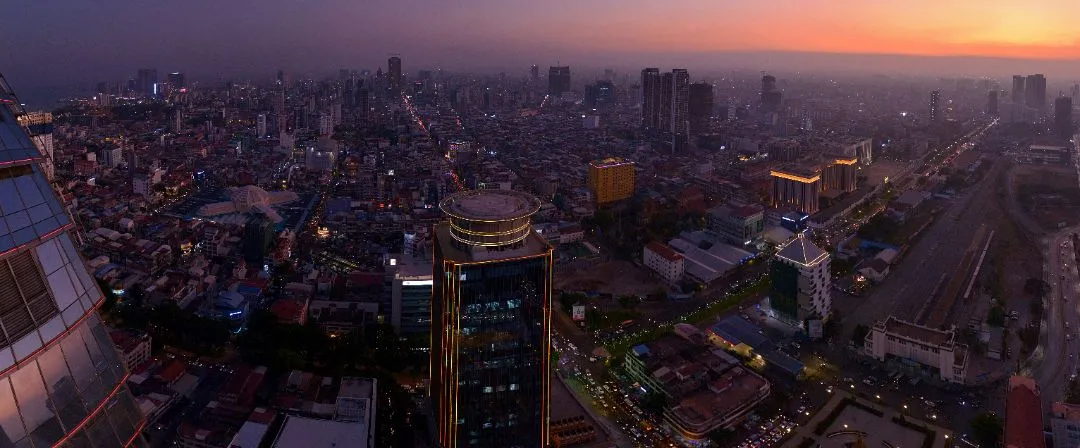
Photo by Ruslan Bardash on Unsplash


Undecided on full implementation

In a press release published by the HKMA on Monday, the authority clarified that the report underscores that while a retail CBDC could bring value to the payments ecosystem and unlock new economic transaction possibilities, in-depth investigation and evaluation are essential before considering large-scale implementation.

At this stage, Hong Kong’s central bank has not committed to introducing an e-HKD, but the report sheds light on the prospects and challenges associated with such a move. The region has been signaling its intent to position itself as a hub for virtual assets, evident in the regulatory framework introduced in June and the granting of licenses to crypto trading platforms in August.

Project e-HKD, initiated by the HKMA in 2021, is a significant step toward assessing the feasibility of a digital Hong Kong dollar. The pilot program was launched in November 2022 as part of the HKMA's “Fintech 2025” strategy. However, the HKMA remains cautious, as reflected in the comments of HKMA CEO Eddie Yue earlier this month. Yue told the South China Morning Post that the central bank is still waiting for greater clarity when it comes to the technological, legal and societal aspects of full implementation.


Three core attributes identified

The report identifies three primary areas where an e-HKD could provide value: programmability, tokenization and atomic settlement. These attributes could lead to faster, more cost-efficient and more inclusive transactions. However, it’s essential to note that the 14 pilot programs conducted with 16 participating firms during phase one were executed on a small scale within a controlled environment.

The phase one review highlights that the true potential and prerequisites for implementing an e-HKD on a larger scale depend on market developments and further investigation. It acknowledges that minor issues identified during the pilot phase could become more prominent or even unacceptable in a production environment.


Gearing up for phase two

Phase one of the pilot program delved into various aspects, including full-fledged payments, offline payments, tokenized deposits, programmable payments and the settlement of Web3 transactions and tokenized assets. Hong Kong is now gearing up for phase two of the pilot, with plans to explore new use cases for an e-HKD and engage in more focused pilot initiatives. The goal is to understand how the e-HKD can facilitate innovative methods of transacting goods and services while maintaining financial stability.

The HKMA’s stance on a retail CBDC places it at the center of a global debate. While the U.S. remains undecided on the issue, with the topic becoming contentious in presidential elections, India has forged ahead with plans for a retail CBDC. Meanwhile, Thailand’s central bank commenced a pilot project for a retail CBDC earlier this year.

More to Read
View All
Web3 & Enterprise·

Jan 29, 2024

Watch-to-Earn app fanC and Filipino exchange Coins.ph team up to expand globally

FanC – a South Korean blockchain reward project designed for creators and users of the Watch-to-Earn short-form video app CELEBe – has signed a business agreement with Coins.ph, the largest cryptocurrency exchange in the Philippines. Through this agreement, the two companies aim to expand their respective global ecosystem through fanC’s rewards system, according to an article by local news outlet Daehan Kyungjae.Photo by Lance Anderson on UnsplashEmpowering creators and rewarding viewersThe CELEBe app aims to bring content creators and viewers together through Create-to-Earn and Watch-to-Earn mechanisms. The platform has notably collaborated with some 4,000 well-known figures, ranging from actors and singers to YouTubers and athletes. Connecting communitiesUnder the agreement, fanC's reward token (FANC) will be available for trading on Coins.ph, allowing fanC to deepen its roots not only in the Filipino market but also in the larger Asian blockchain community. "This agreement marks an important step in fanC's global expansion strategy," said Lee Dong-ho, CEO of fanC. "Through our collaboration with Coins.ph, we will build a stronger global network." Meanwhile, fanC plans to continue to strengthen its partnership with Coins.ph through activities like global meetings to lead the growth of its global fan community. The platform is thus committed to consistent technological development and innovation through collaborations with various global partners. Through these efforts, it aims to provide new value by building an ecosystem that connects the global blockchain community.

news
Policy & Regulation·

Apr 13, 2023

Hong Kong Bank to Act as Settlement Bank for Crypto Firms

Hong Kong Bank to Act as Settlement Bank for Crypto FirmsZA Bank, Hong Kong’s largest virtual bank, is looking to become the go-to bank for crypto startups. The online bank has been given permission to serve as the settlement bank for regulated Web3 companies in the city. This development was announced at Hong Kong’s Web3 Festival, an event supported by the local government and attended by crypto startups and institutions from across Asia.©Pexels/Frank BarningHashKey and OSL collaborationZA Bank is expected to facilitate crypto-fiat conversions with two licensed exchanges in Hong Kong, HashKey and OSL, where customers can swap crypto into fiat currencies. ZA Bank will also offer basic banking services to local Web3 startups, a category that is currently underserved by traditional financial institutions.ZA Bank is focusing on assisting local Web3 startups and small-medium enterprises (SMEs).The bank linked up to the city’s company registry data, allowing for minimal information input and cross-checking. According to Devon Sin, alternate chief executive of ZA Bank, the bank currently conducts AML scrutiny against the usual checklists to satisfy the regulatory requirements. No AML issues have emerged during the recent months of work.Competing for global crypto businessHong Kong is trying to establish itself as a crypto-friendly alternative to other hubs, such as the US and Singapore, and a sandbox for Web3 businesses from China, where crypto trading is illegal. The city is revamping its digital assets regulatory framework, with plans to legalize retail trading of major cryptocurrencies like Bitcoin and Ether. Ronald Lu, CEO of ZA Bank, said that ZA Bank’s online account opening for Web3 startups is a major step forward in integrating traditional banking services with the Web3 world.According to Lu, ZA Bank will act as a settlement bank for clients to allow withdrawals in Hong Kong, China, and US currencies after they deposit crypto tokens with exchanges. The business model is already operational through HashKey and OSL, the only two licensed crypto exchanges in Hong Kong. The bank will provide the same service for other exchanges as they become licensed.HK China’s crypto “trial run”Hong Kong is opening up to the beleaguered sector in a move that aims to revive its status as a financial center following years of COVID restrictions and political upheaval. However, access to banking has been a major hurdle for the city’s ambitions. The city’s banking and securities regulators are hosting a round-table for crypto players and bankers to share experiences and perspectives on banking services later this month.Many have speculated about a softening stance on cryptocurrency by the Chinese authorities. However, it’s more likely that they continue with strict regulation and control relative to crypto in mainland China while happy to monitor a more open approach to it within Hong Kong. Crypto analyst Myles Deutscher likens the approach to a “trial run” that is being monitored by China.Launched in March 2020, ZA Bank is one of Hong Kong’s eight licensed virtual banks and had the most net assets as of last year, despite remaining unprofitable. The virtual lender doesn’t expect it will need to boost its headcount to handle the crypto client push. Although the revenue model is still unclear, Lu said that more clients, more deposits, and more business opportunities are always great for the bank. The lender doesn’t offer services for clients from mainland China, given the restrictions in place there.

news
Web3 & Enterprise·

Sep 08, 2023

dYdX Foundation CEO Shares the Importance of Korean Developers of the Cosmos Network

dYdX Foundation CEO Shares the Importance of Korean Developers of the Cosmos NetworkDecentralized crypto derivatives exchange dYdX is in the midst of a significant transition, as it prepares to move away from its current Ethereum-based layer-2 protocol to Cosmos, a decentralized network of independent blockchains. Meanwhile, senior members of the dYdX Foundation, a Swiss-based not-for-profit entity behind the derivatives exchange, paid a visit to South Korea on the occasion of Korea Blockchain Week: KBW2023, which is an annual event that spans from September 4 to 10 this year.Photo by Mariia Shalabaieva on UnsplashBusy Q4Regarding the upcoming v4 update on a Cosmos-based blockchain, Charles d’Haussy, the CEO of the dYdX Foundation, shared his thoughts in an interview with CoinNess. He expressed anticipation for a bustling fourth quarter this year but also acknowledged that the exact timeline remains uncertain, as it hinges on the voting processes, including one for bridging tokens to Cosmos, within the dYdX community.Utility token on v4As part of dYdX’s migration to Cosmos, its governance token will undergo a transformation into a utility token. The forthcoming dYdX v4 will be fully decentralized, with 100% of the fees collected from the exchange distributed to stakers and validators. Following the completion of this migration, the current dYdX protocol on Ethereum will eventually become deprecated.Exclusive focus on crypto derivativesIn a significant milestone, dYdX achieved over $1 trillion in total trading volume on its Layer 2 platform on July 14 of this year. d’Haussy expressed pride in this achievement and highlighted that dYdX’s competitive edge lies in its exclusive focus on crypto derivatives.DeFi mullet memeAlthough DeFi derivatives trading currently represents just 1% of the overall crypto derivatives volume, d’Haussy is optimistic about its future growth, predicting an acceleration. In a parallel to how traditional banks offer an array of products that originate from external entities such as brokerages and insurance companies, Charles d’Haussy envisions that centralized exchanges will provide a diverse range of offerings sourced from decentralized platforms. He expressed his strong belief in the idea encapsulated by the DeFi mullet meme, which features the phrase “Fintech In The Front, DeFi In The Back.”Top-tier Cosmos builders in KoreaWhen asked about his visit to Korea, d’Haussy emphasized the presence of top-tier Cosmos builders in the country. He underscored South Korea’s importance within the Cosmos ecosystem, highlighting that 10% of dYdX’s testnet participants are Korean companies.

news
Loading