Top

Korbit Joins Zero-Fee Crypto Trading Trend in South Korea

Web3 & Enterprise·October 20, 2023, 2:55 AM

South Korean cryptocurrency exchange Korbit reduced trading fees to zero on October 20 (local time) for all of the cryptocurrencies supported on the platform. This move follows in the footsteps of Bithumb, another Korean exchange that introduced zero-fee trading earlier this month.

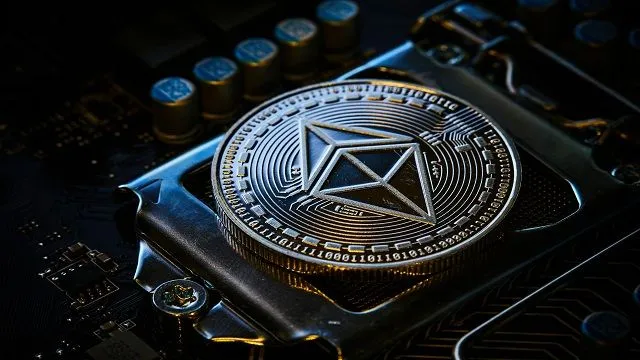
Photo by Jeremy Perkins on Unsplash


No extra registration required

Korbit users can now benefit from zero-fee trading immediately, with no special registration required. This arrangement will continue indefinitely until further notice.


Market maker incentives continue

Korbit’s market maker incentive program will remain in place. Under this program, users earn 0.01% of the transaction value whenever they place an order.

Oh Se-jin, CEO of Korbit, underscored the exchange’s commitment to enhancing user satisfaction. He pointed out several initiatives they’ve undertaken, including enhancing the login system, raising the daily Korean won (KRW) deposit and withdrawal limits, and eliminating transaction fees. He further noted that by removing trading fees, they aim to alleviate the cost pressures of crypto trading for their users and breathe new life into the market.

More to Read
View All
Policy & Regulation·

Feb 03, 2024

Hong Kong's VSFG eyes spot ether ETF application in Q2

Venture Smart Financial Holdings Ltd. (VSFG), a Hong Kong-based financial services firm, is strategically positioning itself to enter the growing cryptocurrency exchange-traded fund (ETF) market, with its latest reveal being an interest in launching a spot ETH ETF in Q2.Photo by Michael Förtsch on UnsplashIn a recent interview with The Block, VSFG Chairman Lawrence Chu revealed the company's plans to apply for a spot ether ETF in Hong Kong. Executing on that plan is contingent upon the successful launch and approval of its spot bitcoin ETF. Q1 launch for bitcoin ETFLast month, the firm disclosed that it is gearing up for a spot bitcoin ETF launch within the first quarter of this year. VSFG was the first to reveal such an intention within the ETF space in Hong Kong. However, competition is already starting to bubble, as subsequently, Chinese asset manager Harvest Fund announced that it has gone one better and actually filed an application for a spot bitcoin ETF product in the Chinese autonomous territory. Chu shared insights into the firm's current status, mentioning that VSFG is in the final phase of preparing its application for a spot bitcoin ETF to be submitted to the Hong Kong Securities and Futures Commission. He emphasized the rigorous regulatory discussions that precede such submissions in Hong Kong, characterizing the imminent application as being in the advanced stages, stating, “Submission [for application] is almost like when you're 95% there.” Chu acknowledged the importance of ongoing conversations with regulators, expressing readiness by stating, “but that really depends on the conversation we have with the regulator. We will be ready.” Competitive spotlight on ETF feesHighlighting the evolving landscape in Hong Kong, Chu noted that nearly 10 fund companies are exploring the launch of potential spot crypto ETFs in the city. That call echoes similar comments made recently by Livio Weng, CEO of digital assets firm HashKey. The prospect of a potential fee war among asset managers was also discussed, drawing parallels with developments observed in the U.S. bitcoin ETF market. That seems likely, given that downward pressure on spot bitcoin ETF fees in the United States has also spread to Europe where Invesco and WisdomTree have cut fees by 60% on similar products. Global ether ETPsWhile commentators such as Standard Chartered Bank speculate on the likely approval of spot ether ETF products in the U.S. by May and VSFG indicates a potential Q2 launch in Hong Kong, there are already a number of similar products out in the wild around the world. According to data compiled by crypto data aggregator platform CoinGecko, the top 10 ether funds account for $5.5 billion in value. Among them is the XBT Provider ether exchange-traded product (ETP), the world’s first Ethereum-based security made available on a regulated exchange, namely Nasdaq Stockholm in Sweden, by crypto ETP specialist CoinShares. While the race is on in Hong Kong to launch crypto ETFs, on an international basis, competition is heating up as various global fintech hubs look to kindle what is likely to make up a significant part of the ETF sector pie in the years to come.

news
Web3 & Enterprise·

Mar 08, 2024

SafePal invests in & partners with Switzerland’s Fiat24

Singaporean crypto wallet provider SafePal has announced a strategic investment in Swiss bank Fiat24, together with the launch of a number of financial services. The partnership is a significant milestone in bridging the gap between the crypto world and real-world financial utilities.Photo by Henrique Ferreira on UnsplashVisa card and in-app bankingThe company outlined in a blog post on March 7 that the centerpiece of this collaboration is the introduction of a crypto-focused Visa card and in-app banking services, both designed to streamline the integration of digital assets into everyday transactions. The default deposit currency for these services is the dollar-pegged stablecoin USD Coin (USDC), providing users with a stable foundation for their financial activities. Through the SafePal mobile wallet app, users can convert their cryptocurrency holdings into USDC via Ethereum layer two scaling network Arbitrum, making for an efficient and reliable process. Once converted, the USDC can be stored in multiple fiat currencies, including USD, EUR and CHF, enabling seamless utilization in various transactions and expenses. Enabling Swiss bank account accessOne of the standout aspects of this initiative is the opportunity for users to establish individually owned, fully compliant bank accounts directly within the SafePal mobile wallet app. By completing the necessary know-your-customer (KYC) and onboarding procedures through Fiat24. Opening such bank accounts will be free, with no account creation or annual management fees being applied. However, transfer and deposit fees will be applied starting from a base rate of 0.6%. The project believes that the integration of NFT technology on Arbitrum will ensure the security and transparency of all related transactions. Veronica Wong, CEO and co-founder of SafePal, emphasized the importance of addressing the accessibility challenges faced by crypto users in a communication with CoinDesk. She highlighted the significance of providing a crypto-friendly banking experience that eliminates the hurdles imposed by traditional financial institutions. Additional payment platform partnershipsIn addition to the crypto Visa cards, SafePal has forged partnerships with leading payment platforms such as Paypal, Google Pay, Apple Pay and Samsung Pay, expanding the usability and convenience of its services. While the Visa card will initially be available in select European regions, plans are underway for its gradual expansion across the continent. Similarly, the in-app banking gateway will cater to users outside the United States and in non-U.S. sanctioned countries, fostering greater accessibility on a global scale. Working towards market growth through a partnership strategy is a route that SafePal has taken in the past. In May 2023 the company attempted to make further inroads into the Korean market by partnering with South Korean enterprise blockchain project Klaytn. In that instance, the wallet provider added support for digital assets that run on the Klaytn network via its mobile app, hardware wallet and browser extension-based wallet. In light of these developments, SafePal's SFP tokens have experienced a modest increase in value. At the time of writing, the token unit price stood at $0.8026, representing a 4.62% increase over the course of the past 24 hours.  

news
Policy & Regulation·

Apr 27, 2023

US Sanctions Chinese for Enabling Crypto Money Laundering

US Sanctions Chinese for Enabling Crypto Money LaunderingIn a press release published earlier this week, the Office of Foreign Assets Control (OFAC) within the Department of the Treasury in the United States, stated that it had sanctioned two Chinese nationals and a Hong Kong British national for allegedly having aided the North Korean government in crypto money laundering activities.©Pexels/RODNAE ProductionsThe Americans claim that the funds are the proceeds of cyber crime with the laundered money in turn being used to support the Democratic People’s Republic of Korea (DPRK) regime, including its ballistic missile and weapons programs.Illicit OTC crypto tradesThe three OFAC-sanctioned individuals are Wu Huihui (Wu), Cheng Hung Man (Cheng) and Sim Hyon Sop (Sim). Wu is an over the counter (OTC) cryptocurrency trader based within China. OFAC claims that he has facilitated the conversion of millions of dollars worth of stolen digital assets into fiat currency at the behest of a North Korean cyber-crime syndicate.In 2009 OFAC sanctioned a small North Korean bank, Korea Kwangson Banking Corp. (KKBC). At the time, the agency claimed that KKBC had extended financial services to previously designated North Korean banks including Tanchon Commercial Bank and Korea Hyoksin Trading Corporation. Fourteen years on, OFAC has now identified Sim as a facilitator of KKBC money laundering schemes. OFAC claims that Sim represented the sanctioned bank, and in the process, he was the recipient of millions of dollars worth of cryptocurrency.Overseas earningsThe agency claims that the source of this money was the earnings of North Korean IT workers who had worked overseas, including within the United States. The North Korean regime has pursued a strategy of sending workers into employment overseas in an effort to raise capital in harder currency.Like Wu, Cheng was also identified as an OTC cryptocurrency trader. It’s understood that Cheng collaborated with Wu, and employed a series of shell companies in order to convert cryptocurrency into fiat money.Blockchain data analysis firm Chainalysis has researched the topic based upon the OFAC and Department of Justice data and information. That analysis has revealed that the North Korean hackers and cyber-crime facilitators make use of cryptocurrency mixers such as Tornado Cash and Sinbad. While other illicit entities utilize these crypto mixers which attempt to obfuscate the origin of digital assets, Chainalysis’ research suggests that the North Korea-affiliated actors use mixers to a far greater extent than others.Reward offeredIt’s understood that the US authorities indicted a fourth person who remains unknown beyond his/her online moniker, “live:jammychen0150.” Properties in the United States connected with the three known individuals have been frozen. The State Department has also outlined its willingness to provide a reward of up to $5 million for any information that leads to the arrest or conviction of Sim. Furthermore, rewards of $500,000 each are being offered relative to the apprehension of two of Sim’s associates, Han Linlin and Qin Gouming.In a statement, Department of Justice Criminal Division Assistant Attorney General Kenneth Polite Jr. said that “the North Korean operatives have innovated their approach to evading sanctions by exploiting the technological features of virtual assets to facilitate payments and profits, and targeting virtual currency companies for theft.”

news
Loading