Top

CarrieVerse Token CVTX Listed on BingX

Web3 & Enterprise·October 12, 2023, 6:29 AM

Blockchain-based Web3 metaverse platform CarrieVerse has recently listed its native token CVTX on the cryptocurrency exchange BingX.
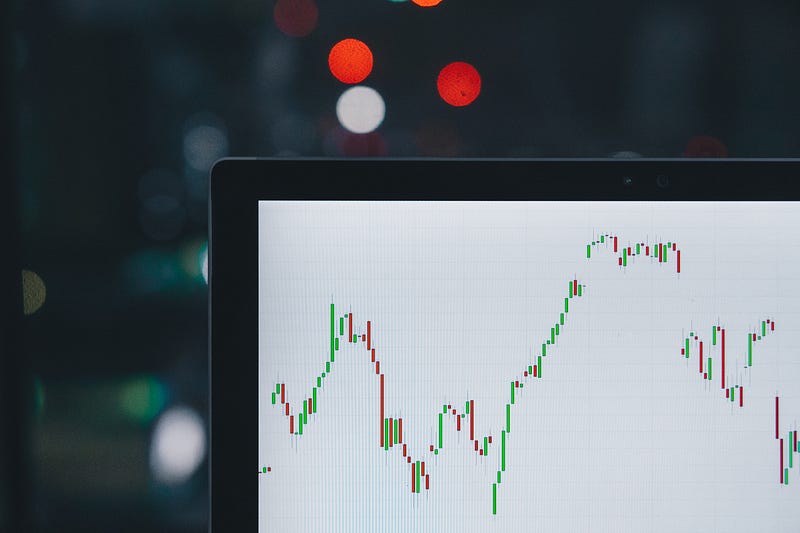
Photo by m. on Unsplash


Multipurpose token

Built on Polygon, CVTX is integrated into the tokenomics ecosystem of CarrieVerse and its card strategy role-playing game (RPG) SuperKola Tactics. It is also the governance token for the CarrieVerse blockchain gaming platform Cling. It is currently tradable on other international exchanges in addition to BingX, such as Gate.io, MEXC Global, BitMart, and ProBit Global, as well as the Korean exchange GOPAX. CVTX can be traded for USDT on all of the above exchanges except for GOPAX, which offers a CVTX/KRW pair. KRW stands for Korean won.

“CVTX has expanded its global presence one step further. We will continue to strive for market expansion through listings on leading exchanges, building on the excitement inspired by gaming and staking,” said David Yoon, CEO of CarrieVerse.


About BingX

Founded in 2018, BingX is a Singapore-based digital asset exchange that offers spot derivatives, copy trading, and grid trading services to over five million users across 100 countries worldwide. Its spot trading volume over the past 24 hours at the time of publication, according to recent data from CoinMarketCap, stands at $602 million. Notably, it allows for easy transfer of assets between Korean exchanges Bithumb and Coinone, having passed their Travel Rules requirements last year.

More to Read
View All
Policy & Regulation·

Sep 25, 2023

Upbit Accidentally Accepts Counterfeit APT Tokens, Initiates Retrieval Efforts

Upbit Accidentally Accepts Counterfeit APT Tokens, Initiates Retrieval EffortsUpbit, South Korea’s largest cryptocurrency exchange, is reported to have accepted deposits of counterfeit Aptos (APT) tokens, mistaking them for their legitimate counterparts. The exchange has been reaching out to the sellers of these tokens by phone, requesting their recovery. This news has been circulating in several online crypto communities since the afternoon of September 24 (Korea Standard Time).Photo by Kenny Eliason on UnsplashUpbit’s responsesOn September 24 at 15:47 KST, Upbit announced a temporary suspension of deposit and withdrawal services for APT due to maintenance on the APT wallet. Following this, at 22:32 KST on the same day, Upbit explained that system maintenance was undertaken after identifying an unusual attempt linked to APT deposits. The crypto exchange went on to announce that the deposit and withdrawal services for APT would resume at 23:00 KST on the same day.DeFi degenerates’ insightsIn relation to this incident, Definalist, a group of DeFi degenerates based in Korea, shared insights on X (formerly Twitter). The group stated: “It seems that during the process of reflecting $APT coin deposits, there was a failure to check the type arguments, and all same functions transfers were recognized as the same APT native token. … If all APT ecosystem tokens were sent to Upbit’s wallet, they would have been mistakenly treated as APT native coins.”Decimal place differenceDefinalist also remarked on the fortunate nature of the counterfeit APT token having six decimal places, in contrast to the authentic APT token’s eight. They noted that if the deceptive token had mirrored the genuine token’s decimal places, the market disruption could have amplified a hundredfold. Meanwhile, the value of the counterfeit APT tokens deposited into Upbit is estimated to be about KRW 20 million (approximately $15,000).

news
Policy & Regulation·

Nov 17, 2023

Philippines breaks new ground in first-ever tokenized bonds sale

Philippines breaks new ground in first-ever tokenized bonds saleThe Philippines is set to offer the country’s first tokenized treasury bonds, a novel way of issuing debt securities using blockchain technology.Photo by Mara Rivera on Unsplash$179 million tokenized bond issuanceAccording to a report by Bloomberg on Thursday, the Bureau of the Treasury announced that it will issue 10 billion pesos ($179 million) of one-year tokenized bonds next Monday after canceling the conventional auction scheduled for the same day. The bonds will be issued by the Development Bank of the Philippines, a state-owned entity, together with the Land Bank of the Philippines.The tokenized bonds will be sold to institutional investors at a minimum denomination of 10 million pesos, with increments of 1 million pesos. The bonds will have a one-year validity, maturing in November 2024. The treasury bond interest rate has yet to be determined and will be confirmed on the date of issuance.Deputy Treasurer Erwin Sta said that the government is exploring the potential of tokenizing real-world assets and bonds and will “continue to study the technology and test how far we can take it.”Tokenization is the process of converting physical or digital assets into digital tokens that can be stored, transferred and traded on a blockchain network. Tokenization can offer several benefits, such as lower costs, faster transactions, greater transparency and enhanced security.Asian surge in tokenizationThe Philippines is not the only Asian country that is experimenting with tokenized bonds. This latest bond tokenization project follows hot on the heels of a similar move in Singapore. Earlier this week, British banking conglomerate Standard Chartered, through its Singapore-based fintech investment subsidiary SC Ventures, unveiled a new platform called Libeara. Libeara is gearing up to offer the first-ever tokenized Singapore-dollar government bond fund.In February, Hong Kong issued $100 million of tokenized green bonds under its Green Bond Programme, using Goldman Sachs’ tokenization protocol. The tokenized green bonds, a first-of-its-kind issuance, have a one-year validity and aim to support environmental projects in the region.Authorities in Singapore have also launched a series of pilots on tokenizing real-world assets in collaboration with JPMorgan, DBS Bank, BNY Mellon and Apollo, an investment firm. The pilots will test the feasibility and efficiency of tokenizing assets such as equities, bonds and funds. The United Arab Emirates (UAE) partnered with HSBC to conduct the tokenization of bonds as well.The tokenization of real-world assets is not limited to Asia. Israel’s Tel Aviv stock exchange completed a proof-of-concept for tokenizing fiat and government bonds, demonstrating the potential of blockchain technology to transform the capital markets.The tokenization of real-world assets using blockchain technology is a growing trend among governments and financial institutions. According to the Boston Consulting Group, tokenized assets could reach a market capitalization of $16 trillion by 2030. By issuing tokenized bonds, the Philippines is joining the ranks of the pioneers in this field, opening up new possibilities and opportunities for the crypto industry and the economy as a whole.

news
Web3 & Enterprise·

Mar 14, 2024

OKX scores payment institution license in Singapore

Leading cryptocurrency exchange OKX has acquired an in-principle approval from Singapore’s financial regulatory authority for a Major Payment Institution (MPI) license through its local arm, OKX SG.Photo by Mark Stoop on UnsplashEnabling broader service offeringAccording to a blog post published by the company on March 12, OKX confirmed the receipt of in-principle approval for the coveted license. The MPI license, issued by the Monetary Authority of Singapore (MAS), Singapore's primary financial regulatory body, represents an important step forward for the company. Once granted the full license, OKX will be empowered to offer digital payment token services and facilitate cross-border transfers within Singapore. A plethora of OKX executives took to social media to comment on the achievement. Hong Fang, President of OKX, expressed the company's long-standing interest in Singapore, describing it as a cornerstone of its global strategy. Fang emphasized Singapore's appeal to entrepreneurial ventures, citing its tech-savvy populace as early adopters. She praised the country's regulatory framework as "clear and thoughtful," enabling businesses like OKX to cultivate sustainable growth over the long term. With this regulatory approval, OKX intends to concentrate on bolstering its spot product offerings in the Singaporean market. Fang outlined plans to forge local banking partnerships to enhance customer experiences and expand service offerings in the future. In summarizing the company’s outlook, Fang wrote that OKX is looking to “build locally. Be compliant. Invest long-term.” OKX CEO Star Xu suggested that the firm intends to be a “long-term member of the Singapore fintech community” as a consequence of the approval. Global market expansionThe company’s CMO, Haider Rafique, pointed out that this latest license approval follows hot on the heels of further expansion in venues like Dubai, Argentina and Turkey. The in-principle license approval follows OKX's recent acquisition of a conditional license from Dubai’s cryptocurrency regulatory authority. On Jan. 16, the Virtual Assets Regulatory Authority (VARA) of Dubai granted OKX a license, enabling the exchange to provide regulated services as a virtual asset service provider within the region.On Feb. 27 the firm launched OKX TR, catering to the needs of crypto users in Turkey. In the same month, the company launched its services within the Argentinian market. MPI-licensed entities like OKX enjoy the privilege of facilitating multiple payment services, surpassing volume limitations prescribed for standard payment firms. This flexibility allows OKX to transcend the prescribed limits of three million Singapore dollars ($2.2 million) for individual payment services and a monthly cap of SG$6 million ($4.4 million) for multiple services. Joining OKX in the pursuit of regulatory compliance, BitGo, a prominent crypto custody business, also received an in-principle approval from MAS. BitGo announced on Jan. 10 that it had secured initial approval, subject to fulfilling additional requirements stipulated by the regulator. Several other notable cryptocurrency entities, including Crypto.com, Coinbase and Ripple, have already obtained complete payment institution licenses in Singapore. OKX's attainment of in-principle approval underscores the ongoing drive among market participants towards regulatory compliance and expansion into key markets. The move should help the firm to position itself well for further market growth as the digital assets space continues to progress.

news
Loading