Top

Korean Crypto Exchanges Struggle Despite Market Recovery

Markets·October 10, 2023, 9:32 AM

The results of a recent study by the South Korean Financial Intelligence Unit (FIU) released on Monday revealed that ten domestic cryptocurrency exchanges have reported zero revenue from transaction fees, with half of them struggling to achieve a daily average trading volume of KRW 1 million ($740).
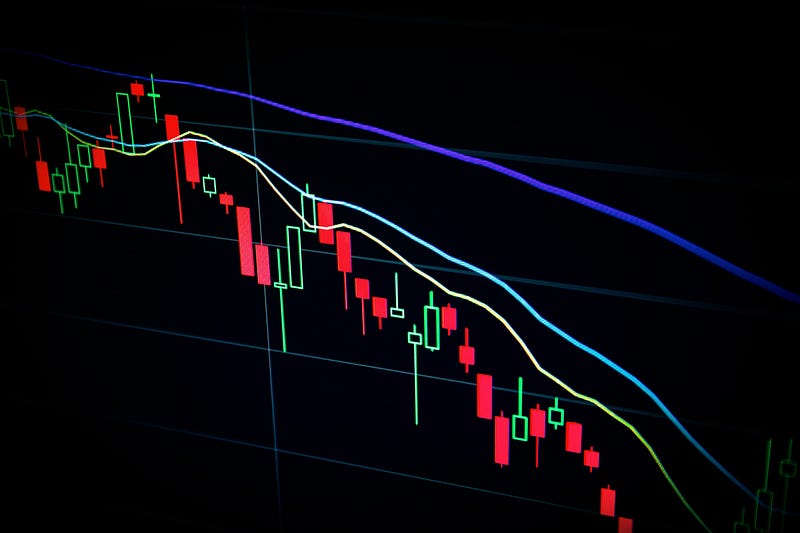
Photo by Maxim Hopman on Unsplash


Trends of growth and decline

The study looked into data from 35 registered virtual asset service providers (VASPs) for the first half of this year. The findings showed that compared to the second half of last year, the crypto market capitalization and Korean won deposits increased, but exchanges faced growing challenges, illustrated by a widening gap between leading fiat-to-crypto exchanges and smaller crypto-only exchanges.

In the first half of this year, the operating profit of won-based exchanges reached KRW 259.8 billion (approximately $193 million), a 46% increase compared to the second half of last year, which recorded KRW 177.9 billion. In contrast, crypto exchanges recorded an operating loss of KRW 32.5 billion. Notably, out of 21 crypto-only exchanges, 10 of them reported no revenue at all from transaction fees, and 18 were in a state of complete capital impairment. Meanwhile, the operating profit of won-based exchanges was concentrated among the country’s top two exchanges, Upbit and Bithumb.

But from a broader perspective, as of the end of June, this year’s total capitalization of the crypto market reached KRW 28.4 trillion — a 46% increase compared to the end of the second half of last year. Korean won deposits also increased by KRW 400 billion, or 11%, compared to the previous half. The overall operating profit was KRW 227.3 billion, up 82% from KRW 124.9 billion at the end of the second half of last year.

“The first half of this year saw a rise in prices of virtual assets and investor sentiment, leading to an increase in Korean won deposits, overall market capitalization, and operating profits for exchanges, compared to the second half of 2022,” the FIU remarked.

The number of new listings and delistings on virtual asset exchanges also surged with 169 new listings and 115 new delistings. These represented a more than double increase and a 47% increase, respectively, compared to the second half of last year. 66% of the delisted crypto assets were coins that had been exclusively listed on a given exchange.

Despite the market’s recovery, trading volume and the number of users have slightly decreased. The daily average trading volume in the domestic crypto market for the first half of this year was KRW 2.9 trillion, down 1.3% compared to the second half of 2022. In addition, the number of registered accounts with VASPs also dropped by 19% to 9.5 million compared to the end of last year. This can be attributed to a growing number of dormant accounts and the removal of duplicate accounts.

The quantity of verified users has also declined. The number of individuals and corporations that had completed the mandatory Know Your Customer (KYC) procedures needed to engage in trading decreased by 210,000 to 6.06 million (including duplicates) compared to the end of 2022. The majority of users, or those who own less than KRW 1 million in virtual assets, dropped by 7%.

On the other hand, the amount of virtual assets leaving the country increased. In the first half of this year, a total of KRW 22.1 trillion was transferred to whitelisted overseas operators or individual wallet addresses, marking a KRW 500 billion increase compared to the second half of last year. This trend could be accredited to futures trading and arbitrage trading influenced by the so-called “kimchi premium” — a term used to describe the difference between trading prices of cryptocurrencies in Korea and in other foreign exchanges.


Age demographics

Other findings showed that the age group that traded the most virtual assets is in their 30s, accounting for 30% of all users. Within this group, men make up 70%, with 1.27 million men recorded as engaging in crypto trading. Following closely with 1.2 million, men in their 40s were the second-largest demographic.

More to Read
View All
Web3 & Enterprise·

Dec 09, 2025

Abu Dhabi broadens crypto regime with new stablecoin approvals and Binance licensing

While global cryptocurrency sentiment remains subdued, authorities and state-linked investors in Abu Dhabi are deepening their engagement with digital assets through expanded regulation and increased capital allocation. On Dec. 8, stablecoin issuer Tether and cryptocurrency exchange Binance announced they had secured regulatory approvals from the Abu Dhabi Global Market (ADGM), the international financial center and free economic zone in the UAE capital. The moves signal a continued effort by the United Arab Emirates to integrate blockchain technology into its formal financial system, creating a contrast with the broader market’s current “extreme fear” rating of 22 on the Alternative Fear and Greed Index.Photo by DrawKit Illustrations on UnsplashTether, Ripple stablecoins approvedTether confirmed that its USDT stablecoin has been designated as an Accepted Fiat-Referenced Token within the ADGM. This status allows financial entities licensed by the Financial Services Regulatory Authority (FSRA) to conduct regulated activities involving USDT across a broader range of blockchain networks, including Aptos, Celo, Cosmos, Kaia, Near, Polkadot, Tezos, TON, and TRON. The approval builds on previous authorizations for USDT on Ethereum, Solana, and Avalanche, and follows the FSRA’s recognition of Ripple’s RLUSD stablecoin last month. Binance fully cleared for regulated launch Simultaneously, Binance announced it has secured full authorization from the FSRA to operate a regulated platform within the financial center. Pending final operational preparations, Binance is scheduled to commence regulated activities on Jan. 5, 2026. The exchange will operate in Abu Dhabi through a three-entity structure that separates key functions, mirroring traditional financial infrastructure. Nest Exchange Limited (currently Nest Services) will function as the regulated arm for spot and derivatives trading, while Nest Clearing and Custody Limited will manage clearing and settlement. Broker-dealer activities will be handled by a third entity, Nest Trading Limited (currently BCI Limited). Circle awarded FSP for paymentsMore recently, Circle, the issuer of the USDC stablecoin, announced the receipt of a Financial Services Permission (FSP) license from the FSRA. The license allows Circle to act as a Money Services Provider within Abu Dhabi’s International Financial Centre (IFC), enabling it to support regulated payment and settlement services for businesses, developers, and financial institutions across the UAE. Circle has been expanding its regulatory presence in the region throughout the year. In February, the Dubai International Financial Centre (DIFC) recognized the company’s USDC and EURC tokens as permitted crypto assets under its virtual asset framework. This regulatory expansion comes amid the UAE’s efforts to develop a comprehensive financial compliance framework. A recent report by the Global Finance & Technology Network identified the UAE as one of seven jurisdictions globally that meet three core standards for anti-money laundering and counter-terrorist financing compliance. Those standards include know-your-customer (KYC) and identity verification, suspicious transaction reporting, and implementation of the Financial Action Task Force (FATF) Travel Rule. Institutional capital inflows riseIn parallel with the regulatory push, investment vehicles linked to the Abu Dhabi government have increased their exposure to digital assets. Bloomberg reported that in the third quarter, the Abu Dhabi Investment Council, a Mubadala subsidiary, increased its position in BlackRock’s iShares Bitcoin Trust ETF more than threefold to nearly eight million shares. Separately, the Royal Group, an investment firm associated with the Abu Dhabi royal family, currently holds roughly 6,516 Bitcoin, according to Arkham data. An earlier Crypto Briefing report noted that this acquisition was carried out through its majority-owned subsidiary, Citadel Mining. These simultaneous developments in licensing and capital allocation suggest a coordinated strategy to establish Abu Dhabi as a hub for institutional digital assets, with a focus on long-term infrastructure despite current market fragility. 

news
Policy & Regulation·

Feb 10, 2024

Thailand’s SEC takes legal action against former Zipmex CEO

The Securities and Exchange Commission (SEC) of Thailand has initiated legal proceedings against Akarlap Yimwilai, the former director and CEO of Zipmex Thailand. Failure to disclose vital informationThe Commission set out its allegations against Yimwilai in a statement published to its website on Thursday. The allegations revolve around Yimwilai's purported failure to disclose vital information during his tenure, resulting in financial losses for Zipmex customers. According to the SEC's investigation, Yimwilai allegedly transferred cryptocurrency from Zipmex Thailand's wallets to overseas digital wallets without prior disclosure to customers.Photo by Olivier Darny on Pexels Unauthorized digital asset movementsThe SEC's findings indicate that customer assets held in Zipmex Thailand's Z Wallet were moved into overseas digital wallets before any official announcement regarding changes in terms and conditions. This conduct, the regulator asserts, contradicts the information provided by Zipmex Thailand, constituting fraudulent misrepresentation. Yimwilai served as CEO of Zipmex Thailand from August 2018 to November 2023, as per his LinkedIn profile. This deceptive action misled users regarding the security of their assets, the SEC claims, prompting the Commission to charge him with violating Section 82 of the Digital Asset Business Operation Act B.E. 2561. The SEC's accusations extend to Zipmex Thailand's submission of inaccurate reports on customer assets and violations of regulatory requirements. The regulator contends that the reports submitted by Zipmex Thailand were inconsistent with independently verified information. Inviting further legal actionIn response to these allegations, the SEC has forwarded charges against Yimwilai to the Office of the Public Prosecutor (OPP) for further legal proceedings. The SEC has also filed a formal complaint against Yimwilai with the Office of the Provincial Crime Suppression Division, indicating a pursuit of additional legal action. The determination or otherwise of legal liability will be a pivotal step in this process, emphasized by the SEC. Zipmex Thailand, a subsidiary of Singapore-based Zipmex under the leadership of Marcus Lim, obtained approval to operate from the Ministry of Finance and SEC in 2020. The company reportedly came under scrutiny from financial regulators over its acquisition by V Ventures in 2023.  V Ventures backed out of the $100 million buyout of the company last year, which would have included the return of customer deposits. It claimed that Zipmex had not lived up to the terms of the buyout contract.On Feb. 2, the Thai SEC directed Zipmex to temporarily suspend its digital asset trading and brokerage services, granting the firm a 15-day period to adhere to regulatory guidelines. Earlier reports had highlighted Zipmex's application for court protection amidst a wave of bankruptcies among crypto lenders. In November 2023, Zipmex proposed a restructuring plan to reimburse creditors at $0.30 on the dollar, encountering resistance from key stakeholders. The initial offer stood at three cents on the dollar, with the potential to increase to 30 cents in the event of optimized capital recovery.

news
Policy & Regulation·

May 17, 2023

Korean Blockchain Firm Proposes Fintech Collaboration in Cambodia

Korean Blockchain Firm Proposes Fintech Collaboration in CambodiaSouth Korean fintech and blockchain company KONDOR recently made an announcement through a press release regarding the establishment of a blockchain fintech advisory board in Cambodia. The firm has proposed a business agreement to the Securities and Exchange Regulator of Cambodia (SERC) with the aim of ensuring sustainable growth in the financial sector and capital markets.Photo by allPhoto Bangkok on PexelsFintech advisory boardThe advisory board comprises experts from various fields, including finance, economics, law, blockchain technology, fintech, and artificial intelligence. They will function independently, offering counsel on policy decisions.Sou Soucheat, Director General of SERC, highlighted that Cambodia is currently in the process of rebuilding and has a youth-driven economy and financial markets. He sees the collaboration with KONDOR as a valuable opportunity to develop a future-oriented financial system.The advisory board will see participation from KONDOR and other notable members, namely VEXK, a global digital asset exchange in Vietnam; Blue Contents, a Honolulu-based digital economy research center; and the Paññāsāstra University of Cambodia, a key player in the country’s educational field.KONDOR and VEXK have put forth a proposal for the joint establishment of a trust company and the pursuit of a custody license in alignment with Cambodia’s revised trust law of 2019.Procuring licensesFollowing the proposal’s approval, VEXK plans to procure a license as a digital asset exchange, as well as a license to establish a trust company. This would enable VEXK to effectively oversee clients’ digital and physical assets through accounts within the established trust company. The safety of these assets will be ensured through insurance coverage provided by reputable global insurers. Furthermore, VEXK will acquire the ability to facilitate USD trading and will retain the digital asset exchange license for five years.The license application will gain support from the SDG Impact Fund, a US-based organization managing $11 billion worth of assets, and the Estates & Infrastructure Exchange (EIX), a project bond exchange based in London.EIX CEO Mark Worrall said that active support from a securities regulator in the dynamic and expanding Web3 era would certainly contribute to Cambodia’s economic growth.

news
Loading