Top

Abu Dhabi broadens crypto regime with new stablecoin approvals and Binance licensing

Web3 & Enterprise·December 09, 2025, 6:59 AM

While global cryptocurrency sentiment remains subdued, authorities and state-linked investors in Abu Dhabi are deepening their engagement with digital assets through expanded regulation and increased capital allocation.


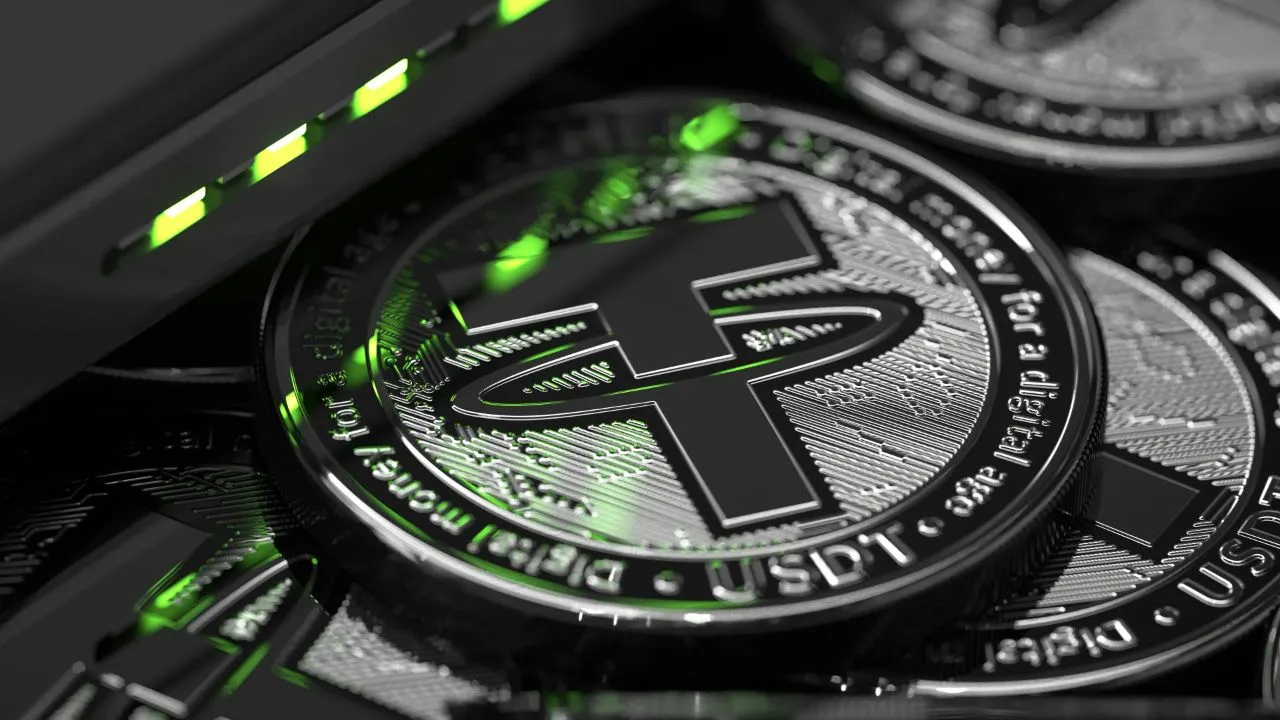
On Dec. 8, stablecoin issuer Tether and cryptocurrency exchange Binance announced they had secured regulatory approvals from the Abu Dhabi Global Market (ADGM), the international financial center and free economic zone in the UAE capital. The moves signal a continued effort by the United Arab Emirates to integrate blockchain technology into its formal financial system, creating a contrast with the broader market’s current “extreme fear” rating of 22 on the Alternative Fear and Greed Index.
https://asset.coinness.com/en/news/0ae1142cc50e46478e02ee3fdc72e08c.webp
Photo by DrawKit Illustrations on Unsplash

Tether, Ripple stablecoins approved

Tether confirmed that its USDT stablecoin has been designated as an Accepted Fiat-Referenced Token within the ADGM. This status allows financial entities licensed by the Financial Services Regulatory Authority (FSRA) to conduct regulated activities involving USDT across a broader range of blockchain networks, including Aptos, Celo, Cosmos, Kaia, Near, Polkadot, Tezos, TON, and TRON. The approval builds on previous authorizations for USDT on Ethereum, Solana, and Avalanche, and follows the FSRA’s recognition of Ripple’s RLUSD stablecoin last month.


Binance fully cleared for regulated launch 

Simultaneously, Binance announced it has secured full authorization from the FSRA to operate a regulated platform within the financial center. Pending final operational preparations, Binance is scheduled to commence regulated activities on Jan. 5, 2026.


The exchange will operate in Abu Dhabi through a three-entity structure that separates key functions, mirroring traditional financial infrastructure. Nest Exchange Limited (currently Nest Services) will function as the regulated arm for spot and derivatives trading, while Nest Clearing and Custody Limited will manage clearing and settlement. Broker-dealer activities will be handled by a third entity, Nest Trading Limited (currently BCI Limited).


Circle awarded FSP for payments

More recently, Circle, the issuer of the USDC stablecoin, announced the receipt of a Financial Services Permission (FSP) license from the FSRA. The license allows Circle to act as a Money Services Provider within Abu Dhabi’s International Financial Centre (IFC), enabling it to support regulated payment and settlement services for businesses, developers, and financial institutions across the UAE.


Circle has been expanding its regulatory presence in the region throughout the year. In February, the Dubai International Financial Centre (DIFC) recognized the company’s USDC and EURC tokens as permitted crypto assets under its virtual asset framework.


This regulatory expansion comes amid the UAE’s efforts to develop a comprehensive financial compliance framework. A recent report by the Global Finance & Technology Network identified the UAE as one of seven jurisdictions globally that meet three core standards for anti-money laundering and counter-terrorist financing compliance. Those standards include know-your-customer (KYC) and identity verification, suspicious transaction reporting, and implementation of the Financial Action Task Force (FATF) Travel Rule.


Institutional capital inflows rise

In parallel with the regulatory push, investment vehicles linked to the Abu Dhabi government have increased their exposure to digital assets. Bloomberg reported that in the third quarter, the Abu Dhabi Investment Council, a Mubadala subsidiary, increased its position in BlackRock’s iShares Bitcoin Trust ETF more than threefold to nearly eight million shares.


Separately, the Royal Group, an investment firm associated with the Abu Dhabi royal family, currently holds roughly 6,516 Bitcoin, according to Arkham data. An earlier Crypto Briefing report noted that this acquisition was carried out through its majority-owned subsidiary, Citadel Mining.


These simultaneous developments in licensing and capital allocation suggest a coordinated strategy to establish Abu Dhabi as a hub for institutional digital assets, with a focus on long-term infrastructure despite current market fragility.

 

More to Read
View All
Policy & Regulation·

Sep 07, 2023

G20 Nations Believed to Have Agreed Upon Global Crypto Framework

G20 Nations Believed to Have Agreed Upon Global Crypto FrameworkUnder India’s current leadership of the G20, reports are emerging that participating nations have reached a unanimous consensus on establishing a common framework for cryptocurrency regulation.According to local news sources, this monumental decision has been reached, and it’s expected to take center stage during the 18th G20 Heads of State and Government Summit scheduled for September 9–10 in New Delhi.Photo by Rachit Chaudhary on UnsplashIMF/FSB synthesis paperThe reports published on Wednesday cite information from official sources that the International Monetary Fund (IMF) and the Financial Stability Board (FSB) have collaboratively released a synthesis paper laying the groundwork for this comprehensive regulatory framework. Consequently, discussions around this initiative will likely feature prominently on the agenda during the upcoming leaders’ summit.The unity achieved by G20 nations in forging this global cryptocurrency regulation framework marks a significant milestone in the ever-evolving area of digital assets. The framework’s primary goal is to provide a structured approach to oversee cryptocurrencies, potentially mitigating risks associated with their use, all while fostering innovation within the rapidly expanding crypto sector.Multilateral Development Banks (MDBs)Aside from this development relative to digital assets, multiple working groups have been working on recommendations related to Multilateral Development Banks (MDBs). These groups have proposed measures to confront future financing challenges, and there is growing support for establishing a $200 billion fund to meet financing needs over the next decade.Beyond financial concerns, the G20 nations, under India’s leadership, have embarked on a comprehensive evaluation of the high volatility in food and energy security. Stressing the vital importance of stability in these sectors for sustainable global growth, these issues will take the spotlight during the leaders’ summit later this week.TaxationAnother area where India has made significant strides is international taxation. During India’s G20 Presidency, a pillar taxation system for international taxation has been recommended. The efforts in this domain have been described as making “significant progress” so far, underscoring the commitment of G20 nations to address global taxation challenges.It’s interesting to note that on the home front, India has been far less progressive when it comes to crypto-related taxation. The country has imposed a 30% tax on cryptocurrency transactions. Local crypto exchanges have also pointed to a 1% Tax Deducted at Source (TDS) which is being applied to exchanges as a major challenge that is having an impact on their operations.A threat and an opportunityLate last month, Indian Prime Minister Narendra Modi urged his G20 counterparts to work towards global collaboration in respect of formulating global crypto regulations. On Wednesday India’s Finance Minister, Nirmala Sitharaman, confirmed that active discussions were underway as part of India’s G20 presidency. At an event in India’s financial capital of Mumbai, Sitharaman stated:”India’s [G20] presidency has put on the table key issues related to regulating or understanding that there should be a framework for handling issues related to crypto assets.” While confirming that G20 members were working toward establishing a global crypto framework, Sitharaman also remarked that crypto was a “threat as well as an opportunity.”

news
Web3 & Enterprise·

Sep 07, 2023

Experts Gather at KBW 2023 to Explore the Future of Blockchain and Web3

Experts Gather at KBW 2023 to Explore the Future of Blockchain and Web3Blockchain and Web3 experts from around the world gathered at the Shilla Hotel in Seoul on Tuesday and Wednesday to attend Impact, the main conference of Korea Blockchain Week (KBW) 2023. There, they shared insights on the challenges faced by the blockchain industry as well as future prospects, especially their anticipation for South Korea’s role in shaping the industry’s landscape.Photo by Terren Hurst on UnsplashCurrent challengesAmong these experts was Sid Powell, CEO and Co-founder of Maple Finance; Stephen Richardson, Managing Director of Financial Markets and Head of the Asia Pacific region at Fireblocks; and Kelvin Koh, Co-founder and CIO at Spartan Group, who discussed the opportunities presented by bridging traditional finance with decentralized finance (DeFi) during a panel session on Wednesday.They mentioned the recent trending decline in DeFi transactions among institutional investors, which can be attributed to the DeFi industry’s fragmented infrastructure that can be difficult to understand. In order to rekindle investor confidence and interest, the industry must consider the integration of infrastructure and highlight the advantages of DeFi such as low costs, transparency, and liquidity to showcase its potential for financial gain.In a fireside chat on the same day, Jeremy Allaire, Co-founder and CEO of global fintech company Circle, acknowledged yet another mounting challenge facing the industry — the mass adoption of blockchain technology and Web3. However, the solution to this roadblock is not far out of reach, he said. Allaire predicted that by 2025, most cryptocurrencies, including stablecoins — cryptocurrencies that are pegged to a commodity or fiat currency to maintain a stable price — will have a legal foundation, thus paving the way for mass adoption.Suk Hwan Paul Kim, CEO and Vice Chairman of Grip Labs, and Archie Ravishankar, CEO of Cogni, also said that implementing user-friendly services and institutional entry will be a key strategy for persuading Web2 users to transition to Web3 platforms and encouraging mass adoption.Outlook for KoreaMeanwhile, several key figures expressed positive hopes for the pivotal role that Korea will play in the development of the Web3 ecosystem. In particular, Polygon Labs co-founder Sandeep Nailwal and COO Michael Blank pointed out that Korean companies, especially those in the gaming industry, are open to applying Web3 technology to their business projects, thus accelerating next-generation innovation in various fields like gaming, social media, and entertainment. Indeed, Polygon Labs’ own Korean partner firms recognize that the future of the Internet will rely on blockchain technology.In order to build a solid Web3 ecosystem, they said, three core values are of utmost importance — privacy, transparency, and openness. Fostering an environment that users can trust while freely interacting with others is the key, and Polygon Labs has vowed to contribute to doing so.Notably, Commissioner Caroline D. Pham of the US Commodity Futures Trading Commission (CFTC) was also in attendance, where she shared her thoughts on the proper regulation of virtual assets. She stated that it is essential to apply the safety measures we have learned from the past century of financial history to the future cryptocurrency industry, cautioning against a one-sided view that virtual assets are inherently bad.In drawing a comparison between the US and Korea, she stated that although the US possesses strong technical capabilities and is gradually adopting a more positive perspective on virtual assets, Korea is still ahead by a decade due to the fact that the general public is more open to embracing emerging technologies. Therefore, the future partnership between the US and Korea could offer valuable insights, not only in terms of economic prosperity but also in legal and regulatory aspects.

news
Web3 & Enterprise·

Jan 23, 2024

NEOPIN to launch bridge platform for Finschia, Ethereum and Klaytn networks

Centralized decentralized finance (CeDeFi) protocol NEOPIN is gearing up to launch NEOPIN Bridge, a platform designed to bridge the Finschia network with Ethereum Virtual Machine-based (EVM) networks like Ethereum and Klaytn. According to an official announcement via Medium on Tuesday (KST), the service will be launched by the end of February.Photo by Shubham's Web3 on UnsplashLinking ecosystemsEver since its establishment of an official partnership with the Finschia Foundation last month, NEOPIN has been developing Finschia’s first EVM-compatible bridge. The project is intended to facilitate the process of exchanging cryptocurrencies for users on the Finschia, Ethereum and Klaytn networks. This will enhance the development and liquidity of the Finschia and Klaytn ecosystems through the integration of Ethereum-based stablecoins.  Currently, NEOPIN’s DeFi protocols are accessible only through the NEOPIN Wallet. But with NEOPIN Bridge, user accessibility and convenience will be enhanced through provided support for various wallets like MetaMask, Kaikas, DOSI Vault and more. New services will also be implemented, including token swaps for users to transfer the converted Finschia tokens (FNSA) through the bridge. NEOPIN is the only DeFi protocol that simultaneously supports both the Finschia and Klaytn mainnets, who recently announced a joint proposal for the Dragon DeFi Initiative – a project to build a DeFi ecosystem active on both the Finschia and Klaytn mainnets. NEOPIN’s strengthsWith a record of zero incidents including stake slashing since 2018, along with a 99.99999% block generation rate, the protocol touts a clean track record in node validation across multiple blockchains, emphasizing its dedication to trust and stability. “NEOPIN is recognized for its robust security and reliability, serving as a role model for the Abu Dhabi DeFi regulatory framework. The launch of our self-developed NEOPIN Bridge is a significant stride towards encouraging the growth of the Finschia and Klaytn ecosystems,” said Ethan Kim, CEO of NEOPIN.

news
Loading