Top

Crypto Titans Clash on Elon Musk’s X

Web3 & Enterprise·September 25, 2023, 1:06 AM

A subtle panel discussion photo posted by Andrei Grachev of Singapore’s DWF Labs turned into a war of words among crypto trading titans on Elon Musk’s X (formerly Twitter).

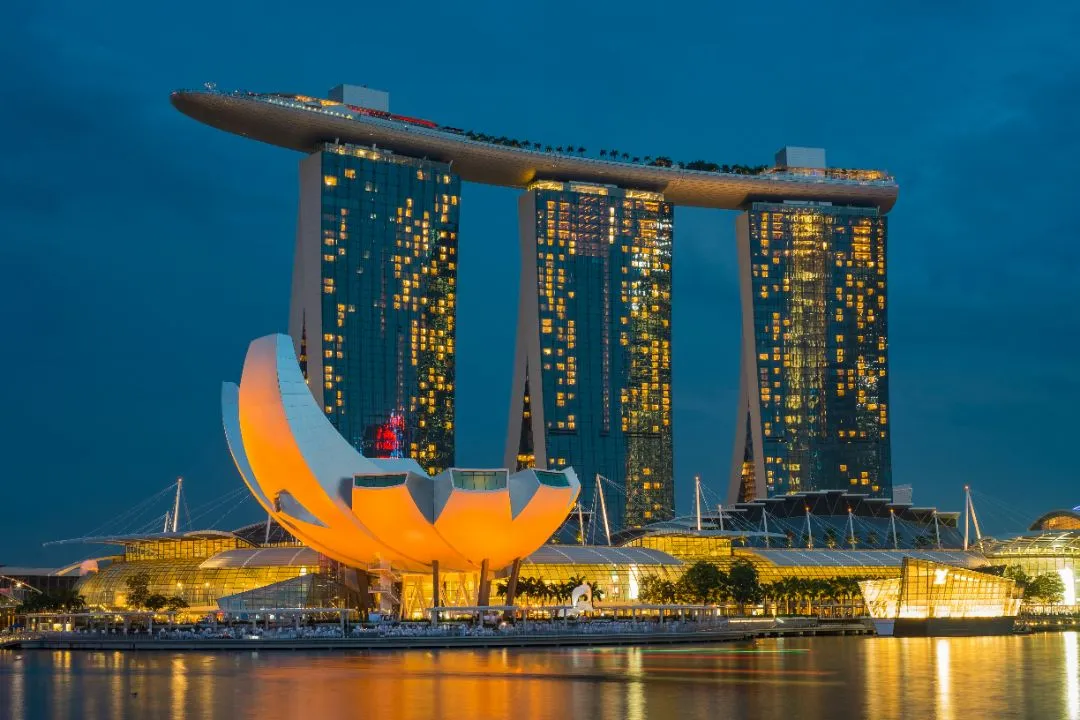
Photo by Marek Piwnicki on Unsplash


DWF vs GSR

Grachev, who is a Managing Partner at the market maker and Web3 investment firm, thanked his fellow panelists in the post. However, the tone quickly soured as Cristian Gil, Co-Founder of rival market-making giant GSR, took offense to Grachev’s presence on the panel and voiced his disapproval on the platform.

Gil didn’t mince his words, stating: “[Andrei Grachev] had absolutely no business to be on that panel. It’s insulting to [GSR] , [OKX] and [Wintermute] to be in the same room as [DWF Labs].”


DWF vs Wintermute

His remarks received a “Like” from Evgeny Gaevoy, the CEO of market maker Wintermute. In response, Grachev defended his presence, asserting that DWF was superior in technology, trading, and business development compared to its rivals, going so far as to suggest to Gil: “Yeah, if I were you — I would be also crying all the time.”

The exchange continued with Grachev claiming that DWF was capturing market share from Wintermute, and Gaevoy responded with a nonchalant “lol,” challenging Grachev to invest more if he believed DWF posed a threat.


DWF Labs’ rapid growth

While the exchange consisted of mere words, it shed light on DWF Labs’ sudden rise to prominence earlier over recent months. The company has featured prominently in an array of investments in Web3 startups and blockchain networks over the course of 2023. Prominent among them have been investments in EOS, the Algorand ecosystem, and the TRON ecosystem.

Recently appearing on the BlockBeats podcast, Grachev defended the company, outlining that it was not involved in market manipulation in response to recent assertions to the contrary.

“We do not engage in any manipulative behavior,” Grachev stated. “Of course, we have the futures market, which is a tool for hedging positions and trading clubs. We are completely different from directional traders,” he added.

Gaevoy added some humor to the mix by sharing a meme, raising questions about the maturity level of these prominent figures in the crypto industry. The spat provoked a broad array of commentary from the crypto community.


Crypto immaturity

The very public clash raises concerns about how traditional Wall Street firms, currently making bold moves into the crypto space, might perceive such behavior. Notably, firms like BlackRock have been involved in Bitcoin ETF applications, signaling a growing interest in cryptocurrency among mainstream financial institutions. In response to Gaevoy and Grachev, one commentator wrote: “The institutions are never coming back.”

While it would appear that there’s no love lost between DWF, GSR, and Wintermute, it also seems evident that both market makers can agree on Singapore as being an appropriate location from where to operate a crypto business. While Wintermute is London-based, it revealed recently that it was expanding its operations in Singapore. Like Wintermute, GSR is primarily based in London although it too maintains a presence in Singapore to service Asia-centric business.


More to Read
View All
Policy & Regulation·

Jul 27, 2023

Singapore High Court Recognizes Cryptocurrency as Personal Property

Singapore High Court Recognizes Cryptocurrency as Personal PropertyIn a significant ruling on July 25, Judge Philip Jeyaretnam of the High Court of Singapore declared that cryptocurrency is capable of being held in trust and should be recognized as property.The judge’s decision came in response to a case brought by Dubai-headquartered crypto exchange Bybit against its former employee, Ho Kai Xin, who was accused of transferring approximately 4.2 million Tether (USDT) from the crypto exchange to her private accounts without authorization.Photo by Tingey Injury Law Firm on UnsplashNo fundamental differenceIn his ruling, Judge Jeyaretnam emphasized that there is no fundamental difference between cryptocurrencies, fiat money, or even physical objects like shells when it comes to their status as property. He argued that as long as these objects hold value and are based on mutual faith, they can be considered property. The judge’s verdict is seen as a crucial step in establishing the legal status of digital assets within the Singaporean jurisdiction.Addressing the argument that cryptocurrencies lack physical presence and therefore cannot be considered property, Judge Jeyaretnam drew an analogy, stating: “We identify what is going on as a particular digital token, somewhat like how we give a name to a river even though the water contained within its banks is constantly changing.” By equating cryptocurrencies to named entities, the judge made it clear that physical tangibility is not a prerequisite for something to be classified as property.Cryptocurrencies have valueFurthermore, the ruling challenges the perception that cryptocurrencies have no “real” value. Judge Jeyaretnam firmly refuted this notion, highlighting that the value of any asset, whether physical or digital, is ultimately determined by collective human belief and judgment.One critical classification made by the judge is grouping cryptocurrencies under the category of “things in action” within British common law. This categorization means that cryptocurrencies are considered a form of property, over which personal rights can be claimed and enforced through legal actions, rather than requiring physical possession.The judge’s decision also referenced the Monetary Authority of Singapore’s (MAS) consultation paper, which proposes implementing segregation and custody requirements for digital payment tokens. By taking cues from the MAS’s stance on digital assets, the court emphasized the legality of holding cryptocurrencies on trust, as long as practical methods for identification and segregation are in place.Cues taken from existing lawSingapore’s legal framework for property also played a crucial role in the ruling. Judge Jeyaretnam pointed to Order 22 of Singapore’s Rules of Court 2021, which defines “movable property” to include various assets, such as cash, debts, bonds, shares, and cryptocurrency or other digital currency. This inclusion reinforces the recognition of cryptocurrencies as a valid form of property within Singaporean law.In April of this year, a Hong Kong court reached a similar conclusion, recognizing cryptocurrency as property. In the High Court of Justice in London the following month, non-fungible tokens (NFTs) were recognized as “private property.”Overall, Judge Jeyaretnam’s ruling represents a significant milestone in the legal recognition of cryptocurrencies in Singapore. By acknowledging cryptocurrencies as property, the court provides greater clarity and certainty for crypto users and investors while affirming the importance of embracing digital assets within the nation’s legal framework.

news
Policy & Regulation·

Aug 29, 2023

Illicit Crypto Activities Estimated to Have Surpassed $100 Billion in S.E. Asia

Illicit Crypto Activities Estimated to Have Surpassed $100 Billion in S.E. AsiaA recent analysis by blockchain analytics firm Bitrace has found that over $100 billion worth of digital currency has been used in illicit crypto trading activities in Southeast Asia.Photo by Bermix Studio on UnsplashThe firm provided details of its analysis via X (formerly Twitter) on Monday. The data underscores the extensive scope of unlawful activities involving cryptocurrencies across Southeast Asia. The analysis further revealed that illicit activities involve fraudulent schemes, online gambling, and money laundering.Misuse of digital asset innovationSome of the key characteristics of digital assets include the ability to maintain anonymity, decentralization, and borderless transactions, which are generally considered positive attributes. However, the very nature of decentralized cryptocurrency means that nobody dictates who uses it or the purpose for which someone decides to use it. With that, these characteristics have rendered illegal undertakings not only more covert but also facilitated expedited transfers of pilfered resources.The silver lining, however, rests in the inherent transparency of blockchain ledgers. This quality has enabled Bitrace’s team of encryption analysts to trace funds implicated in illicit ventures through intensive on-chain analysis.Key insightsThe Bitrace research points towards the following key insights:Prevalence of Tether (USDT): The use of USDT has gained prominence in both illicit activities and gambling operations throughout Southeast Asia, with a staggering sum of over 115 billion USDT recorded in 2022 alone.Shift to Top Trading Platforms: USDT is observed to migrate from unlawful platforms within Southeast Asia towards top-tier trading platforms. Particularly favored by operators and gamblers, a significant proportion hails from the Chinese demographic, consistently gravitating towards specific exchanges.Inflow into Trading Platforms: A noteworthy development emerges as over 14.6 billion USDT prepares to traverse into trading platform accounts. The mounting risk factor diffuses across an expanding spectrum of addresses and platforms.Likely consequencesIf this blockchain analysis is found to be accurate, there are likely to be ramifications for all projects operating in the digital assets, DeFi and Web3 space. It comes at a time when the focus on the regulation of crypto-related businesses is more intense than ever before.Anti-Money Laundering (AML) and Know Your Transaction (KYT) legislation are cornerstone financial services regulations that have been established on a global basis. If these regulations are being flouted, and crypto is being used as a means to circumvent them, there’s a real risk that regulation could be applied heavy-handedly to counteract that threat of widespread illicit activity.Global crypto exchange Binance has faced criticism in this context, with a suggestion in March that its Turkey-based exchange service had been used by an organization connected with militant group Hamas for money laundering and terrorist financing.In a report last week, Binance claimed that it shared information with authorities that led to the capture of senior ISIS members. More such cooperation will likely be necessary to prevent the sector being subject to overzealous regulation.

news
Web3 & Enterprise·

Jul 17, 2025

Binance launches Sharia-compliant staking product

Global crypto exchange platform Binance has launched “Sharia Earn,” a crypto staking product that has been certified as being Sharia-compliant. Sharia-compliant financial products adhere to Islamic law, with sharia law being Islamic canonical law based upon the teachings of the Koran. The product incorporates multi-token staking featuring BNB, Ether (ETH) and Solana (SOL). The product has been built on top of existing infrastructure which Binance had already used to offer “Simple Earn Locked Products” relative to BNB and liquid staking in the case of ETH and SOL. Users of the product can earn staking rewards on crypto assets, while secure in the knowledge that they are investing in compliance with Islamic finance principles.Photo by Kanchanara on Unsplash‘Most meaningful product yet’The new product was announced by the company during a Binance Square Webinar. Binance CEO Richard Teng described it as the firm’s “most meaningful product yet.” He referred to the launch of the product as a defining moment both for Binance and the broader crypto sector. Teng said that “a truly inclusive financial system must respect the values and needs of every community, and that’s the vision behind Sharia Earn.” He added that “Islamic finance’s core tenets—transparency and shared prosperity—are universal,” asserting that these same values are at play in driving Binance. The platform contracted Amanie Advisors, a Dubai-based global Islamic finance advisory service, in order to obtain Sharia-compliant certification for its latest product. Bader Al Kalooti, Binance’s Head of Operations, Marketing & Growth for the Middle East & North Africa (MENA) region, said that “crypto adoption has surged in many Muslim-majority countries, but yield-generating products have remained largely inaccessible due to compliance concerns.” He claimed that the arrival of “Sharia Earn” addresses this issue. While this is Binance’s first Sharia-compliant product, it’s not the first major exchange to enter this market. Last year, Bybit, a Dubai-headquartered global crypto exchange, engaged with ZICO Shariah Advisory Services in order to obtain certification for the trading of Sharia-compliant digital assets. At the time, Bybit claimed to have launched the world’s first crypto Islamic account. Growing Islamic finance sectorIslamic law prohibits interest-based transactions. Crypto staking can be structured in such a way as to avoid interest. Staking is considered to be acceptable as rewards are not fixed. Staking rewards are seen as profit-sharing, with the staker retaining ownership of the asset and being open to the risk of potential losses. Some forecasts suggest that the overarching Islamic finance sector could reach $4 trillion in the years ahead. That represents a market opportunity for crypto platforms to cater to this market by taking the time to acquire Sharia-compliant certification for their crypto products. Binance and Bitget are not the only entities to spot this market opportunity. A new crypto trading platform called BurjX, founded by Canadian entrepreneurs Adam Ferris and Omar Abbas, has been established in the United Arab Emirates (UAE) with a vision of developing Sharia-compliant and regulatory-compliant crypto products.  While no definitive timeline has been established, Abbas told the UAE English language daily newspaper, the Khaleej Times, that his company “will partner with the appropriate Sharia boards, and when we do launch, it’s going to be approved by the appropriate regulators.”

news
Loading