Top

Socket Protocol Raises $5M in Strategic Partnership

Web3 & Enterprise·September 07, 2023, 2:56 AM

Socket Protocol, an interoperability protocol founded by Indian duo Rishabh Khurana and Vaibhav Chellani, has raised $5 million with the strategic investment coming from Coinbase Ventures and Framework Ventures.

Despite the ongoing bear market, cross-chain protocols like Socket have continued to attract substantial investment, underlining the growing belief in a future where different blockchains seamlessly connect.

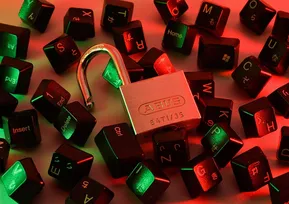
Photo by Towfiqu barbhuiya on Unsplash


More than just funding

Socket Protocol, designed to enhance communication between various blockchains, secured this funding to further its collaboration with Coinbase. The firm articulated the nature of the funding and that collaboration on X (formerly Twitter) on Wednesday.

The partnership aims to create bridging opportunities for developers and users of Coinbase Wallet and Base, Coinbase’s recently launched layer-2 network built on Ethereum. Socket explained that there is already evidence of that collaboration, borne out by a bridging feature that has already been built into Coinbase Wallet, and powered by Socket Protocol.

In relation to the newly launched Base network, the project stated: “We are also helping developers and apps expand to Base with a seamless onboarding experience. Rainbow Wallet, Layer3, Bungee, Zapper & more apps leverage Socket to get their users onboarded to Base already!”

As the cryptocurrency ecosystem witnesses the emergence of new layer-2 networks or “rollups” and the continuous expansion of layer-1 blockchains, Socket Protocol positions itself as a critical player in connecting these fragmented ecosystems.


Seamless cross-network communication

The protocol’s primary goal is to facilitate communication between different blockchains, allowing them to interact seamlessly. By offering a bridge for assets, Socket Protocol simplifies cross-network transactions, effectively making the experience akin to operating on a single unified blockchain.

Socket boasts that since the launch of the project, it has facilitated over 2.5 million cross-channel transactions, accounting for $3.5 billion in value transfer, while claiming that this is just the starting point, with the project aspiring to grow past that milestone going forward.

The recent fundraising highlights the increasing interest in interoperability solutions like LayerZero, as investors recognize the significance of bridging for the future of blockchain technology. Notably, inter-bank messaging system Swift revealed experiments involving the transfer of tokenized value across various private and public blockchains, with Chainlink’s Cross-Chain Interoperability Protocol playing a pivotal role in these experiments.

Socket Co-Founder Chellani emphasized the importance of scalable solutions for the future. He noted that “rollup-to-rollup communication is really important” for achieving scalability, aligning the scaling future with the concept of a multi-chain or cross-chain future. “I think the scaling future, and the multi- or cross-chain future are the same thing,” he added.

This investment in Socket Protocol, coming at a time of market uncertainty within the crypto space, reflects the growing confidence in the potential of blockchain interoperability to unlock new possibilities and create a more interconnected blockchain landscape.


More to Read
View All
Web3 & Enterprise·

Aug 11, 2023

Netmarble’s MARBLEX Bolsters Partnership with Bisonai to Elevate MBX Ecosystem

Netmarble’s MARBLEX Bolsters Partnership with Bisonai to Elevate MBX EcosystemSouth Korean gaming company Netmarble said today that its blockchain subsidiary, MARBLEX, is reinforcing its strategic partnership with blockchain infrastructure company Bisonai to help bolster the MARBLEX gaming finance (GameFi) ecosystem.Revolutionizing gaming with blockchainNetmarble released the MARBLEX Playground in February of this year, which aims to optimize game enjoyment and benefits for players by incorporating NFTs, GameFi, decentralized finance (DeFi), and more that collectively run on a blockchain ecosystem revolving around its governance token, MBX.Photo by ELLA DON on UnsplashAs a company that specializes in building blockchain products for its clients in a wide range of sectors, including gaming, Web3, NFTs, and DeFi, Bisonai has directly contributed to the development of MARBLEX’s MBX ecosystem. In particular, it played a significant role in building MBX Marketplace — a platform for unrestricted NFT transactions within the ecosystem — which went live in November of last year, as well as MBX Explorer, a token scanning site.Following this venture, Bisonai is planning to provide further technical consultations and solutions for the blockchain infrastructure that will be potentially required within the MARBLEX ecosystem.Advancing transparency and accessibility of MBXMeanwhile, MARBLEX disclosed plans on June 27 to overhaul the token system within the MBX ecosystem. As part of its commitment to improving transparency, it announced that it burned approximately 670 million MBX that have not been designated for use within the ecosystem out of its total supply of one billion MBX.The MBX token also received a landmark whitelist approval in Japan last month, becoming the first token from a Korean blockchain gaming project to do so.

news
Policy & Regulation·

May 13, 2024

Worldcoin resumes services in South Korea after two months of suspended operation 

Sam Altman’s iris-scanning project Worldcoin (WLD) has resumed its service in South Korea following two months of suspended operation, according to Digital Today. The project utilizes a device dubbed “Orbs” to collect personal biometric data from users who agreed to have their iris scanned by the machine.  The service was suspended after a number of complaints were filed against Worldcoin in February for its data collection practices. In the following development, Korea’s Personal Information Protection Committee (PIPC) launched an investigation into Worldcoin to examine if any local privacy law has been violated by Worldcoin. This led to suspension of six Orbs installed in several areas in Seoul, including Yeouido and Yeoksam areas.  While these Orbs have resumed operations, the investigation is still underway. The South Korean regulators are yet to decide what legal measures to take regarding Worldcoin, according to the press. Photo by Amanda Dalbjörn on UnsplashProof of personhood: Crypto tokens for simply being human Meanwhile, Worldcoin argues that it is impossible to identify an individual person by solely relying on the iris bio-data. It claims that the data will be only used in providing “proof of personhood” to distinguish humans from artificial intelligence (AI). The project aims to offer its WLD token to users “simply for being human” as universal basic income, whose jobs will be potentially replaced by artificial general intelligence (AGI) in the future.  A Worldcoin official added that the project has addressed potential privacy concerns by eliminating data custody processes and allowing users to remove their sensitive data at will. However, major countries including France and Spain have issued orders to suspend Worldcoin’s operation within their jurisdictions, citing risks involving personal data tracking and breaches.  A PIPC official stated that the government authority will continue the investigation and take further action in line with the Personal Information Protection Act.  

news
Markets·

Apr 19, 2023

Experts Discuss Korean Security Token Market

Experts Discuss Korean Security Token MarketSince the Korean financial regulator released regulatory guidelines on security tokens in February, many have anticipated that the introduction of security tokens would transform the concept of investment and give rise to new market strategies based on blockchain technology.©Pexels/PixabayIndustry professionals have expressed their opinions on the matter in interviews with media outlets.Token issuance and distributionPark Hyo-jin, vice president at Sejong Telecom, in a recent interview with Korean media outlet Digital Today, expressed his disappointment about the Korean government’s decision to separate token issuance from token distribution. Sejong Telecom is the developer and operator of the blockchain-based real estate fractional investment platform Bbric.According to Park, the capital market law separates token issuance from token distribution in order to prevent conflicts of interest, as interested parties may attempt to control financial products according to their own preferences. However, things are different with security tokens, Park believes. With the help of blockchain technology, a mainnet can issue and distribute tokens without intermediaries.Higher investment limitsPark emphasized the importance of increasing investment limits and cited the small size of the Korea New Exchange (KONEX), a stock exchange for small enterprises, as a reason for its lack of activity. He added that higher caps would result in positive ripple effects.Regarding real estate security tokens, Park doesn’t expect more profitable products, but sees that more investment choices will be available. He is particularly interested in investment contract securities. One such example is renting a piece of land to farmers to distribute harvest profits.Connection with virtual assetsThe security token market will face limitations if it’s not connected with its virtual asset counterpart. He mentioned the need for a digital asset law to create an ecosystem that links security tokens with virtual assets.Meanwhile, in an interview with Economic Review, Lee Kun-ho, former CEO of KB Kookmin Bank, showed a somewhat pessimistic view about the Korean security token market while admitting its potential.Various uncertaintiesIn his opinion, while real estate holds potential as a security token investment, government policies may introduce uncertainties. Likewise, the markets for music and artwork are also subject to unpredictability. Consequently, security token strategies in these areas could encounter limitations.Lee also sees that some of the services don’t necessitate blockchain technology. It is unlikely that any clear winners will emerge in the short term; therefore, it is vital for the industry to approach this issue with prudence, he added.

news
Loading