Top

TRYB Emerges as Turkish Alternative to Dollar-Pegged Stablecoins

Web3 & Enterprise·September 02, 2023, 11:12 AM

In a market typically dominated by dollar-backed stablecoins like Tether (USDT) and USD Coin (USDC), a new player has emerged in Turkey to operate alongside those dominant stablecoins.

According to a report by CoinDesk on Friday, BiLira’s TRYB stablecoin, pegged to the Turkish lira (TRY), has rapidly climbed the ranks to become the world’s second-largest non-US dollar-pegged stablecoin. It currently trails Tether’s euro-pegged EURt, which according to Coingecko data, currently holds a market cap of $221 million. In just three weeks, TRYB has skyrocketed, quadrupling its market cap to $136.10 million.
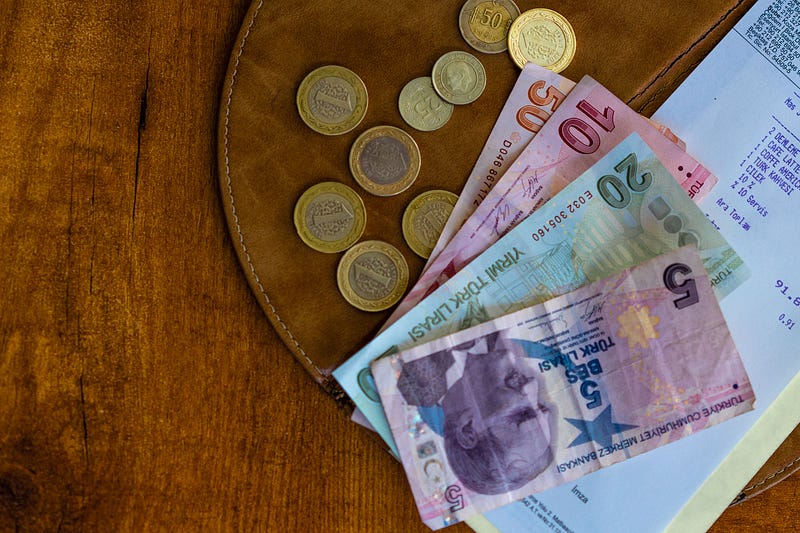
Photo by Oleksandr P on Pexels


Market cap volatility

However, TRYB's market cap had fallen off a cliff on Friday, dropping from $135 million earlier in the day to $40 million. TRYB, an Ethereum-based stablecoin, offers a unique proposition in that it is pegged to the Turkish lira, allowing users to exchange 1 TRYB for 1 TRY. The stablecoin offering, which is administered by Istanbul-based BiLira, is underpinned by 100% fiat reserves held in Turkish banks.

The Turkish lira has earned its reputation as one of the most volatile fiat currencies globally, often experiencing fluctuations against the US dollar. Over the course of the last five years, the currency has lost 94% of its value when benchmarked against the performance of the US dollar.

In response to this volatility, TRYB has found its purpose as a medium of exchange. It can act as a gateway to transition user’s Turkish lira into cryptocurrencies and vice versa. This trend aligns with the global use of stablecoins as the foundation of crypto trading pairs, providing traders with a stable asset while sidestepping fiat currency’s unpredictability.


Exiting the lira

The US Federal Reserve acknowledged the significance of stablecoins in December 2022, highlighting their role in facilitating crypto trades, serving as collateral for crypto loans, and minimizing inefficiencies tied to fiat-to-crypto conversions. In fact, stablecoins account for over 80% of the trading volume on centralized exchanges, attesting to their pivotal role in the crypto ecosystem.

It’s likely that the Lira-pegged stablecoin will act as a means to access other cryptocurrencies and US dollar-pegged stablecoins like USDT and USDC, rather than be considered as a rival or replacement. That’s by virtue of the ongoing difficulties of the Turkish sovereign currency which it tracks. So long as the lira continues to erode in terms of buying power, it’s likely that citizens will be looking for avenues to escape from that erosion of value.


Increased interest in crypto

Given this monetary backdrop in Turkey, it shouldn’t surprise anyone to learn that interest in crypto is on the rise. In a recent report published by Seychelles-based cryptocurrency exchange KuCoin earlier this week, a significant increase in the number of crypto investors in Turkey over the course of the past eighteen months has been identified.

The report found that 52% of the adult Turkish population have participated in crypto-related investments. Over the past 18 months, the number of Turkish adults embracing crypto has risen to that 52% level from 40%.


More to Read
View All
Policy & Regulation·

Dec 31, 2024

Legislator calls for Bitcoin reserve in Hong Kong

In an interview with local media, Hong Kong legislator Johnny Ng called for the Chinese autonomous territory to implement a national Bitcoin reserve. Ng made the comments in a discussion with Hong Kong-based state-owned Chinese language media outlet, Wenweipo. The legislator believes that there is an opportunity for Hong Kong to take advantage of China’s “one country, two systems” approach to governance, which gives it the freedom to implement such a reserve despite mainland China remaining much less enthusiastic where Bitcoin and cryptocurrencies are concerned.Photo by Kanchanara on UnsplashSpot Bitcoin ETF impactThe Hong Kong Legislative Council member suggested that as a first step, Hong Kong needs to assess the impact that spot Bitcoin exchange-traded funds (ETFs) in the United States have had. Spot Bitcoin ETFs were launched in the U.S. in January. The leading spot Bitcoin ETF, IBIT, provided by asset manager BlackRock, has achieved a growth rate five times faster than any other ETF launched in the past. El Salvador and the Kingdom of Bhutan are examples of nations that have made Bitcoin a significant component within their national reserves. A recent report suggests that El Salvador currently holds 6,000 Bitcoin which it purchased at an average price of $45,465. In November, Arkham Intelligence reported that Bhutan was holding Bitcoin with a dollar value which had exceeded $1 billion at that time. Ng also referred to a move by individual states in the U.S. towards holding Bitcoin as a reserve asset. In August, the state of Wisconsin increased its holdings of shares in BlackRock’s spot Bitcoin ETF, IBIT. Last month, the state of Pennsylvania introduced a bill to make Bitcoin a strategic asset. Ohio has proposed similar legislation while Alabama’s State Auditor, Andrew Sorrell, has suggested that his state should establish a Bitcoin reserve. Reducing price volatilityNg believes that furthering the Chinese autonomous territory’s dealings relative to Bitcoin could prove beneficial, given that Bitcoin has the potential to play a role in attracting more talent and investment to Hong Kong. Additionally, he feels that the development of Bitcoin reserves at state level could help in reducing the price volatility of the asset as it goes through the process of global adoption. The Hong Kong lawmaker also believes that there is an opportunity for the Chinese antonymous territory to benefit from first mover advantage, stating that “the value of Bitcoin will be more stable, causing more and more other countries to follow suit and reduce their holdings of traditional assets.” Ng's latest interview follows a similar comment he made on X in July, where he suggested that Bitcoin is worth considering as an official financial reserve for a country. David Bailey, CEO of Bitcoin Magazine, took to X stating: “Hong Kong making moves, SBR here we go. President Trump must make the Strategic Bitcoin Reserve his top priority the day he enters the White House.”In recent days, soundings from Japan and Russia suggested that neither of these countries was prepared to establish Bitcoin reserves. However, just like with the advent of the Bitcoin ETF in the U.S., following Trump’s expression of interest in the establishment of a strategic Bitcoin reserve, the level of consideration of the matter has increased considerably among governments around the world.

news
Policy & Regulation·

Oct 11, 2024

Dubai regulator takes action against unlicensed crypto firms

The Virtual Assets Regulatory Authority (VARA), the regulatory body which oversees the digital assets market within the emirate of Dubai in the United Arab Emirates (UAE), has taken corrective action against seven unlicensed crypto entities. Fines issuedAccording to an enforcement notice, published to the VARA website on October 8, the agency issued fines relative to a number of firms that it found were engaging in unlicensed virtual asset-related trading activity. The fines ranged from between 50,000 to 100,000 UAE dirhams (AED), equivalent to between $13,600 and $27,200 in U.S. dollars. The agency outlined that it was taking this corrective action in order to continue its enforcement efforts so as to safeguard Dubai’s virtual asset ecosystem. In its enforcement notice, the regulator did not disclose the names of the entities that have been sanctioned. The agency said that its investigations are ongoing, in partnership with local law enforcement.  A statement from the Regulatory Affairs and Enforcement division within VARA was provided, stating: “VARA will not tolerate any attempts to operate without appropriate licenses, nor will we allow unauthorized marketing of virtual asset activities. Our marketing regulations further emphasize Dubai’s commitment to ensuring transparency and always protecting stakeholder interests.”Photo by Alex Block on UnsplashCease and desist ordersIn addition to fines, VARA also issued the seven firms with cease and desist orders for breaching marketing regulations. Marketing by crypto firms is an area the regulator has been focusing on recently. Last month, VARA published a press release, outlining that it had updated its crypto regulations to specifically deal with marketing-related matters. Alongside that update, it issued a guidance document, clarifying the responsibilities of virtual asset service providers (VASPs) relative to marketing practices. A schedule of fines was provided in the case of a breach of the regulations, while the update set out a need for a mandatory disclaimer on marketing material to indicate that virtual assets are volatile and may lose their value, fully or partially. The Dubai regulator is not the first to home in on the marketing activities of crypto businesses. In the UK, the Financial Conduct Authority (FCA) enforced additional rules related to crypto marketing in late 2023. Some crypto businesses found the requirements too arduous and left the UK market as a direct consequence. Public warningIn its enforcement notice, the Dubai regulator also had a message for the trading and investing public, stating: “This public warning is VARA’s market notice to all to avoid engaging with any unlicensed firms.” The regulator added that interacting with unlicensed entities exposes both individual investors and institutions to both financial and reputational risk.  Furthermore, it warned of “potential legal consequences” for regulatory violations. “Only firms licensed by VARA are authorised to provide virtual asset services in/from Dubai, and the Authority remains steadfast in its commitment to protect consumers and investors, and to preserve market integrity,” the regulator further asserted. 

news
Policy & Regulation·

May 31, 2023

Bank of Japan Publishes Results of CBDC PoC

Bank of Japan Publishes Results of CBDC PoCThe Bank of Japan (BoJ) recently concluded the second phase of its central bank digital currency (CBDC) proof of concept (PoC) project, which began in April. The results of this phase were published on Monday, and they shed light on key aspects such as the comparison between account-based and token-based CBDCs and the management of holding limits for users with multiple accounts.Photo by Manuel Cosentino on UnsplashToken-based CBDCsThe experiments conducted by the central bank covered a wide range of topics. Among the most intriguing findings were the advantages and disadvantages of token-based CBDCs and how to effectively impose holding limits for users with multiple CBDC balances.Token-based CBDCs have garnered interest from various central banks, with some adopting the UTXO token model used by Bitcoin without the use of a distributed ledger. A UTXO or unspent transaction output, defines where a blockchain transaction starts and finishes. The Bank of Japan explored this model and analyzed its pros and cons.In the initial proof of concept, both account-based and token-based CBDCs were examined, considering scenarios where the central bank managed the ledger or shared it with intermediaries like banks. In the token-based model, fixed token denominations were used, similar to physical cash in countries like India, and a centralized ledger was employed. However, in the recent phase, the central bank utilized flexible value tokens similar to UTXO and shared ledger functions with intermediaries.The Bank of Japan favored the flexible value token model due to its ability to handle multiple requests simultaneously. However, it acknowledged that this model may require more technical resources compared to the account-based approach. Challenges may arise when implementing additional functions, such as holding limits, while maintaining optimal performance. The European Central Bank (ECB) also noted in a recent report that most payment providers are accustomed to account-based payments and would incur costs to adapt to token-based systems.Another significant aspect explored by the BoJ was how to impose holding limits when users have multiple CBDC balances through different intermediaries. The challenge lies in determining if the overall holding limit has been breached without compromising user privacy.Homomorphic encryptionOne possible solution discussed in the report is the use of homomorphic encryption, which enables computations to be performed on encrypted data without it first needing to be decrypted. That allows for the necessary checks without intermediaries accessing the specific data being checked. Although this solution may slightly increase processing time, it could introduce a higher risk of data inconsistencies.Alternatively, a simpler approach proposed by the central bank is to establish a per-account holding limit and a limit on the number of accounts a single user can hold, rather than imposing global limits. Ideally, users with multiple accounts would have a higher per-account holding limit compared to those with fewer accounts.Phase 3 underwayWith the next pilot phase already underway, the BoJ aims to test the end-to-end process flow and identify challenges related to integrating with external systems. Additionally, they are creating a CBDC Forum to gather input from the private sector, ensuring a collaborative approach to CBDC development.While investigation and research into CBDCs continues, the BoJ has said that it will make a final decision on CBDC implementation by 2026.

news
Loading