Top

Laos Halts Crypto Miners’ Electricity Amid Drought and Debts

Policy & Regulation·August 29, 2023, 1:32 AM

Laos, a leading producer and exporter of hydroelectricity, has made the decision to suspend electricity supply to cryptocurrency mining operations within its borders.

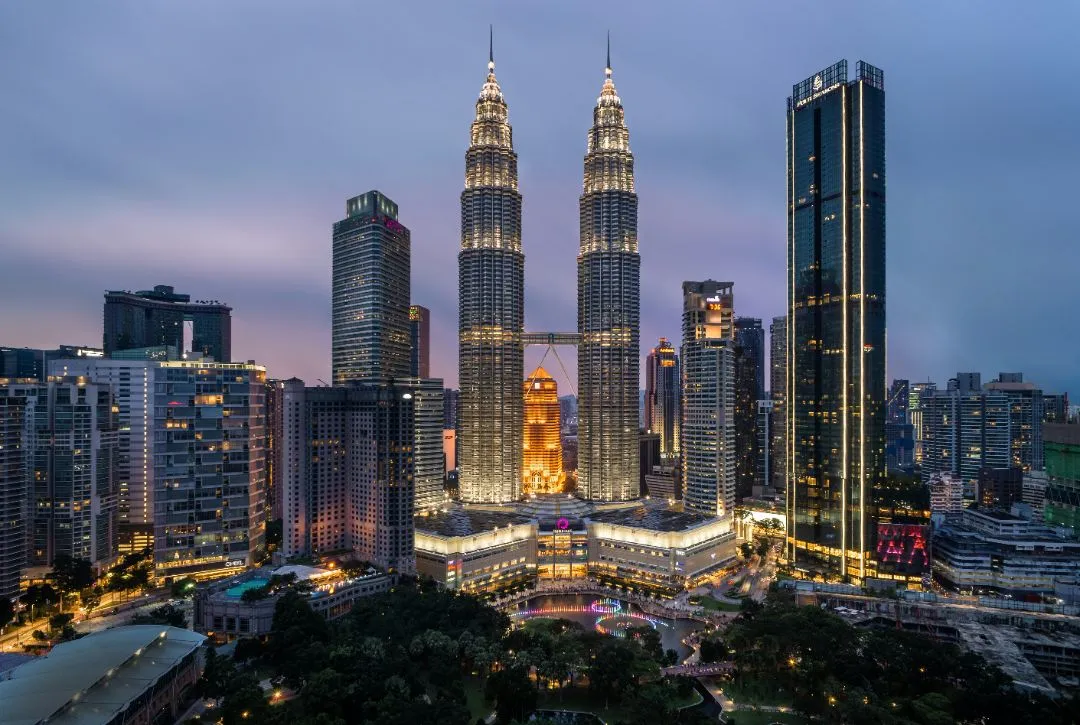
Photo by Ioana Farcas on Unsplash


Tackling a perfect storm

The decision comes as a result of a perfect storm of challenges, including a struggle to meet escalating power demands due to drought conditions, impending commitments to export electricity to Thailand, and the mounting debts of cryptocurrency mining companies.

In a calculated move in 2021, Laos initiated a public-private pilot program aimed at delving into cryptocurrency mining and trading. The context for this move was China’s sweeping crackdown on mining activities, compelling miners to scout for alternative jurisdictions for their operations.

In response, Laos granted authorization to a handful of entities, spanning construction conglomerates and a bank, to partake in the mining and trading of Bitcoin, Ethereum, and Litecoin. This led to a commitment to regulatory collaboration between government ministries, the Bank of Laos, and Electricité du Laos (EDL).


Exploiting hydropower

Laos’ abundant and affordable electricity has placed it on the short list of locations for crypto miners to settle in. With an abundance of rivers and waterfalls, hydropower stands as one of the nation’s primary energy sources, offering a renewable source of cost-effective electricity.

However, events in 2023 have disrupted that narrative. A persistent drought has hit the country during the first half of the year, which triggered an unprecedented surge in the demand for electricity from sources other than hydro.

The dependence on hydropower, constituting 95% of the nation’s energy generation, struggled to keep pace with the demand. As a direct consequence, EDL, a state-owned electricity distributor, announced the cessation of electricity supply to crypto mining operations.

The problem has compounded as Laos finds itself committed to exporting substantial quantities of electricity to the Electricity Generating Authority of Thailand (EGET), serving as a lifeline for Thailand’s power grid during the forthcoming dry season. This external commitment has, in turn, further strained the local capacity for electricity supply.

Another Asian country, Bhutan, has also gotten involved with crypto mining in an effort to exploit its hydropower resources, where 99% of electricity supply comes from hydropower within the kingdom.


Unpaid bills

Another dimension to the saga is the growing debt crisis faced by cryptocurrency mining operations. A representative of EDL cited the inability of these mining businesses to settle their accumulating electricity bills as a key factor in the decision for suspension. The Bank of Laos has further escalated matters by deciding to halt loans to cryptocurrency companies in January.

Laos has had bold objectives to transform itself into Southeast Asia’s premier exporter of clean electricity. The nation’s topography, featuring mountainous terrain covering 70% of the country, has immense potential for hydropower, with over 26,000 megawatts of installed capacity and ambitious plans to double this figure.

Hydroelectric dams like Nam Theun 2 have become conduits for substantial volumes of low-cost electricity, primarily directed towards neighboring Thailand and Vietnam. Meanwhile, projects like the Luang Prabang dam, boasting an installed capacity of 1,460 megawatts, underscore the country’s ambitions to develop hydropower further.

Revenues from power exports have become a vital component in Laos’ gross domestic product (GDP), contributing almost 15%, as per a report from October 2022.

More to Read
View All
Web3 & Enterprise·

Nov 23, 2023

Wintermute Asia executes inaugural options block trade via CME

Wintermute Asia executes inaugural options block trade via CMEWintermute Asia Pte. Ltd, the digital asset derivatives trading arm of the well-known algorithmic trading firm and crypto market maker Wintermute Group, has successfully executed its first options block trade through the CME Group.The BTC/USD block trade was conducted in collaboration with U.K.-based liquidity and data solutions specialist TP ICAP. It was successfully cleared by ABN AMRO, marking a significant milestone for Wintermute Asia in the digital assets space.Photo by Kanchanara on UnsplashMeeting institutional investor needsInstitutional interest in secure and alternative avenues for exposure to digital assets continues to build momentum. It’s likely with that in mind that Wintermute Asia is strategically expanding its derivatives product offerings with this latest move. It’s also no surprise that Wintermute’s Singapore-based team was involved in this development, given a recent expansion of its Singapore base and the fact that its derivatives business is dealt with in Singapore.Presently, Wintermute Asia provides vanilla options in BTC, ETH and various altcoins, featuring expiration periods ranging from 1 day to 6 months. The platform also caters to more sophisticated needs with the inclusion of exotic options.Evgeny Gaevoy, CEO of Wintermute Group, expressed enthusiasm about Wintermute Asia’s evolving product offering, stating:“Wintermute Asia is excited to offer a range of OTC derivatives solutions to our counterparties that can accommodate all of their trading needs. Our growing suite of derivative instruments allows investors to easily hedge and manage risks, generate yield, and gain synthetic exposure to the underlying digital assets.”The move towards facilitating options block trades aligns with the increasing diversification of institutional portfolios into the digital asset sector. Giovanni Vicioso, Global Head of Cryptocurrency Products at CME Group, emphasized the significance of the partnership with Wintermute Asia. He commented:“We are pleased to provide Wintermute and its counterparties with access to our highly liquid, regulated suite of benchmark cryptocurrency futures and options on bitcoin and ether.”Involving TradFi heavyweightsCME is a cornerstone TradFi financial derivatives exchange, first established in 1898 and headquartered in Chicago in the United States. Its CEO Terry Duffy pushed back against proposals from convicted fraudster and FTX Founder Sam Bankman Fried in 2022 to alter the futures clearing model on the basis that such a move would introduce significant risk into the financial system. A year on from the failure of FTX and many other crypto platforms, a move towards involving established TradFi firms like CME, as Wintermute is doing, is far more appealing to institutional investors.Sam Newman, Digital Assets Head of Broking at TP ICAP, acknowledged Wintermute as another participant in block trading CME Group cryptocurrency products. TP ICAP, a key player in digital asset broking services since 2020, has been instrumental in price discovery and liquidity through global coverage on regulated exchanges. Newman expressed excitement about witnessing crypto-native firms like Wintermute accessing traditional products and services, indicating the market’s maturation.Earlier this year, CME Group upgraded its BrokerTec Stream from version 1.5 to 2.0. The upgrade aims to enhance performance and reduce latency for clients, introducing features such as sweepable matching and firm price improvements. Recently, CME became the second largest bitcoin futures exchange, second only to global crypto exchange Binance.

news
Policy & Regulation·

May 17, 2023

Korean Blockchain Firm Proposes Fintech Collaboration in Cambodia

Korean Blockchain Firm Proposes Fintech Collaboration in CambodiaSouth Korean fintech and blockchain company KONDOR recently made an announcement through a press release regarding the establishment of a blockchain fintech advisory board in Cambodia. The firm has proposed a business agreement to the Securities and Exchange Regulator of Cambodia (SERC) with the aim of ensuring sustainable growth in the financial sector and capital markets.Photo by allPhoto Bangkok on PexelsFintech advisory boardThe advisory board comprises experts from various fields, including finance, economics, law, blockchain technology, fintech, and artificial intelligence. They will function independently, offering counsel on policy decisions.Sou Soucheat, Director General of SERC, highlighted that Cambodia is currently in the process of rebuilding and has a youth-driven economy and financial markets. He sees the collaboration with KONDOR as a valuable opportunity to develop a future-oriented financial system.The advisory board will see participation from KONDOR and other notable members, namely VEXK, a global digital asset exchange in Vietnam; Blue Contents, a Honolulu-based digital economy research center; and the Paññāsāstra University of Cambodia, a key player in the country’s educational field.KONDOR and VEXK have put forth a proposal for the joint establishment of a trust company and the pursuit of a custody license in alignment with Cambodia’s revised trust law of 2019.Procuring licensesFollowing the proposal’s approval, VEXK plans to procure a license as a digital asset exchange, as well as a license to establish a trust company. This would enable VEXK to effectively oversee clients’ digital and physical assets through accounts within the established trust company. The safety of these assets will be ensured through insurance coverage provided by reputable global insurers. Furthermore, VEXK will acquire the ability to facilitate USD trading and will retain the digital asset exchange license for five years.The license application will gain support from the SDG Impact Fund, a US-based organization managing $11 billion worth of assets, and the Estates & Infrastructure Exchange (EIX), a project bond exchange based in London.EIX CEO Mark Worrall said that active support from a securities regulator in the dynamic and expanding Web3 era would certainly contribute to Cambodia’s economic growth.

news
Policy & Regulation·

Jan 17, 2025

PM encourages focus on crypto so Malaysia doesn’t get left behind

Malaysian Prime Minister Datuk Seri Anwar Ibrahim has said that Malaysian government agencies and the country’s central bank need to study blockchain and cryptocurrency from a policy perspective so as not to get left behind.Photo by Esmonde Yong on UnsplashConsidering major changesHis comments emerged alongside the news that Anwar had discussed digital finance policy matters with Abu Dhabi government officials and with Changpeng Zhao (CZ), the founder and former CEO of Binance. According to the New Straits Times, an English-language newspaper published in Malaysia, the Malaysian government is homing in on the establishment and adoption of a formal policy relative to digital assets and blockchain.  Anwar confirmed that discussions also related to “digital transformation, data centers and artificial intelligence (AI),” and that the demands that Malaysia now faces require the government to consider major changes. In discussion with local media, Anwar stated: "I proposed several months ago how our agencies, including security, treasury and Bank Negara study how Malaysia can explore this so we aren't left behind. Ensuring that is regulated could safeguard the people's interests and prevent leakages.” Crypto-friendly regulationsAnwar added that a “radical departure from the old ways” would be needed for Malaysia to remain competitive, emphasizing the need for the Southeast Asian country to keep up to speed through the application of crypto-friendly regulations. Addressing the pace of technological change, he stated: “This is an evolution which happens quickly and requires us to be equally fast. We feel that Malaysia should not be left behind while mired in an old financial system.” In moving towards setting out a clear policy relative to digital assets, the Malaysian prime minister is encouraged by his recent dialogue with United Arab Emirates (UAE) government officials. He said that they confirmed that they feel they can forge close cooperation with Malaysia on the matter. Anwar added:“We need to discuss this in detail, leave behind the old business model and give meaning to this digital finance policy.” Taking to the X social media platform, Binance’s CZ described the nature of his discussion with the Malaysian prime minister, stating: “The discussions were not about Binance but about the crypto industry and Malaysia, including regulations, policies, risks, and collaborations between industries and across national borders. Forward!” A pseudonymous crypto investor and programmer, @darren_com_my, responded to CZ’s tweet to explain that the Malaysian government provides support to the digital assets industry via government agencies, but that, on the other hand, it has blacklisted a number of exchanges such as HTX (formerly Huobi) and Binance.  The local regulator has issued licenses to six virtual asset service providers. In recent weeks, Malaysia’s Securities Commission has taken action against global exchange Bybit and crypto app Atomic Wallet, prohibiting them from trading within the jurisdiction due to both companies not having obtained the required licensing.

news
Loading