Top

Hong Kong Lawmaker Explores Digital Asset Links With Mainland

Policy & Regulation·August 04, 2023, 11:33 PM

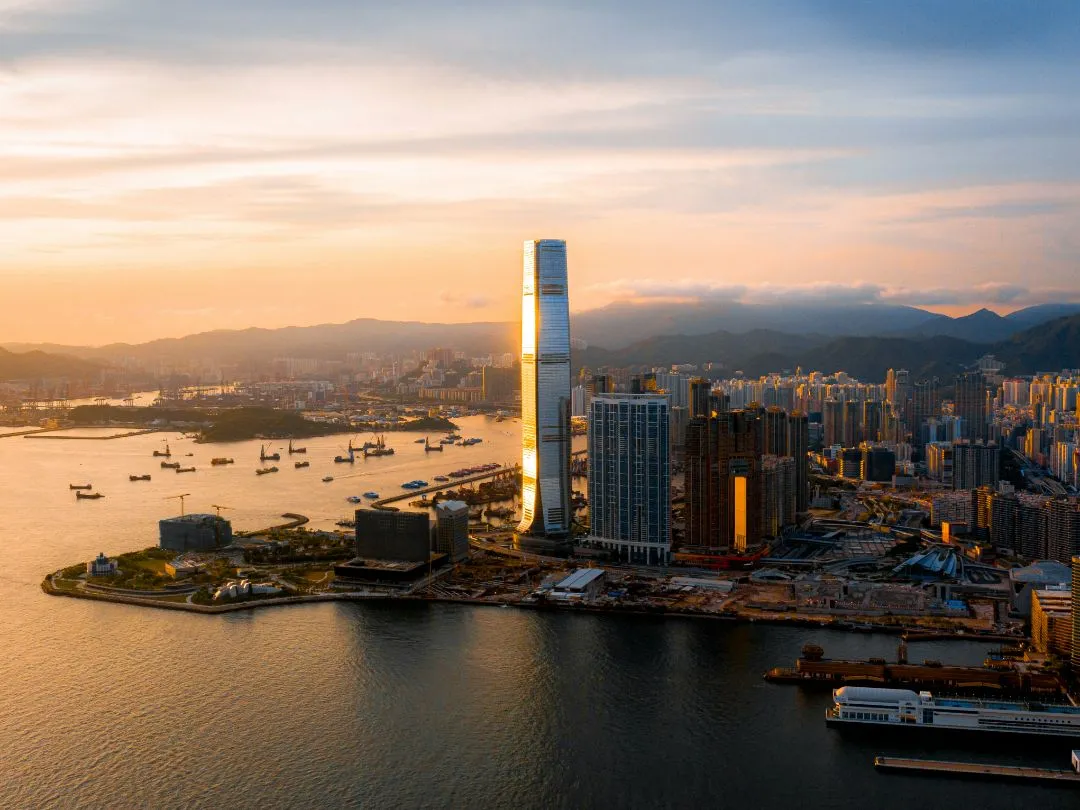
In a move aimed at bolstering its position as a rising global Web3 hub, Hong Kong Legislative Council member Johnny Ng has expressed his aspiration to foster greater collaboration between digital asset platforms in Hong Kong and a Shanghai-based exchange.

Photo by Simon Zhu on Unsplash


Digital asset exchange interconnectivity

As Hong Kong continues to position itself as a key player in the emerging Web3 landscape, Ng envisions a future where licensed virtual asset exchanges in Hong Kong could be interconnected with their counterparts in Shanghai.

Ng’s remarks came during an interview with Chinese media outlet The Paper. Drawing a parallel with the established Shanghai-Hong Kong Stock Connect program that seamlessly connects the stock markets of both cities, Ng raised the question of whether a similar connection could be established for licensed digital asset exchanges. Ng’s idea hinges on the potential to bridge appropriate platforms in Shanghai with those licensed in Hong Kong for virtual asset trading.


Interconnected talent pool

The lawmaker’s enthusiasm for interconnectivity also extends to the talent pool. He expressed his desire for more Web3 talent exchanges between Hong Kong and the mainland, recognizing Shanghai’s status as a financial hub boasting numerous exceptional financial enterprises.

Hong Kong’s approach to the Web3 landscape stands in contrast to mainland China’s stringent cryptocurrency regulations. While China banned cryptocurrency transactions in 2021, Hong Kong has embraced crypto firms, even encouraging partnerships between these firms and local banks.

This year, Hong Kong authorities unveiled a series of cryptocurrency-related policy statements, aimed at fortifying its stature as a global financial center. A significant step followed in December, when the Hong Kong Legislative Council passed an amendment introducing a comprehensive licensing framework for virtual asset service providers (VASPs).

In a recent development underscoring Hong Kong’s pro-crypto stance, HashKey and OSL have become the pioneering recipients of licenses for retail trading under the new regulatory regime, which commenced on June 1.


Differing policy approaches

People following developments in crypto and Web3 in China and East Asia have been speculating if the strategic positive shift in Hong Kong towards developing as a regional hub relative to the sector is indicative of a softening in the approach of mainland China towards the industry. It appears that Hong Kong’s pursuit of crypto business has been sanctioned by Beijing.

Commentators have been monitoring the emergence of further encouraging signals. In May, Chinese state television featured a segment that covered cryptocurrency and in particular Bitcoin. Binance CEO Changpeng Zhao (CZ) was sufficiently encouraged by the development to suggest that it was “a big deal,” although the clip was later removed from the broadcaster’s website.

Ng’s proposal aligns with the broader narrative of Hong Kong’s ambitious push into the Web3 landscape, capitalizing on its favorable regulatory environment to attract crypto-related ventures. As discussions evolve around the potential interconnectivity between Hong Kong and Shanghai’s digital asset exchanges, the global cryptocurrency community watches with interest to see if there are any emerging signs that Beijing will reciprocate positively.
More to Read
View All
Web3 & Enterprise·

Mar 27, 2024

Coinone updates its mobile app to provide better UX for crypto investors

Coinone, one of the five fiat-to-crypto trading platforms in South Korea, unveiled an upgraded version of its mobile app charts for a better user experience. According to local news source Bizwatch, the update introduces an array of indicators at the bottom of the charts to facilitate more comprehensive analysis. Additionally, the app now includes three new chart features: a display of best orders, the capability to see price alert lines and access to a 90-day transaction history. Since last year, Coinone has rolled out 20 updates aimed at enhancing the trading experience and bolstering security for its users. This year also saw several new features. Among these are the integration of TradingView charts and the addition of share buttons for announcements. Additionally, Coinone recently started providing the functionality to print statements for crypto accounts.Photo by Kanchanara on UnsplashHiring more developersThese enhancements are part of Coinone's continuous efforts to elevate customer satisfaction and refine its services. Despite the downturn that the cryptocurrency industry faced last year, Coinone took a noteworthy step by bringing on board 20 new developers this year. This move underscores Coinone's proactive stance in improving its platform and offerings amidst challenging market conditions. Coinone's focus on meeting customer demands has led to a notable reduction in inquiries. Last year, the exchange reported that its efforts to enhance customer service resulted in a decrease of more than 45% in the number of customer inquiries. Compliance amid changing regulatory environmentMarking its 10th anniversary last month, Coinone has set its sights on emphasizing investor protection and regulatory compliance in anticipation of the upcoming implementation of the Virtual Asset User Protection Act, which is slated to take effect in July.  Cha Myung-hun, the CEO of Coinone, commented on the recent updates, noting that the surge in public interest towards virtual asset investment has prompted the decade-old exchange to enhance its chart functionalities, specifically catering to novice investors. 

news
Policy & Regulation·

May 17, 2023

Korean Blockchain Game Publisher Joins UNGC to Bolster ESG Management

Korean Blockchain Game Publisher Joins UNGC to Bolster ESG ManagementWemade, a Korean blockchain game publisher, joined the United Nations Global Compact (UNGC) to bolster its environmental, social, and governance (ESG) management. The company announced its membership through a press release issued on Wednesday.Photo by Noah Buscher on UnsplashUNGC membershipSince its establishment in 2000, the UNGC has evolved into the largest corporate sustainability initiative worldwide. With a membership base of over 20,000 companies spanning across 162 countries, it serves as a platform for organizations to align their operations with ten principles encompassing human rights, labor, environment, and anti-corruption.Annual reportsUnder the guidelines of the UNGC, Wemade will fulfill its commitment by submitting an annual report called the Communication on Progress (COP). The company’s objective is not only to meet sustainable development goals but also to enhance its ESG management. Along with these endeavors, the company will strive to improve its corporate citizenship.ESG managementIn expressing his thoughts on the matter, Wemade CEO Chang Hyun-guk emphasized that the company’s inclusion in the UNGC would serve as a catalyst for driving sustainable growth through ESG management. He underscored its commitment to fulfilling corporate social responsibility and meeting global standards by practicing ESG management, given its position as a leading entity in the blockchain market.Wemade’s three main objectivesMeanwhile, Wemade is practicing ESG management centered on three main objectives: responsible environmental management, inclusive growth for future generations, and transparent governance.

news
Web3 & Enterprise·

Aug 04, 2023

Huobi Co-Founder Acquires 10 Million CRV Tokens

Huobi Co-Founder Acquires 10 Million CRV TokensJun Du, Chinese Co-Founder of Seychelles-headquartered global crypto exchange Huobi, has recently completed the purchase of 10 million curve tokens (CRV) from Curve founder Michael Egorov.Photo by Growtika on UnsplashCurve protocol loan exposureThe transaction amounted to $4 million and is part of Egorov’s ongoing efforts to mitigate his at-risk loan exposure, a further consequence of last week’s $52 million hack of the Curve DeFi protocol.Initially, Du expressed his interest in acquiring 10 million CRV tokens at the prevailing rate of $0.40. This price aligned with multiple over-the-counter (OTC) agreements between Egorov and various cryptocurrency individuals. According to a report by The Block, Du later confirmed the purchase through a Twitter direct message, revealing that he had chosen to lock up the acquired tokens as veCRV. This lock-up mechanism grants voting rights within the Curve platform while requiring the tokens to remain locked for a specified duration.“I intend to uphold this lock-up for at least a year, with optimism for continuous improvements within the Curve ecosystem,” Du stated, highlighting his commitment to the project’s long-term growth.On his Twitter account, Du emphasized his unwavering support for Curve, drawing parallels to his past backing of BendDAO during a liquidity crisis. He clarified: “Challenges faced now are transient, and collective support will foster a stronger industry.”Alongside being a Co-Founder at Huobi, Du holds the positions of CEO at New Huo Tech, a digital asset service platform, and Co-Founder and General Partner (GP) at the Web3 fund ABCDE.Ongoing token sell-offIn actively managing liquidation risk, Egorov is persistently offloading CRV tokens to bolster his loan position, given his significant exposure. He has utilized multiple DeFi lending platforms to secure loans, predominantly employing CRV tokens as collateral to borrow stablecoins. His borrowing activity on platforms like Aave alone has involved $56 million in stablecoins against $149 million worth of CRV collateral.Egorov’s health ratings on these platforms have improved recently, hovering around 1.67 or higher. Nonetheless, there remains a lingering risk associated with potential liquidation of his positions if CRV’s price were to dip substantially. This could potentially lead to bad debt scenarios for the platforms, particularly due to the substantial proportion of CRV supply involved.Sales of 72 million CRVEgorov’s token sales have amounted to 72 million CRV, according to Nansen analyst Sandra Leow. Notable recipients of these tokens include Tron Founder Justin Sun, crypto trader “DCFGod,” and Andrew Kang, Co-Founder of Mechanism Capital.Aave Chan Initiative, an entity tied to the Aave protocol, has proposed that the Aave treasury allocate funds to purchase up to $2 million worth of CRV tokens. The intention is to lock up these tokens as veCRV for an extended period, potentially up to four years. This move is aimed at further reinforcing the stability of CRV’s market dynamics.

news
Loading