Top

KuCoin Halts Bitcoin and Litecoin Mining Pools Amidst Strategic Shift

Web3 & Enterprise·August 03, 2023, 12:16 AM

In an announcement on Tuesday, Seychelles-based cryptocurrency exchange KuCoin revealed its decision to temporarily suspend its Bitcoin and Litecoin mining pools, effective from 16:00:00 on August 15, 2023 (UTC).
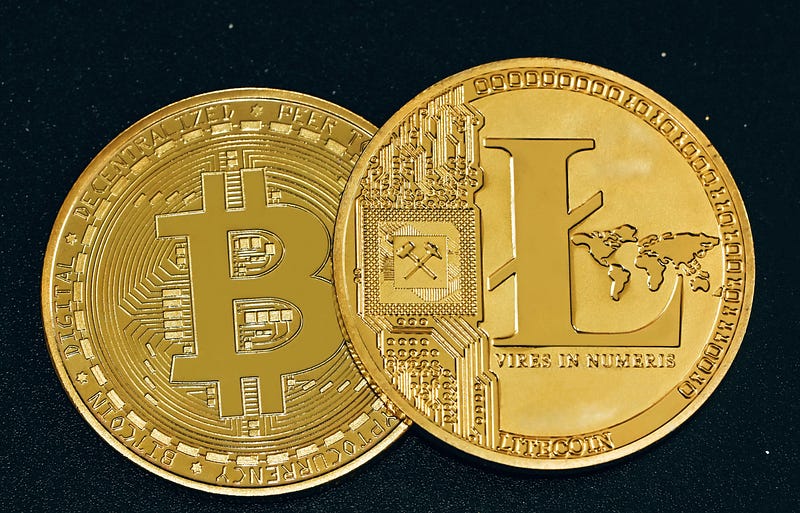
Photo by Traxer on Unsplash


Changing business strategy

This move is attributed to KuCoin’s evolving business strategy, although specific details remain undisclosed. The exchange expressed its regret for any inconvenience caused and extended gratitude for users’ continued support.

It appears that the company wants to focus on core business activities and for that reason, it’s terminating its mining pool activity. That said, the discontinuation was described in its statement as being “temporary” although that has been left open-ended with no indication of if or when it would bring the service back into operation.

The company is open to the idea of revisiting the facilitation of mining pools in the future. “We will see if it is needed to restart based on the market and users’ demand in the future,” a spokesperson for the company told The Block.

To ensure miners’ uninterrupted earnings during the suspension, KuCoin advised users engaged in cryptocurrency mining to transition their Bitcoin (BTC) and Litecoin (LTC) miners to alternative mining pools before the specified suspension date. Additionally, the exchange emphasized the importance of backing up and preserving mining records and related data, recommending users complete these actions before August 27.

Presently, the KuCoin Bitcoin mining pool maintains a hash rate of 9.08 exahash per second (EH/s), while the Litecoin pool operates at 3.90 terrahash per second (TH/s). These figures contribute to the broader hash rate landscape, where the entire Bitcoin network boasts a hash rate of 349.19 EH/s, compared to the Litecoin network’s 792.16 TH/s.


Workforce reduction

It is clear that the company is in the process of adjusting to current market conditions. Last week, rumors surfaced of a plan to effect a workforce reduction. That prompted KuCoin’s CEO Johnny Lyu to respond, clarifying that the exchange’s operations are running smoothly. Dismissing layoff speculation, Lyu highlighted the exchange’s steady expansion and strong growth as demonstrated by the H1 2023 report. The report showcased an increase in users and new listings, underscoring the platform’s vitality and development.


Mandatory KYC

In recent months, KuCoin has also implemented mandatory Know Your Customer (KYC) requirements, obligating users to undergo verification processes. Existing customers who fail to complete KYC procedures will be unable to make deposits. With over 20 million registered accounts, the exchange felt that it needed to improve on its level of regulatory compliance and security measures.

It’s highly likely that an action taken by authorities in New York in the United States in March prompted KuCoin’s decision to tighten up on KYC. At that time, the New York Attorney General said that action was being taken against KuCoin due to its failure to register as a securities and commodities broker-dealer.

As KuCoin undergoes these changes, the suspension of its mining pools raises questions about the broader implications for its business strategy and the potential impact on miners within its ecosystem. That said, the firm is not alone in making changes, with most crypto exchanges having had to adjust to a business and regulatory environment that has changed considerably since the 2021 crypto bull run.


More to Read
View All
Web3 & Enterprise·

Oct 12, 2023

Streami Appoints New CEO, Boosting Hopes for Regulatory Crypto Approval in Korea

Streami Appoints New CEO, Boosting Hopes for Regulatory Crypto Approval in KoreaStreami, the operator of South Korean cryptocurrency trading platform Gopax, has been struggling for months to obtain approval for the change of its chief executive officer from the financial regulator. This challenge emerged following the significant investment by the global exchange Binance, which became the company’s largest shareholder in February. At that time, Leon Sing Foong, who was the Asia-Pacific head of Binance, was appointed as CEO.Photo by Andriyko Podilnyk on UnsplashCityLabs’ emergenceHowever, the recent appointment of a CEO from a Korean company could potentially represent a turning point for Streami. This development is particularly noteworthy because this local firm has acquired shares in Streami and is expected to further increase its stake in the company.In a report from local news outlet Bizwatch, it was revealed that Cho Young-joong, who currently serves as CEO of CityLabs, has been officially designated as the new CEO of Streami. This appointment now places him in a leadership position overseeing both the smart city infrastructure company and the cryptocurrency exchange operator.Before Cho’s appointment, CityLabs had made investment in Streami, contributing KRW 5.4 billion, which is approximately $4 million. This investment secured CityLabs an 8.55% stake in Streami, equivalent to a total of 76,308 shares of the company.Thanks to this development, Streami has finally filled the CEO position, ending a two-month vacancy that began after the resignation of former CEO Lee Joong-hoon in August. While it has been confirmed by a company official that Cho has been selected as the new CEO, he has not yet assumed his role.Frequent leadership changesIn the course of this year, Streami has already undergone three leadership changes. The stagnant administrative process at the Financial Intelligence Unit (FIU) compelled Leon Foong to step down from his position, which was subsequently assumed by Lee Joong-hoon, Streami’s former Vice President. However, despite Lee’s appointment, little progress was made during his tenure. Additionally, It’s also worth noting that there were reports indicating Leon Foong’s complete departure from Binance in late August.Several industry sources have suggested that Binance is likely to relinquish its status as Streami’s largest shareholder but could later participate in managing the company. The hope is that this strategic maneuver will assist Streami in securing approval from the FIU.

news
Policy & Regulation·

Dec 27, 2023

Worldcoin withdraws verification service from Indian market

Worldcoin, the startup co-founded by OpenAI CEO Sam Altman, has encountered setbacks in its eye-scanning initiatives just six months after its international expansion. A recent report by TechCrunch indicates that the company’s signature orb eye-scanner is no longer available to users in the Indian market. According to that report, the Worldcoin Foundation clarified that its activities have also been suspended in France and Brazil. The company clarified that its offerings in those markets were only intended to be limited-time product previews as opposed to long-term roll-outs.Photo by Big G Media on UnsplashTemporary service haltIn India, the World App is experiencing widespread adoption, but the orb-verified proof of personhood services has been temporarily halted. The pause aims to allow the protocol to develop and implement a bespoke, safe and orderly process to meet the growing demand. The setback comes after Tools for Humanity, the organization behind Worldcoin, announced the expansion of World ID, its digital identity program linked to iris scans, in July. The startup had ambitious plans, intending to make 1,500 orbs available in over 35 cities globally. Recently, the company unveiled a program offering $5 million in grants to developers utilizing its eye-scanning technology. Regulatory investigationsSam Altman and his co-founders established Worldcoin in 2020 to help individuals prove their digital identity amidst the rise of AI. Over the years, Worldcoin has secured $250 million in funding from notable venture capitalists, including Andreessen Horowitz. However, the startup has faced regulatory challenges, including investigations by French and German regulators and an Argentinian government agency. Altman, himself, has navigated recent challenges. In November, the OpenAI board temporarily removed him as CEO, reinstating him two weeks later. More recently, Fortune reported that Altman quietly received $75 million from the University of Michigan for a new venture capital fund, raising questions about transparency, particularly following the launch of OpenAI’s signature product, ChatGPT. Asian tourIn recent weeks, the project development team behind Worldcoin had engaged in a tour of Asia. The objective of that mission was to gather market feedback prior to engaging in greater efforts to expand the reach of its World ID verification system within the region. To gauge market receptiveness to its product offering, the tour included meetups in major Asian cities such as Hong Kong, Seoul, Singapore and Tokyo. Up until mid-November, the Asian region accounted for 1.4 million World App sign-ups.The introduction of World ID 2.0 by the company on Dec. 13 led to a surge in the price of WLD. Over the course of the 48 hours that followed, it jumped from $2.47 to $4.23, a 71% increase. At the time of writing, the token unit price stood at $3.66. As Worldcoin navigates these challenges, the cryptocurrency industry will closely monitor developments, recognizing the broader implications for the startup’s innovative approach to digital identity verification.

news
Policy & Regulation·

Dec 09, 2023

Binance withdraws Abu Dhabi bid amid global licensing reevaluation

Binance withdraws Abu Dhabi bid amid global licensing reevaluationLeading global crypto exchange Binance has chosen to withdraw its bid for a trading license in Abu Dhabi, according to information gleaned from the Abu Dhabi Global Market (ADGM) register and a report published by Reuters on Thursday.Photo by Demid Druz on UnsplashChange of directionThe local subsidiary company responsible for the application, BV Investment Management Limited, initially submitted its licensing bid on Nov. 15, 2022. Much has changed in the crypto space and in the fortunes of Binance over the course of the past year, leading the firm to withdraw its application on Nov. 7.This proposed license would have granted Binance the authority to pool and invest funds from professional investors. The decision to retract the bid is part of Binance’s broader reevaluation of its overall strategy going forward. “When assessing our global licensing needs, we decided this application was not necessary,” a spokesperson from the company told Reuters.Adapting to new circumstancesMuch has changed for Binance in 2023. The company has been combating regulatory pushback in multiple jurisdictions worldwide, not least in the United States, where Binance founder Changpeng Zhao (CZ) recently reached a plea agreement with U.S. prosecutors and agreed to pay $4.3 billion for violations related to money laundering and sanctions laws.As part of that process, CZ stepped down as CEO, passing the leadership to Singaporean Richard Teng. Teng is a former regulatory executive who previously oversaw the exchange’s regional operations. A spokesperson for the company maintained that this recent decision relative to licensing in Abu Dhabi is entirely unrelated to the recently agreed-upon settlement in the United States.UAE tiesWhile Binance may be dropping its attempts to gain licensing in Abu Dhabi, in July the company acquired a Minimum Viable Product (MVP) license from the Virtual Assets Regulatory Authority in the United Arab Emirates’ (UAE) other major center, Dubai. The UAE is also the location where CZ has established his home.Some had speculated that the company had also established its headquarters within the UAE. However, CZ has always refused to disclose the firm’s global headquarters, instead suggesting that the firm has no global headquarters. Teng has taken a similar approach.Binance was originally founded in China in 2017. It then shifted its headquarters to Japan and later established a base in Malta to circumvent regulatory challenges in China. Similarly, it’s thought that regulatory scrutiny provides the rationale for the company’s ongoing stance in refusing to confirm the location of its corporate headquarters.Despite regulatory challenges, Binance had previously expressed a focus on expanding its operations in the Middle East, known for its crypto-friendly environment and specific regulatory frameworks. Binance holds various crypto licenses from regulators in the region. In May of last year, it acquired a Category 4 crypto-asset service provider (CASP) license from the Central Bank of Bahrain.The exchange maintains registrations and licenses across Europe, Asia and other regions. It’s had mixed fortunes in its endeavors over recent months, driven out of some markets while making in-roads in others. Earlier this week, its Binance Japan subsidiary became fully operational. Last week, regulators in the Philippines moved against the company due to regulatory irregularities.

news
Loading