Top

Busan City Houses Two Foreign Financial Firms on the Road to Becoming Blockchain, Fintech Hub

Policy & Regulation·July 31, 2023, 8:03 AM

The city of Busan said Monday that it has chosen two financial companies, UIB Korea and Lina One, as the new occupants of Decacorn-Space — an office space on the 63rd floor of the Busan International Finance Center (BIFC) — in an effort to position the southern port as the nation’s blockchain and fintech hub.

Busan has been running an open call for foreign financial institutions to move into the recently renovated space since June. After a rigorous two-step evaluation process, UIB Korea and Lina One were selected, the city said.

This comes as part of Busan’s efforts to further develop the BIFC and become a major financial powerhouse in Korea.

“We have been relocating public financial institutions, fostering financial experts, and exploring new growth drivers such as fintech, blockchain, and digital innovation,” the city’s mayor Park Heong-joon explained.

Photo by Minku Kang on Unsplash


About UIB Korea and Lina One

UIB Korea, or UIB Insurance Brokers, is the Korean branch of UK-based UIB Group — a global insurance broker that offers risk management advisory services. In particular, the firm is set to work with other domestic companies such as DB Insurance and Meritz Fire & Marine Insurance to establish a consortium for providing insurance products and consulting services.

Meanwhile, Lina One is the Korean branch of Chubb Group, the world’s largest publicly traded property and casualty insurance company. One of the firm’s major goals is to promote the insurance information technology market in Busan.

Notably, both companies aim to leverage their digital capabilities, experience, and competitiveness to achieve similar goals, which include digitizing insurance for various partners, ranging from maritime and industrial companies to regional banks, fintech companies, and individuals. In turn, their efforts are expected to expand Busan’s network with the larger global financial community and present the city as an ideal spot for international conferences.


On the road to becoming a financial hub

Despite considerable challenges such as the withdrawal of foreign financial institutions from Korea and the impact of COVID-19 on international travel, the city has continuously made efforts in collaboration with the Busan Finance Center to attract international financial institutions through events like investor relations meetings and local networking activities.

To support the successful landing of these companies in Busan, the city will also offer one-stop services such as business model development support and residential settlement consultations.

Once settled, UIB Korea and Lina One are expected to generate significant synergy with partner firms such as local financial holding company BNK Financial Group during the third phase of the development of the BIFC whose objective is to house innovative financial workspace by 2025.

“It is crucial for us to attract more competent domestic and foreign financial institutions that will have a great impact on the city’s financial economy,” Mayor Park emphasized.


More to Read
View All
Policy & Regulation·

Aug 11, 2023

Binance Initiates Registration Process for AML Compliance in Taiwan

Binance Initiates Registration Process for AML Compliance in TaiwanGlobal crypto exchange Binance has set in motion the process of registering under Taiwan’s Money Laundering Control Act, the sole crypto-related regulatory framework currently established in Taiwan.In a confidential gathering on Tuesday, Taiwan’s Financial Supervisory Commission (FSC) conveyed to numerous domestic crypto service providers that Binance is in the process of applying for registration to ensure compliance with anti-money laundering (AML) regulations, according to a local media report.Photo by Thomas Tucker on UnsplashImportance of AML complianceTaiwan has mandated that virtual asset service providers (VASPs) adhere to its anti-money laundering statutes since the FSC introduced AML rules in July 2021. Outside of these measures, the cryptocurrency industry in the country remains largely unregulated.Speaking to The Block on Friday, an FSC official refrained from confirming whether Binance had already submitted the necessary documentation to register with the regulatory body. However, the official did emphasize the importance of offshore crypto platforms operating in Taiwan abiding by the local AML regulations.While Binance is not yet regulated in Taiwan, it has established a local entity named “Binance International Limited Taiwan Branch (Seychelles),” as per records from the Department of Commerce’s database. The registration particulars indicate that the Taiwanese government endorsed Binance’s company registration on May 12, 2023, with a registered capital of NT$30 million ($944,000) within Taiwan.Cooperation with law enforcementBinance has taken steps to cooperate with local law enforcement agencies to combat cybercrime in Taiwan. In June, the exchange revealed its collaboration with Taiwan’s Criminal Investigation Bureau, leveraging its expertise to assist over 200 Taiwanese law enforcement officers in addressing digital asset-related criminal activities.Damien Ho, Head of Global Partnerships at Binance, remarked in a blog post at the time:“As an increasing number of individuals in Taiwan show interest in cryptocurrency, ensuring a secure and comfortable crypto ecosystem for users becomes crucial.”Growing Asian influenceBinance’s influence is growing across Asia. This month, it officially launched operations in Japan after its acquisition of the local exchange Sakura Exchange BitCoin in November 2022, paving the way for regulatory oversight by the Japan Financial Services Agency (JFSA). Earlier this month, an investigative report carried out by the Wall Street Journal revealed that Binance is thriving in China in spite of the fact that crypto trading is a banned activity there.Regulatory guidelines anticipatedTaiwan’s FSC, which assumed the role of the primary regulator overseeing the crypto industry in March, is currently formulating comprehensive guidelines for trading and payments involving cryptocurrencies for VASPs.The FSC has disclosed plans to release the VASP guidelines by the end of September. Kevin Cheng, a Director at the Taiwan Fintech Association, revealed that the FSC intends to implement a stringent regulatory approach for crypto platforms in Taiwan, similar to its oversight of traditional financial institutions.Cheng noted: “The FSC plans to require VASPs to keep their own crypto assets separate from the clients’ crypto assets and to have accounting firms audit such assets every year.” However, Cheng highlighted the potential difficulty of this requirement, as many accounting firms might hesitate to serve crypto clients due to the specialized nature of crypto-related information.

news
Policy & Regulation·

May 26, 2023

Silence From Multichain’s Chinese Developers Stokes Fear

Silence From Multichain’s Chinese Developers Stokes FearA prolonged silence from the project leadership behind Multichain, a cross-chain routing network, is causing growing concern among the users of the cross-chain protocol. The network currently holds $1.5 billion in total value locked (TVL).The protocol has experienced five days of stuck transactions, and multiple cross-chain bridge pathways, including Kava, zkSync, and Polygon zkEVM are still offline. Initially, the project’s China-based team attributed the issues to an upgrade that was being fixed. That explanation was changed recently to an ambiguous “force majeure,” leaving users with more questions than answers.Photo by Santiago Lacarta on UnsplashPossible arrests in ChinaAdding to the uncertainty are rumors circulating on Twitter that the core leadership team may have been arrested in China. Although the rumors remain unconfirmed, they have contributed to the growing sense of unease within the community. DJ Qian, one of the co-founders of Multichain who is no longer involved with the project, took to Twitter to share his attempts to seek clarification. Qian mentioned reaching out to Multichain CEO Zhaojun and founding partner Xu Guochang for technical assistance. When asked about Zhaojun’s availability, Qian stated that he was “not available yet.”Users and investors eagerly await updates and clarity from Multichain’s leadership team. However, the team’s lack of communication extends across various forms of social media. In group Telegram messages with the Multichain team, there have been no responses from Zhaojun, and direct messages through the same app have gone unanswered as well. This silence has left the community members puzzled, with little information to rely on.$MULTI price plummetsMeanwhile, the price of Multichain’s native token, $MULTI, has continued to decline. It currently stands at $4.37, representing a 20% decrease over the past 24 hours. The lack of communication and uncertainty surrounding the project have likely contributed to this downward trend in token price. Over the course of the past seven days, the token has decreased in price by 45%.In response to the situation, layer 1 blockchain project Conflux Network has taken precautionary measures by suspending Multichain’s co-mint privileges. This move prevents Multichain from minting tokens on the Conflux blockchain. The Conflux Network has also assured users that it will work with them in case any losses arise due to the ongoing issues.Flight to safetyOther projects and individuals have also reacted to the silence from Multichain’s team. Hong Kong-based HashKey Group, a crypto investment firm, has transferred $250,000 to crypto exchange Gate.io as a precautionary measure. Tron founder Justin Sun has withdrawn 470,000 of the $USDD stablecoin from the Multichain protocol. These actions reflect a growing concern among stakeholders, representing their efforts to mitigate potential risks associated with the uncertainty surrounding Multichain.Furthermore, the Fantom Foundation has withdrawn $2.4 million in liquidity of the protocol’s native $MULTI tokens from the decentralized exchange SushiSwap. It later tweeted out an update stating that the Fantom-Multichain bridge was operating as normal. These withdrawals signal a loss of confidence in Multichain and its native token, as stakeholders seek to protect their investments.As the silence persists, users and investors remain anxious for updates and clarifications from Multichain’s leadership team. The lack of communication and the circulating rumors have cast a shadow of uncertainty over the project, leaving stakeholders in a state of limbo.

news
Web3 & Enterprise·

Nov 18, 2023

Leading Chinese gaming company lines up $100M crypto investment

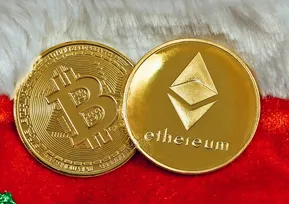
Leading Chinese gaming company lines up $100M crypto investmentAs yet another indicator of the rising trend of institutional crypto investments, China’s premier board and card game company, Boyaa Interactive, has unveiled plans to invest up to $100 million in cryptocurrency assets, with a focus on Bitcoin (BTC) and Ethereum (ETH).News of Boyaa’s plans emerged following a disclosure from the Hong Kong Exchanges and Clearing Limited, which stated that the company will distribute notices regarding its crypto investment plans during an extraordinary general meeting (EGM). The relevant details are expected to have been supplied to shareholders on or before Nov. 30. The company has emphasized its intention to ensure transparency while adhering to listing rules throughout this process.Photo by Traxer on UnsplashDigital asset acquisition over a 12-month periodThe decision to delve into the world of cryptocurrencies aligns with Boyaa Interactive’s commitment to strengthening its presence in the evolving Web3 landscape, as highlighted by the company’s board of directors. The proposal outlines a comprehensive strategy to acquire the assets over a 12-month period, pending approval at the upcoming EGM.The planned acquisition involves allocating approximately $90 million equally between Ethereum and Bitcoin. The remaining $10 million is earmarked for stablecoins Tether (USDT) and USD Coin (USDC). Boyaa Interactive asserts that the actual acquisitions will depend on open market conditions, with a commitment not to pay premiums exceeding 10% of prevailing market prices. Funding for this initiative will be sourced from the company’s existing cash reserves.The board will play a crucial role in determining the specific cryptocurrencies to acquire, their allocation ratios and the optimal timing for purchase. The emphasis is on prudent risk management, aligning with Boyaa’s business development strategies.Diversification strategyThe company justifies its choice of Bitcoin and Ethereum by citing their alignment with its long-term development goals. In the document, Boyaa Interactive highlights the importance of investing in cryptocurrencies with robust market liquidity and substantial market values. Bitcoin, Ethereum, USDC, and USDT, chosen for their high market liquidity, align seamlessly with Boyaa’s strategic vision.In its stock exchange filing, it justifies these plans on the basis of a desire to diversify its holdings. The document reads:”[The] purchase of cryptocurrencies is also an important arrangement for the Group’s asset allocation, as allocating part of the Group’s idle reserve funds in cryptocurrencies can serve as a diversification to holding cash in treasury management, and a measure to balance investment risks and returns.”Growing asset acceptanceThe move into the cryptocurrency market comes at a time when institutional investors are increasingly flocking to major assets like BTC and ETH. Reports indicate significant inflows of institutional funds into these cryptocurrencies, setting the stage for what appears to be an extended bull market.Boyaa first showed an interest in holding crypto on its balance sheet back in August when it proposed allocating $5 million towards cryptocurrency investment. The company following up with a $100 million investment serves as a testament to the growing acceptance and integration of cryptocurrencies within mainstream business strategies.

news
Loading