Top

Netmarble’s MARBLEX Secures Whitelist Approval for MBX Token in Japan

Policy & Regulation·July 26, 2023, 3:22 AM

South Korean gaming company Netmarble made an announcement today that its blockchain subsidiary, MARBLEX, has obtained whitelist approval for its governance token MBX in Japan. This marks a significant milestone for the project, opening up new opportunities for MBX’s utilization within the Japanese market.

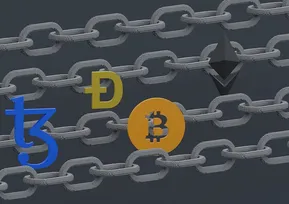
Photo by Eliobed Suarez on Unsplash


Crypto listing in Japan

In Japan, crypto assets must undergo a rigorous review conducted by the Japanese Financial Services Agency (FSA) before being listed on crypto exchanges. Boasting its stability and reliability, MBX has become the first token from a Korean blockchain gaming project to be added to the Japanese whitelist of crypto assets.

As part of its expansion plan, MARBLEX is in discussions with Zaif to arrange the listing of the MBX token on the Japanese crypto exchange in October.


Utility expansion plan

Moon Jun-ki, Business Division Director of MARBLEX, expressed confidence in MBX’s competitiveness as a verified token. He highlighted MARBLEX’s strategy to introduce a token burn policy and expand the token’s utility, all aimed at establishing a sustainable and transparent ecosystem.

These comments from Moon point to MARBLEX’s overhaul plan for MBX tokenomics. As a key step in this initiative, the blockchain firm burned 67% of its total 1 billion MBX distribution on July 19.

More to Read
View All
Markets·

Sep 12, 2024

India tops global crypto adoption despite regulatory hurdles: Chainalysis report

India has once again emerged as the global leader in cryptocurrency adoption for the second consecutive year, according to the latest Chainalysis Global Crypto Adoption Index for 2024. Despite strict regulations, including high taxes and restrictions on foreign exchanges, India continues to see widespread participation in digital assets, showcasing resilience in the country’s growing cryptocurrency ecosystem.Photo by Jovyn Chamb on UnsplashIndia leads in crypto adoptionIndia ranked first out of 151 countries in the 2024 Chainalysis report, maintaining its top position from 2023. Indian investors have continued engaging with both centralized and decentralized finance (DeFi) platforms despite regulatory challenges such as the 30% capital gains tax and a 1% tax deducted at source (TDS) on crypto transactions. This activity highlights the country's strong interest in digital assets. India received $143 billion in crypto inflows from July 2023 to June 2024, placing second in the Central and Southern Asia and Oceania (CSAO) region behind Indonesia, which received $157 billion. CSAO as a whole accounted for $750 billion in crypto assets over the same period, making up 16.6% of global crypto activity. Offshore exchange restrictions and workaroundsIn December 2023, India’s Financial Intelligence Unit (FIU) issued show-cause notices to nine offshore cryptocurrency exchanges, including Binance, Kraken and KuCoin, for non-compliance with anti-money laundering laws. The FIU also blocked access to these platforms for Indian users. However, many investors found ways to bypass these restrictions, continuing to access these exchanges via pre-downloaded apps. Despite these regulatory hurdles, Binance and KuCoin have since re-entered the Indian market after paying fines and complying with local laws. Binance settled a $2.25 million fine in June 2024, while KuCoin resolved a $41,000 penalty in March 2024. Indonesia’s rapid growth in cryptoIndonesia on the other hand has emerged as the fastest-growing crypto market in the CSAO region, climbing four places to third in the global rankings. The country experienced a nearly 200% year-over-year increase in crypto activity, driven primarily by retail investors seeking alternative investments such as meme coins. Indonesia received $157.1 billion in crypto inflows during the 12-month period, reflecting strong engagement with decentralized finance services. Broader regional trendsSeven of the top 20 countries in Chainalysis’ adoption index come from the CSAO region, including Vietnam, the Philippines and Pakistan. This growth is fueled by investment opportunities and an embrace of digital assets as new financial tools. Countries with lower purchasing power tend to have higher adoption rates, with retail-sized transactions making up a significant portion of activity.India’s resilient crypto marketDespite regulatory challenges, India’s crypto market continues to thrive. The government's strict policies have done little to dampen enthusiasm for digital assets. Chainalysis found that investors remained committed to crypto, even as the country enforces strict tax policies. India’s high adoption rate reflects strong demand and adaptability in the market. Future outlook for India’s crypto ecosystemIndia’s leadership in crypto adoption is expected to continue. The FIU is reviewing applications from more foreign exchanges, with at least two expected to be approved by the end of 2025. As the regulatory landscape evolves, clearer guidelines could encourage further growth and innovation in the digital asset space.

news
Policy & Regulation·

Sep 11, 2023

Korea to Ban Virtual Asset Deposit Services from Next July

Korea to Ban Virtual Asset Deposit Services from Next JulyDuring a recent criminal law seminar held at the Supreme Prosecutors’ Office, Park Min-woo, Director of the Capital Markets Bureau at the South Korean Financial Services Commission (FSC), underscored that starting next year, virtual asset service providers (VASPs) will no longer be permitted to offer deposit and management services for virtual assets. That’s according to a report by local crypto news outlet Digital Asset.This is seen as a response to the suspension of virtual asset deposits and withdrawals carried out by virtual asset yield platforms Haru Invest and Delio a few months ago.Photo by Mathew Schwartz on UnsplashLegal backgroundDirector Park referred to Article 7, Paragraph 2 of the Virtual Asset User Protection Act, clarifying that the intention behind this provision is to ensure that VASPs have the ability to fulfill asset withdrawal requests, even in the scenario where all their customers make such requests. This Act is scheduled to go into effect in July of next year, and Article 7 prohibits VASPs from entrusting customer assets to third parties.Deposit service providers receive cryptocurrency deposits and then distribute the resulting yields to their customers. In a bull market, these entities can manage yields on their own. However, in a flat or bear market, these asset managers may face challenges in paying yields unless they can generate profits by handing over customer assets to external custodians.Signs of giving upIn fact, centralized finance (CeFi) company HeyBit made an announcement last month, stating that it will discontinue its virtual asset deposit service starting from October 2. They cited this specific provision as the reason for their decision.Fraud chargesBoth Haru and Delio have been indicted by the Seoul Southern District Prosecutors’ Office on fraud charges.As an unregistered VASP, Haru suspended its deposit and withdrawal services on multiple occasions in June, causing substantial financial losses to numerous investors. This suspension was triggered by significant losses incurred at B&S Holdings, another unregistered entity to which Haru had entrusted virtual assets.Similarly, Delio, although registered, entrusted a considerable amount of virtual assets to Haru and Traum Info Tech but was unable to recover them.

news
Policy & Regulation·

Oct 19, 2023

Surge in Hong Kong Crypto License Applications from Mainland-Linked Brokers

Surge in Hong Kong Crypto License Applications from Mainland-Linked BrokersTwo new platforms with mainland China links are preparing to apply for retail trading licenses in Hong Kong, with several others believed to be interested in following suit.According to a report published by Nikkei Asia earlier this week, the platforms, Yax and PantherTrade, have connections to mainland online securities brokers. PantherTrade is reportedly associated with Futu, a company which in turn is backed by Chinese tech giant Tencent, one of China’s largest technology companies. Yax, an emerging player in the crypto sector, has strong links to UP Fintech Holding, a Beijing-headquartered firm more commonly known as Tiger Brokers.Photo by Kanchanara on UnsplashCapital flight concernsThese connections are significant, given the previous involvement of these brokers in helping mainland Chinese customers invest in offshore assets, primarily US stocks. The firms have previously attracted the attention of China’s financial regulators. A notice from the Chinese securities watchdog in December last year compelled them to cease their “illegal cross-border business” activities.While crypto trading is banned in mainland China, an investigative report by the Wall Street Journal in August suggested that global exchange Binance was thriving in China despite the ban. Actions taken by the Chinese authorities are demonstrative of some level of concern with regard to crypto trading and potential capital flight through crypto.VASP licensingThe move by Yax and PantherTrade signals their intention to apply for a virtual asset service platform (VASP) license in Hong Kong, which would enable them to operate cryptocurrency exchanges for retail customers.Currently, both platforms are undergoing third-party assessments, a mandatory step preceding their formal application to the Securities and Futures Commission (SFC). The timeline for their applications remains uncertain.Broader interestThe growing interest in VASP licenses is not unique to Yax and PantherTrade. At least four other exchange platforms, similarly linked to mainland China, have also sought the same license, highlighting the eagerness of various players to enter the Hong Kong market. OneDegree, the sole licensed insurer for digital assets in Asia, has observed a significant uptick in license applications, including applications from traditional financial institutions, reflecting a positive trend toward educating the mass market.The SFC’s recent decision to make license application information public is an attempt to enhance transparency, following a scandal related to Dubai-headquartered crypto exchange JPEX in which over HK$1.5 billion (approximately $190 million) in virtual assets reportedly disappeared from the exchange.Currently, only two cryptocurrency exchanges, OSL and Hashkey, have received SFC approval. Others, including online brokers, have considered applying for licenses since late last year but are awaiting greater regulatory clarity before taking the plunge.Hong Kong, under the “one country, two systems” framework, has established itself as a hub for legal retail trading of cryptocurrencies. This development may signify a shift in China’s stance on digital assets and its increasing openness to crypto initiatives, as noted recently by blockchain data provider Chainalysis.

news
Loading