Top

Colt Technology Partners With Singapore’s AsiaNext

Web3 & Enterprise·August 18, 2023, 1:17 AM

Colt Technology Services, an established player in the digital infrastructure sector, has unveiled a strategic partnership with AsiaNext, an emerging name in the crypto exchange domain.

News of the collaboration emerged on Thursday, with the partnership designed to harness the strengths of Colt’s secure and high-performance digital infrastructure solutions to foster high-frequency trading of various digital securities and crypto derivatives on the AsiaNext platform.

AsiaNext is a joint venture between Japan’s SBI Digital Asset Holdings and Swiss digital infrastructure firm, SIX Group. The entities behind the venture identified similarities in the regulatory approach taken in Switzerland and Singapore, and for that reason, AsiaNext was developed to grow the business in the city-state.
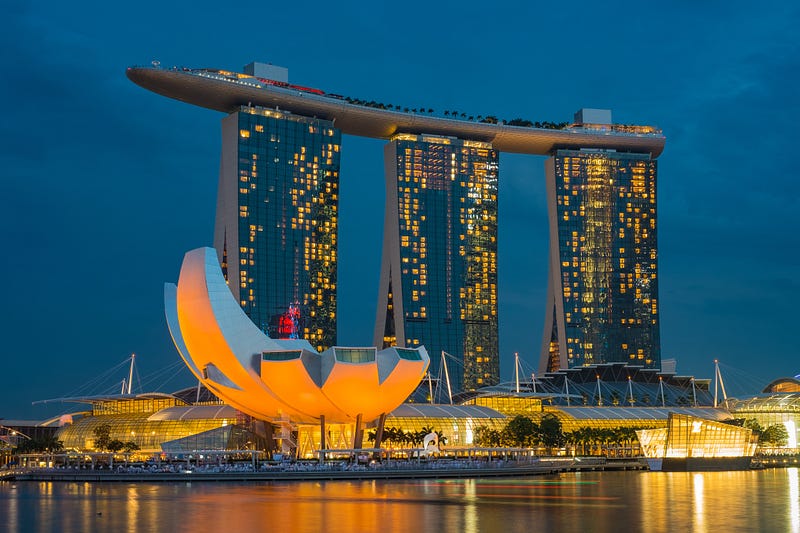
Photo by Julien de Salaberry on Unsplash


Accessing Multicast Market Data

The partnership will see AsiaNext leverage Colt’s Multicast Market Data in the Cloud. This service facilitates seamless connectivity between buyers and sellers, bridging the divide between mainstream finance and the secure realm of digital assets trading. The move takes on greater significance against the backdrop of Asia’s rapid ascent in digital asset trading and its central role in shaping global cryptocurrency regulations.

AsiaNext has been targeting institutional investors and aims to offer a comprehensive suite of services encompassing listing, trading, and post-trade functions for digital assets. The exchange is attempting to provide institutional investors with a secure platform for trading digital assets, bolstering the crypto derivatives market in the region.

Alongside Colt’s Multicast Market Data product, AsiaNext will also benefit from access to Colt’s PrizmNet, which enables low latencies for global delivery of data, software, content, and financial services.

Commenting on the deal, Russell Toop, Colt’s Team Lead, Capital Markets Asia, remarked: “Our partnership with AsiaNext demonstrates our firm commitment to capital markets in Asia and across the world, and we’re excited to be part of its journey at the earliest stages as it sets out to bring digital assets to the mainstream.”

Yuen Keng Yin, Chief Technology Officer of AsiaNext, echoed the sentiment by highlighting the transformative potential of Colt’s solutions for institutional investors, stating:

“Their solutions support our investors in securing their position in this rapidly-growing market, so they can optimize their digital assets trading strategies and open up exciting new opportunities for their clients.”


Working towards a full CMS license

AsiaNext has been making progress within the Singaporean market. In June, the local regulator and central bank, the Monetary Authority of Singapore (MAS), granted the institutional grade exchange regulatory approval in principle.

That Capital Markets Services (CMS) license is now on the cusp of full license approval from MAS. Furthermore, the firm is also working towards obtaining a Recognised Market Operator license.

These regulatory milestones all feed into AsiaNext’s overall goal, which is to offer a service which can bridge the gap between traditional finance and the digital assets space. In building out that offering, Marek Socha, Head of Corporate Development at SIX Group, said in an interview last year that important partnerships would be established by AsiaNext. No doubt accessing Colt’s service offering with this latest partnership is another step for the firm in reaching its objective.


More to Read
View All
Policy & Regulation·

Jan 18, 2024

Tax burden contributes to Indonesian crypto exchange trading slump

While Indonesia has been recognized as one of the world's swiftest embracers of cryptocurrencies, it has faced a notable setback more recently, with a 60% decline in transaction volumes on local exchanges compared to the preceding year. High taxesIn a recent report by CoinDesk Indonesia, the publication speculates that the imposition of high taxes may be a pivotal factor dissuading traders and impacting the overall market dynamics. Indonesia’s tax system treats crypto assets as commodities, with the burdensome taxes arising as a direct consequence of that classification. The tax framework in Indonesia subjects crypto assets to both income tax and value-added tax (VAT), treating them akin to commodities. Leading crypto exchanges in the country reveal that the cumulative tax load on each transaction could surpass the trading fees imposed by exchanges, potentially discouraging users from engaging in crypto transactions. Oscar Darmawan, the CEO of the leading Indonesian crypto exchange INDODAX, told CoinDesk that users bear an income tax of 0.1% and a VAT of 0.11% on every crypto transaction. Additionally, exchanges are required to remit a 0.04% fee to the recently established national crypto bourse. Darmawan clarified that “this places a significant financial burden on the domestic crypto industry." expresses Darmawan in an interview with CoinDesk Indonesia, underscoring the challenges faced by the industry due to the current tax structure.Photo by Nataliya Vaitkevich on PexelsAn international issueThe tax treatment of digital assets has been a bugbear for the crypto space on an international basis. In Japan, it arose last month that the country’s lawmakers were considering applying an exemption for companies from paying taxes on unrealized cryptocurrency gains. It has since transpired that such an amendment will be applied to its fiscal 2024 tax reform plan. India has applied a heavy tax burden where crypto is concerned, with a 30% tax applied to capital gains relative to the sale of crypto assets. Additionally, 1% taxation applies by way of a tax deducted at source (TDS) on crypto transactions. The use of cryptocurrency for the purchase of goods and services in the United States remains a stumbling block, given that the current tax code treats such a scenario as a taxable event. Last year, two U.S. senators attempted to address that issue, by including a $200 exemption for purchases made with cryptocurrency. Calls for crypto asset reclassificationIn response to this dilemma in Indonesia, some stakeholders within the local crypto industry advocate for a paradigm shift in the classification of crypto assets. They propose treating crypto as securities instead of commodities, anticipating that this alteration could alleviate the tax burden on users. Yudhono Rawis, the CEO of the exchange platform Tokocrypto, asserts: "Both stocks and crypto are tradable assets with profit potential … Thus, implementing the same tax regime for both these investment instruments would be more equitable and consistent." The industry anticipates regulatory changes in the near future, as crypto oversight in Indonesia is set to transition from the commodities regulator to the Financial Services Authority (OJK) in January 2025.  

news
Policy & Regulation·

Jan 03, 2024

Indian Web3 industry body campaigned for ‘level playing field’

An industry advocacy body for crypto and Web3 in India had urged the Indian government to take action against nine offshore exchanges, prompting the government to issue show cause notices and block URLs recently. Native industry pushbackAccording to CoinDesk, the publication has seen a copy of a letter that was sent in mid-December by the Bharat Web3 Association (BWA), addressed to the Indian Finance Ministry’s Department of Revenue Secretary, Sanjay Malhotra. The letter was penned by BWA Chairman Dilip Chenoy. Chenoy has been in the role since March of last year having a number of years of leadership experience within Indian industry bodies under his belt, with time spent previously as Secretary General of the Indian Chambers of Commerce and Industry and as Chairman of the board of Sant Longowal Institute of Engineering and Technology. According to its LinkedIn profile, the BWA seeks to “advocate for the collaboration between the regulatory bodies and the Industry for creating awareness about the new age technology and the emerging [Web3/crypto] asset class.” ‘Show cause’ noticesIt emerged last week that India’s Financial Intelligence Unit (FIU) had issued “compliance show-cause” notices to a number of overseas crypto platforms who have otherwise been active within the Indian market. The FIU is a national body tasked with liaising with and providing information to enforcement agencies where suspected illicit transactions are concerned. The offshore exchanges, including Binance, KuCoin, Huobi, Kraken, Gate.io, Bittrex, Bitstamp, MEXC Global and Bitfinex, have been given a two-week deadline to respond to the show cause notice. This notice questions why regulatory actions should not be taken against them, aiming to ensure compliance with the country's financial regulations. It’s understood that the BWA's letter requested a one-month grace period for offshore exchanges to register with the FIU. It remains unclear whether the government's actions were solely prompted by the BWA's letter or if it would have taken place independently. Notably, the BWA's letter aligns with the government's earlier mandate in March, requiring crypto businesses to register with the FIU and adhere to anti-money laundering processes under the Prevention of Money Laundering Act (PMLA). Since then, 31 domestic entities have registered with the FIU. Photo by Peter Glaser on UnsplashEnsuring a fair gameThe BWA's letter also proposes that offshore exchanges establish an Indian subsidiary, deposit the applicable tax deducted at source (TDS) from July 1, 2022 and face restrictions, including potential access blocks on mobile app stores and IP addresses, for non-compliance. While it's unclear if all these requests feature in the show cause notices, the BWA emphasizes the need for fair competition. Rajagopal Menon, Vice President of leading Indian crypto exchange WazirX, stressed that “all we are asking for is a level playing field." The BWA's letter also urges the government to grant Indian retailers a 30-day window to withdraw assets before implementing any restrictions. The fledgling BWA industry body recently celebrated its first anniversary with its founding member, CoinSwitch founder Ashish Singhal, stating that he got involved with the BWA “to help build an effective regulatory framework for Web3 and digital assets in India.” Singhal added that the BWA’s mission is “to help India realize its vision to be the leading digital economy.” 

news
Policy & Regulation·

May 24, 2023

Chinese Fentanyl Producers Taking Payment in Crypto

Chinese Fentanyl Producers Taking Payment in CryptoA report produced by blockchain analytics and crypto compliance solutions firm Elliptic has found that most Chinese suppliers of fentanyl precursors are accepting payments for the illicit material in cryptocurrency.In a blog post published on its website on Tuesday, Elliptic claimed that 90 percent of the 90 China-based firms, from which its researchers received offers of fentanyl precursors, accepted cryptocurrency as a form of payment. The majority of fentanyl which is trafficked into the United States is manufactured using imported fentanyl precursors like the material that the Elliptic researchers were offered.Seventeen of the suppliers even offered to provide fentanyl itself. Others still offered to supply synthetic opioids, equally or more potent than fentanyl, which are currently legal to both produce and supply within China.Photo by Hal Gatewood on UnsplashTracking blockchain transactionsIn tracing back transactions relative to these illicit suppliers, the Elliptic researchers’ analysis demonstrated that the digital asset wallets used by the rogue suppliers have received thousands of payments. The research team has estimated the net worth of those transactions to total $27 million.It appears that a move towards crypto payments is trending with this group of suppliers as there has been a 450% increase year-on-year when it comes to payments for fentanyl precursor using crypto.The study highlighted activity related to Dutch national Alex Peijnenburg. An alleged fentanyl supplier, Peijnenburg, made an $85,000 payment in crypto to one of the ninety fentanyl precursor suppliers identified by Elliptic researchers. In November of last year, the Dutchman was sanctioned by US authorities relative to his activities.Global trade and distributionThe report stated: “During our correspondence, the suppliers showed no concerns about how the chemical would be used, with some explaining that it was their best-selling product and could be used to produce fentanyl.”It went on to state that “others pointedly mentioned that they had sold it to customers in Mexico.” Mexico is a significant location in the global drugs trade, given the activity of drug cartels within the country. One supplier offered an insight to researchers as to the preferences of their nefarious Mexican clients, stating: “They always use USDT or Bitcoin to pay. It is no problem.”While it looks like these nefarious Chinese companies are able to trade into and out of crypto assets, that should be a difficulty for them as China banned the offering of crypto trading services going back a number of years already. Furthermore, foreign digital asset exchanges are prohibited from servicing the needs of Chinese clients where crypto is concerned.Elliptic’s research team uncovered that the majority of the illicit drugs trade suppliers have been using workarounds in order to gain access to overseas digital asset exchanges. The suppliers have used intermediaries in order to convert crypto into Chinese yuan.The report concludes that this part of the international fentanyl trade can be dealt with and “disrupted by the services that act as gateways into and out of crypto assets.” On arriving at that conclusion, Elliptic has acted by notifying the digital asset exchanges that these suppliers are using. “[We] have flagged hundreds of crypto addresses in our tools as being linked to this activity,” the report states.Crypto had infamously been associated with illicit activity on the dark web in its earliest years. It has moved well beyond that although due to its decentralized nature, it’s difficult, if not impossible, to control who utilizes decentralized digital currency.

news
Loading