Top

MAS Offers Guidelines for Banks Handling Crypto-Related Clients

Policy & Regulation·July 18, 2023, 1:44 AM

The Monetary Authority of Singapore (MAS) has released a comprehensive set of guidelines to assist banks in managing clients who are involved in digital assets, such as cryptocurrency exchanges or individuals whose wealth is derived from cryptocurrencies.
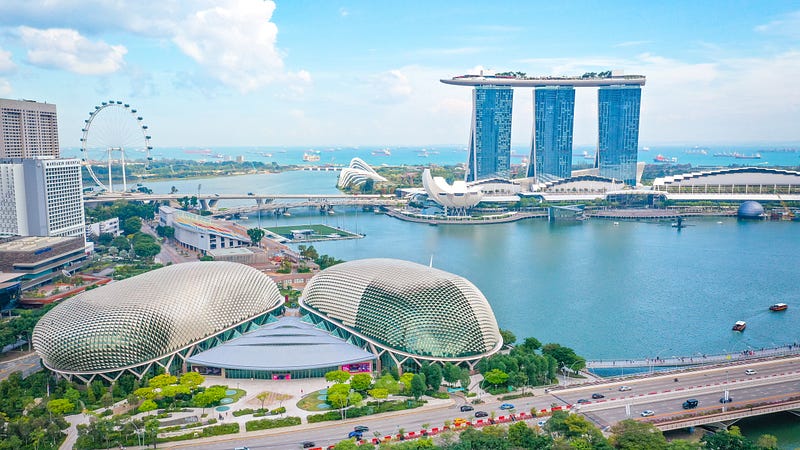
Photo by Meriç Dağlı on Unsplash


Industry working group

According to a report in local media source, The Straits Times, these non-mandatory guidelines, developed by an industry working group, aim to provide best practices for financial institutions to address concerns related to money laundering, terrorism financing, and sanctions risks associated with cryptocurrencies.

The working group suggests that enhanced due diligence may be necessary for firms closely connected to facilitating crypto transactions. For instance, conducting site visits or walk-throughs of a client’s anti-money laundering and anti-terrorism financing processes and controls could be required.

During the onboarding process, banks should request information documenting the customer’s crypto exposure and the intended usage of the account. Additionally, banks are advised to establish the source of the client’s funds or wealth.

To evaluate the regulatory status of a merchant customer’s crypto-related counterparties, especially if they contribute significantly to the merchant’s transactions, banks should conduct thorough assessments.

The working group also highlights the use of blockchain screening tools to review the on-chain activity of digital token payment service providers. Regular screening of new and existing wallet addresses owned or controlled by these providers against the sanctions list and designated wallets is also recommended.


Comprehensive guidelines

Loretta Yuen, Head of Legal and Compliance at Oversea-Chinese Banking Corp (OCBC), a Singapore-headquartered bank, describes the guidelines as one of the most comprehensive in the world, providing insights into banks’ management of crypto-related money laundering, terrorism financing, and sanctions risks.

She believes the guidelines will raise awareness among prospective customers regarding the key risk considerations banks prioritize and enable customers to proactively fulfill banks’ customer due diligence requirements during the onboarding process.

Evy Theunis, DBS Bank’s Head of Digital Assets, views the guidelines as a codification of best practices across the industry, aligning with the bank’s existing protocols. United Overseas Bank (UOB) also acknowledges the benefits of the best practice paper, particularly given the diverse range of digital assets with varying levels of risk.


Eight participating banks

The working group responsible for developing these guidelines includes representatives from eight banks, MAS, the Commercial Affairs Department, and Big Four audit firm Ernst & Young. Formed in August 2022 under the anti-money laundering and countering the financing of terrorism industry partnership (ACIP), the group aims to identify, assess, and mitigate money laundering and terrorism financing risks in Singapore through a collaborative private-public partnership involving the financial sector, regulators, law enforcement agencies, and other government entities.

Singapore is vying to establish itself as a hub for digital asset business in Asia, alongside other centers such as Hong Kong. The Chinese autonomous territory has been making greater progress over the course of the past year.

However, a report in The Wall Street Journal on Monday suggests that banking remains a difficulty for crypto businesses in Hong Kong. Hong Kong’s difficulty may be Singapore’s opportunity, given the work that this working group has carried out in smoothing the way for the banking of digital asset-related businesses.

More to Read
View All
Policy & Regulation·

Dec 21, 2023

Korean regulator monitors non-listed token amidst peer-to-peer trading surge

Korean regulator monitors non-listed token amidst peer-to-peer trading surgeThe South Korean financial regulator is closely monitoring BTCMobick, a non-listed token issued by crypto influencer Oh Tae-min, who is known for authoring books like “The Great Bitcoin” and “Bitcoin and the Geopolitics of the Dollar.” The Financial Services Commission (FSC) is cautioning local crypto exchanges regarding the potential for price manipulation should the token be listed.Photo by Daniel Bernard on UnsplashBTCMobick TokenThe BTCMobick token is reportedly being traded peer-to-peer at around KRW 300,000, which is approximately equivalent to $230, in chat rooms of messaging apps like KakaoTalk outside of cryptocurrency exchanges. The token has gained enough traction to spur the emergence of dedicated apps that facilitate these peer-to-peer trades, charging fees for their services. Based on the size of the chat rooms and apps involved, it is estimated that approximately 3,000 participants are trading the token, according to a report by local news website Etoday.As per another coverage by the same outlet, the Virtual Asset Inspection Division of the Financial Intelligence Unit (FIU), which operates under the FSC, has inquired with local crypto exchanges on two occasions — once in September and again this week — about whether they have listed or are planning to list the BTCMobick token. It’s rare for the financial authority to specifically target a particular token when making inquiries with crypto trading platforms.Potential price manipulationAn FIU official explained the rationale behind the agency’s inquiry into crypto exchanges. The official stated that the probe aimed to caution the exchanges about potential price manipulation of the BTCMobick token. The concern is that many crypto users might suffer losses if such a token, which has been experiencing a continual rise in price outside of trading platforms, were to be listed. Currently, legal penalties for cryptocurrency price manipulation fall under the Virtual Asset User Protection Act, which will not be enforced until July 2024. This indicates a regulatory gap in the immediate term.Hwang Suk-jin, a professor at Dongguk University’s Graduate School of International Affairs and Information Security, pointed out that while giving out privately generated tokens to friends or acquaintances doesn’t raise any legal issues, the situation changes once these tokens are listed for trading on exchanges and distributed more broadly in the market. In such scenarios, these tokens can become a source of legal disputes, he explained.Amidst these developments, there are circulating rumors suggesting that BTCMobick is on the verge of being listed on exchanges. An industry insider has mentioned that there are brokers actively spreading these rumors, indicating that the token might soon become publicly tradable.Oh Tae-min’s denial of rumorsMeanwhile, Oh Tae-min, the creator of BTCMobick who has been distributing his token for free, states that the token is part of an experiment intended to mimic the early stages of Bitcoin. However, critics are concerned that the personally issued token has no practical utility. Addressing the circulating rumors about the token’s potential listing on exchanges, Oh asserts that these rumors are baseless and false. He further warns that any brokers spreading such rumors are likely engaging in fraudulent activities.

news
Markets·

Jan 20, 2024

Hong Kong financial services platform plans spot Bitcoin ETF launch for Q1

Venture Smart Financial Holdings Ltd. (VSFG), a Hong Kong-based financial services company, is gearing up to initiate an exchange-traded fund (ETF) directly investing in bitcoin in the first quarter of this year.Photo by Kanchanara on UnsplashThat’s according to a report by Bloomberg on Friday. The move aligns with Hong Kong's strategic efforts to establish itself as a digital asset hub, and with that, the company plans to submit an application to the Securities and Futures Commission (SFC) for ETF approval. Brian Chan, the group head of investment and product at VSFG, expressed optimism about the potential of this market, setting a goal of achieving $500 million in assets under management by the end of the year. Long-term objectiveWhile the firm has taken the decision to focus on spot crypto ETFs amid a backdrop of spot bitcoin ETF approval in the United States earlier this month, it’s an objective the firm has been working on for some time. In June of last year, crypto media reported that VSFG were planning the launch of such a product. Notwithstanding that intention, the recent launch of several high-profile bitcoin funds in the United States, including offerings from BlackRock and Fidelity Investments, will likely assist the company in getting product approval in Hong Kong. Immediately following U.S. approval, a Hong Kong lawmaker suggested that the Chinese autonomous territory should respond proactively. Johnny Ng outlined that Hong Kong had to respond to secure its global position in developing the digital assets space in Hong Kong. Positive soundingsTowards the end of December, there appeared to be positive soundings on the possibility of spot bitcoin ETF approval in Hong Kong emerging from the local regulator. SFC CEO Julia Leung stated that the regulator was open to the notion of retail participation in spot crypto ETF products. Her comment was followed shortly afterwards by a joint announcement from the SFC alongside the Hong Kong Monetary Authority (HKMA) that they were prepared to accept applications for such funds. The approval process for such products typically takes weeks to months, following the precedent of traditional ETFs. Hong Kong presently permits futures-based crypto ETFs, with three already listed: CSOP Bitcoin Futures, CSOP Ether Futures and Samsung Bitcoin Futures. However, these funds have a combined asset value of around $50 million. Samsung Asset Management has not ruled out exploring the launch of a spot ETF, while CSOP Asset Management remains silent on the matter. VSFG is one of Hong Kong's first SFC-approved virtual asset managers, offering both traditional and digital wealth management services. Aegis Custody, a digital asset custodian, is in discussions with four asset managers about listing spot crypto products in Hong Kong. The regulatory requirements in the city may lead issuers to impose higher fees compared to the low management levies seen in many new U.S. spot bitcoin ETFs. Although bitcoin experienced substantial growth in anticipation of these U.S. products, it has seen a 10% decline since their trading commenced on Jan. 11. Nevertheless, many industry commentators expect a stronger bitcoin unit price in the medium to long term as a direct consequence of these products. 

news
Web3 & Enterprise·

Sep 25, 2023

Crypto Titans Clash on Elon Musk’s X

Crypto Titans Clash on Elon Musk’s XA subtle panel discussion photo posted by Andrei Grachev of Singapore’s DWF Labs turned into a war of words among crypto trading titans on Elon Musk’s X (formerly Twitter).Photo by Marek Piwnicki on UnsplashDWF vs GSRGrachev, who is a Managing Partner at the market maker and Web3 investment firm, thanked his fellow panelists in the post. However, the tone quickly soured as Cristian Gil, Co-Founder of rival market-making giant GSR, took offense to Grachev’s presence on the panel and voiced his disapproval on the platform.Gil didn’t mince his words, stating: “[Andrei Grachev] had absolutely no business to be on that panel. It’s insulting to [GSR] , [OKX] and [Wintermute] to be in the same room as [DWF Labs].”DWF vs WintermuteHis remarks received a “Like” from Evgeny Gaevoy, the CEO of market maker Wintermute. In response, Grachev defended his presence, asserting that DWF was superior in technology, trading, and business development compared to its rivals, going so far as to suggest to Gil: “Yeah, if I were you — I would be also crying all the time.”The exchange continued with Grachev claiming that DWF was capturing market share from Wintermute, and Gaevoy responded with a nonchalant “lol,” challenging Grachev to invest more if he believed DWF posed a threat.DWF Labs’ rapid growthWhile the exchange consisted of mere words, it shed light on DWF Labs’ sudden rise to prominence earlier over recent months. The company has featured prominently in an array of investments in Web3 startups and blockchain networks over the course of 2023. Prominent among them have been investments in EOS, the Algorand ecosystem, and the TRON ecosystem.Recently appearing on the BlockBeats podcast, Grachev defended the company, outlining that it was not involved in market manipulation in response to recent assertions to the contrary.“We do not engage in any manipulative behavior,” Grachev stated. “Of course, we have the futures market, which is a tool for hedging positions and trading clubs. We are completely different from directional traders,” he added.Gaevoy added some humor to the mix by sharing a meme, raising questions about the maturity level of these prominent figures in the crypto industry. The spat provoked a broad array of commentary from the crypto community.Crypto immaturityThe very public clash raises concerns about how traditional Wall Street firms, currently making bold moves into the crypto space, might perceive such behavior. Notably, firms like BlackRock have been involved in Bitcoin ETF applications, signaling a growing interest in cryptocurrency among mainstream financial institutions. In response to Gaevoy and Grachev, one commentator wrote: “The institutions are never coming back.”While it would appear that there’s no love lost between DWF, GSR, and Wintermute, it also seems evident that both market makers can agree on Singapore as being an appropriate location from where to operate a crypto business. While Wintermute is London-based, it revealed recently that it was expanding its operations in Singapore. Like Wintermute, GSR is primarily based in London although it too maintains a presence in Singapore to service Asia-centric business.

news
Loading