Top

China’s digital yuan set for deposit-based role in banks next year

Policy & Regulation·December 30, 2025, 7:19 AM

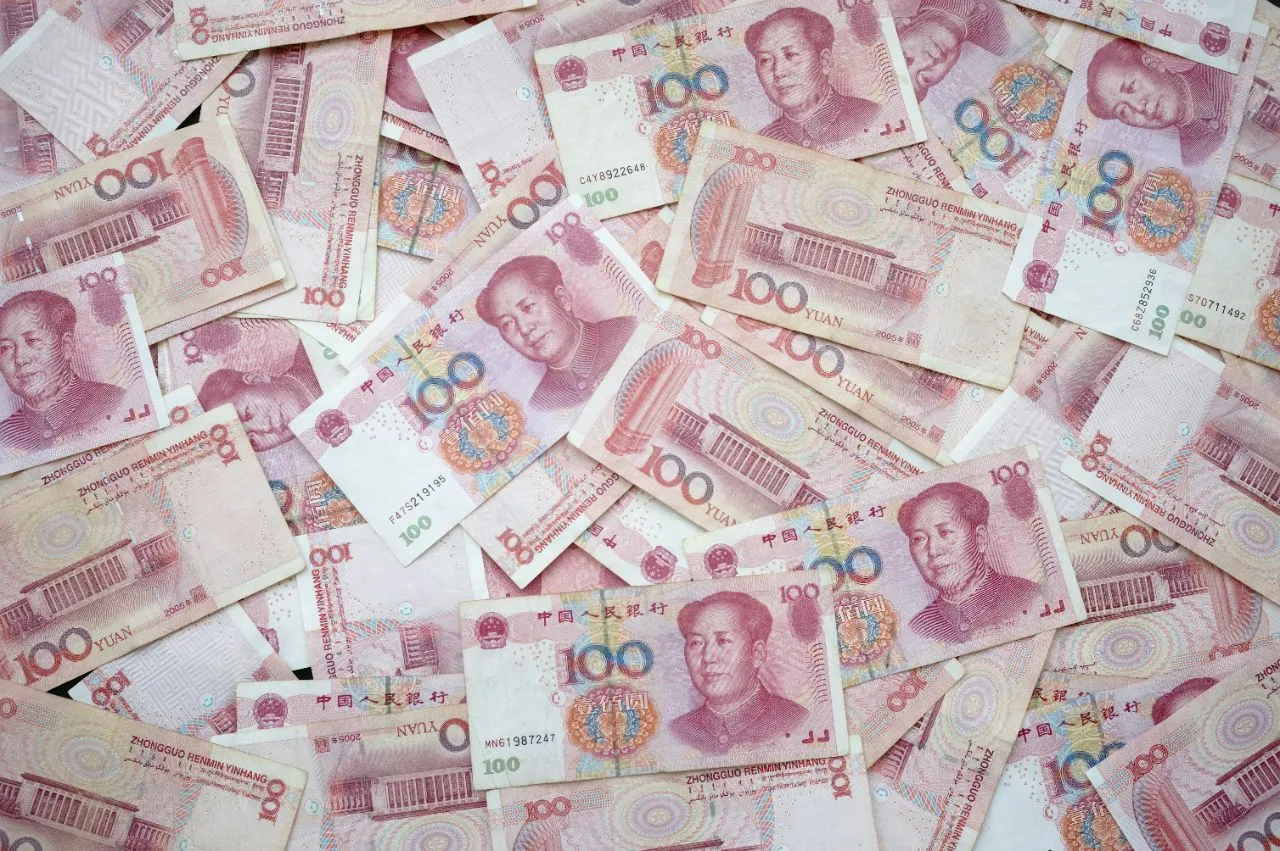
The People’s Bank of China (PBOC) plans to roll out a new structure for its central bank digital currency (CBDC) operations, moving the digital yuan into a deposit-based role within the commercial banking system beginning Jan. 1, 2026.


Lu Lei, a deputy governor of the PBOC, announced the update, marking a new direction after nearly a decade of pilot programs. According to a report by FTChinese, the move fits into Beijing’s broader economic planning, as authorities seek to reinforce China’s role in global finance while containing risks tied to loosely regulated digital activity.


The deputy governor said China will continue to run the digital yuan under a two-tier system, with the central bank responsible for rules and infrastructure, while commercial banks manage wallets, payments, and compliance. He added that the arrangement is designed to prevent banks from being sidelined and to limit shadow banking risks associated with digital payment platforms outside the regulated system.
https://asset.coinness.com/en/news/7498df75b0391a82a989281bdce6420f.webp
Photo by Eric Prouzet on Unsplash

Digital yuan transactions top $2.3T

The announcement comes as use of the digital yuan, known as the e-CNY, continues to rise. By late November 2025, the system had handled 3.48 billion transactions with a total value of 16.7 trillion yuan ($2.3 trillion). There are about 230 million personal wallets and 18.84 million corporate wallets.


Beyond domestic use, the e-CNY is being positioned for international trade. Lu pointed to progress on mBridge, a cross-border payments project involving multiple central banks. The platform has processed 4,047 transactions worth the equivalent of 387.2 billion yuan ($55.3 billion), with the digital yuan accounting for about 95.3% of the settlement value.


The deputy governor also sounded a note of caution on private-sector innovation, saying the rapid growth of digital assets and stablecoins could complicate the conduct of monetary policy. He said central banks need to ensure that new payment tools do not undermine macroeconomic stability or allow money to circulate beyond regulated channels.


Hong Kong to license crypto dealers, custodians

As Beijing moves to strengthen its state-backed currency framework, Hong Kong is also tightening oversight of the crypto market. On Dec. 24, the city’s Financial Services and the Treasury Bureau (FSTB) and the Securities and Futures Commission (SFC) released their conclusions on proposed legislation to regulate virtual asset dealing and custodial services.


Following the implementation of the Stablecoins Ordinance in August, regulators are now moving to require firms offering crypto dealing or custody services in Hong Kong to obtain licenses and operate under regulatory supervision. They also began seeking feedback on whether to extend oversight to virtual asset advisory and management providers, with the proposed framework modeled on existing securities market rules.


In a separate development underscoring the contrast between state-backed and decentralized digital currencies in the region, reports this month pointed to a sharp drop in Bitcoin network activity linked to mainland China.


BTC hashrate drop seen amid China mining changes

Kong Jianping, CEO of Nasdaq-listed Web3 infrastructure firm Nano Labs, said on the social media platform X that the global Bitcoin network’s hashrate fell by about 100 exahashes per second, or roughly 8%, around Dec. 15. He attributed the decline to the shutdown of an estimated 400,000 mining rigs, mainly in Xinjiang. A lower hashrate means less computing power is securing the network, reducing competition among miners that validate transactions.


China has maintained a broad ban on crypto trading and mining since 2021. Industry outlet Wu Blockchain said the reasons for the latest shutdowns were unclear.


 

More to Read
View All
Policy & Regulation·

Nov 12, 2024

Deutsche Bundesbank joins Singapore’s Project Guardian

The Deutsche Bundesbank, Germany’s central bank, has joined Project Guardian, a collaboration established in 2022 between the Monetary Authority of Singapore (MAS) and the financial sector, with an emphasis on the use of asset tokenization to improve liquidity and efficiency within financial markets.Photo by Rachel Davis on UnsplashAssessing DLT technologyIn a press release published on Nov. 8, Bundesbank Executive Board member Burkhard Balz suggested that the central bank is aligned with MAS in that both central banks are interested in determining “how innovative technologies and concepts, such as distributed ledger technology (DLT) or blockchain, can be put to meaningful use in the financial sector.” In joining Project Guardian, the Bundesbank will take part in the Asset & Wealth Management workstream, testing an interoperable blockchain platform for tokenized and digital funds. While the German central bank has just announced details of its participation in Project Guardian, in a speech given at the Layer One Summit, an event which formed part of the Singapore Fintech Festival last week, MAS Deputy Director Leong Sing Chiong welcomed the Bundesbank, alongside the World Bank, to Project Guardian.  The MAS executive clarified that the Deutsche Bundesbank and the World Bank would join the project’s Policymaker Group. He outlined that the role of that group is to “help provide inputs on governance arrangements, guidance on how GL1 [Global Layer One] infrastructures can be developed in line with global standards, and advice on appropriate regulatory guardrails for tokenised asset transactions.” GL1 refers to an initiative that has been established to create the foundational digital infrastructure to facilitate tokenized assets. Cross-border collaborationThrough its involvement in Project Guardian, the German central bank hopes to strengthen cross-border collaboration, while at the same time, progressing matters related to the “standardisation and interoperability of digital assets.” In working towards the goal of standardization, MAS has published two comprehensive reports covering fixed income tokenization and fund tokenization. MAS believes that the use of too many individual private DLT networks is resulting in fragmentation, with a detrimental effect with regard to liquidity. Consequently, the Singaporean central bank is establishing the Guardian Wholesale Network to improve liquidity and achieve asset tokenization at scale. The network will consist of Citi, Schroders, Standard Chartered, UOB and HSBC. Additionally, it was recently announced that SBI Digital Markets, a Singapore-based affiliate company of Japan’s SBI Digital Asset Holdings (SBI DAH), intends to contribute towards greater liquidity through its involvement in a fixed income asset tokenization pilot. Meanwhile, Citi and Fidelity have developed a proof of concept for a digital foreign exchange (FX) swap, enabled within an on-chain money market fund (MMF).  Tokenization inflection pointLeong went on to claim that while nobody has succeeded yet in implementing tokenization at scale, an inflection point has been reached with regard to the use of tokenization. He added that many use cases are promising relative to tokenization but that there is a need for supporting infrastructure “to enable good use cases to scale beyond individual networks.” In the press release, Leong said that the Bundesbank’s expertise “will be invaluable as we work together to enhance liquidity and efficiency of financial markets through asset tokenisation.”

news
Web3 & Enterprise·

Jan 09, 2024

Japanese e-commerce giant Mercari planning bitcoin payments

Mercari, one of Japan's leading e-commerce platforms, has declared its intention to accept bitcoin payments starting from June of this year. The decision, which was reported by Japanese financial media outlet Nikkei on Friday, outlines that the processing of bitcoin payments will be managed through Mercari's Tokyo-based crypto subsidiary, Melcoin.Photo by Dmytro Demidko on UnsplashSeamless BTC conversionIt's noteworthy that Melcoin will convert all BTC payments into yen, ensuring vendors receive fiat currency despite the buyer's choice of bitcoin for payment. While the company won't display prices in bitcoin, listing items for sale in fiat yen, customers will have the option to select BTC as a payment method during the purchase process on the platform. In recent months, Mercari has introduced various crypto-related products, including the Mercari bitcoin crypto trading service. This service allows users to buy and sell bitcoin using the proceeds from their sales on the platform. The integration of a loyalty points system further enhances the crypto trading experience, enabling Mercari users to exchange their points for bitcoin. Remarkably, Mercari announced that its bitcoin trading service surpassed the 1 million user milestone in October, just seven months after its launch. At the time of the launch of the trading service, the company outlined that it would “make bitcoin more accessible to people who have never tried crypto trading before.” Notably, around 80% of the crypto users on Mercari had no prior experience with crypto-asset trading in June of the previous year. Expanding its crypto-related offering to include bitcoin payments unleashes much more potential relative to crypto adoption. 22 million monthly usersEstablished in 2013, Mercari has evolved into Japan's largest community marketplace platform, boasting 22 million monthly users as of July 2023. It’s a flea market application, making it a consumer-to-consumer platform that could play a significant role in bringing about bitcoin adoption in Japan among ordinary people. The company has also expanded its footprint internationally, with a particular focus on Europe. Market observers have labeled Mercari's crypto service, along with a competitor operated by Rakuten, as a potential "gateway" for bitcoin and crypto investors and traders. Rakuten, another major Japanese e-commerce platform deeply involved in the crypto space for an extended period, operates the Rakuten Wallet crypto trading service. Like Mercari, Rakuten has integrated its loyalty points program with its crypto arm, allowing users to trade their points for crypto-assets. Rakuten had also emerged last year among a shortlist of Asian companies expressing an interest in purchasing failed crypto exchange FTX. A recent survey highlighted the growing influence of these e-commerce giants in the crypto space. Japanese individuals who entered the coin trading scene towards the end of 2022 overwhelmingly favored either Mercari's bitcoin trading app (24.7%) or Rakuten's Rakuten Wallet platform (24.2%). This revelation dealt a blow to traditional crypto exchanges, with bitFlyer, the long-standing market leader, securing the third position with a share of 11.3%. This move contributes towards a more progressive crypto environment in Japan, where lawmakers recently indicated a willingness to consider making tax rules more accommodative of the crypto sector.

news
Policy & Regulation·

Nov 29, 2023

KuCoin affiliate applies for license in Hong Kong amid identity mix-up

KuCoin affiliate applies for license in Hong Kong amid identity mix-upIn a recent development on the Hong Kong crypto scene, VAEXC Limited, a cryptocurrency exchange, has submitted an application for a crypto trading license. The move had sparked a misunderstanding as some reports suggested the application was submitted by a Binance-linked company when in fact, it turns out to be a KuCoin-affiliated entity.Photo by Stella P on UnsplashReporting confusionA report published in October by the South China Morning Post (SCMP) asserted that a newly established crypto exchange named HKVAEX appeared to be connected with global crypto platform Binance.In the meantime, it emerged more recently that an application for a trading license had been submitted by the similarly named VAEXC Limited. While many reports confused this entity with what is believed to be a Binance-linked company, subsequent reports have emerged to confirm that the application pertains to an entity associated with the Seychelles-incorporated cryptocurrency exchange, KuCoin.In response to these initial wayward reports, a HKVAEX spokesperson confirmed that the company is in the process of preparing a licensing application in Hong Kong but that it has yet to do so. The spokesperson stated:“We are still in the preparatory stages for the application” . . . “VAEXC is an entirely separate applicant, and our operations are completely independent.”Leveraging KuCoin technologyThe SFC updated the list of virtual asset trading platform applicants on Nov. 27, disclosing that Hong Kong VAEXC Limited submitted its application on Nov. 25. Operating under the name VAEX, the exchange places a strong emphasis on security and regulatory compliance, positioning itself as a next-generation, trusted virtual asset exchange.Backed by a team with extensive industry expertise and leveraging KuCoin Tech, VAEX aims to offer a secure, reliable, stable and user-friendly platform for crypto asset trading and management. In celebration of VAEX’s launch, KuCoin conducted a public testing campaign, featuring a 15,000 USDT prize pool for eligible KuCoin users and participants.Despite the recent scandals in Hong Kong’s crypto scene — including an alleged fraud at the JPEX crypto exchange and more recently still, an alleged Ponzi scheme orchestrated by unlicensed crypto exchange Hounax — the regulatory stance in Hong Kong remains unwaveringly positive where digital assets are concerned.Introduced in June, regulations in Hong Kong mandate cryptocurrency exchanges to apply for a Virtual Asset Service Provider (VASP) license from the SFC by June 2024 or face de-registration. Notably, unregistered exchanges are permitted to operate during the interim transition period.KuCoin’s investment arm, KuCoin Ventures, has also been active in Hong Kong. In March, the firm led a $10 million investment in CNHC, a Hong Kong-based stablecoin issuer. Three months later, amid a changing regulatory environment in 2023, the platform confirmed a tightening of its compliance procedures with the introduction of mandatory know-your-customer (KYC) identity checks.Meanwhile, it’s unclear as to what plans Binance has to expand in Hong Kong if any. The leading global exchange is facing very challenging legal issues in the United States currently. That could have a bearing on its plans in Hong Kong, while it remains unclear as to what level of involvement it has with HKVAEX.

news
Loading
