Top

Seoul’s Seocho District Leverages Blockchain Coins to Catalyze Social Impact

Policy & Regulation·July 03, 2023, 5:20 AM

Seocho District, one of the 25 districts in the South Korean capital of Seoul, is leveraging blockchain technology to tackle environmental and welfare issues with the introduction of the “Good Seocho Coins,” as reported by local news outlet Shinailbo.
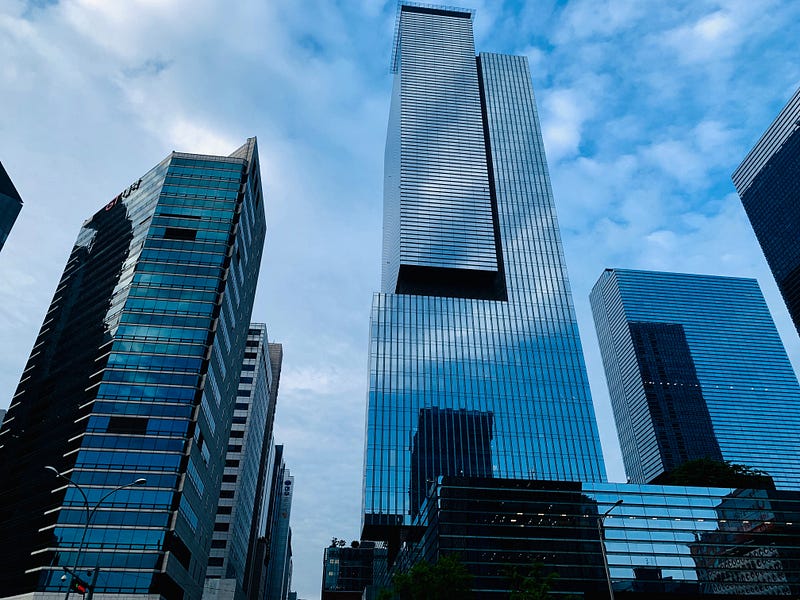
Photo by TANIM MUNSHI on Unsplash


Contribute and earn rewards

Under this program, residents of Seocho can earn Good Seocho Coins by engaging in socially beneficial activities. Each coin holds a value of 100 KRW ($0.076) and can be utilized for various purposes such as accessing facilities, enrolling in educational courses, and making purchases at the Seocho Community Center and the Seocho Joongang Senior Welfare Center.


From recycling to in-kind donations

To earn these coins, residents can participate in three categories of activities: recycling, identifying marginalized households, and making in-kind donations. By returning items like paper bags, clothes hangers, empty plastic bottles, and ice packs to 300 Carbon Zero-certified stores within the district — ranging from coffee shops to laundromats and butcher shops — residents can earn coins. For instance, returning ten hangers or empty plastic bottles would earn them a coin.

Residents who identify marginalized households and assist them in obtaining welfare benefits will receive ten coins, while those who connect them with social services will earn five coins.

Talented individuals can also contribute to the community and earn coins. For example, photographers, hairdressers, makeup artists, and performers of the non-verbal comedy show Nanta can donate their services and earn one coin per hour. Additionally, health educators and volunteers can earn coins by assisting residents aged 60 or older.


Expanding horizons

Originally conceived as an initiative to promote the health and community engagement of elderly individuals, the Good Seocho Coin project underwent revisions last month to encompass a broader community through regulatory changes.

Mayor Jun Sung-soo of Seocho District stated that the aim of this initiative is to harness the potential of blockchain technology and motivate district residents to actively contribute towards tackling a wide range of social challenges. He further highlighted the district’s intention to broaden the scope of this initiative in order to cultivate a sense of pride and satisfaction among the residents, leading to a positive ripple effect throughout the community.


More to Read
View All
Web3 & Enterprise·

Jun 12, 2023

METACON 2023 to Explore Innovative Metaverse Business Models

METACON 2023 to Explore Innovative Metaverse Business ModelsAccording to a report by local crypto news outlet Tokenpost, METACON 2023, a conference focused on Web3 and the metaverse, is set to take place from June 29 to 30 at COEX, a convention and exhibition center in Seoul. This year’s event marks the third anniversary since its inception in 2021.Photo by GuerrillaBuzz on UnsplashInsights on the MetaverseAs the main event of Seoul Meta Week (SMW), METACON aims to showcase cutting-edge metaverse applications, explore innovative business models, and find ways to penetrate new markets. Titled “WEB 3.0 X METAVERSE: The Future of Hyper-Connected Experience,” METACON 2023 will feature presentations and discussions from approximately 40 speakers representing prominent companies. Among the featured speakers are representatives from The Sandbox, Google Cloud, Tencent, Shutterstock, DRESSX, The Fabricant, Nexon Korea, Amorepacific, SK Telecom, and LG Uplus.On June 29, Kerry Murphy, the Founder and CEO of The Fabricant, will provide insights into the impact of digital fashion on the real-life fashion industry. Following that, Murphy will engage in a discussion with Natalia Modenova, the Founder & COO of DRESSX, to talk about the philosophy of Web3 and collaborative efforts in shaping trends in digital fashion.Participation from traditional banksIn addition, visitors to the conference will have the opportunity to hear from representatives of four traditional Korean banks: KB Kookmin Bank, Shinhan Bank, Hana Bank, and Woori Bank. Other discussions throughout the event will cover a wide range of topics, including the work environment, digital art, the popularization of Web3, investments, and generative artificial intelligence (AI).The following day of the conference will commence with a keynote speech titled “Unlocking Brand Value in the Metaverse” by Sebastien Borget, the Co-founder and COO of The Sandbox, a community-driven blockchain gaming platform. After that, Dade Orgeron, the VP of 3D Innovation at US stock image provider Shutterstock, will deliver a talk on generative AI as a creative tool and discuss the company’s AI license policy.An official from Seoul Meta Week (SMW) stated that this year’s program was specifically designed to provide an agenda that encourages interaction between newcomers to the Web3 industry and established projects.

news
Policy & Regulation·

May 30, 2023

Bybit Gets Outline Approval to Operate in Kazakhstan

Bybit Gets Outline Approval to Operate in KazakhstanBybit, the cryptocurrency spot and derivatives trading platform, is expanding its operations with a recent “in-principle” approval from the Astana Financial Services Authority (AFSA) in Kazakhstan. This approval allows Bybit to operate as a digital asset trading facility and custody services provider at the Astana International Financial Centre (AIFC).Photo by Engin Akyurt on PexelsExpanding area of operationsBen Zhou, the co-founder and CEO of Bybit, expressed his belief in the promising potential of the Commonwealth of Independent States (CIS) region for the growth of the crypto industry. He also emphasized Bybit’s commitment to complying with local regulations, following the recent scrutiny the company faced in Japan for operating without proper registration.To obtain permanent authorization to serve the local market, Bybit must fulfill certain pre-conditions specified in the in-principle approval and complete the application process. In April, it emerged that the company had established its global headquarters in Dubai, where it has already secured “in-principle” approval to operate a virtual assets business. Bybit has also been active in Hong Kong and is in the process of obtaining a license to trade in the Chinese autonomous territory.Debit card and lending servicesAs well as a geographical expansion, in recent months Bybit has also been expanding its service offering. On May 2, the exchange announced the introduction of crypto lending services for its users. This addition allows users to lend and borrow cryptocurrencies through the Bybit platform, providing them with more opportunities to maximize their holdings.Earlier this year, Bybit collaborated with Mastercard to launch a new debit card tailored for cryptocurrency payments. This partnership aimed to bridge the gap between traditional financial systems and the growing crypto ecosystem, allowing users to spend their cryptocurrencies seamlessly in everyday transactions.Kazakhstan’s crypto strategyKazakhstan got off to a difficult start with crypto. Once crypto miners were banished from China, many of them moved operations to Kazakhstan, putting pressure on the local power grid.The local administration has since gotten to grips with the industry, restricting crypto miners’ access to cheap electricity. Bybit’s decision to offer services in Kazakhstan aligns with the country’s current efforts to position itself as a regional hub for crypto, mining, and blockchain.In February, local officials implemented a mandate that requires 75% of revenue generated from crypto mining to be sold through a crypto exchange, with the aim of combating tax evasion.CBDC developmentFurthermore, Kazakhstan has been actively exploring the development of a central bank digital currency (CBDC) and is currently in the pilot phase of its implementation. The introduction of a CBDC can potentially revolutionize the country’s financial landscape, offering faster and more efficient digital transactions while maintaining regulatory oversight.Bybit’s pre-approval in Kazakhstan signifies the company’s strategic expansion into a region with a favorable regulatory environment for cryptocurrencies. As the crypto industry continues to evolve, partnerships between traditional financial institutions and crypto exchanges, like the collaboration between Bybit and Mastercard, demonstrate the increasing integration and acceptance of digital assets in mainstream financial systems.

news
Web3 & Enterprise·

Oct 18, 2023

Standard Chartered Muscling Into Asian Crypto Space

Standard Chartered Muscling Into Asian Crypto SpaceUK banking giant Standard Chartered is making a concerted foray into the Asian crypto sector through its Singapore-based subsidiary, Standard Chartered Ventures.Photo by Kirill Petropavlov on UnsplashTargeting institutional businessThat’s according to a report by Nikkei Asia on Tuesday. It’s believed that the company is positioning itself as a trusted choice for institutional cryptocurrency clients amid the backdrop of digital token price volatility and recent upheavals in the industry. The move will pit the British bank directly against global crypto exchange Binance in key Asian markets, specifically Singapore and Japan.Rene Michau, the Global Head of Digital Assets at Standard Chartered, emphasized what he considers to be the bank’s unique advantage in the digital asset space, stating:“As regulated banks, we have a fairly deep infrastructure around risk, conduct compliance, and the activities that go along with crypto assets.”This solid infrastructure includes established risk frameworks, governance structures, and compliance tools that Standard Chartered is keen to bring into the cryptocurrency sphere, thus making it an attractive option for its clients.Zodia Custody and Zodia MarketsStandard Chartered’s substantial involvement in the cryptocurrency market is channeled through its majority ownership of Zodia Custody, responsible for safeguarding digital assets, and Zodia Markets, a crypto exchange tailored for institutional clients.Both entities have been making significant progress in bringing their offerings to market in recent months. Zodia Custody recently launched its services in Singapore, offering a secure solution for financial institutions to manage their crypto holdings. Last month it launched a crypto staking product targeted at institutional clients.In the same month, Zodia Markets achieved in-principle approval to trade as a broker-dealer in the United Arab Emirates. Zodia Custody has also been successful in the UAE, launching its crypto custodian service in Dubai in May.Japan and SingaporeThis concerted effort by Standard Chartered follows a broader trend where traditional financial institutions, such as DBS Group Holdings in Singapore, are entering the cryptocurrency market, capitalizing on the challenges faced by younger crypto players in proving their credibility.Binance rebranded its Binance Custody unit as Ceffu and expanded its offerings for corporate customers in Singapore. While Binance asserts the independence of Ceffu, the exact nature of their capital relationship remains undisclosed.A parallel competition is unfolding in Japan, where Binance Japan has entered the market and Standard Chartered’s Zodia Custody has formed a joint venture with SBI Digital Asset Holdings, targeting institutional clients.While Standard Chartered has achieved a lot through its crypto-focused subsidiaries in a short space of time, there’s always room for improvement. In June, Hong Kong’s banking regulator singled out Standard Chartered alongside HSBC, appealing to both banking groups to make greater efforts to bank crypto clients within the Chinese autonomous territory, as it looks to compete with Singapore in becoming a regional crypto hub.The cryptocurrency sector has witnessed increased scrutiny as virtual currencies like Bitcoin and Ether have gained popularity. The rise of digital token exchanges, each vying for custody of assets belonging to investors who have embraced cryptocurrencies, has sparked concerns about corporate governance and security.Giants in traditional finance, like Standard Chartered, are stepping in to offer institutional investors a safer path to engage with virtual assets while leveraging the trust associated with established brands.

news
Loading