Top

Standard Chartered Muscling Into Asian Crypto Space

Web3 & Enterprise·October 18, 2023, 1:34 AM

UK banking giant Standard Chartered is making a concerted foray into the Asian crypto sector through its Singapore-based subsidiary, Standard Chartered Ventures.
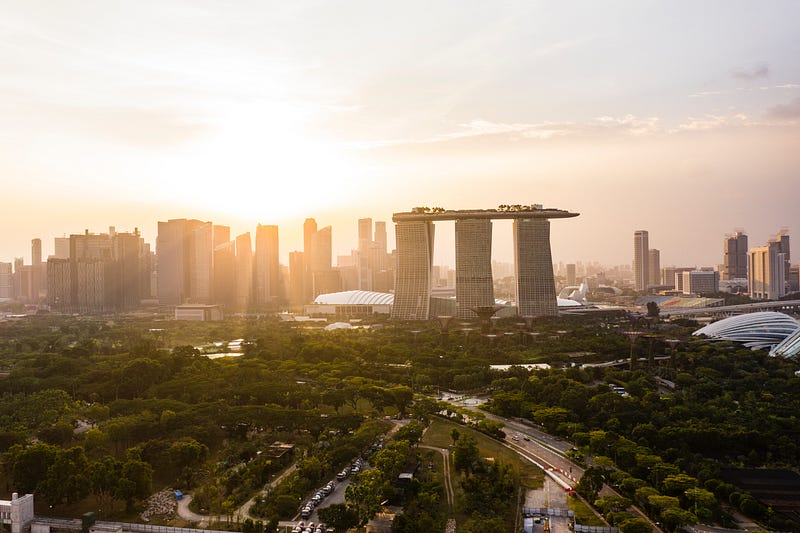
Photo by Kirill Petropavlov on Unsplash


Targeting institutional business

That’s according to a report by Nikkei Asia on Tuesday. It’s believed that the company is positioning itself as a trusted choice for institutional cryptocurrency clients amid the backdrop of digital token price volatility and recent upheavals in the industry. The move will pit the British bank directly against global crypto exchange Binance in key Asian markets, specifically Singapore and Japan.

Rene Michau, the Global Head of Digital Assets at Standard Chartered, emphasized what he considers to be the bank’s unique advantage in the digital asset space, stating:

“As regulated banks, we have a fairly deep infrastructure around risk, conduct compliance, and the activities that go along with crypto assets.”

This solid infrastructure includes established risk frameworks, governance structures, and compliance tools that Standard Chartered is keen to bring into the cryptocurrency sphere, thus making it an attractive option for its clients.


Zodia Custody and Zodia Markets

Standard Chartered’s substantial involvement in the cryptocurrency market is channeled through its majority ownership of Zodia Custody, responsible for safeguarding digital assets, and Zodia Markets, a crypto exchange tailored for institutional clients.

Both entities have been making significant progress in bringing their offerings to market in recent months. Zodia Custody recently launched its services in Singapore, offering a secure solution for financial institutions to manage their crypto holdings. Last month it launched a crypto staking product targeted at institutional clients.

In the same month, Zodia Markets achieved in-principle approval to trade as a broker-dealer in the United Arab Emirates. Zodia Custody has also been successful in the UAE, launching its crypto custodian service in Dubai in May.


Japan and Singapore

This concerted effort by Standard Chartered follows a broader trend where traditional financial institutions, such as DBS Group Holdings in Singapore, are entering the cryptocurrency market, capitalizing on the challenges faced by younger crypto players in proving their credibility.

Binance rebranded its Binance Custody unit as Ceffu and expanded its offerings for corporate customers in Singapore. While Binance asserts the independence of Ceffu, the exact nature of their capital relationship remains undisclosed.

A parallel competition is unfolding in Japan, where Binance Japan has entered the market and Standard Chartered’s Zodia Custody has formed a joint venture with SBI Digital Asset Holdings, targeting institutional clients.

While Standard Chartered has achieved a lot through its crypto-focused subsidiaries in a short space of time, there’s always room for improvement. In June, Hong Kong’s banking regulator singled out Standard Chartered alongside HSBC, appealing to both banking groups to make greater efforts to bank crypto clients within the Chinese autonomous territory, as it looks to compete with Singapore in becoming a regional crypto hub.

The cryptocurrency sector has witnessed increased scrutiny as virtual currencies like Bitcoin and Ether have gained popularity. The rise of digital token exchanges, each vying for custody of assets belonging to investors who have embraced cryptocurrencies, has sparked concerns about corporate governance and security.

Giants in traditional finance, like Standard Chartered, are stepping in to offer institutional investors a safer path to engage with virtual assets while leveraging the trust associated with established brands.
More to Read
View All
Policy & Regulation·

Jul 04, 2023

Thai SEC Implements Measures to Protect Crypto Investors

Thai SEC Implements Measures to Protect Crypto InvestorsIn response to the crypto lending crisis that unfolded in 2022, prompting companies like BlockFi and Celsius to declare bankruptcy, Thailand’s Securities and Exchange Commission (SEC) has introduced new regulations aimed at safeguarding investors in the digital assets space.Photo by Jakob Owens on UnsplashDisclosing risk warningsThe guidelines, issued on Monday, require digital asset service providers to provide comprehensive warnings that emphasize the risks associated with cryptocurrency trading. All platforms must prominently display a message stating: “Cryptocurrencies are high risk. Please study and understand the risks of cryptocurrencies thoroughly, because you may lose the entire investment amount.” Prior to utilizing the service, users must consent to and acknowledge the risks.Crypto lending prohibitionIn addition to the risk disclaimer, the new guidelines explicitly forbid service providers from using customer funds for lending or investment purposes. This ban on crypto lending services prevents platforms from offering any returns on deposited crypto to customers. By implementing these measures, the Thai SEC aims to enhance investor protection and shield investors from the risks posed by lending services. The regulations are scheduled to take effect at the end of the month.Today’s guidelines are the product of months of deliberation. Discussions surrounding investor protection regulations commenced on September 1, 2022, when the SEC acknowledged the necessity for security warnings by cryptocurrency businesses to disclose the risks associated with trading digital assets. The prohibition on digital asset operators offering deposit-taking and lending services was deliberated during meetings held on December 1, 2022, and May 11, 2023.Response to crypto platform failuresThe introduction of these investor protection rules follows a significant crisis in the crypto lending sector that unfolded during the bear market of 2022. Several crypto lending firms, which had collected billions of dollars in customer deposits by promising substantial returns, collapsed during this period. Prominent lending companies such as Celsius and BlockFi filed for bankruptcy, resulting in investors’ funds being trapped in lengthy bankruptcy proceedings.The Thai SEC’s proactive approach in implementing these regulations reflects the growing concern for investor welfare within the cryptocurrency industry. By requiring clearer risk disclosures and prohibiting the use of customer assets for lending and investment, the SEC aims to instill greater confidence and transparency in the digital asset service sector.Crypto academyThailand’s SEC has run other initiatives in efforts to better protect investors. In January the Commission launched the SEC Crypto Academy, an e-learning course. The objective of that initiative was to provide investors with a basic understanding of the digital assets space prior to investing. At the time of the launch of the course, the SEC said that “the more you know your investments, the less risk you will have.”These latest regulations not only serve as a protective measure for Thai investors but also set an example for other jurisdictions to evaluate and enhance their own regulatory frameworks. As the crypto industry continues to evolve, prioritizing investor protection becomes crucial in fostering a more sustainable and responsible ecosystem.

news
Policy & Regulation·

Sep 15, 2023

Singapore’s Regulator Imposes 9-Year Ban on 3AC Founders

Singapore’s Regulator Imposes 9-Year Ban on 3AC FoundersSingapore’s central bank and financial regulator, the Monetary Authority of Singapore (MAS), has handed down a nine-year prohibition order to Kyle Davies and Su Zhu, co-founders of the failed crypto hedge fund Three Arrows Capital (3AC).Photo by Swapnil Bapat on UnsplashSevere restrictionsThe penalty relates to alleged violations of the city-state’s securities laws. The prohibition order came into effect on Wednesday, carrying severe restrictions for Davies and Zhu.During this nine-year period, Davies and Zhu are prohibited from engaging in any regulated activities in Singapore. They are also barred from managing, serving as directors, or holding substantial shares in any capital market services business within the territory of Singapore.Loo Siew Yee, the Assistant Managing Director of Policy, Payments, and Financial Crime at MAS, emphasized the seriousness of the violations in a statement released by the central bank on Thursday. Yee stated:“MAS takes a serious view of Mr. Zhu’s and Mr. Davies’ flagrant disregard of MAS’ regulatory requirements and dereliction of their directors’ duties.” She further asserted that MAS would take action against senior managers who engage in such misconduct.Securities law violationsMAS’s decision to impose these sanctions on the 3AC co-founders was based on its findings of further securities law violations during investigations into 3AC and its founders. The regulatory authority accused Davies and Zhu of failing to inform MAS when 3AC hired a new business representative, providing false information to the regulator, and neglecting to establish an appropriate risk management framework.3AC’s troubles stemmed from the crypto market crash that occurred last year, triggered by the Terra ecosystem’s collapse. The hedge fund’s leveraged crypto positions exposed it to billions in loan defaults, resulting in significant financial losses. Its lack of risk management had a cascading effect in crypto. Lenders like Celsius and BlockFi had exposure to 3AC, leading to further collapses later in 2022 as a consequence.3AC’s creditors claim that the firm owes as much as $3.5 billion, and liquidators are now seeking to recover approximately $1.3 billion from Zhu and Davies, who allegedly incurred the debt when the firm was already insolvent.Regulatory reprimandsThis action by MAS follows last June’s reprimand of 3AC, which occurred just before the hedge fund filed for bankruptcy amid widely reported insolvency issues. At that time, MAS had criticized 3AC for providing false information, failing to report directorship changes involving Zhu and Davies, and exceeding the legal assets under management threshold.It’s just the latest reprimand the duo have received from a regulator this year, though. Zhu and Davies have been busy in trying to get another start-up off the ground. Earlier this year, they launched OPNX, a crypto bankruptcy claims trading platform. The venture is based out of Dubai, and the firm reported in April that it had gotten significant VC backing.Many of those that the company claimed were backing the venture disassociated themselves from those claims. The following month, the Dubai regulator, the Virtual Assets Regulatory Authority (VARA), reprimanded the OPNX founders, having issued an investor alert relative to the firm a few weeks prior to that. VARA's complaint was that the business had been operating without having acquired the appropriate licensing.

news
Policy & Regulation·

Sep 19, 2023

JPEX Exchange Scandal Sees Crypto Regulation Under Scrutiny in Hong Kong

JPEX Exchange Scandal Sees Crypto Regulation Under Scrutiny in Hong KongWhile Hong Kong has been developing steadily as a crypto sector hub, the focus in the Chinese autonomous territory has turned towards regulation after a recent scandal involving an unlicensed cryptocurrency exchange.Photo by Ihor Saveliev on UnsplashOngoing investigationYesterday we reported on some arrests relative to problems experienced at crypto exchange JPEX. The fallout continues on Tuesday, with the Hong Kong police now understood to have arrested eight individuals, including social media influencers who promoted the exchange and JPEX employees, on allegations of fraud. This illicit activity in and around the JPEX exchange has affected over 1,600 investors, implicating more than $150 million in assets.JPEX, in response to mounting pressure, announced the suspension of trading on its platform. In a statement, the exchange mentioned ongoing negotiations with third-party market makers to address liquidity shortages. However, JPEX also accused an unidentified third-party market maker of maliciously freezing funds, further complicating the situation.Politicians and regulators speak outResponding to the incident via a press conference on Tuesday, Hong Kong’s Chief Executive, John Lee, emphasized the significance of investing in virtual assets through licensed platforms. Lee stated:“This incident highlights the importance that when investors want to invest in virtual assets, then they must invest on platforms that are licensed.” He also pledged that the Securities and Futures Commission (SFC) would closely monitor the situation to ensure investor protection.Elizabeth Wong, the Head of the SFC’s fintech unit, revealed that an investigation was underway to determine whether JPEX had violated anti-money laundering laws. The SFC had already declared JPEX unlicensed, prompting numerous complaints from investors who were unable to withdraw their virtual assets or experienced unexplained reductions in their balances.Assets frozenHong Kong authorities have taken decisive action against those involved in the scandal. They have frozen bank accounts valued at 15 million Hong Kong dollars ($1 million) and seized three properties valued at 44 million Hong Kong dollars. The police have reported receiving 1,641 complaints related to JPEX, involving a staggering $1.2 billion Hong Kong dollars. By last Wednesday, the SFC had received in excess of 1,000 complaints and at that point, they notified the general public.The JPEX scandal has drawn attention to the need for stronger cryptocurrency regulations in Hong Kong, a region that has become attractive to cryptocurrency firms since mainland China banned cryptocurrency transactions in 2021. In mainland China, trading cryptocurrencies on foreign exchanges from within the country remains illegal.Hong Kong’s response to cryptocurrency regulation has evolved. Beginning on June 1, the SFC started accepting applications from cryptocurrency exchanges, allowing licensed operators to serve retail investors, provided they understand the associated risks. Previously, only professional investors had access to such exchanges. Currently, only two exchanges in Hong Kong, OSL Exchange and Hashkey Exchange, have received approval to operate.As Hong Kong reevaluates its approach to cryptocurrency regulation, the crypto sector will hope that it strikes a balance between fostering innovation and protecting investors from fraud and market manipulation.

news
Loading