Top

Korean Crypto Exchange Coinone Protects Investors from Fraud Losses of $370K in H1

Web3 & Enterprise·June 20, 2023, 8:20 AM

Coinone, one of South Korea’s leading cryptocurrency exchanges, announced its achievement today in the battle against crypto fraud. The company successfully safeguarded 476 million KRW ($370,000) during the first half of this year by effectively countering various fraudulent activities, including voice phishing, as reported by local news outlet Etoday.

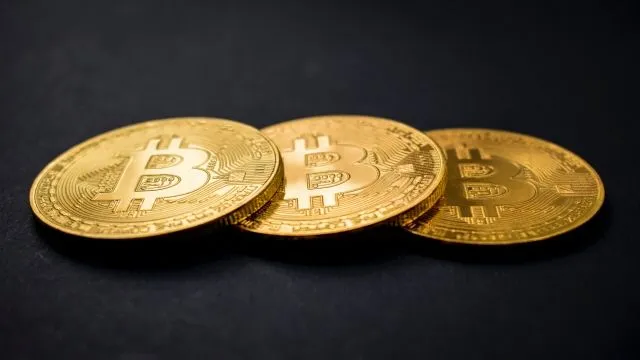
Photo by Pixabay on Pexels


Foiling 21 crimes

This accomplishment can be largely attributed to Coinone’s customer protection center, which has monitored and identified suspicious transactions while taking proactive measures. Since the beginning of the year, the exchange has successfully foiled 21 instances of crypto-related crimes. Among these cases, 18 were investment frauds, including romance scams, resulting in the prevention of potential losses amounting to 152 million KRW ($120,000). Additionally, there were three cases of voice phishing incidents, successfully averting potential losses of 324 million KRW ($250,000). Voice phishing is the use of fraudulent phone calls to extract personal information or deceive people into unwanted financial transactions.


Fewer complaints

The effective prevention of crimes has resulted in a decrease in the number of complaints received. Coinone’s customer center has experienced an average monthly decrease of 31% in requests related to “voice phishing” since March. Furthermore, the customer satisfaction rating for the center recorded an average of 89.1 points over the same period.

Recognizing the growing prevalence of crypto crimes, Coinone has taken preemptive measures to address the issue. The exchange’s official website has been providing information on various types of crimes and preventative strategies.

Jang Seok-won, the chief of Coinone’s customer protection center, emphasized the criticality of early detection and prevention of criminal activities. While acknowledging the success in countering voice phishing thanks to improved efforts by law enforcement, Jang expressed concern over the rising incidence of romance scams and similar investment frauds. He further highlighted Coinone’s full commitment to protecting investors and ensuring their safety.

More to Read
View All
Web3 & Enterprise·

Mar 02, 2024

SynFutures launches V3 on Blast’s optimistic rollup network

SynFutures, the Singapore-headquartered decentralized derivatives exchange specializing in crypto perpetual futures trading, has taken its V3 from public testnet through to mainnet launch on the Blast layer two network. Bringing permissionless perps to BlastTaking to Medium on March 1, the company outlined that “we’ve officially brought permissionless perps to Blast.” With the launch, the project is demonstrating iterative progression. Back in October of last year, the company outlined that it had launched V3 on public testnet, while also announcing details of a $22 million Series B funding round at that time. SynFutures' decision to roll out V3 on the Blast mainnet aligns with the layer two network's rapid ascent in the crypto space. Blast itself launched on Feb. 29 and in the process the network unlocked around $2.3 billion in staked crypto which had remained locked up until that point. The optimistic rollup-based network allows transactions to be executed off-chain, all the while leveraging the security provided by the Ethereum blockchain network. Blast has managed to garner significant value on-chain due to the 5% annual yield it offers users on ether and stablecoins that network participants accrue from staked ETH.Photo by Alina Grubnyak on UnsplashPoints rewards programAlongside the V3 launch, SynFutures has introduced a points rewards program, christened Oyster Odyssey. This initiative aims to incentivize user engagement on the platform, with V3 users set to qualify for the upcoming Blast airdrop as well. "Interacting with SynFutures can qualify users for Oyster Odyssey points as well as Blast points," Rachel Lin, co-founder and CEO of SynFutures, disclosed to The Block. Lin added:"We're also committed to giving 100% of our Blast developer airdrop back to users, so they'll enjoy plenty of benefits." Gearing up for native token launchIt also appears that SynFutures is gearing up for the launch of its native token. In its blog post, the firm suggested that it was pleased to reveal that it is “exploring the path to a token.” The company promises that launch details and an associated timeline will be disclosed in the not-too-distant future. Following V3 public testnet launch last year, the project explored various blockchain options, including Polygon and zkSync Era, before ultimately settling on Blast. While the team remains committed to a multi-chain expansion for V3, with future deployments under consideration, Lin has suggested that the immediate focus lies in driving adoption and volume on Blast. While V2 of the platform still operates on the Polygon proof-of-stake chain, support for it is gradually phasing out as SynFutures prioritizes the V3 rollout. Meanwhile, V1 has already been phased out, with both iterations collectively processing over $23 billion in cumulative trading volume to date. SynFutures' journey thus far has been supported by substantial funding, with approximately $38 million raised to date. Notable backers include Pantera Capital, HashKey Capital and SIG DT Investments, a unit of the Susquehanna International Group, among others.  

news
Web3 & Enterprise·

Oct 10, 2023

Kbank’s Upbit Customer Deposits Total $2.2B

Kbank’s Upbit Customer Deposits Total $2.2BKbank, an internet-only bank in South Korea, is facing criticism due to its relatively high proportion of cryptocurrency customer deposits compared to other banks. Kbank reportedly manages approximately KRW 3 trillion (equivalent to $2.2 billion) in deposits from customers of cryptocurrency exchange Upbit, which accounts for about 18% of its total customer deposits.This percentage stands out, being notably higher than other banks that provide accounts to the other four crypto-to-fiat exchanges in Korea. That is according to a report by Maeil Business Newspaper, which obtained documents submitted to lawmaker Kim Hee-gon by the Financial Services Commission (FSC).According to Korean law, crypto exchanges must secure real-name bank accounts from banks to offer crypto trading services against the Korean won. Kbank offers its accounts to Upbit, the dominant player in the Korean crypto market.Photo by David McBee on PexelsNotable exposure to crypto exchangeThe FSC documents showed that Kbank’s Upbit customer deposits totaled KRW 3.09 trillion, making up 18% of its total deposits, which amount to KRW 17.2 trillion.In a striking contrast, Nonghyup Bank had 0.2% of its deposits, equivalent to KRW 557.8 billion, in Bithumb, which is the nation’s second-largest cryptocurrency exchange. Kakaobank, another internet-only bank, had 0.3% (KRW 112.2 billion) of its deposits in Coinone. Shinhan Bank held 0.01% (KRW 43 billion) in Korbit, and Jeonbuk Bank had a similarly small 0.02% (KRW 4.2 billion) in Gopax.Lawmaker Kim pointed out that Kbank has become a bank dedicated to crypto trading. Kim proposed that financial authorities take proactive measures to assess the potential risks that may emerge when Kbank utilizes Upbit customer deposits as a basis for offering credit loans. Such risky financial practices could potentially result in higher loan defaults and the emergence of a greater number of individuals with poor credit histories, which could ultimately jeopardize the stability of the financial market.Regulatory gapThe current Financial Transaction Reporting Act mandates that virtual asset service providers (VASPs) segregate customer deposits from their own assets as a measure to combat money laundering. However, it has been noted that there are regulatory gaps stemming from the absence of specific guidelines for the custody of these deposits.According to the Financial Supervisory Service (FSS), Nonghyup and Kakaobank store deposits in separate accounts within the bank. On the other hand, Kbank and Jeonbuk Bank keep deposits in corporate accounts under their respective exchange partners’ names.When deposits are stored in separate accounts within the bank, only the bank has access to those funds, and they are essentially operated in a manner similar to a trust, preventing the bank from using the funds arbitrarily. In contrast, funds held in corporate accounts can be used by the bank as a source for lending. Lawmaker Kim warned that in scenarios such as exchange bankruptcies or similar situations, banks holding customer funds in corporate accounts could face difficulties in ensuring customer protection.Each of these banks receives reserve funds from crypto exchanges in anticipation of potential compensation requirements in the event of unforeseen losses. The FSS states that as of the end of last month, the reserve amounts held by each bank were as follows: Kbank had KRW 200 billion, Nonghyup Bank had KRW 100 billion, Kakao Bank had KRW 73 billion, and both Shinhan Bank and Jeonbuk Bank had KRW 30 billion.Kbank’s Upbit customer deposits are approximately 72 times larger than Shinhan Bank’s Korbit customer deposits. However, the reserve amounts held by Kbank are only 6.7 times greater than those held by Shinhan. Lawmaker Kim emphasized the importance of banks maintaining reserve funds that are proportional to the customer deposits held in their partner crypto exchanges.Signs of recoveryMeanwhile, the Korean cryptocurrency industry, which faced a downturn in the latter half of last year due to events like the Terra collapse and FTX’s bankruptcy, has exhibited signs of recovery in the first half of this year.The Financial Intelligence Unit (FIU) of the FSC recently reported that the cryptocurrency market cap in South Korea has reached KRW 28.4 trillion as of the end of June this year. This reflects a 46% increase compared to the end of last year when it stood at KRW 19.4 trillion. Additionally, the total operating profit of domestic exchanges surged by 82% to KRW 227.3 billion over the past six months, compared to the previous figure of KRW 124.9 billion.The total market’s max drawdown (MDD) was 62%. MDD assesses the extent to which an asset has declined in value from its highest point to its lowest point within a specific time frame, before experiencing a recovery. The FIU considers this MDD to be high, urging investor caution.

news
Markets·

Jan 24, 2024

Mt. Gox edging closer to BTC payouts sparks market fears

The trustee of the failed Japanese cryptocurrency exchange Mt. Gox is preparing to initiate repayments of bitcoin (BTC) and bitcoin cash (BCH), prompting fears of a market sell-off among traders and investors.Photo by Dmytro Demidko on UnsplashConfirming repayment detailsThe crypto community on the /mtgoxsolvency subreddit disclosed that the Tokyo-based bitcoin exchange has initiated the process of verifying creditors' addresses for forthcoming repayments. Emails have been sent to creditors, confirming that their repayment details have been validated with relevant cryptocurrency exchanges. The communication from Mt. Gox appears to be staggered, with users on different platforms receiving emails at varying times. Some Bitstamp users reported receipt of the email, while several Kraken customers mentioned that they were still awaiting the confirmation. Mt. Gox, cautioning creditors, clarified that users with disabled or frozen accounts would not be able to receive repayments using the provided addresses. Additionally, the emails specifically pertain to payments in bitcoin and bitcoin cash. This recent communication follows Mt. Gox's announcement in November, where it committed to returning approximately 142,000 bitcoin, 143,000 bitcoin cash and 69 billion Japanese yen, valued at over $5.67 billion at the announcement date and approximately $6.46 billion at the present moment. During the November announcement, Mt. Gox assured creditors that repayments would commence in the following months and weeks. Creditors with payment methods deemed "effective at this time" were earmarked to receive their assets first. Towards the end of December, some creditors reported the addition of yen-denominated balances to their PayPal accounts by Mt. Gox, signaling progress in the repayment process. Market fearsThe fear among market participants of a distribution of bitcoin from the Mt. Gox estate has cast a shadow over the sector over the course of a number of years. With this latest development, it appears that the estate is finally on the cusp of executing on that distribution. If distribution is achieved in the short term, it will come at a time when bitcoin has experienced a major unit price pullback already. Since the approval of spot bitcoin exchange-traded funds (ETFs) in the United States earlier this month, it appears that another bankrupt crypto exchange, FTX, has sold $1 billion worth of Grayscale Bitcoin ETF shares into the market. That move is believed to have been responsible for a dramatic drop in bitcoin’s unit price. In tandem with that event, some commentators believe that a pullback at this point is healthy for the market. That’s the view of Charles Edwards, founder of Capriole Investments. Taking to social media, Edwards wrote:”We're still not here yet. This pullback is very overdue and lower is healthier.” At the time of writing, bitcoin has a unit price of $39,884, down from a high earlier this month of $48,494. Confirmation emails have been reported by several Reddit users, with Bitstamp confirming for most, and a few Kraken users also acknowledging receipt. Nevertheless, a significant number of Kraken users mentioned they are yet to receive the confirmation email. Mt. Gox officially closed its doors in February 2014, almost a decade ago, after succumbing to an exploit in 2011.  

news
Loading