Top

OKX Follows Path Towards Dubai Licensing

Policy & Regulation·June 15, 2023, 11:32 PM

Seychelles-headquartered OKX, one of the world’s largest cryptocurrency exchanges, has expressed its intention to seek regulatory approval for operating in Dubai as part of its expansion strategy in the Middle East.

With that objective, the company has obtained a Minimum Viable Product (MVP) preparatory license, an interim step on its path towards full licensing. That’s according to a press release published on Thursday.

Tim Byun, OKX’s Global Head of Government Relations, emphasized the growing trend of regulation within the industry. In an interview with Reuters, Byun stated: “We would like to get ahead of that curve and be regulated in a sound manner.” The move comes in the wake of recent legal action taken by the Securities and Exchange Commission (SEC) in the United States against Binance and Coinbase, two of the largest crypto exchanges, for alleged breaches of SEC rules.
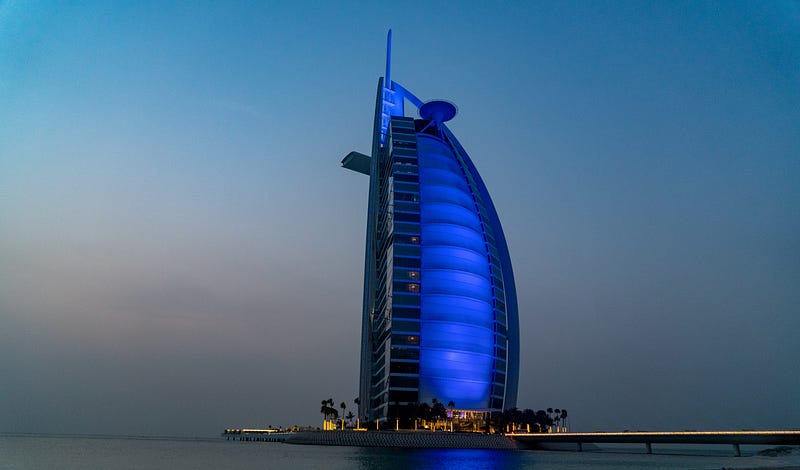
Photo by Marcus Herzberg on Pexels


Switching to Dubai

Byun believes that the SEC’s actions will compel more market participants to seek out innovative regulators such as Dubai’s Virtual Asset Regulatory Authority (VARA).

To support its expansion plans, OKX intends to hire 30 staff members following the opening of an office last month in the Dubai World Trade Center, strategically located in the business and financial hub of the United Arab Emirates.

Byun further explained that by expanding its services from Dubai to jurisdictions like Saudi Arabia or Bahrain, where no domestic regulatory framework is in place, the local populations would benefit significantly from OKX’s regulation under an international regulator.


Following Bahamian regulation

Currently regulated in the Bahamas, OKX does not allow customers from the United States to utilize its platform due to regulatory concerns. Following the collapse of FTX in November of last year, the Bahamas has suffered reputationally.

It’s seen as a jurisdiction with much looser regulation and as the FTX debacle demonstrated, one that proved to be totally ineffective in preventing the epic fraud that occurred in that instance.


Effective regulatory framework

In contrast, Dubai and the United Arab Emirates (UAE) in general seem to be making a much better effort towards a workable yet effective regulatory framework. Established in March 2022, VARA serves as the regulatory authority overseeing the burgeoning virtual asset sector in Dubai, excluding the Dubai International Financial Centre financial free zone. The United Arab Emirates has been actively working towards positioning itself to become a global crypto industry hub.

No company has yet obtained a license for VARA’s full market product (FMP) stage, which would grant permission to serve retail clients. Byun revealed that OKX intends to apply for such a license.

Byun concluded by expressing OKX’s willingness to be regulated and licensed in jurisdictions that adopt a balanced, clear, and transparent approach to the industry. The exchange is committed to operating within frameworks that prioritize investor protection and promote market integrity.


More to Read
View All
Policy & Regulation·

Aug 29, 2023

Laos Halts Crypto Miners’ Electricity Amid Drought and Debts

Laos Halts Crypto Miners’ Electricity Amid Drought and DebtsLaos, a leading producer and exporter of hydroelectricity, has made the decision to suspend electricity supply to cryptocurrency mining operations within its borders.Photo by Ioana Farcas on UnsplashTackling a perfect stormThe decision comes as a result of a perfect storm of challenges, including a struggle to meet escalating power demands due to drought conditions, impending commitments to export electricity to Thailand, and the mounting debts of cryptocurrency mining companies.In a calculated move in 2021, Laos initiated a public-private pilot program aimed at delving into cryptocurrency mining and trading. The context for this move was China’s sweeping crackdown on mining activities, compelling miners to scout for alternative jurisdictions for their operations.In response, Laos granted authorization to a handful of entities, spanning construction conglomerates and a bank, to partake in the mining and trading of Bitcoin, Ethereum, and Litecoin. This led to a commitment to regulatory collaboration between government ministries, the Bank of Laos, and Electricité du Laos (EDL).Exploiting hydropowerLaos’ abundant and affordable electricity has placed it on the short list of locations for crypto miners to settle in. With an abundance of rivers and waterfalls, hydropower stands as one of the nation’s primary energy sources, offering a renewable source of cost-effective electricity.However, events in 2023 have disrupted that narrative. A persistent drought has hit the country during the first half of the year, which triggered an unprecedented surge in the demand for electricity from sources other than hydro.The dependence on hydropower, constituting 95% of the nation’s energy generation, struggled to keep pace with the demand. As a direct consequence, EDL, a state-owned electricity distributor, announced the cessation of electricity supply to crypto mining operations.The problem has compounded as Laos finds itself committed to exporting substantial quantities of electricity to the Electricity Generating Authority of Thailand (EGET), serving as a lifeline for Thailand’s power grid during the forthcoming dry season. This external commitment has, in turn, further strained the local capacity for electricity supply.Another Asian country, Bhutan, has also gotten involved with crypto mining in an effort to exploit its hydropower resources, where 99% of electricity supply comes from hydropower within the kingdom.Unpaid billsAnother dimension to the saga is the growing debt crisis faced by cryptocurrency mining operations. A representative of EDL cited the inability of these mining businesses to settle their accumulating electricity bills as a key factor in the decision for suspension. The Bank of Laos has further escalated matters by deciding to halt loans to cryptocurrency companies in January.Laos has had bold objectives to transform itself into Southeast Asia’s premier exporter of clean electricity. The nation’s topography, featuring mountainous terrain covering 70% of the country, has immense potential for hydropower, with over 26,000 megawatts of installed capacity and ambitious plans to double this figure.Hydroelectric dams like Nam Theun 2 have become conduits for substantial volumes of low-cost electricity, primarily directed towards neighboring Thailand and Vietnam. Meanwhile, projects like the Luang Prabang dam, boasting an installed capacity of 1,460 megawatts, underscore the country’s ambitions to develop hydropower further.Revenues from power exports have become a vital component in Laos’ gross domestic product (GDP), contributing almost 15%, as per a report from October 2022.

news
Policy & Regulation·

Nov 24, 2023

Korea unveils detailed plan for retail CBDC transaction pilot with 100K participants

Korea unveils detailed plan for retail CBDC transaction pilot with 100K participantsThe Bank of Korea (BOK), Financial Services Commission (FSC) and Financial Supervisory Service (FSS) jointly announced on Thursday (local time) their comprehensive plan to pilot a central bank digital currency (CBDC). This pilot program will concentrate on two key areas: retail transactions and technical experiments within simulated environments.For the retail transaction aspect, the test aims to give citizens direct experience in using the new digital currency, helping them understand its advantages. This practical approach will promote public familiarity with the CBDC.In terms of technical experiments, these will be conducted in partnership with various banks. The goal is to explore and develop methods for constructing a financial market infrastructure suitable for the future, leveraging the capabilities of the digital currency.Photo by Terrence Low on UnsplashRetail CBDC test to commence in Q4 2024The initiative to examine retail transactions using a CBDC is scheduled to begin in the fourth quarter of 2024. This test will focus on improving how vouchers work. Currently, the use of vouchers faces several challenges, such as high fees, complex and slow settlement procedures and the risk of fraudulent transactions. CBDC-based deposit tokens programmed with the digital voucher functionality could help solve these problems. The exploration of digital vouchers within the realm of CBDCs is not just a concern in Korea but also a topic of global interest.Banks that will participate in the CBDC retail transaction test are to be selected by the end of the third quarter of next year, following necessary procedures such as the financial regulatory sandbox policy. These selected banks will receive the green light to issue deposit tokens within this regulatory sandbox framework. They’ll be in charge of recruiting and managing test participants, which includes both individuals and merchants. Additionally, these banks will be responsible for developing digital wallets for users and handling payment transactions. On the other hand, any bank interested in joining technical experiments in simulated environments may apply to do so until mid-December this year.Citizens who want to take part in the retail transaction test for the CBDC can apply through the banks involved in the test. However, it’s important to note that since this CBDC utilization test is a limited trial, the number of participants will be limited to a maximum of 100,000.The retail transaction test for the CBDC will involve three stages: issuance, distribution and payment. Initially, banks will issue deposit tokens with digital voucher functions upon request. Users will then use these tokens to buy goods from merchants, with the transactions being settled accordingly. Before starting, the BOK, FSC and FSS will propose pilot tasks to the banks, following consultations with relevant agencies and the review of pertinent laws. Banks will also propose tasks related to the voucher function. During the test, these tokens will be used solely for digital voucher transactions, and peer-to-peer transfers won’t be allowed.Simulated environment experiments: three use casesFor technical experiments within simulated environments, the financial authorities have selected three use cases focused on examining the technical feasibility of new types of financial instruments.The first objective is to collaborate with Korea Exchange, the only securities exchange operator in the country, to connect the CBDC system with a carbon credit trading simulation platform. This platform will be based on an external distributed ledger. The key objective here is to assess if the “delivery versus payment” (DvP) mechanism between carbon credits and special payment tokens can function smoothly. DvP is a settlement method that ensures the transfer of securities occurs only after the corresponding payment is made.The second objective will see collaboration with the Korea Financial Telecommunications and Clearings Institute (KFTC). In this scenario, a hypothetical issuer will release tokenized assets to the public through a public offering. To manage this, deposit tokens that match the subscription amount by investors will be temporarily frozen, preventing them from being liquidated. After the final allocation of these tokenized assets is determined, the system, using smart contracts, will automatically transfer funds equivalent only to the allocated tokenized assets.The last objective revolves around advancing the concept of a unified ledger introduced by the Bank for International Settlements (BIS). In this endeavor, the BOK aims to issue digital demo securities within the CBDC system. Following this, an experiment will be conducted where financial institutions will have the opportunity to trade these digital securities using the institutional CBDC. This trading will be executed using the DvP method.

news
Policy & Regulation·

Dec 22, 2023

Putin approves inclusion of digital ruble within Russian tax code

Putin approves inclusion of digital ruble within Russian tax codeRussian President Vladimir Putin has given his approval to a new law that incorporates the digital ruble into Russia’s tax code, marking a significant step in the country’s push towards digital currency adoption.Photo by Egor Filin on UnsplashAuthority to recover fundsThe development was reported by Russian news outlet Telesputnik on Tuesday. The legislation introduces terms such as “digital ruble” and “digital ruble wallet” into the tax code. It outlines the legal framework for these digital assets. Notably, the law grants bailiffs and court-appointed individuals the authority to recover central bank digital currency (CBDC) funds from wallets in cases where taxpayers lack sufficient fiat in their bank accounts.Moreover, the law empowers tax authorities to suspend transactions on digital ruble wallets and request documentation from platform operators to confirm fund withdrawals from a taxpayer’s account. In a move aimed at streamlining the process, confiscated digital coins can be transferred directly to the Russian Treasury.This legislation, the second major CBDC-related law passed in 2023, signals Russia’s interest in fast-tracking the implementation of its digital ruble. Despite conflicting statements, the Ministry of Finance anticipates that all Russians will have the opportunity to use digital ruble wallets for payments by 2024. However, the Central Bank has indicated a potentially delayed national roll-out, stating it may not occur before 2025.Key provisions outlined in the new law include defining the Central Bank’s role as the “operator of the digital ruble platform” and establishing liability procedures if the bank fails to fulfill these obligations. Additionally, the law addresses the taxation of transactions involving digital rubles, with exemptions for Value Added Tax (VAT) on account opening and holding.Working around sanctionsAs Russia edges closer to the digital ruble roll-out, the nation faces economic challenges due to ongoing U.S. and EU sanctions. Moscow views the CBDC as a strategic tool in international trade, aiming to leverage it to navigate economic restrictions. Government officials believe the digital ruble will play a crucial role in reducing costs and risks for domestic firms engaged in foreign trade.The Eurasian Economic Union (EAEU), a five-member economic bloc including Russia, Belarus, Kazakhstan, Armenia and Kyrgyzstan, is exploring the potential for cross-border CBDC functions. Belarus and Kazakhstan are also expediting their CBDC projects, with a focus on cross-border trading capabilities.Earlier this month, a Russian politician could begin to use their respective CBDCs for bilateral trade deals as early as next year. Even before sanctions hit, both Russia and China had been working towards de-dollarization for some time.Ongoing pilot programThe Central Bank is actively piloting the digital ruble in 11 Russian cities alongside 13 partner commercial banks. Earlier this month, the bank stated that “the pilot will continue at least until the end of 2024 and, if necessary, will be extended.” The Central Bank added that “only after the completion of the pilot will the digital ruble be introduced into mass circulation.”A group of 16 banks is set to join the trial in the coming year. The finance ministry aims to utilize the digital ruble for government subsidies and welfare payments, with plans for implementation in 2024.

news
Loading