Top

Atomic Wallet Hacker Uses Lazarus Crypto Mixer

Web3 & Enterprise·June 07, 2023, 12:27 AM

The stolen cryptocurrency from the recent $35 million hack of Atomic Wallet is already being moved to a crypto mixer favored by North Korea’s notorious cyber-hacking group.
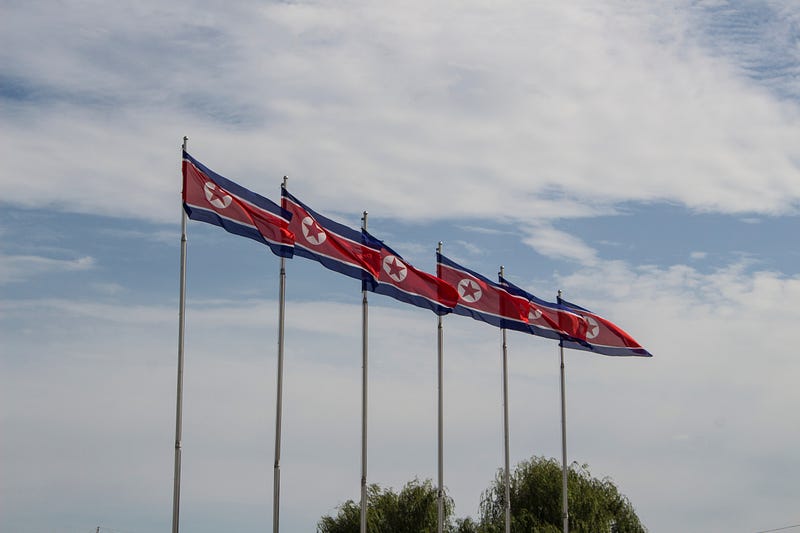
Photo by Micha Brändli on Unsplash


Sinbad.io

According to UK-based crypto compliance analysis firm Elliptic, the funds have made their way to a crypto mixer used by Lazarus Group, a notorious hacker group that focuses on crypto heists which is believed to have direct ties with the North Korean government.

On June 5, Elliptic’s Investigations Team revealed that it had traced the funds from the Atomic Wallet hack to the crypto mixer Sinbad.io. Lazarus had previously used the mixer to launder over $100 million in stolen crypto assets.

While the exact amount sent to the mixer was not specified, Elliptic noted that the stolen funds were being exchanged for Bitcoin before undergoing obfuscation through the mixer. Additionally, Elliptic reported that Sinbad.io is likely a rebranded version of Blender.io, another mixer extensively used to launder funds by the Lazarus Group. Blender.io has been sanctioned by the US Treasury.


Atomic Wallet hack

The hack of several user accounts on Atomic Wallet occurred on June 3, resulting in losses of up to $35 million. News of the issue broke with the following tweet from the project team (which has subsequently been deleted): “We have received reports of wallets being compromised. We are doing all we can to investigate and analyze the situation. As we have more information, we will share it accordingly.”

In a follow-up tweet the next day, the team confirmed that it was investigating the matter with the assistance of a number of “leading security companies.”

However, Atomic Wallet later downplayed the incident, stating that less than 1% of its monthly active users were affected. The project team was castigated by users for trying to present the hack as a minor incident. One user took to Twitter to call out the Atomic Wallet team for “having the nerve to come to the networks and say that only 1% of wallets were affected.”

The Atomic Wallet project is based out of Tallinn, Estonia, having been founded in 2017. It claims to provide a non-custodial decentralized multi-currency crypto wallet. The product supports over fifty coins and two hundred tokens. It also offers atomic swaps between digital assets, while also supporting integrations with instant exchanges such as Changelly, ShapeShift, and others.

Roland Säde, the Chief Marketing Officer of Atomic Wallet, assured users that the team is working tirelessly to recover the stolen funds. He emphasized the need to complete the investigation to develop a concrete plan.

Despite the ongoing efforts, Säde urged victims to track the illicit transfers and report them to popular crypto exchanges. By doing so, it was thought that may hinder the scammers from exchanging the funds.


Crypto hacking menace

Lazarus Group hackers have been the bane of the crypto space in recent years. Elliptic released a report last month that identified Japan as having been the country most adversely affected by the North Korean hackers. It’s understood that the estimated $721 million in stolen crypto from Japan-based entities amounts to nearly nine times the value of North Korea’s exports based on 2021 data.

While Atomic Wallet is directly reporting the incidents, Säde believes that having more individuals monitoring the hackers’ activities will make it more challenging for them to move the funds undetected. Unfortunately, Elliptic’s recent findings suggest that for many victims, it may already be too late to prevent further misuse of their stolen cryptocurrency.

More to Read
View All
Policy & Regulation·

Mar 09, 2024

Further details emerge on Philippine CBDC project

The Philippines is on track to finalize Project Agila, its wholesale central bank digital currency (CBDC) trial, by the end of this year. Three primary use casesThat’s according to statements made on March 6 by Deputy Governor Mamerto Tangonan of the Bangko Sentral ng Pilipinas (BSP) —  the Philippine central bank. According to a local news report by GMA News, the Deputy Governor outlined three primary use cases for the wholesale CBDC trials in a press conference: interbank settlement, settlement of securities transactions and cross-border payments. Notably, the Philippines is participating as an observer in the cross-border CBDC project mBridge, which involves China, Hong Kong, Thailand and the United Arab Emirates (UAE). Six domestic institutions are involved in the current tests in the Philippines: BDO Unibank, China Banking Corp, Land Bank of the Philippines, Rizal Commercial Banking, Union Bank of the Philippines and Maya Philippines.Photo by OJ Serrano on UnsplashUsing pilot as ‘learning exercise’Tangonan described the pilot as a "learning exercise in order to put us in a better position to assess whether this technology is what, itself, claims to be.” Typically, central bank accounts are restricted to commercial banks and some central counterparties in financial markets. However, the BSP intends for the wholesale CBDC to be accessible to banks and certain financial institutions. Nevertheless, past tests, including one in Canada, have highlighted potential limitations, such as the inability of brokers to use the wholesale CBDC for settlement. An ongoing interest since 2020The Philippines initially expressed interest in issuing a CBDC in 2020, with the BSP Monetary Board conducting a positive initial assessment of a wholesale CBDC and planning pilot tests from 2022 onwards, known then as Project CBDCPh. The launch of the pilot project was announced in April 2022. In 2023, the Southeast Asian country participated in a pilot study with the Digital Dollar Project, Western Union and BDO Unibank to explore a retail CBDC for remittance purposes. While the study found potential cost reductions and increased transparency and competition, it also identified challenges related to transaction speed, particularly due to most remittances arriving after working hours. Moving away from blockchainLast September, the BSP announced plans to utilize the Hyperledger Fabric blockchain. However, in February, Governor Eli Remolona stated that the CBDC would not be utilizing blockchain technology. At that time, the central bank Governor had indicated the expectation of launching a wholesale CBDC either next year or by 2026. Elsewhere in the Asian region, the Hong Kong Monetary Authority (HKMA) recently announced its own wholesale CBDC trials, Project Ensemble, underscoring the growing interest and activity in CBDC development across various jurisdictions. The Chinese autonomous territory is also cooperating with its colleagues in mainland China in participating in testing of the digital yuan or e-CNY, with a particular focus on cross-border payments.India represents another key Asian nation which has devoted quite a lot of time and resources to CBDC development already. However, a report last month suggested that the world’s most populous country has concerns with regard to the question of privacy relative to CBDC use. For that reason, it has determined the need to remain cautious while continuing CBDC development.  

news
Policy & Regulation·

Apr 11, 2023

Malaysia Looking to Wean Itself Off Dollar Dependency

Malaysia Looking to Wean Itself Off Dollar DependencyAccording to Prime Minister Anwar Ibrahim, China is willing to engage in discussions with Malaysia regarding the creation of an Asian Monetary Fund. This proposal, which has been circulating for decades, aims to decrease the dependence on the US dollar.©Pexels/Sergei StarostinAsian Monetary FundAnwar highlighted the necessity to minimize reliance on the dollar and the International Monetary Fund and proposed the establishment of this fund at the Boao forum in Hainan last week. He stressed that the fund would aid in diversifying the financial landscape of Asia and improving its resilience against economic challenges.Following a state visit to China last week, Anwar stated that “there is no reason for Malaysia to continue depending on the dollar.” The Prime Minister told the Malaysian parliament on Tuesday that China’s President Xi Jingping was receptive to the idea of an Asian Monetary Fund and welcomed further discussions on such a proposal.Anwar Ibrahim, serving as both the Finance Minister and Prime Minister of Malaysia, stated that the country’s central bank is already taking measures to allow for negotiations between Malaysia and China using their respective currencies, the ringgit and renminbi.The robustness of the US dollar poses a significant challenge for Malaysia and other Asian countries, particularly as Malaysia is a net importer of food. In September 2022, the Bloomberg dollar index reached an all-time high, leading to a decline in the value of the ringgit and other Southeast Asian currencies to levels not seen in decades.As a result, Anwar Ibrahim’s proposal for a shift towards bilateral trade negotiations with China using the ringgit and renminbi holds the potential to alleviate some of the region’s dependence on the dollar and reduce the impact of its fluctuations.International shift away from dollarThis development comes as other officials in the region, particularly Singapore, have been discussing strategies to manage the effects of a dominant US dollar that has weakened local currencies and been used as an instrument of economic power by the United States.There has been a raft of deals struck in recent weeks all pointing towards an international shift away from the US dollar as the global reserve currency. Russia has agreed with China to trade in renminbi. A major trade deal was struck recently between China and Brazil that will see the two countries trade in reals and renminbi. Major oil producer Saudi Arabia has made similar soundings and signed similar deals with Beijing.Bitcoin as a reserve currencyAll of this recent upheaval has brought further consideration of bitcoin acting as a reserve currency back into view. It’s expected that even if there is a shift away from the US dollar, the renminbi won’t be capable of acting as a single dominant global reserve currency. Taking to Twitter on Wednesday, Bloomberg Intelligence Crypto Market Analyst Jamie Coutts suggested that bitcoin’s performance in Q1, 2023 marks “a significant milestone in its ascendancy as a potential global reserve asset.”Coutts believes that it marks the first occasion that the leading cryptocurrency has acted as a safe haven asset during a liquidity crisis. Bitcoin remains at an early stage of development. Nobody expects that it could serve as the global reserve currency at this point. However, it is not unreasonable to anticipate it increasingly growing into a role as a reserve currency used for international trade and settlement. Especially so, as issues bubble over relative to banking and a desire to escape the clutches of US dollar domination.

news
Policy & Regulation·

Dec 15, 2023

Banking giants in Turkey embrace crypto ahead of legislative change

Banking giants in Turkey embrace crypto ahead of legislative changeIt remains unclear what the underlying environment for the further development of the crypto sector in Turkey will be until such time as the country introduces a legislative framework to shape the industry’s development. However, that fact is not deterring a couple of Turkey’s leading banks, who have decided to embrace the digital asset realm.Photo by Michael Jerrard on UnsplashStablex acquisitionOn Monday CoinDesk Turkiye reported that the investment arm of Turkish bank Akbank had acquired local crypto company Stablex. Stablex was founded in May 2020 by Jihad Shannak with the objective of providing professional services, including trading relative to cryptocurrencies in Turkey. Majority shareholding passed to Ak Investment in May of this year, with initial negotiations on the sale having commenced in August 2022.A high-ranking official at Ak Investment expressed the group’s ambition to become a pivotal figure in the digital asset realm, signaling a proactive approach to the evolving financial landscape. Akbank also banks the majority of crypto start-ups based in Turkey.Speaking about the acquisition recently, Akbank executive Mert Erdoğmuş stated:“We have invested in Stablex to respond to the need for reliable and innovative service in the cryptocurrency market. Stablex reflects our values with its experience in the sector, pioneering achievements and professional service approach.”BBVA crypto walletAlongside Akbank’s move into the digital assets arena, Garanti BBVA, Turkey’s second largest private bank, recently unveiled its crypto wallet app. The feature-rich application includes a cold wallet, empowering users to seamlessly send and receive assets such as bitcoin (BTC), USD Coin (USDC) and ether (ETH).The pilot project for the app commenced in August, with the application currently available on iOS. In bringing the app to market, the bank created Garanti BBVA Digital Assets, a dedicated subsidiary firm. Commenting on that development back in August, the subsidiary’s Chairman of the Board, M. Çağrı Süzer, stated:”Our research shows that customers significantly value trust in their crypto transactions and especially on its storage. Hence, we are happy to launch our Crypto Custody Wallet addressing these real needs.”Despite uncertainties, Turkey has firmly established itself in the global crypto landscape, ranking among the top 20 countries in Chainalysis’ Global Crypto Adoption Index 2023. The instability of the Turkish lira in recent years has been a driver for crypto adoption in the country. In recent days, the bitcoin unit price has reached its highest exchange rate level against the local sovereign currency.Earlier this week, it emerged that crypto platform Blockchain.com is adding headcount and has its sights set on expansion into Turkey as one of its growth opportunities.FATF-compliant regulatory approachTurkey’s regulatory stance has been to take a cautious approach. In 2021, the central bank restricted the use of crypto for payments, although a complete ban on digital assets was ruled out by officials.Looking ahead, a government official revealed plans for crypto legislation to be presented to Parliament in November. While details remain scarce, this legislative move aligns with Turkey’s broader strategy to exit the Financial Action Task Force’s (FATF) “gray list.”

news
Loading