Top

Bithumb Shuts Down Crypto Research Center Amid Trading Volume Slump

Web3 & Enterprise·June 01, 2023, 3:52 AM

Bithumb, a cryptocurrency exchange based in South Korea, is shutting down its research center less than a year after its launch, according to a report by news agency Newsis. The closure is seen as a strategic move to enhance business performance in response to the recent decline in trading volume.
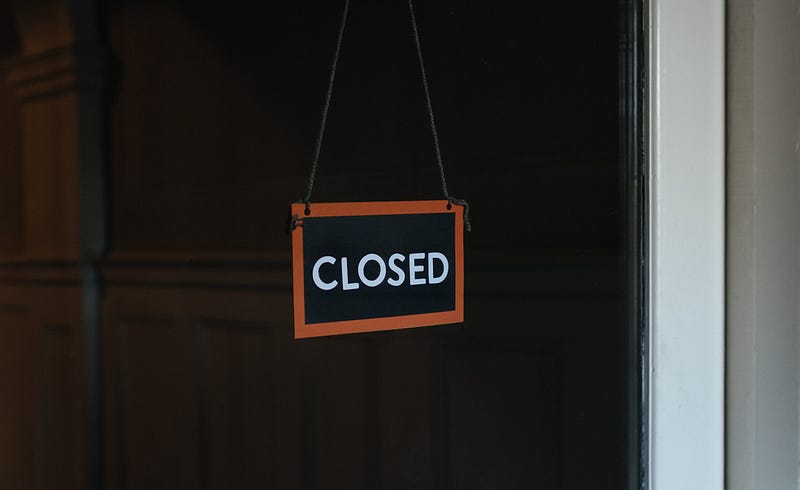
Photo by Kelly Sikkema on Unsplash


Costly research centers

Established on June 8 last year, the Bithumb Economic Research Institute is reportedly ceasing operations tomorrow. Research centers are often perceived as costly endeavors, particularly when the company is experiencing poor financial performance. In the traditional financial sector, small and medium-sized securities firms typically prioritize restructuring their research divisions when dealing with profitability challenges.


Relevance of research hubs

An official from a Korean cryptocurrency exchange told Newsis that research centers can be a financial burden during times of low trading volumes and subpar performance. Nonetheless, the official underscored the need to furnish investors with refined information through these research hubs, encouraging exchanges to cultivate an environment conducive to informed decision-making based on high-quality data.

Since its inception, Bithumb’s research organization has published 55 reports aimed at forecasting cryptocurrency market trends using comprehensive macroeconomic and crypto data analysis. These reports have contributed to drawing investors to the sector.


Global restructuring trend

The wave of workforce reductions in the crypto industry isn’t isolated to South Korea; it’s a global phenomenon. Chinese reporter Colin Wu, known for his crypto news platform Wu Blockchain, shared via Twitter that Binance, the world’s largest cryptocurrency exchange, is planning to lay off roughly 20% of its staff, totaling about 8,000 employees.

In response to these concerns, Binance CEO Changpeng Zhao, also known as CZ, wrote a tweet yesterday. According to CZ, employee layoffs are a weekly occurrence within the company, based on considerations such as alignment with corporate culture. As an example, he mentioned the remote work environment and how it may not be suitable for everyone. However, CZ reassured that Binance remains engaged in hiring, with a focus on enriching its talent pool.
More to Read
View All
Web3 & Enterprise·

Oct 10, 2023

Kbank’s Upbit Customer Deposits Total $2.2B

Kbank’s Upbit Customer Deposits Total $2.2BKbank, an internet-only bank in South Korea, is facing criticism due to its relatively high proportion of cryptocurrency customer deposits compared to other banks. Kbank reportedly manages approximately KRW 3 trillion (equivalent to $2.2 billion) in deposits from customers of cryptocurrency exchange Upbit, which accounts for about 18% of its total customer deposits.This percentage stands out, being notably higher than other banks that provide accounts to the other four crypto-to-fiat exchanges in Korea. That is according to a report by Maeil Business Newspaper, which obtained documents submitted to lawmaker Kim Hee-gon by the Financial Services Commission (FSC).According to Korean law, crypto exchanges must secure real-name bank accounts from banks to offer crypto trading services against the Korean won. Kbank offers its accounts to Upbit, the dominant player in the Korean crypto market.Photo by David McBee on PexelsNotable exposure to crypto exchangeThe FSC documents showed that Kbank’s Upbit customer deposits totaled KRW 3.09 trillion, making up 18% of its total deposits, which amount to KRW 17.2 trillion.In a striking contrast, Nonghyup Bank had 0.2% of its deposits, equivalent to KRW 557.8 billion, in Bithumb, which is the nation’s second-largest cryptocurrency exchange. Kakaobank, another internet-only bank, had 0.3% (KRW 112.2 billion) of its deposits in Coinone. Shinhan Bank held 0.01% (KRW 43 billion) in Korbit, and Jeonbuk Bank had a similarly small 0.02% (KRW 4.2 billion) in Gopax.Lawmaker Kim pointed out that Kbank has become a bank dedicated to crypto trading. Kim proposed that financial authorities take proactive measures to assess the potential risks that may emerge when Kbank utilizes Upbit customer deposits as a basis for offering credit loans. Such risky financial practices could potentially result in higher loan defaults and the emergence of a greater number of individuals with poor credit histories, which could ultimately jeopardize the stability of the financial market.Regulatory gapThe current Financial Transaction Reporting Act mandates that virtual asset service providers (VASPs) segregate customer deposits from their own assets as a measure to combat money laundering. However, it has been noted that there are regulatory gaps stemming from the absence of specific guidelines for the custody of these deposits.According to the Financial Supervisory Service (FSS), Nonghyup and Kakaobank store deposits in separate accounts within the bank. On the other hand, Kbank and Jeonbuk Bank keep deposits in corporate accounts under their respective exchange partners’ names.When deposits are stored in separate accounts within the bank, only the bank has access to those funds, and they are essentially operated in a manner similar to a trust, preventing the bank from using the funds arbitrarily. In contrast, funds held in corporate accounts can be used by the bank as a source for lending. Lawmaker Kim warned that in scenarios such as exchange bankruptcies or similar situations, banks holding customer funds in corporate accounts could face difficulties in ensuring customer protection.Each of these banks receives reserve funds from crypto exchanges in anticipation of potential compensation requirements in the event of unforeseen losses. The FSS states that as of the end of last month, the reserve amounts held by each bank were as follows: Kbank had KRW 200 billion, Nonghyup Bank had KRW 100 billion, Kakao Bank had KRW 73 billion, and both Shinhan Bank and Jeonbuk Bank had KRW 30 billion.Kbank’s Upbit customer deposits are approximately 72 times larger than Shinhan Bank’s Korbit customer deposits. However, the reserve amounts held by Kbank are only 6.7 times greater than those held by Shinhan. Lawmaker Kim emphasized the importance of banks maintaining reserve funds that are proportional to the customer deposits held in their partner crypto exchanges.Signs of recoveryMeanwhile, the Korean cryptocurrency industry, which faced a downturn in the latter half of last year due to events like the Terra collapse and FTX’s bankruptcy, has exhibited signs of recovery in the first half of this year.The Financial Intelligence Unit (FIU) of the FSC recently reported that the cryptocurrency market cap in South Korea has reached KRW 28.4 trillion as of the end of June this year. This reflects a 46% increase compared to the end of last year when it stood at KRW 19.4 trillion. Additionally, the total operating profit of domestic exchanges surged by 82% to KRW 227.3 billion over the past six months, compared to the previous figure of KRW 124.9 billion.The total market’s max drawdown (MDD) was 62%. MDD assesses the extent to which an asset has declined in value from its highest point to its lowest point within a specific time frame, before experiencing a recovery. The FIU considers this MDD to be high, urging investor caution.

news
Web3 & Enterprise·

Nov 10, 2023

Shinhan Bank to issue NFTs at 2023 Blockchain Grand Week in Seoul

Shinhan Bank to issue NFTs at 2023 Blockchain Grand Week in SeoulShinhan Bank, one of South Korea’s leading financial institutions, is set to issue non-fungible tokens (NFTs) and operate a promotional booth in celebration of its participation in the upcoming 2023 Blockchain Grand Week, scheduled for next Wednesday, according to a report by local news outlet Newspim.The Blockchain Grand Week, an annual event since 2018, is hosted by the Ministry of Science and ICT and organized by the Korea Internet and Security Agency (KISA), the National IT Industry Promotion Agency (NIPA) and the Institute of Information and Communications Technology Planning and Evaluation (IITP). Its objectives are to increase public awareness of blockchain technology and to facilitate the broader adoption of its ecosystem.Photo by Pete Linforth on PixabayNFTs to first 2,000 visitorsThe event is set to take place at the Convention and Exhibition Center, better known as COEX, in Seoul over two days. It will feature a conference centered around the theme “Adding Trust to Digital Platforms” and will include several academic seminars. Various blockchain companies will also be showcasing their products and services at their respective booths. For this event, Shinhan Bank is collaborating with Hexlant and Vircle to introduce their NFT project. They also plan to offer NFTs to the first 2,000 visitors to their booth.The NFTs will be distributed through Shinhan Bank’s NFT wallet, SOL Wallet, and will come with practical perks such as tickets for events at the booth and coffee coupons. Furthermore, these NFTs will be transferable to others.A representative from Shinhan Bank expressed hope that visitors will have the opportunity to experience the bank’s NFTs and gather diverse information related to blockchain technology. The official also emphasized the bank’s commitment to continually developing and introducing blockchain services that can be integrated into customers’ daily lives.Shinhan Bank’s endeavors in blockchainShinhan Bank’s efforts in the blockchain sector have been marked by various accomplishments in recent years. In 2021, the bank received the Ecosystem Transformation Award at the Enterprise Blockchain Awards, now known as the Web3 and Blockchain Transformation Awards (W3B Awards). This January, Shinhan integrated the SOL Wallet service into its financial services application. The bank remains dedicated to spearheading client-centric blockchain initiatives, one such effort being the development of NFT technology in collaboration with Hexlant and Vircle for corporate marketing purposes.Prohibition on discussing virtual assetsMeanwhile, there has been some dissatisfaction among industry insiders regarding the event’s restrictions. Those operating booths are prohibited from mentioning virtual assets in their projects. The application form for booth holders explicitly stated that exhibitions related to virtual assets are not allowed. This cautious approach is believed to be a response to recent cryptocurrency scandals, such as the $40 billion Terra-LUNA crash and the controversy surrounding a Korean lawmaker’s crypto holdings.

news
Policy & Regulation·

Jun 07, 2023

SEC Lawsuit Stalls Binance’s Gopax Acquisition Deal in South Korea

SEC Lawsuit Stalls Binance’s Gopax Acquisition Deal in South KoreaNothing exists in a vacuum, and on that basis, it appears that ripples emanating from the recent lawsuit filed by the Securities and Exchange Commission (SEC) in the United States against global crypto exchange Binance have resulted in the company struggling to complete the acquisition of South Korea’s Gopax.Photo by Daniel Bernard on UnsplashSuspended pending reviewThe acquisition deal between Binance and South Korean crypto trading platform Gopax has hit a roadblock as a direct consequence of the lawsuit. The Financial Services Commission (FSC), the financial watchdog in South Korea, has put the acquisition on hold as it reviews the situation.Binance had acquired a majority stake in Gopax in February, with plans to re-enter the South Korean crypto market after a two-year absence. Gopax is a top five cryptocurrency exchange in South Korea, alongside Upbit, Bithumb, Coinone, and Korbit. However, according to a report by local news media, the FSC has suspended Gopax’s executive change report filed on Tuesday in light of the SEC lawsuit. The report outlined the nomination of three Binance members, including Leon Singh Poong, as inside directors of Gopax.The FSC cited the allegations of securities law violations against Binance and the SEC’s request to freeze Binance.US assets as the reasons for its cautious approach.Gopax revivalThe significance of Binance’s acquisition of Gopax goes beyond its re-entry into the South Korean market. It also aimed to revive the struggling local crypto trading platform. In November 2022, Gopax faced challenges when it suspended withdrawals of principal and interest payments from its decentralized finance service, GoFi, following the collapse of the Bahamas-based FTX crypto exchange and the bankruptcy of Genesis, a US digital assets financial services firm.Digital Currency Group, the parent company of Genesis, was reportedly the second-largest shareholder of Gopax and a key business partner providing the GoFi product. Binance’s acquisition deal intended to inject new capital into Gopax to facilitate customer withdrawals and interest payments for GoFi.The SEC lawsuit against Binance alleges the exchange’s commingling of customers’ funds and violations of various securities laws. The SEC has filed 13 charges against Binance, its subsidiaries, and its CEO, Changpeng Zhao.Acquisition strategyBinance appears to have been pursuing an acquisition strategy in attempting to carve out a greater market share in Asian markets. Binance entered the Japanese market via acquisition in November 2022 when it purchased local crypto platform, Sakura Exchange BitCoin. At the end of last month, Binance announced that it was rebranding the business as Binance Japan and launching it as a stand alone bespoke platform dedicated to the Japanese market.In Thailand, the global crypto exchange has varied its approach, entering into a joint venture rather than a full acquisition. It has partnered with Gulf Innova, with the new entity, Gulf Binance, recently having been awarded a trading license by the Thai regulator.The outcome of the SEC lawsuit and its impact on Binance’s operations in South Korea remains uncertain. The FSC’s review process will consider the allegations against Binance and the implications of the SEC’s actions before making a decision on the Gopax acquisition. The crypto industry will closely monitor the developments as they unfold, as no doubt the saga will have broader implications for Binance and its expansion plans.

news
Loading