Top

BNP Paribas Partners With Chinese in Digital Yuan Push

Policy & Regulation·May 08, 2023, 12:19 AM

The Chinese authorities continue with their sustained efforts to promote use of the digital yuan, on this occasion by hooking up with French international banking group, BNP Paribas.

According to the South China Morning Post (SCMP) on Friday, the partnership will see BNP Paribas collaborating with the Bank of China (BOC) to promote the digital yuan to its corporate clients. The digital yuan or e-CNY is a digital representation of the Chinese sovereign currency, issued by the BOC.
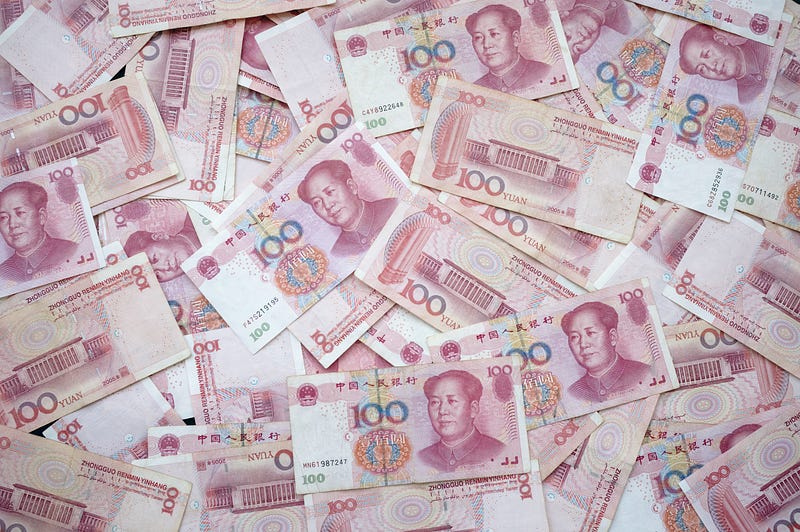
Photo by Eric Prouzet on Unsplash


e-CNY system access

As part of the arrangement, BNP Paribas China will connect into the BOCs system, accessing an e-CNY management system. The BOC has authorized ten banks in China including the four state-owned banks, all of which are domestic lenders, to deal with its digital currency business.

The direct e-CNY system access enables straight-through processing, allowing BNP Paribas to offer digital wallet functionality to its corporate clients relative to the digital yuan. Essentially, the system will allow BNP Paribas China’s corporate clients to link their bank accounts with an accompanying digital wallet. Other functionality that will be enabled as a consequence includes access to smart contract applications through the m-CBDC bridge (central bank digital currency).

BNP Paribas China CEO CG Lai commented on the partnership: “While this collaboration can supplement the Bank’s offline payment collection capabilities and further optimize our clients’ account structure, this also reinforced the Bank’s commitment to the China market.” Lai outlined that the bank intends to enhance customer service capabilities by pursuing digital innovation that, like in this instance, contributes to China’s economic development.

Louise Zhang, Head of BNP Paribas China Transaction Banking claimed that the partnership will “provide innovative, efficient cash management and trade financing services to local and multinational clients.”


CBDC development

There has been a lot of activity in recent years when it comes to the development of CBDCs. The central banks of most nations have carried out some level of preparatory or investigative work relative to a digital currency. However, China has been by far the leader in its development of a CBDC.

The BOC first began research into a digital currency in 2014. The country’s State Council approved the development of the digital yuan in partnership with China’s commercial banks in 2017. Beyond initial development, a testing phase began in 2019 with the project known as the Digital Currency Electronic Payment (DCEP) system emerging as the first version of the digital yuan after a number of years of development.

In 2020, the BOC began more extensive testing of the digital currency in four Chinese cities — Shenzhen, Suzhou, Chengdu and Xiong’an. To promote use of the currency at that time, they offered free digital yuan to residents of those cities to spend, in that way, stepping up efforts to popularize the digital currency.

Last month, the administrators of the Chinese city of Xuzhou announced that it was in the process of publishing a pilot scheme which will set out a means for promoting China’s e-CNY digital currency. Also in April, the eastern city of Changshu clarified that it is gearing up to commence paying state employees in the city in e-CNY. According to an announcement made by the city’s finance bureau the civil servants will start to receive e-CNY as payment in May.


More to Read
View All
Policy & Regulation·

Nov 29, 2023

Standard Chartered joins China’s CBDC pilot trials

Standard Chartered joins China’s CBDC pilot trialsStandard Chartered Bank has joined the advanced stages of China’s central bank digital currency (CBDC) pilot trials, making it one of the world’s largest multinational banks to partake in such an initiative.Photo by Eric Prouzet on UnsplashEnabling e-CNY exchangeChina initiated its CBDC pilot trials over a year ago, with it being much further ahead of other CBDC initiatives internationally in terms of development. It has now expanded its trials to include more lenders, with Standard Chartered China becoming the latest participant.This development means that Standard Chartered Bank’s users in the Asian nation will soon have access to the digital version of the Chinese yuan by seamlessly integrating its platform with China’s dedicated CBDC app. According to an announcement by Standard Chartered Bank (China) Ltd. on Monday, the bank will be enabled, through partner firm City Bank Clearing Services Co., to offer its clients the ability to purchase, exchange or redeem e-CNY.In its announcement, Standard Chartered China’s President, Zhang Xiaolei, stated:“As an international bank rooted in the Chinese market for 165 years, Standard Chartered is optimistic about the development prospects of digital renminbi.”Joining e-CNY testing programThe e-CNY pilot testing program in China has been extended to 26 cities and provinces. Standard Chartered’s Chinese subsidiary will involve itself with supply chain financing, trade financing and cross-border merchant payments as part of that pilot program.The adoption of CBDCs is anticipated to reduce reliance on physical currency notes while ensuring transparent and tamper-proof transaction histories. China’s CBDC, known as the digital yuan or e-CNY (digital renminbi), has garnered international attention for its progressive approach to digital currency.Broader digital assets sector involvementStandard Chartered’s involvement in China’s CBDC pilot marks a milestone, emphasizing the bank’s commitment to digital innovation. However, the British banking conglomerate has had a broader approach to digital assets beyond this CBDC collaboration. A report by Nikkei Asia last month suggested that the banking group was making a concerted effort to develop its digital assets-related business within the Asian region through its Singapore-based investment arm, SC Ventures.Earlier this month, SC Ventures unveiled Libeara, a platform which plans to offer the first-ever tokenized Singapore dollar government bond fund. Subsidiary companies include digital asset custodian Zodia Custody and institution-first digital asset marketplace Zodia Markets.China has been at the forefront of CBDC experimentation, with initiatives like testing offline payment systems integrated with SIM cards. This innovative approach allows users to initiate CBDC payments by simply bringing their phones close to sale terminals. The trials, initially launched in major cities such as Shanghai, Beijing and Shenzhen, have encouraged residents to embrace e-CNY for everyday transactions.While China’s advancements in CBDC trials are noteworthy, other nations, including India, Japan and the U.S., are also actively engaged in the advanced phases of CBDC-related research and development. These global efforts seek to diversify financial settlement options, providing individuals with a broader range of choices in the evolving landscape of digital currencies.

news
Policy & Regulation·

Oct 11, 2023

Israel Freezes Crypto Accounts Linked to Hamas

Israel Freezes Crypto Accounts Linked to HamasIsrael has taken action to freeze cryptocurrency accounts believed to be involved in a fundraising campaign for the Palestinian militant group Hamas on social media, according to a statement by Israeli police on Tuesday.Hamas recently carried out a series of devastating attacks from Gaza into Israel, leading to one of the most severe escalations in the Israel-Palestinian conflict in years.According to the police statement:“With the outbreak of the war, Hamas’ terrorist organisation initiated a fundraising campaign on social networks, urging the public to deposit cryptocurrencies into their accounts.”Photo by Taylor Brandon on UnsplashBinance implicatedIn response, the Police Cyber Unit and the Ministry of Defense, with the cooperation of global crypto exchange Binance, located and froze these accounts, with the intention of diverting the funds to the state treasury.While the statement did not provide specific details about the number of accounts frozen or the value of the cryptocurrencies seized, it emphasized the government’s proactive efforts to counteract these activities.Hamas had been using cryptocurrencies as a fundraising method for some time, but in April, the group announced that it would discontinue receiving donations in Bitcoin, citing an increase in “hostile” activities against its donors.Binance has been cooperating with global law enforcement agencies and regulators to combat illicit activities, including those related to terrorism financing. A spokesperson for Binance stated:“Over the past few days, our team has been working in real time, around the clock, to support ongoing efforts to combat terror financing.”Unwelcome attentionThe exchange also mentioned that the data used to identify individuals and entities associated with specific organizations comes from intelligence provided by law enforcement and investigative tools developed in collaboration with partners.While Binance is cooperating with law enforcement on these matters, such specific attention is likely to be unwelcome. The exchange platform has been the subject of severe regulatory pushback internationally in 2023. Any suggestion of terrorist financing being enabled through the platform, even if unknowingly so, won’t be helpful to the business in overcoming its regulatory challenges.In the lawsuit taken against Binance by the Commodity Futures Trading Commission (CFTC) in the United States earlier this year, the CFTC claimed that Binance was aware that it had facilitated terrorist financing, specifically referring to Hamas-related transactions.Given that all eyes are currently on the activities of the Palestinian terrorist group, there could also be trouble for rival platform Bitfinex. According to a Wall Street Journal report earlier this year, Bitfinex Turkiye was alleged to have facilitated an account that was used by Hamas for money laundering purposes.Previous crypto seizuresThis action by Israel is not the first of its kind. In May, Reuters reported that Israel had seized approximately 190 crypto accounts on Binance since 2021, including two accounts linked to the Islamic State and dozens owned by Palestinian firms associated with Hamas.Binance responded to these developments by affirming its commitment to cooperate with law enforcement agencies and emphasized that it uses information available only to law enforcement to identify individuals involved in activities related to illicit organizations.

news
Policy & Regulation·

May 28, 2025

Pakistan appoints crypto advisor to PM & allocates 2K MW to Bitcoin mining

Recent weeks have seen a positive policy shift in Pakistan with regard to digital assets and blockchain and that initiative has gathered further momentum with the appointment of a special assistant on blockchain and crypto to the Pakistani prime minister and the allocation of 2,000 MW of surplus electricity to Bitcoin mining and AI data centers.Photo by Abuzar Xheikh on UnsplashOn May 26, the Pakistan Observer, an English language daily newspaper, reported that Bilal bin Saqib has been appointed to serve as a special assistant on blockchain and crypto matters to Pakistani Prime Minister Shehbaz Sharif. Forbes ‘30 under 30’ social entrepreneurIn this role, Saqib assumes the status of a minister of state under Rule 4(6) of the Rules of Business, 1973, with the appointment effective immediately. Saqib had been featured by Forbes through its “30 under 30” list of social entrepreneurs in Asia in 2020. He is the founder of Tayaba.org, a non-governmental organization (NGO) focused on the provision of clean drinking water to vulnerable communities in Pakistan. Saqib came to prominence in the crypto sector earlier this year when he was appointed CEO of the newly formed Pakistan Crypto Council (PCC), an agency established to promote blockchain technology and digital assets within the South Asian country. In April he was added by World Liberty Financial, a crypto project connected with the family of U.S. President Donald Trump, as an advisor. Earlier this month, Pakistan’s Ministry of Finance gave the go-ahead for the establishment of the Pakistan Digital Assets Authority (PDAA), a body that will be responsible for the implementation of regulations governing the crypto and blockchain sector.  Utilizing surplus energyAt the time, one area of focus that had been highlighted in the announcement of the establishment of the PDAA was a desire to make better use of Pakistan’s surplus energy. The country runs an annual average surplus of 4,000 megawatts. A report by 24 Digital on May 25 indicated that action has already been taken in this regard. It outlined that Pakistan has allocated 2,000 megawatts of surplus electricity for the exclusive use of operators of AI data centers and Bitcoin mining facilities.  This plan is being rolled out in phases. The first phase makes surplus energy available to these operators. Phase 2 will focus on enabling crypto mining operators to avail of renewable energy to power their facilities, in an effort to develop the sector in Pakistan in an environmentally responsible manner. According to the Ministry of Finance, interest has already been expressed by international operators in the crypto mining and AI data center sectors. A number of international firms are understood to have visited the country in an effort to explore potential collaboration opportunities.  Earlier this month, Saqib claimed on social media that Pakistan “is moving at crypto speed.” He made the case that the country is a breeding ground for crypto innovation, citing the opportunity to exploit surplus electricity via crypto mining and the potential for crypto adoption given a $36 billion remittance market, millions of unbanked citizens and 64% of the population under 30.

news
Loading