Top

Institutional support expected to cushion crypto volatility, analyst says

Markets·December 05, 2025, 6:28 AM

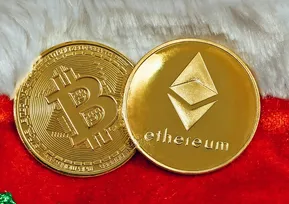
Despite ongoing fluctuations in the cryptocurrency market, analysts suggest that sustained institutional activity is likely to underpin a near-term rebound. As Bitcoin recovered above $90,000 on Dec. 5, market observers began weighing potential risks against growing evidence of corporate and sovereign adoption.

https://asset.coinness.com/en/news/45fb97f7490c6e6b7c9b86e230787fb9.webp
Photo by Austin Hervias on Unsplash

Structural risks seen as limited

According to South Korean news outlet Etoday, Hong Sung-wook, a researcher at NH Investment & Securities, said that the recent slump in both Bitcoin and Strategy stock may weigh on shareholders but does not fundamentally threaten the company’s solvency. He noted that concerns that typically emerge during Bitcoin downturns seldom reflect new underlying risks.


Addressing the potential removal of Strategy from the MSCI index, pending review results expected by Jan. 15, Hong indicated that the impact would likely be limited, as the firm has already exhausted its capacity to make additional Bitcoin purchases. However, he cautioned that prolonged share price weakness could force companies to reevaluate digital asset treasury (DAT) models. Such a shift, he warned, could trigger corporate sell-offs that would burden the broader market.


Hong also addressed concerns related to stablecoins and future technology. Despite S&P Global Ratings assigning Tether its lowest grade of "weak," Hong observed that the issuer maintains reserves exceeding the USDT in circulation, rendering a mass withdrawal crisis unlikely. Regarding the threat of quantum computing, he argued that the timeline remains uncertain and that the Bitcoin network could mitigate future risks through consensus-driven protocol upgrades.


Policy moves may offer market tailwinds

Looking ahead, the analyst identified several constructive developments that could bolster the market, including the potential passage of a U.S. crypto market structure bill early next year. He also pointed to the anticipated nomination of Kevin Hassett as Federal Reserve Chair by President Trump. Hassett is expected to favor interest rate cuts, creating a potentially favorable macro environment. Additionally, Vanguard’s decision to permit the trading of select third-party crypto ETFs and mutual funds was cited as significant, given the asset manager’s historically conservative stance on digital assets.


While the market has shifted into a broader risk-off mode, institutional demand for Bitcoin has continued to build, including activity that began well before the recent pullback. The Czech central bank recently established a $1 million test portfolio comprising Bitcoin, a USD stablecoin, and a tokenized deposit to research payment futures, though it clarified that it does not currently plan to add digital assets to its international reserves.


In the academic sector, a Form 13F filing with the U.S. SEC revealed that Harvard Management Company, which oversees a $56.9 billion endowment, held 6.8 million shares of BlackRock’s iShares Bitcoin Trust ETF (IBIT) as of Sept. 30, a threefold increase from the previous quarter. Furthermore, BlackRock CEO Larry Fink reportedly stated at the New York Times DealBook Summit 2025 that multiple sovereign wealth funds have begun accumulating Bitcoin, according to Forbes.


Korean banks advance crypto integration

This shift toward institutional acceptance is also materializing within South Korea’s traditionally conservative banking sector. The Maeil Business Newspaper reported that Woori Bank recently became the first major South Korean lender to display real-time Bitcoin prices on its trading floor, allowing dealers to track the asset alongside equities and foreign exchange rates.


Concurrently, Hana Financial Group announced a partnership with Dunamu, the operator of the Upbit exchange, to develop blockchain-based remittance services, according to The Korea Economic Daily. By leveraging Hana’s global network and Dunamu’s technology, the initiative aims to reduce settlement times and costs for cross-border payments. Hana intends to introduce the technology for transactions between its Korean offices and overseas branches as early as the first quarter of next year, with broader expansion planned as domestic regulations evolve.


Hana intends to launch the service at overseas branches as early as the first quarter of next year, with gradual expansion planned as domestic regulations evolve.
 

More to Read
View All
Policy & Regulation·

Jul 14, 2023

Hong Kong’s Bricks-and-Mortar Crypto Shops Attract Chinese Visitors

Hong Kong’s Bricks-and-Mortar Crypto Shops Attract Chinese VisitorsHong Kong has become a thriving destination for cryptocurrency enthusiasts, particularly mainland Chinese visitors, due to the ambiguity surrounding the regulatory status of these crypto shops.Despite the illegality of cryptocurrency transactions on the mainland and the ban on overseas exchanges serving onshore clients, Hong Kong allows legal crypto trading, and according to a recent report published by the Financial Times, the autonomous Chinese territory is being accessed by residents of the Chinese mainland for the purpose of trading crypto.Photo by Chapman Chow on UnsplashSurging demandBricks-and-mortar crypto shops, lightly regulated and scattered across the city’s popular tourism and shopping districts, have flourished thanks to the surging demand from mainland Chinese visitors. These stores offer customers the convenience of purchasing digital assets with cash, often without the need to disclose the source of funds or personal information.In contrast to the strict licensing requirements imposed on online exchanges in Hong Kong’s push to become a virtual assets trading hub, these over-the-counter (OTC) crypto stores provide customers with the opportunity to buy large volumes of cryptocurrencies with minimal or no verification checks.Before the border between China and Hong Kong reopened fully in February, mainland Chinese customers accounted for less than 5% of customers at Crypto HK, an OTC crypto outfit with two branches in the city. However, this figure has now increased significantly, making up around half of their customer base.Similarly, One Satoshi, a crypto store with nine branches in Hong Kong, reported trading volumes between January and May 2023 that were 20–25% higher than the same period the previous year. They anticipate a 35–40% increase in trading for the entire year.While some store owners, like Roger Li of One Satoshi, currently decline mainland Chinese customers due to Beijing’s crypto ban, they remain optimistic that restrictions will ease. This belief is prevalent among the crypto community in Hong Kong following the city’s announcement to become a virtual assets hub in October.Regulatory anomalyHong Kong introduced a new regulatory framework for cryptocurrency exchanges in June, requiring all online platforms operating in the city to apply for a license. However, most OTC stores still operate outside the purview of Hong Kong’s Securities and Futures Commission (SFC), presenting an area of further consideration for the government.OTC stores primarily serve as a simple way for users to convert money to and from unlicensed online exchanges, according to Carlton Lai, head of blockchain research at Daiwa Capital Markets. Hong Kong’s lenient regulations and ease of starting such businesses, as long as there is sufficient capital, contribute to the higher number of OTC stores compared to other locations.While some shops welcome increased regulation in the sector, others do not require customers to provide identification, promoting quick and anonymous transactions. However, this falls short of the investor protection measures mandated for online platforms seeking licenses to trade cryptocurrencies to retail clients.The lack of scrutiny faced by Hong Kong’s OTC shops, coupled with their proximity to mainland China — a market that ranked fourth globally for crypto trading in 2022 — makes them appealing to Chinese citizens still interested in the asset class.

news
Policy & Regulation·

Aug 04, 2023

Gyeonggi Content Agency Partners with The Sandbox to Foster Metaverse Talent

Gyeonggi Content Agency Partners with The Sandbox to Foster Metaverse TalentThe Gyeonggi Content Agency (GCA) is teaming up with global metaverse platform The Sandbox to recruit participants for the “2023 Northern Gyeonggi Cultural Creation Hub: Metaverse Creator Training,” aimed at cultivating specialized experts in the field of the metaverse.Photo by GuerrillaBuzz on UnsplashA space for creators within the metaverseThe training program focuses on nurturing creators who will be active in The Sandbox Metaverse platform. Participants will be trained in The Sandbox’s metaverse content creation tools, namely VoxEdit and Game Maker.The Sandbox also plans to allow anyone and everyone to publish and offer the content they create in the LAND — the platform’s virtual real estate space for interacting and showcasing creativity — by the end of this year.“The Northern Gyeonggi Cultural Creation Hub is a regional hub for support and entrepreneurship in design and content convergence. Through various support programs that implement education, mentoring, and startup funds, we are taking the lead in promoting a startup ecosystem with design and storytelling,” said Tack Yong-seok, director of the GCA.About the training programApplications for the program can be submitted through The Sandbox’s official Naver Cafe and the Gyeonggi Cultural Creation Hub’s online portal until August 27. The opportunity is open to anyone interested in pursuing a career as a metaverse creator.The free training course will take place over eight weeks, from September 2 to October 27, at the Northern Gyeonggi Cultural Creation Hub located in Uijeongbu, Gyeonggi Province. Training sessions will be held every Saturday, the GCA explained.“Since 2022, we have collaborated with partners both online and offline to train over 500 creators. We will expand offline education in regions that have had relatively fewer opportunities for metaverse training,” said Cindy Lee, CEO of The Sandbox Korea.

news
Web3 & Enterprise·

Jun 29, 2023

The Sandbox Adds Singapore Virtual Neighborhood Lion City

The Sandbox Adds Singapore Virtual Neighborhood Lion CityMetaverse platform The Sandbox has announced the launch of Lion City, Singapore’s virtual neighborhood, during its inaugural Singapore Partner Day event.In a blog post published on Tuesday, The Sandbox project team outlined that Lion City is set to debut in September 2023 and will feature 512 plots of virtual land. With over 40 partners and 10+ studios, Lion City aims to showcase global and regional brands, along with established Web3 natives, representing Singapore’s culture in sports, fashion, entertainment, and technology within The Sandbox metaverse.Photo by Kin Pastor on PexelsRegional brand partnershipsThe Sandbox has attracted a range of local partners for Lion City, including MM2 Asia, ONE Championship, Mighty Jaxx Group, Spa Esprit Group, METAVI, Technology Development Centre (TDC) of ITE College Central, UKISS, Bandwagon, Renovi, Affyn, 8sian, The Engineers, Metaskull by Jacky Tsai x Froyo Games, Fabric of Reality, CreativesAtWork, Memotics, FXMedia, Kappou, The Parlour, Manifest, Vaniday, PengWine, LOFI, and Zodium. These partners represent various industries and will contribute to the diverse offerings and experiences within Lion City.Studio partnersMoreover, studio partners catering to the Singapore market will be an integral part of the Lion City experience. These studios include Smobler Studios, CGame Studio, Oceanus Media Global, and iCandy Interactive subsidiaries Lemonsky Studios and Hashcode Studio, New Moon Studios, Pangu by Kenal, and Clevereen. Collaborative ecosystem partners such as OKContract, Pinnacle, DIFY, and Peatix are also contributing to the development of the metaverse.Unlocking Web3 opportunitiesThe Sandbox emphasized the significance of Lion City as a gateway and launchpad for Southeast Asia. With over 400 global brands, including Singapore’s DBS Bank, already on board, Lion City has the potential to unlock new Web3 possibilities in the region. The supportive and collaborative ecosystem in Singapore will provide companies with opportunities to explore digital frontiers and test decentralized technologies.The project also announced the milestone during the Singapore Partner Day event held at the Marina Bay Sands Expo & Convention Centre. The event served as a platform for networking and sharing insights among The Sandbox’s partners.Keynotes were delivered by Sébastien Borget, the Co-Founder and COO of The Sandbox, and George Wong, the project’s Head of Singapore. They discussed the vast opportunities within the metaverse, and panel discussions with ecosystem partners took place, covering topics like intellectual properties (IPs) and the metaverse’s future, as well as the development of the open NFT metaverse.During the event, Borget highlighted Singapore’s regulatory environment, as being conducive to emerging technologies. He also emphasized Singapore’s position as an innovation hub for Web3 advancements.The metaverse faces new challenges in 2023, with the crypto market gravitating towards a more institutional-friendly approach, and questions surrounding its relevance. Recently, Borget had a clash with the SEC in the United States, disagreeing with the regulator’s classification of the project’s native $SAND token as a security.No doubt that experience has helped to underscore his appreciation for Singapore’s regulatory setup. Nevertheless, Wong described 2023 as an important and pivotal year for metaverse growth.

news
Loading