Top

Bybit Extends Service Offering to Include Lending

Web3 & Enterprise·May 03, 2023, 1:29 AM

Dubai-headquartered crypto spot and derivatives trading platform Bybit announced on Tuesday that it has expanded the range of services it offers to now also encompass crypto lending.
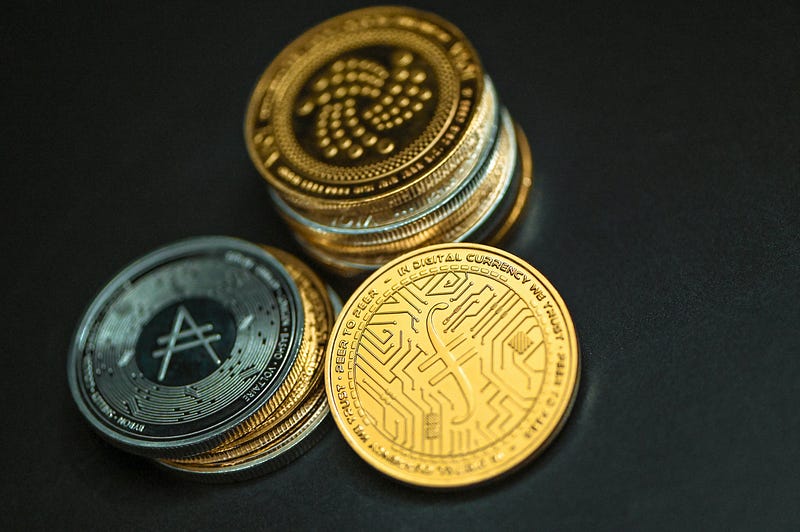
Photo by Traxer on Unsplash


Hourly interest

In the announcement which has been published to the platform’s website, the company set out the nature of the Bybit Lending product. “With Bybit Lending, users can deposit their unused cryptocurrencies into Asset Pools, which will be lent out to borrowers,” the service update outlines.

Expanding on the features that the new service offering brings with it, the crypto platform outlines that customers will have the ability to accrue interest on an hourly basis. That interest will be calculated at a variable rate, with a variance in the rate depending upon the level of borrowing activity. “In extreme cases where there are no borrowers at all, the interest rate could drop to 0%,” the company clarified.


Low risk claims

Bybit points out that “loaned assets are kept safe by Bybit’s strict risk management system, enabling you to earn returns with peace of mind.” While this is comforting to hear, it remains to be seen to what extent crypto market participants will take this statement at face value.

2022 proved itself to be a graveyard for most of the leading crypto lending firms, and with that, such failures also proved to be a graveyard for the hard earned funds of retail market participants in their hundreds of thousands. Many are dubious about the integrity and sustainability of the crypto lending model, at least at a retail level.


Withdrawal restrictions

Bybit added that the product facilitates flexible redemptions. However, in an accompanying note, it added that the withdrawal of funds is dependent upon “ the funds in the Asset Pool [not being] fully lent out and you have not exceeded your Daily Withdrawal Limit.”

It’s important to note that as many of the failed crypto lenders were getting further and further into difficulty in 2022, they added more arduous withdrawal limits and withdrawal conditions as a mechanism to stem the bleeding that was the outward flow of deposits against a backdrop of a deficit in customer funds held by these platforms.

In further marketing of the product on Twitter, the company is claiming that customers can benefit from interest rates of up to 16.46%. While one could take the view that limited promotion of exceptionally high interest rates is harmless, the lesson learned from recent crypto lender failures is that such platforms were offering excessive and unsustainable interest rates as a mechanism to reel in retail deposits, only to later proceed to mismanage those funds.


Competing offerings

Bybit is not alone in offering this service. While a plethora of lending services exited the market via bankruptcy, exchanges such as OKX and KuCoin have their own variations on lending. OKX extends a loan facility to platform users proportionate to digital assets the user has deposited on the platform. Seychelles-based KuCoin offers a lending service across a broad spectrum of crypto assets.

The intent of US based platforms Coinbase and Kraken in this regard has been retarded due to the actions of US regulators. Kraken fell foul of the Securities and Exchange Commission (SEC) relative to its staking service and paid a $30 million fine as a consequence. Meanwhile, Coinbase shelved plans to launch lending-based services in September 2021 having been warded off the idea by the SEC.


More to Read
View All
Web3 & Enterprise·

May 10, 2023

OmniBOLT to Support BRC-20 Tokens on Lightning

OmniBOLT to Support BRC-20 Tokens on LightningSingapore’s OmniBOLT, a project that’s developing technological solutions within bitcoin’s layer two network environment, has outlined that it will support BRC-20 tokens on Lightning Network.Before we consider precisely what OnmiBOLT's decision to support BRC-20 tokens means, let’s cover the backstory.Photo by Sander Weeteling on UnsplashBRC-20BRC-20 is an experimental token standard which was created by an anonymous developer with the handle “Domo”, and username ‘@domodata’ on Twitter. A token standard governs how and where a cryptocurrency can be used. The approach has been pioneered by developers on the Ethereum blockchain who created the ERC-20 standard a number of years ago, relative to the Ethereum network.A bitcoin evolutionIn this instance, BRC-20 is a fungible token standard designed for the bitcoin blockchain. Bitcoin development is very slow and conservative, and deliberately so, in an effort to put network security first. However, it has had two major upgrades over the course of the last few years, namely SegWit and Taproot.Many in crypto have been critical of the bitcoin project on the basis of it being a pet rock that lacked features and the flexibility to use it in other ways aside from as a store of value or means of exchange. However, those protocol upgrades have led to further development that is expanding bitcoin’s use case and versatility.SegWit and Taproot enabled the development of Bitcoin Ordinals in January 2023. Ordinals provide a means to create Bitcoin non-fungible tokens (NFTs), by attaching data to individual satoshis, the smallest denomination of Bitcoin. NFTs created this way are immutable as they’re not created on side chains but on the bitcoin blockchain itself.In a fast moving scenario, the development of Ordinals led two months later to the emergence of the BRC-20 standard. BRC-20 tokens can be stored on the bitcoin base-chain, built with the assistance of Ordinals. BRC-20 is an exciting development as it stands to enable smart contract capabilities relative to bitcoin.Solving the bitcoin fee issueMany see this development as a solution for the longer term fees issue that the bitcoin blockchain will have to overcome. Bitcoin miners are compensated in mining rewards but the level of rewards is being cut in half every four years. The concern is that in the longer term, there may not be enough revenue for miners to continue to secure the network effectively.With the development of Bitcoin Ordinals, more fees are generated, and so this is seen as a means through which the network can sustain itself over the longer term.Mempool backlogSo what’s not to like? The issue that has arisen over the past few days is that bitcoin transaction fees have hit a two year high. Over the past few days, there have been in excess of 400,000 unconfirmed bitcoin network transactions sitting in the mempool. The mempool is a mechanism within the bitcoin protocol that stores the data relative to a queue of transactions that are waiting to be confirmed.Relieving pressure on bitcoinThat brings us back to the significance of the Singaporean team of developers at OmniBOLT deciding to support BRC-20 tokens on the lightning network. That move can relieve the pressure on the bitcoin mainnet. The project is being backed by Waterdrip Capital, Danhua Capital, Redline DAO and others.Bitcoin has been a boring protocol and many have celebrated that fact as a feature and benefit for a network that serves a couple of vitally important use cases exceptionally well. However, development never stops and it’s fascinating to see another side to the protocol unfold, and all the while, it’s not entirely clear where it will end.

news
Policy & Regulation·

Aug 04, 2023

Hong Kong Lawmaker Explores Digital Asset Links With Mainland

Hong Kong Lawmaker Explores Digital Asset Links With MainlandIn a move aimed at bolstering its position as a rising global Web3 hub, Hong Kong Legislative Council member Johnny Ng has expressed his aspiration to foster greater collaboration between digital asset platforms in Hong Kong and a Shanghai-based exchange.Photo by Simon Zhu on UnsplashDigital asset exchange interconnectivityAs Hong Kong continues to position itself as a key player in the emerging Web3 landscape, Ng envisions a future where licensed virtual asset exchanges in Hong Kong could be interconnected with their counterparts in Shanghai.Ng’s remarks came during an interview with Chinese media outlet The Paper. Drawing a parallel with the established Shanghai-Hong Kong Stock Connect program that seamlessly connects the stock markets of both cities, Ng raised the question of whether a similar connection could be established for licensed digital asset exchanges. Ng’s idea hinges on the potential to bridge appropriate platforms in Shanghai with those licensed in Hong Kong for virtual asset trading.Interconnected talent poolThe lawmaker’s enthusiasm for interconnectivity also extends to the talent pool. He expressed his desire for more Web3 talent exchanges between Hong Kong and the mainland, recognizing Shanghai’s status as a financial hub boasting numerous exceptional financial enterprises.Hong Kong’s approach to the Web3 landscape stands in contrast to mainland China’s stringent cryptocurrency regulations. While China banned cryptocurrency transactions in 2021, Hong Kong has embraced crypto firms, even encouraging partnerships between these firms and local banks.This year, Hong Kong authorities unveiled a series of cryptocurrency-related policy statements, aimed at fortifying its stature as a global financial center. A significant step followed in December, when the Hong Kong Legislative Council passed an amendment introducing a comprehensive licensing framework for virtual asset service providers (VASPs).In a recent development underscoring Hong Kong’s pro-crypto stance, HashKey and OSL have become the pioneering recipients of licenses for retail trading under the new regulatory regime, which commenced on June 1.Differing policy approachesPeople following developments in crypto and Web3 in China and East Asia have been speculating if the strategic positive shift in Hong Kong towards developing as a regional hub relative to the sector is indicative of a softening in the approach of mainland China towards the industry. It appears that Hong Kong’s pursuit of crypto business has been sanctioned by Beijing.Commentators have been monitoring the emergence of further encouraging signals. In May, Chinese state television featured a segment that covered cryptocurrency and in particular Bitcoin. Binance CEO Changpeng Zhao (CZ) was sufficiently encouraged by the development to suggest that it was “a big deal,” although the clip was later removed from the broadcaster’s website.Ng’s proposal aligns with the broader narrative of Hong Kong’s ambitious push into the Web3 landscape, capitalizing on its favorable regulatory environment to attract crypto-related ventures. As discussions evolve around the potential interconnectivity between Hong Kong and Shanghai’s digital asset exchanges, the global cryptocurrency community watches with interest to see if there are any emerging signs that Beijing will reciprocate positively.

news
Policy & Regulation·

Apr 25, 2023

China to Pay State Employees in Digital Yuan

China to Pay State Employees in Digital YuanChina is making its biggest push yet to facilitate greater use of its central bank digital currency (CBDC), the digital yuan (e-CNY).©Pexels/RODNAE ProductionsThe eastern city of Changshu is gearing up to commence paying state employees in the city in e-CNY. According to an announcement made by the city’s finance bureau on Sunday, the civil servants will start to receive e-CNY as payment in May. The measure will also impact journalists working for state media, medical staff, technicians and schoolteachers.Advancing a cashless societyThrough a proliferation in the use of digital money such as that offered via WeChat Pay and AliPay, China is already well on its way towards being a cashless society. However, this latest move with the e-CNY is another major step in that direction.In a separate announcement on Sunday, the administrators of the city of Xuzhou, which like Changshu is also located within Jiangsu province, said that Xuzhou is in the process of publishing a pilot scheme which will set out a means for promoting China’s e-CNY digital currency. Meanwhile another Jiangsu province city, Suzhou, was one of the first locations in China to run a digital yuan pilot scheme in April 2020.Previously local government authorities in cities like Shenzhen and Beijing have experimented with using the currency, offering free digital yuan to citizens to spend, in an effort to popularize the digital currency.Changshu had already been using the currency for the best part of a year to make overtime payments to 4,900 state enterprise employees. Additionally, the city administrators had introduced it to pay subsidies, including payments to tech companies, payments related to housing and transport for local government workers. While there’s every likelihood that this latest measure could be applied on a province-wide basis, there has as yet been no direct confirmation of such an eventuality.Privacy concernsThe Chinese government maintains that further introduction of the e-CNY will lead to an improvement for citizens in terms of privacy. Beijing maintains that the large tech platforms like WeChat Pay and AliPay will have no access to the transaction data of individuals and companies. However, that data will find itself directly in the hands of the Chinese government. Given the totalitarian nature of governance in China, it’s hard to imagine how that could be a positive outcome for Chinese society.International currencyOriginally known as DCEP, work on the digital currency began in China in 2014. The Chinese are among a growing list of countries that are understood to be unhappy with the need to use US dollars for international trade given that the dollar is the global reserve currency.That discontent has grown further as a direct response to greater use of sanctions by the United States, and particularly the seizure of Russian sovereign funds held in dollars. Furthermore, the weaponization of the SWIFT payments system exemplified through the exclusion of countries like Russia and Iran is also believed to have been a catalyst for greater development of the e-CNY.

news
Loading