Top

Hong Kong Enticing Crypto Firms from Mainland China

Policy & Regulation·April 14, 2023, 2:14 AM

In the wake of various scandals and high-profile bankruptcies, some governments have shunned the cryptocurrency industry, but Hong Kong is instead embracing mainland China crypto companies, urging them to relocate to the city in a bid to bolster its status as a financial hub.
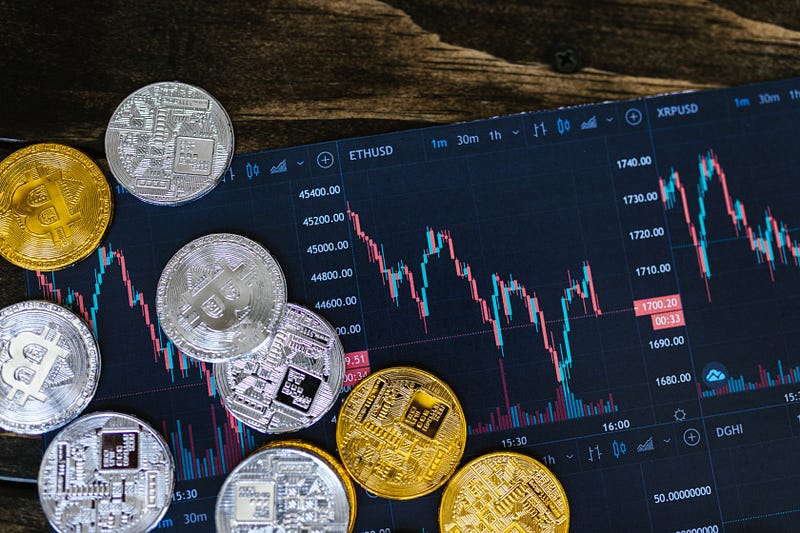
crypto coins and a candle chart on treading platform
©Pexels/RODNAE Productions


Embracing crypto

After enduring an exodus of bankers amid a China security crackdown and stringent COVID curbs, Hong Kong is now making a concerted effort to revitalize its finance sector by embracing crypto. Top Hong Kong government officials, including Chief Executive John Lee, have voiced their support, and the city is planning to hold 100 crypto-related conferences and lavish parties throughout April. Hong Kong is “very serious about building an international virtual asset center,” said Xiao Feng, chairman of Hong Kong crypto exchange HashKey, which drew 13,000 people on the first day of its Hong Kong Web3 Festival, the most significant conference of the month.

HashKey obtained a license to operate in Hong Kong last November, making it one of two licensed crypto exchanges in the city, alongside rival exchange OSL. Xiao told Reuters that many people in the crypto industry had initially assumed that Hong Kong would inevitably adopt the same regulations as mainland China. However, the government is now emphasizing that Hong Kong operates under the “One Country, Two Systems” framework and enforces distinct laws.


Skeptics

Despite this, many remain skeptical of Hong Kong’s promise of a stable regulatory regime on cryptocurrencies. One crypto venture capitalist, who spoke to Reuters on the condition of anonymity due to the sensitive nature of the matter, expressed concern over China’s crypto ban, which still looms large in the background. “If Hong Kong can suddenly claim to be crypto-friendly, that switch can be flipped off just as quickly should things become challenging,” he said.


Crypto licensing interest

Nevertheless, at least 10 companies with Chinese founders, including OKX, Bybit, and Huobi, have announced or are planning to announce their bid for licenses in Hong Kong. These firms, which have exited countries like Canada and the UK, are among the sponsors of the most glamorous Hong Kong parties this week. Bybit held a private dinner for industry heavyweights, and OKX reserved a rooftop venue overlooking Victoria Harbour, where guests could enjoy a stunning view.

At one event on Tuesday, Tron founder Justin Sun, addressed a mainly Chinese-speaking audience, stating, “I can’t believe that we are having such conferences on Chinese soil.” Sun has been charged with fraud by the US Securities and Exchange Commission (SEC), but he argued that the charges lacked merit and accused the regulator of targeting crypto players. “Hopefully, one day, we will have such events in Shanghai and Beijing,” he remarked.

Despite the lingering concerns, Hong Kong is committed to establishing itself as a leading finance hub in the cryptocurrency industry and is sparing no effort to achieve its goals.


More to Read
View All
Web3 & Enterprise·

Oct 11, 2023

Bitmain Pays Employees Following Salary Suspension

Bitmain Pays Employees Following Salary SuspensionBitmain, the Beijing-based Bitcoin mining equipment manufacturer, has somewhat resolved its cash flow issues, having recently suspended employee salaries in response to ongoing financial struggles and sluggish progress in its mining operations.Photo by Thought Catalog on UnsplashCash flow challengesNews of the payment issue emerged via employee reports online on Monday. The suspension encompassed both performance-based and basic wages, affecting all Bitmain personnel. The dire situation has marked a critical juncture for the ASIC manufacturer, which once held a commanding 70% share of the global Bitcoin mining machine market.Chinese crypto reporter Colin Wu had also outlined the firm’s difficulties on social media. In a subsequent post on X (formerly Twitter), Wu stated:”On the afternoon of October 7, Bitmain has repaid September wages, and stated that it only did not pay the performance salary of some people. It has also been repaid, and the basic salary has been released normally on September 30.”More recent reports by local news media in China indicated that the firm has proceeded to pay part of its staff salaries.Internal conflictsBitmain’s financial woes are not new. The company has been plagued by internal conflicts between its co-founders, Wu Jihan and Zhan Ketuan, resulting in a debilitating power struggle that severely eroded its market dominance. Earlier efforts to restore financial stability included a restructuring of employee compensation in the first quarter of this year. Under this reform, the original fixed salary was divided into a basic salary and a performance-based component linked to rank.Regrettably, these measures have proven insufficient to reverse Bitmain’s fortunes. In a company announcement issued in September 2023, Bitmain acknowledged that its operating cash flow had plunged into negative territory, and the performance of its mining machines fell short of expectations.Consequently, the company suspended employee salaries, with the prospect of resuming payments contingent upon developments after the October 7 holiday.It emerged in April that the firm had been fined for tax code violations in China.Core Scientific dealIn August, Bitmain explored the possibility of acquiring an equity stake in Core Scientific, a prominent North American crypto-mining company, as part of Core Scientific’s bankruptcy restructuring plan. This proposed agreement, pending final documentation and court approval, entails Bitmain acquiring 27,000 S19j XP Bitcoin miners from Core Scientific.The Core Scientific deal represents a potential lifeline for Bitmain. Nevertheless, the suspension of employee salaries underscores the prevailing uncertainty surrounding the company’s future. Whether the completion of the Core Scientific transaction will usher in the much-needed financial turnaround for Bitmain remains uncertain as the company grapples with its ongoing financial challenges.Bitmain’s decision to suspend employee pay highlights the gravity of the situation and the urgency of finding a sustainable solution to its financial woes. The outcome of the Core Scientific deal could determine Bitmain’s fate as it strives to regain its once-dominant position and secure its financial stability. In the meantime, the firm continues to develop the latest generation of Bitcoin mining equipment.

news
Web3 & Enterprise·

Oct 24, 2023

Global Blockchain Incheon Conference to Promote Web3 Exchange and Advancement

Global Blockchain Incheon Conference to Promote Web3 Exchange and AdvancementThe city of Incheon is set to host the Global Blockchain Incheon Conference (GBIC 2023) this year from October 30 to 31 under the theme “The Age of Discovery: Voyage to the New World of Blockchain.” The conference aims to provide a space for the exchange of Web3 technologies that are becoming a part of daily life and facilitating communication between businesses, all in the pursuit of establishing Incheon as a global blockchain hub.Photo by Jiho Choi on UnsplashThe city intends to reveal its master plan to achieve this pursuit, consisting of five major strategy points: citizen participation, sustainable growth, advanced innovation, development of a business-friendly environment, and global technological leadership.Exploring the rich tapestry of GBIC 2023The event will include an opening ceremony, keynote speeches, seminars, and additional activities such as hackathon competitions, photo exhibitions of cutting-edge technologies, and interactive zones. Keynote speakers include Marouen Zelleg, Head of Business Development at Polygon Labs’ Asia-Pacific region; Patrick Yoon, General Manager Korea at Crypto.com; Shun Ishikawa, COO at Astar Foundation; and Christopher Lai, Director of the Hong Kong Trade Development Council’s Korea branch.There will be sessions centered around various themes such as stepping into the future of blockchain, improving safety for the citizens of Incheon, delivering tangible innovation, integrating blockchain into daily life, venturing beyond regulations into new possibilities, disseminating technology, and innovating industrial ecosystems.In particular, the conference will also hold a demo day, where companies can showcase demos for their products and services to attract potential investors.Diverse experiences for visitorsAttendees will have the unique opportunity to see how blockchain technology is integrated into daily life by receiving non-fungible tokens (NFTs) minted with Incheon’s mascots — Deungdaeri, Bumi, Kkomi, and Aini — and participating in blockchain-powered games. Other NFTs, such as those issued by Shinhan Bank with records of information like confirmation of entry and coupon usage, will also be available.GBIC is also holding other online and offline activities for visitors to participate in, such as quizzes, social media events, and souvenir distributions.“We will demonstrate how digital technology is integrated into daily life through blockchain in the Web3 era that we are living in,” said Son Hye-yeong, Head of the city’s Data Industry Division. “We encourage everyone’s interest and participation in the blockchain presentations and forums led by global leaders.”GBIC will take place at Songdo Convensia in Incheon, an international conference complex located in Songdo International Business District.

news
Policy & Regulation·

May 30, 2025

Kazakhstan plans CryptoCity as pilot project for crypto payments

The Central Asian republic of Kazakhstan is planning to establish a pilot project that will enable the use of crypto as a means of exchange for goods and services within a specific zone. That’s according to a statement published on Akorda.kz, the official website of the President of Kazakhstan. The statement incorporates the text of a keynote speech delivered by President Kassym-Jomart Tokayev at the Astana International Forum. Tokayev stated: “We are planning to create a pioneering pilot zone called CryptoCity where cryptocurrencies might be used for purchasing goods, services, and even beyond.”Photo by Engin Akyurt on PexelsWorking towards digital transformationThe initiative forms part of Kazakhstan’s efforts to make progress in terms of digital transformation, as well as an aspiration to become an IT hub within the Eurasia region.  For the purposes of the pilot program, the use of cryptocurrencies for the payment of goods and services has been authorized by the government within a pre-defined sandbox environment. Alatau City, an urban development located north of the Kazakhstani city of Almaty, has been chosen for the pilot scheme. Alatau has been established as a special economic zone and planned to become a hub for new technology and knowledge, alongside global tourism. It hosts the Innovation Technology Park together with the Kazakhstan National Nuclear Center, Institute of Nuclear Physics and the Physics & Technology Institute.It’s envisaged that the existing technology and knowledge base within Alatau will support its expansion into the area of crypto payments and blockchain development. In addition to crypto payments, other blockchain-based technologies related to taxation systems, investment and decentralized identity systems will be nurtured and encouraged within the Alatau special economic zone. Potential Eurasian crypto hubIn a recent opinion piece published by the Russian-language government-backed newspaper Kazakhstanskaya Pravda, Kanysh Tuleushin, Kazakhstan’s vice minister of digital development, suggested that the Central Asian republic has the potential to position itself as the region’s leading crypto hub.  Tuleushin also suggested that crypto mining operators could help to modernize the country’s energy sector, playing a role in stabilizing the country’s power grid, while making use of surplus electricity. Kazakhstan had proven to be a popular destination for Bitcoin miners in the past. However, the sudden influx of miners following a ban on the activity in China in 2021 was unplanned for.  The surge in electricity demand put the country’s electricity grid under pressure, leading to blackouts in some cases. In 2023 President Tokayev signed legislation into law that limited the energy use of domestic crypto miners. Despite that negative experience, it appears that Tuleushin has seen the benefits that the activity can bring when regulated and planned for. Back in March, it emerged that lawmakers in Kazakhstan had proposed the creation of a crypto bank. One obstacle to the creation of the bank is a lack of a crypto regulatory framework. According to a report published earlier this month, the National Bank of Kazakhstan is now in the process of preparing a regulatory framework for digital assets.

news
Loading