Top

Hong Kong Setting High Bar on Crypto Rules

Policy & Regulation·April 11, 2023, 2:02 AM

Lucy Gazmararian, a Fintech Advisory Group member of Hong Kong’s Securities and Futures Commission (SFC) and founder of crypto venture firm Token Bay Capital has said that the standards for Virtual Asset Service Providers (VASPs) in Hong Kong are incredibly high.

©Pexels/Brayden Law

The Securities and Futures Commission (SFC) has established these strict guidelines as they want the crypto industry to adhere to the same compliance standards as traditional financial firms.

Gazmararian made the comments in discussion with Cointelegraph on the fringes of the Hong Kong WOW Summit. Although the bar is set high, Gazmararian maintains that it is not without good reason. The SFC’s approach is to ask VASPs to apply the same standards that existing financial institutions such as huge banks and asset managers must comply with.


Short term challenges

According to a consultation paper released by the SFC on February 20th, licensed VASPs may serve retail investors, but the standard of investor protection measures imposed needs to be considered. Additionally, Anti-Money Laundering (AML) and Know Your Customer (KYC) policies were also discussed.

While these high standards may benefit the industry in the long run, Gazmararian believes they may pose challenges for the crypto industry in Hong Kong over the short term. She explained that many crypto businesses are in the startup phase and have funding but not huge amounts. Therefore, complying with the framework may incur significant costs. Gazmararian mentioned the need for local VASPs to have insurance, independent assessment reports, and store crypto in cold storage. It is important to note that these costs may prevent some startups from entering the market, which may have consequences on the industry’s growth in Hong Kong.

The Token Bay Capital founder believes that with a solid regulatory framework in place, more well-capitalized financial firms will be willing to help promising startups get off the ground. In her opinion, the companies that receive a license will be upholding the most stringent standards.


Ambitions to be global crypto hub

The SFC has encouraged individuals, corporations, and crypto firms to review the 361-page consultation paper and provide feedback. The securities regulator wants these entities to share their views and point to things that may have been missed. According to Gazmararian, the SFC is “absolutely focused” on getting everything right, so they are seeking input from a wide range of sources.

Submissions for feedback on the consultation paper closed on March 31. Hong Kong has made significant strides in recent months to establish itself as the world’s next crypto hub. According to a March 20 statement by the Secretary for Financial Services and the Treasury, Christian Hui, more than 80 digital asset firms have expressed interest in establishing a presence in Hong Kong over the last few months. This interest is a testament to the growing importance of the crypto industry and the favorable environment that Hong Kong is creating for its growth.


More to Read
View All
Web3 & Enterprise·

Jul 21, 2023

Bitget Targets MENA Business Expansion

Bitget Targets MENA Business ExpansionBitget, the Seychelles-based cryptocurrency derivatives exchange, is setting its sights on the Middle East and North Africa (MENA) as the region emerges as a fast-growing crypto hub.The firm announced its expansion plans via a press release which was published on Thursday. With countries like the United Arab Emirates (UAE) and Bahrain embracing crypto, more exchanges are taking notice and entering the market. Bitget has now joined the ranks of a series of crypto companies seeking to establish a foothold in the region.Photo by Kyle Glenn on UnsplashIncreasing crypto adoption and interestCiting the region’s impressive crypto adoption rate, which accounted for 9.2% of global transactions between 2021 and 2022, Bitget is capitalizing on the growing interest in digital assets. The UAE alone experienced a remarkable 400% increase in registered crypto businesses over two years, driving a surge in global digital asset trading by 10%. Moreover, blockchain-related educational programs have tripled in the region, which contributes to 8% of the overall mining hash rate. All of these are creating a favorable environment for Bitget’s expansion.Dubai officeTo support its entry into the Middle East, Bitget has opened an office in the heart of Dubai and has already hired 60 new employees for various mid and back-office positions. The company aims to scale its Middle East team further, with plans to hire 30 to 60 more professionals over the next two years.Bitget is not alone in recognizing the potential of the Middle Eastern market. Bybit, another major cryptocurrency exchange, recently obtained local licenses to operate in the digital assets space in the UAE, having moved its global headquarters to Dubai in April.OKX, one of the largest exchanges by volume, also received a Minimal Viable Product (MVP) Preparatory License from the Dubai Virtual Assets Regulatory Authority (VARA). Binance is also eyeing the Middle East, with Binance Dubai poised to become the primary focus for the company’s development efforts, given regulatory challenges in Europe and the US.Global expansion strategyBitget’s expansion into the Middle East is part of its broader global scaling strategy. The company has already registered as a Virtual Asset Service Provider (VASP) in Poland and Lithuania, and it launched a localized Turkish website earlier this year.Founded in 2018, Bitget boasts a user base of over 8 million users across more than 100 countries, offering copy trading services. The company’s move to the Middle East showcases its determination to tap into new markets and solidify its position as a global player in the cryptocurrency exchange landscape.There’s been a lot going on at Bitget in recent months, in addition to these regional expansion plans. In May the company announced a corporate social responsibility project named “Blockchain4Youth,” cleverly identifying the importance of connecting with the younger demographic which is far more likely to drive crypto and blockchain adoption.Earlier this month it launched a crypto loans product offering while last week it provided transparency via its proof of reserves initiative, demonstrating a 223% level of reserves and outlining that the company is debt free.

news
Policy & Regulation·

Dec 05, 2023

28 crypto service providers register with India’s FIU

28 crypto service providers register with India’s FIUIn India, 28 entities providing services related to virtual digital assets (VDAs) have successfully registered with the Financial Intelligence Unit (FIU), the body responsible for combating money laundering in the world’s most populous country.Notable names in this list include Neblio Technologies, more commonly known as CoinDCX, Zanmai Labs, the company responsible for the WazirX crypto platform, Bitcipher Labs’ CoinSwitch, Nextgendev Solutions and Awlencan Innovations India’s Zebpay.Photo by Big G Media on UnsplashA need to register as ‘reporting entities’This information comes in response to a question posed in the Lok Sabha (India’s lower house of Parliament), where the government emphasized the significance of these entities complying with the Prevention of Money Laundering Act (PMLA). In March, the government had formally designated companies dealing in VDAs, crypto exchanges and related intermediaries as “reporting entities” under the PMLA.According to the notification, crypto exchanges and their intermediaries are obligated to conduct Know Your Customer (KYC) procedures for their clients and platform users. This includes maintaining KYC details, identity documents, account files and business correspondence records with clients.Offshore exchanges required to registerMinister of State for Finance Pankaj Chaudhary mentioned that the registration process for VDA service providers catering to the Indian market is underway. Non-compliance with these regulations may result in appropriate action under the PMLA. It has been clarified that offshore crypto exchanges operating in India are required to adhere to these guidelines. Despite that, none of the 28 entities who have registered so far appear to be offshore companies.Commenting on the development via the X social media platform, Sumit Gupta, Co-Founder of CoinDCX, wrote:”Emphasizing compliance to PMLA is vital for the safety and financial integrity of Indians, as dealing with non-registered platforms exposes citizens to nefarious actors, putting their finances at risk.” . . . “It’s encouraging to witness the Government initiating actions against non-compliant offshore entities.”While steps to provide guidelines for the industry are largely positive, the Reserve Bank of India (RBI) has been vocal in its criticism of cryptocurrencies and calls for potential bans have cast a shadow over the industry in India. The recent collapse of prominent platforms like FTX have not been helpful, only serving to exacerbate concerns relative to India’s crypto ecosystem.The negative sentiment, coupled with an ongoing funding winter, has resulted in the closure of operations for some crypto platforms, including Pillow and WeTrade, this year. Firms like CoinSwitch and Gupta’s CoinDCX have had to reduce headcount in 2023 amid challenging market conditions.Despite these challenges, there are also positive signs. A recent report by blockchain analytics firm Chainalysis found that India has been the frontrunner more recently in terms of crypto adoption in Asia.This latest development provides guidelines where anti-money laundering processes are concerned for crypto firms in India. However, the government needs to follow through with a complete regulatory framework for the industry. The Indian courts recently declined to act on such a petition on the basis that it falls within the remit of the country’s legislature and is outside the purview of the courts.

news
Markets·

Feb 16, 2024

Bitcoin-Yen pair sets new record amid pressure on Japan’s fiat currency

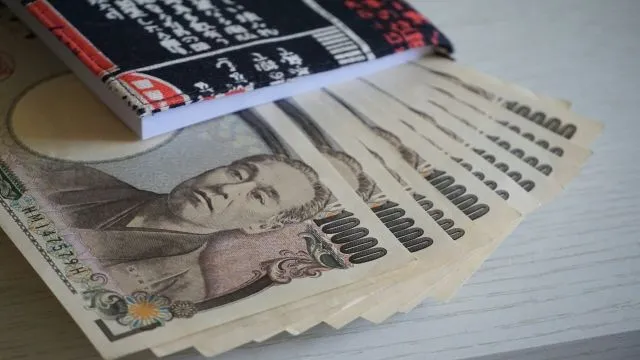
Early on Thursday bitcoin surged to a record high in terms of its valuation in Japanese yen, outpacing its valuations in other leading fiat currencies such as U.S. dollars, euros, British pounds and Australian dollars. Currency devaluationThis increase in yen valuation can be attributed to the recent depreciation of the Japanese currency against the backdrop of continued money printing by the Bank of Japan (BoJ) and resurging inflation, which have collectively weakened sentiment surrounding the yen. Fiat currencies, including the Japanese yen, lack backing by hard assets and derive their value solely from market perceptions. The current rally of bitcoin is indicative of the prevailing market sentiments, with the yen exhibiting particular vulnerability among major fiat currencies. For instance, early market activity on Thursday witnessed bitcoin, often hailed by proponents as digital gold, hitting a fresh all-time high of 7.9 million yen on Tokyo-based cryptocurrency exchange bitFLYER. In contrast, the cryptocurrency's dollar-denominated price hovered above $52,000, still 32% below its peak of $69,000 in November 2021. This price disparity underscores the strain on the Japanese yen, fueled by the Bank of Japan's persistent liquidity easing measures, rising inflationary pressures and indications of economic fragility.Photo by jun rong loo on UnsplashEntering recessionThis recent surge coincides with reports confirming Japan's descent into an economic recession by the end of the previous year, slipping to fourth place behind Germany in terms of the world’s largest economies. While central banks worldwide, including the Federal Reserve, aggressively raised interest rates in attempts to curb inflation, the Bank of Japan maintained near-zero interest rates and continued printing fiat currency. A recession characterized by inflation without corresponding growth prompts investors to seek refuge in safer havens like gold and digital gold. With that, there could be further opportunities for bitcoin to make further in-roads in Japan. In 2023, Japan's core inflation, excluding volatile food and energy components from the consumer price index (CPI), rose by 3.1%, marking its most significant increase since 1982. Consequently, the yen depreciated to a 33-year low against the dollar, declining by 13% and 7.5% against the dollar previously, with an additional 6.4% decrease this year. Bitcoin's persistent premium in Japanese yen terms suggests that it may continue to maintain higher valuations unless the Bank of Japan accelerates its exit from the ultra-loose monetary policy it has been pursuing. That would make yen holdings relatively more attractive compared to other assets. Although a complete regulatory framework for digital assets in Japan is still lacking, the country has recently moved to make tax rules more crypto-friendly. Bitcoin's elevated valuation against the Japanese yen underscores the challenges facing Japan's fiat currency, driven by monetary policy decisions and economic uncertainties.

news
Loading