Top

Analysts expect crypto market cap to triple or more next year

Markets·December 19, 2023, 3:55 AM

The Korbit Research Center, affiliated with South Korean cryptocurrency exchange Korbit, published a report last Friday that provides projections for the crypto market in 2024.

The paper includes contributions from its team, notably head of research Peter Chung, as well as research analysts Choy Yoon-young, Kang Dong-hyun and Kim Min-seung.

Peter Chung predicts that the total market capitalization of cryptocurrencies could soar to $5 trillion, more than three times greater than its current level of $1.6 trillion. He attributes this potential growth to three key factors: the possibility of the U.S. Federal Reserve easing its monetary policy, the potential approval of spot bitcoin and ether exchange-traded funds (ETFs), and the anticipated Bitcoin halving event expected in April 2024.
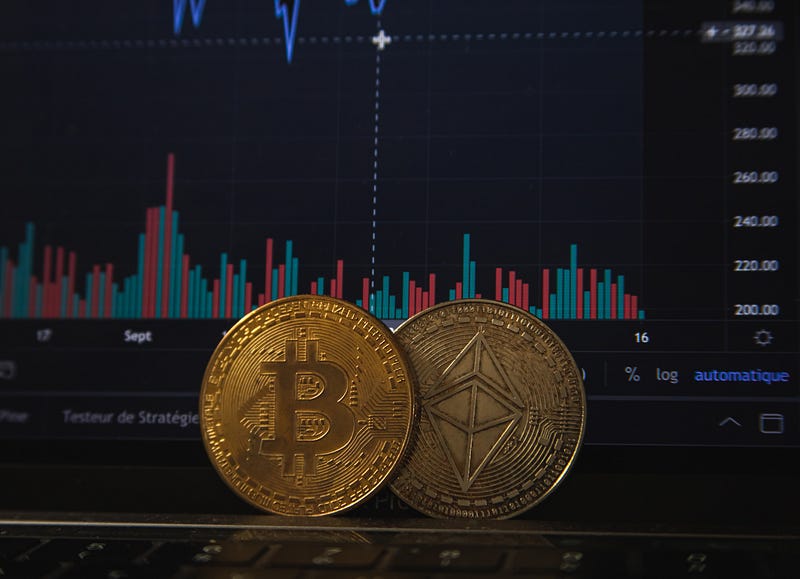
Photo by Pierre Borthiry — Peiobty on Unsplash


Factors driving crypto market growth in 2024

Peter Chung suggests that the growth of the crypto market will be driven by the expanding utility of virtual assets. He believes that once ETFs for bitcoin and ether are approved, these cryptocurrencies will become more versatile as investment options. This, in turn, is expected to enhance their reputation and foster wider adoption, having a significant influence on the broader crypto ecosystem beyond the two most dominant cryptocurrencies.


Real-world assets and financial firms

Choy anticipates that the U.S. Securities and Exchange Commission (SEC) will approve spot bitcoin and ether ETFs by the first half of next year. On a different note, Kang focuses on the importance of blockchain technology, particularly emphasizing real-world assets (RWAs) and roll-up solutions. Kang highlights that since RWAs are closely linked with traditional financial institutions, an influx of capital from these entities is likely to boost the RWA market. This interaction between traditional finance and blockchain technology could be a key driver of growth in the sector.


Regulatory changes and landscape shift

Kim Min-seung, another analyst from the team, forecasts that upcoming regulatory developments could alter the dynamics of the cryptocurrency market. A notable development in this regard is the forthcoming implementation of the Virtual Asset User Protection Act in South Korea, set for July next year. According to Kim, these changes might result in a scenario where only competitive cryptocurrencies survive.

Kim elaborates that the perception of virtual assets is poised for a shift. Currently, crypto investors tend to base their decisions on expectations of arbitrary cryptocurrency inflation. However, once new regulations are implemented, investors are likely to start assessing the actual value of virtual assets more critically. This shift in approach could lead to a more value-driven and stable cryptocurrency market, as speculative tendencies might decrease and a focus on intrinsic value increases.

According to local news outlet website The Asia Business Daily, Peter Chung anticipates further growth in the cryptocurrency market next year, following its rebound this year. He suggests that this growth trajectory will not only continue but also attract increased attention from the public.

More to Read
View All
Web3 & Enterprise·

Feb 26, 2025

MANTRA snags VASP license in Dubai

MANTRA, a real-world asset (RWA) tokenization blockchain project headquartered in Hong Kong, has announced that it has been awarded a Virtual Asset Service Provider (VASP) license in the United Arab Emirates (UAE). In a community update published on its website, MANTRA co-founder and CEO John Patrick Mullin outlined that Dubai regulator, the Virtual Assets Regulatory Authority (VARA), had awarded the company the VASP license, meaning that the project is now entitled to act as a virtual asset exchange. Additionally, it is authorized to offer broker-dealer and investment management services. Photo by Aleksandar Pasaric on PexelsMullin claimed that the milestone is huge for both the company and the broader industry. He stated:”It’s a major step in our objective to bring the world’s financial ecosystem onchain by being the preferred ledger of record for real world assets. It’s a validation of our purpose,which is to provide developers and institutions with a purpose-built RWA Layer 1 Blockchain, that’s capable of adhering to real world regulatory requirements.” Scaling operations in the Middle EastThe project sees the license as a key step in broadening MANTRA’s global footprint and scaling its operations within the Middle East. Mullin outlined that both the UAE and broader Middle East & North Africa (MENA) have become “a progressive global hub and thriving ecosystem for Web3 and virtual assets owing to their regulatory initiatives and frameworks.” Mullin added that the license not only strengthens the project’s presence regionally, but it also “positions us internationally to deliver unique DeFi products that bridge the gap between decentralized finance and traditional finance.”  Shorooq Partners, a Dubai-based venture capital firm and investor in the project, commented on the announcement on X. It said that the license would mean that MANTRA would set a new standard for compliant and secure DeFi solutions. It emphasized the importance of regulatory compliance in enabling institutional DeFi adoption on a global scale. The venture capital firm was the lead investor in an $11 million funding round completed by MANTRA in March 2024. At the time, Shane Shin, founding partner at Shorooq, said that he liked MANTRA’s strategic focus on key markets like Hong Kong and Dubai, adding that the investment implicated a future where digital and traditional assets converge seamlessly. The project intends to launch DeFi-based products that have been formulated to meet investors' needs by combining the benefits of DeFi with the structure and security provided by conventional finance. Token's price performanceThe OM token is a utility and governance token within the MANTRA decentralized autonomous organization (DAO). It was the best-performing layer-1 token as of Feb. 17. At the time of writing, it’s trading at $7.59, according to CoinMarketCap data. The project also announced a $1 billion deal with UAE-based DAMAC Group, a property development company, last month.

news
Markets·

Jan 15, 2024

Spot bitcoin ETF approval triggers surge and shift in Korean crypto exchange performances

The U.S. Securities and Exchange Commission (SEC) approved the spot bitcoin exchange-traded fund (ETF) last Tuesday, prompting South Korean investors to flock to cryptocurrency exchanges to make transactions. However, the revenues recorded by these exchanges showed a mixed performance in response to this development due to their differing transaction fee policies, according to local news outlet DealSite on Monday.Photo by Maxim Hopman on UnsplashTrading volumes surge and retreatAccording to crypto analytics platform CoinGecko, as of 9 a.m. on Jan. 12 (KST), Upbit's trading volume on Dec. 11 and 12 was approximately $5.1 billion and $6.1 billion, respectively, for a total of about $11 billion. During the same period, Bithumb recorded $2.6 billion and $2.4 billion, respectively, totaling nearly $5 billion. However, as of this writing at 11 a.m. on Jan. 15, Upbit’s 24-hour trading volume has dropped back down to $2.1 billion and Bithumb to $874 million. "After the SEC's approval, crypto exchanges were simultaneously flooded with transactions," an anonymous industry employee commented. "Bitcoin and Ethereum were mainly traded." Fee divergenceAlthough the ETF approval caused a general uptick in trading volumes, the amount of revenue that the exchanges earned from transaction fees varied. Upbit charges a fee of 0.05% for both buying and selling crypto, meaning the exchange made an estimated KRW 14.8 billion in revenue from the fees from Dec. 11 to 12. Bithumb, on the other hand, hasn't earned any revenue from trading fees since its zero-fee policy was implemented in October last year.  Bithumb had previously charged 0.25% for transactions and 0.04% with coupons. By implementing the former, the exchange lost about KRW 15.8 billion ($12 million) in revenue, and with the latter, it lost about KRW 2.5 billion. For crypto investors, Bithumb's zero-fee policy has made investing more accessible, but the exchange is unlikely to reap its own rewards. Significant investor interestMoreover, with trading for the spot bitcoin ETF beginning on the 11th, the influx of funds is expected to boost trading. "All told there were 700,000 individual trades today in and out of the 11 spot ETFs," Bloomberg ETF analyst Eric Balchunas told X (formerly Twitter). "For context, that is double the number of trades for $QQQ." $QQQ refers to the Invesco QQQ ETF. According to an image that accompanied Balchunas’ post, the total trading volume across all 11 spot ETFs was reportedly $4.3 billion. Grayscale's GBTC had the highest volume at $2.1 billion, followed by BlackRock’s IBIT at $1 billion and Fidelity’s FBTC at $673 million.

news
Markets·

Jun 16, 2023

Survey Reveals Favorable Public Opinion on Binance’s Acquisition of Korean Exchange Gopax

Survey Reveals Favorable Public Opinion on Binance’s Acquisition of Korean Exchange GopaxCratos, a South Korean blockchain-based polling app, conducted a survey from June 12 to June 14 to gauge public opinion on whether the Financial Services Commission (FSC) should approve the request of Korean cryptocurrency exchange Gopax’s operator Streami to change its representatives, as reported by local news outlet The Stock. This change is necessary for global crypto exchange Binance to acquire Gopax.The survey, which involved 2,093 participants, revealed that 64.6% of respondents favored approving the acquisition, while 35.4% opposed it. More than half of the participants believed that approving the acquisition would safeguard investors’ assets deposited in Gopax.Photo by Heesang Park on PexelsSurvey resultsWhen analyzed by age group, the survey found that respondents in their teens and 20s were more likely to disagree with the acquisition, with 69.4% and 52.3%, respectively. However, those in their 30s were more inclined to support it. Notably, over 70% of respondents in their 50s agreed with the acquisition.Among those who favored Binance’s acquisition, 55.5% chose investor protection as their reason. 33.5% believed there were no legal grounds to refuse the acquisition (33.5%), and 11.0% expressed concerns about the potential shrinkage of the crypto market (11.0%).On the other hand, the most common reason given by respondents for opposing the acquisition was the risk of Binance’s opaque business and financial structure (45.8%). This was followed by the ineligibility of executives, representatives, and other major shareholders (37.4%) and the risk of disrupting the crypto market (16.8%).Consensus on investor protectionCratos CEO Kang Dong-won explained that the crypto winter, characterized by declining crypto asset values, has been prolonged due to a series of negative news at home and abroad, including the US Securities and Exchange Commission’s (SEC) lawsuits against Binance and Coinbase, poor performance of crypto exchanges, and controversy over a Korean lawmaker’s alleged holding and investment of crypto assets. Kang believes that the survey findings reflect falling crypto yields, leading to a growing consensus on the need for investor principal protection and victim relief.On March 7, Streami submitted a report to notify the Financial Intelligence Unit (FIU) under the FSC about the change of its representatives. However, the Korean financial watchdog has been pending its decision amid Binance’s legal issues.The concern is that if Binance fails to acquire Gopax, investors could suffer losses since their assets worth KRW 56.6 billion are held in GoFi, the exchange’s crypto deposit service. On June 8, GoFi users sent a public inquiry to the FIU regarding the reasons for the delay in approving the exchange operator’s request. In the meantime, Streami is exploring ways to address this challenge by announcing its board meeting scheduled for next week. The meeting will discuss changing its CEO from Leon Sing Foong, Asia Pacific Head at Binance, to Lee Joong-hoon, Gopax’s current Vice President, as it is believed that appointing a Korean national as the CEO would facilitate smoother communication with the government.

news
Loading