Top

Digital asset insurer funds Middle East expansion

Policy & Regulation·December 16, 2023, 12:10 PM

OneDegree, a Hong Kong-based InsurTech startup is expanding its area of engagement to the Middle East, funded through an undisclosed investment from Dubai Insurance.


Fresh funding round to finance growth

The seven-year-old startup announced on Friday that it has secured further funding, solidifying its commitment to Middle East expansion while building upon the success of OneDegree’s $55 million Series B round in June. Total funds raised are believed to be in the region of $100 million.

The Series B round was required to expand its digital assets insurance portfolio. Similarly, the partnership with Dubai Insurance is aimed at facilitating OneDegree’s expansion into the digital asset insurance sector within the United Arab Emirates (UAE) and the Gulf region. The startup firm will now proceed to establish a new entity in Dubai and hire staff locally to take on new business in the region.

Among its notable investors are Alibaba Entrepreneurs Fund (AEF) Greater Bay Area Fund, Sun Hung Kai & Co and Cathay Venture, the venture capital arm of Taiwanese billionaire Tsai Hong-tu’s Cathay Financial Holdings. OneDegree’s CEO, Alvin Kwock, has stated that the company is on track to achieve profitability by the second half of 2024.
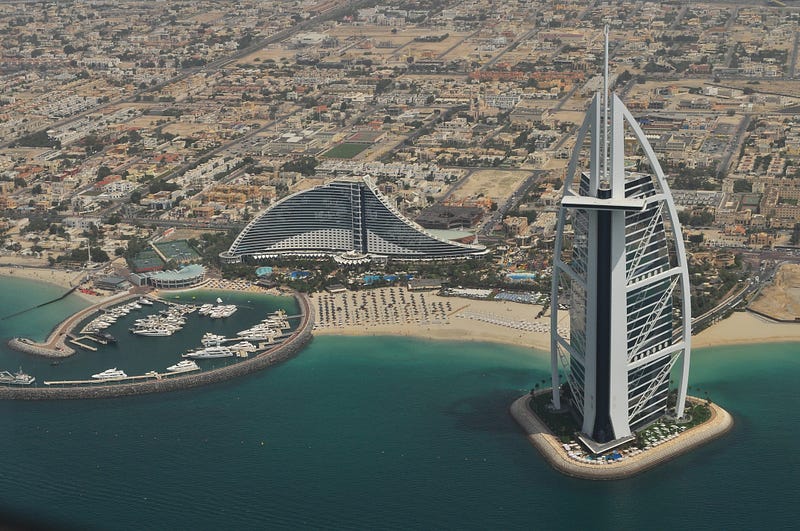
Photo by Roman Logov on Unsplash


Ministerial interest

It’s understood that the UAE’s economy minister, Abdulla bin Touq Al Marri, had outlined his interest in OneDegree bringing its service offering to the UAE when he met with representatives from the company at the Belt and Road Summit in Hong Kong in September.

Given that OneDegree is planning to service the digital assets sector in the UAE, the move aligns with Dubai’s new crypto regulatory framework implemented earlier this year, which mandates insurance coverage for licensees engaged in crypto-related businesses to safeguard users’ funds. Major players in the crypto industry, such as Binance, Crypto.com and OKX, have already established a presence in Dubai.


Only digital asset insurer in Asia

In a video interview from Dubai on Friday with Forbes, Alvin Kwock emphasized OneDegree’s unique position as the first and only licensed insurer in Asia capable of providing digital asset insurance.

Kwock revealed that approximately half of the world’s top 20 crypto exchanges have approached OneDegree for its digital asset insurance, with some of them already being clients. The startup has extended its services to around 30 companies, including Cactus Custody, the custodian unit of Singapore’s Matrixport; Rakkar Digital, backed by Thailand’s Siam Commercial Bank; and Hashkey, one of Hong Kong’s licensed crypto exchanges.

In July it penned a deal with blockchain infrastructure firm Blockdaemon. Meanwhile, it has been underwriting digital assets for crypto custodian METACO since November 2022.

Anticipating substantial growth, Kwock expects the number of OneDegree’s digital asset insurance customers to surpass 100 by the end of 2024. He foresees this segment constituting about half of the company’s total business in the coming year, up from the current level of 30%. Kwock underscored the evolving dynamics in the crypto market, emphasizing the increasing importance of risk management and the essential role of insurance in the digital asset industry.

OneDegree’s expansion into the UAE aligns with the nation’s crypto-friendly policies, actively attracting firms to leverage its supportive regulatory environment. Indirectly, it also serves the Hong Kong government’s strategy to deepen business ties with the Middle East.


More to Read
View All
Web3 & Enterprise·

Jul 21, 2023

Shinhan Bank and SCB TechX Succeed in Stablecoin Remittance Pilot

Shinhan Bank and SCB TechX Succeed in Stablecoin Remittance PilotSouth Korean banking institution Shinhan Bank, Thai Siam Commercial Bank’s tech arm SCB TechX, and a Taiwanese financial institution recently announced the successful completion of a proof-of-concept (PoC) pilot of stablecoin remittances. The PoC was built on the hashgraph consensus-based public ledger, Hedera. Hashgraph consensus is a technology that provides an alternative to the more commonly used blockchain consensus mechanisms.Photo by Lea L on UnsplashThree currenciesThe pilot test was conducted to assess the feasibility and functionality of a system involving real-time settlement and real-time foreign exchange (FX) rate integration. The test was successful in implementing these capabilities for three currencies: the Thai Baht (THB), the New Taiwan dollar (NTD), and the South Korean won (KRW). Since the PoC is compatible with the Ethereum Virtual Machine (EVM), EVM-based stablecoins should be able to join the PoC framework without significant modifications.More efficient and affordableIn November 2021, Shinhan Bank developed this PoC on the Hedera network in collaboration with an international bank outside Korea, employing stablecoins for cross-border remittances. The success of the subsequent pilot test this year represents a major achievement in the pursuit of more efficient and affordable cross-border payments, especially given that the financial industry has been increasingly recognizing the transformative possibilities of blockchain and distributed ledger technology.These banks expect that this stablecoin solution will allow individuals and organizations to conduct transactions in locally denominated stablecoins, benefiting from remarkably low fees.Kim Byung-hee, Chief of the Blockchain Division at Shinhan Bank, said, “The successful completion of this second PoC marks an important step forward in our efforts to make cross-border payments faster, cheaper, and more accessible to people around the world.”SCB TechX’s CEO Trirat Suwanprateeb echoed this sentiment, stating that this endeavor can help “increase financial inclusion and improve access to financial services for individuals and businesses in underserved communities.”

news
Policy & Regulation·

May 11, 2023

OSL Prepares for Fund Launch Following License Approval

OSL Prepares for Fund Launch Following License ApprovalIn a press release published on Tuesday, Hong Kong-based digital asset platform OSL announced that its asset management business, OSL Asset Management (OSLAM), has been granted a license to trade by the autonomous territory’s securities regulator.Photo by Eliobed Suarez on UnsplashType 1,4 & 9 approvalHong Kong’s Securities and Futures Commission (SFC) has issued the firm with a license which permits it to carry out trading activities encompassing Type 1 (dealing in securities), Type 4 (advising on securities) and Type 9 activities. The latter category enables OSLAM to carry on a business involved in asset management.Upcoming fund launchWith licensing secured, OSLAM is now building up to its first fund launch which it envisages will happen within the next few months. According to the statement the company released, “OSLASM’s inaugural product offering will concentrate on unlocking new opportunities in the rapidly growing sectors of blockchain solutions, artificial intelligence (AI), and Web 3.0 technologies.”The firm claims that it has access to unique deal flow, together with the experience to operate in the asset management arena relative to the digital asset sector. OSL thinks that it is well placed in this regard as it is one of only two companies in Hong Kong who are currently licensed to facilitate security token offerings, trading and dealing.”OSL is an offshoot of the BC Technology Group, a company that provides staffing services to clients in the telecommunications sector. Ken Lo, the Deputy Chairman of BC Technology Group said that this milestone would empower the company “to explore new frontiers in blockchain and AI, creating value for our clients and shaping the future of the industry.” He added that the firm “can unlock unprecedented opportunities for growth, collaboration, and value creation” relative to these sectors.Licensing going live in JuneHong Kong has been pulling out all the stops to enable crypto business in recent months. It recently called on the banks to make an additional effort in catering to the needs of crypto businesses. It has been working on a regulatory framework culminating in this licensing regime. Licensing goes live on June 1.Speaking at the Bloomberg Wealth Asia Summit on Tuesday, Eddie Yue, the CEO of Hong Kong’s other regulatory body, the Hong Kong Monetary Authority (HKMA), said that the autonomous territory had very high guardrails over the past number of years that impeded the development of digital asset-related business. Yue believes that Hong Kong now has the right level of regulation and investor protection in place to enable the development of the sector.According to Yue, Hong Kong sees a greater opportunity in the overarching digital assets space as it develops. “Virtual assets or crypto is actually a very broad term. It’s not really about crypto, you’re talking about stablecoins or tokenized assets in the future.,” he stated.Many commentators have suggested that all illiquid real world assets will ultimately be tokenized in the future. As it stands today, a mere $0.3 trillion of illiquid real world assets have been tokenized. Some researchers anticipate that this level of real world asset tokenization will climb to $16 trillion by 2030.

news
Policy & Regulation·

May 02, 2023

Binance APAC Head Urges the Korean FIU to Approve Gopax’s Exec Changes

Binance APAC Head Urges the Korean FIU to Approve Gopax’s Exec ChangesIn a recent interview with Yonhap News, Leon Sing Foong, Binance’s head of Asia-Pacific operations, emphasized the importance of the Korean financial regulator approving the change of executives at Gopax, a Korean crypto exchange.©Pexels/freestocks.orgDelayed staked asset returnFoong’s comments came in the face of mounting worries regarding the delayed repayment of assets stored in Gopax’s staking service GOFi. He explained that 25% of the assets staked in GOFi have been repaid, and the remaining assets will be refunded after approval of the Financial Intelligence Unit (FIU) of the Korean Financial Services Commission (FSC) is secured.Foong was appointed as the new CEO of Gopax last February, with Binance becoming the largest shareholder of Gopax’s operator Streami. In March, Gopax submitted an application to the FIU to inform them of the executive changes, as required by Korean law.However, the application review has been delayed amid concerns about the unclear location of Binance’s headquarters and its regulatory challenges in the US.Controlling staking servicesThe Binance executive believes Gopax’s staking service should be controlled by the exchange itself, rather than a third party. The current GOFi issue emerged due to Gopax’s management of its custody assets through crypto lender Genesis, which ceased trading following the FTX bankruptcy. Foong stated that Binance will require Gopax to maintain reserves of over 100% and eventually phase out the third-party-based service.According to Foong, Gopax’s business model will remain unchanged, and the exchange will work alongside Binance to bolster liquidity within the local market while enhancing both infrastructure and security measures. He considers internal risk management as Gopax’s top priority.Risk assessmentFoong also expressed confidence in the upcoming risk assessment of Gopax by Jeonbuk Bank, recently requested by the Korean Financial Supervisory Service (FSS). He said that the exchange is healthy, and that Binance has high-level anti-money-laundering (AML) capabilities.Korean law mandates crypto exchanges supporting Korean won trading have real-name bank accounts, and Gopax receives such accounts from its partner Jeonbuk Bank.Binance’s Asian expansionBinance’s endeavor to enter the Korean market is part of its strategy to expand its presence in Asia. It was previously reported that Binance Japan will start its operations around June this year.

news
Loading