Top

Non-Fiat Crypto Exchanges in Korea Urge Banks for Real-Name Accounts

Policy & Regulation·June 20, 2023, 5:39 AM

The Virtual Asset Exchange Association (VXA) made an announcement today regarding its recent due diligence request sent to 12 South Korean banks, as reported by local news outlet Digital Today. These banks have not yet entered into contracts to provide real-name deposit and withdrawal accounts to cryptocurrency exchanges.

VXA is a group comprised of representatives from ten non-fiat crypto trading platforms in the country. Among its members, eight exchanges–Aprobit, Probit, BTX, Foblgate, GDAC, Flata Exchange, Flybit, and High Block (previously known as Huobi Korea)–participated in the request.
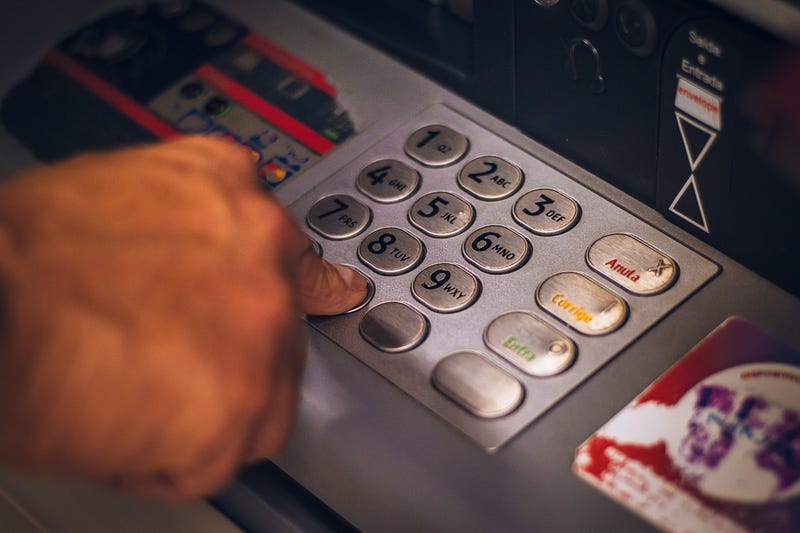
Photo by Eduardo Soares on Unsplash


Partnerships with banks

The objective of the request is to urge the banks to consider establishing partnerships with competent non-fiat exchanges. The requesters argued that such collaborations would promote fair trading in the market and provide customers with more options. They highlighted the growing presence of the virtual asset trading sector in the capital market.


Uneven crypto market

An official from VXA emphasized the key role played by real-name bank account issuers in creating a healthy environment that addresses the existing monopoly in the Korean crypto market. According to a March report published by the Financial Services Commission, non-fiat crypto trading platforms accounted for only 3 percent of the total Korean crypto market capitalization during the second half of 2022. The remaining 97 percent was attributed to fiat-supporting crypto exchanges.

The official further explained that allowing more exchanges to support the trading of the Korean won currency would contribute to shaping a free market while bolstering transparency and investor protection.


Legal requirements

Earlier this month, VXA also sought fair due diligence from five Korean banks that have already formed partnerships with fiat-supporting crypto exchanges. In Korea, crypto trading platforms are required by law to obtain real-name accounts from banks in order to provide cash deposit and withdrawal services.


More to Read
View All
Policy & Regulation·

Jul 04, 2023

Thai SEC Implements Measures to Protect Crypto Investors

Thai SEC Implements Measures to Protect Crypto InvestorsIn response to the crypto lending crisis that unfolded in 2022, prompting companies like BlockFi and Celsius to declare bankruptcy, Thailand’s Securities and Exchange Commission (SEC) has introduced new regulations aimed at safeguarding investors in the digital assets space.Photo by Jakob Owens on UnsplashDisclosing risk warningsThe guidelines, issued on Monday, require digital asset service providers to provide comprehensive warnings that emphasize the risks associated with cryptocurrency trading. All platforms must prominently display a message stating: “Cryptocurrencies are high risk. Please study and understand the risks of cryptocurrencies thoroughly, because you may lose the entire investment amount.” Prior to utilizing the service, users must consent to and acknowledge the risks.Crypto lending prohibitionIn addition to the risk disclaimer, the new guidelines explicitly forbid service providers from using customer funds for lending or investment purposes. This ban on crypto lending services prevents platforms from offering any returns on deposited crypto to customers. By implementing these measures, the Thai SEC aims to enhance investor protection and shield investors from the risks posed by lending services. The regulations are scheduled to take effect at the end of the month.Today’s guidelines are the product of months of deliberation. Discussions surrounding investor protection regulations commenced on September 1, 2022, when the SEC acknowledged the necessity for security warnings by cryptocurrency businesses to disclose the risks associated with trading digital assets. The prohibition on digital asset operators offering deposit-taking and lending services was deliberated during meetings held on December 1, 2022, and May 11, 2023.Response to crypto platform failuresThe introduction of these investor protection rules follows a significant crisis in the crypto lending sector that unfolded during the bear market of 2022. Several crypto lending firms, which had collected billions of dollars in customer deposits by promising substantial returns, collapsed during this period. Prominent lending companies such as Celsius and BlockFi filed for bankruptcy, resulting in investors’ funds being trapped in lengthy bankruptcy proceedings.The Thai SEC’s proactive approach in implementing these regulations reflects the growing concern for investor welfare within the cryptocurrency industry. By requiring clearer risk disclosures and prohibiting the use of customer assets for lending and investment, the SEC aims to instill greater confidence and transparency in the digital asset service sector.Crypto academyThailand’s SEC has run other initiatives in efforts to better protect investors. In January the Commission launched the SEC Crypto Academy, an e-learning course. The objective of that initiative was to provide investors with a basic understanding of the digital assets space prior to investing. At the time of the launch of the course, the SEC said that “the more you know your investments, the less risk you will have.”These latest regulations not only serve as a protective measure for Thai investors but also set an example for other jurisdictions to evaluate and enhance their own regulatory frameworks. As the crypto industry continues to evolve, prioritizing investor protection becomes crucial in fostering a more sustainable and responsible ecosystem.

news
Policy & Regulation·

Apr 24, 2023

Abu Dhabi Puts Forward Legal Framework for Decentralized Tech

Abu Dhabi Puts Forward Legal Framework for Decentralized TechAuthorities in Abu Dhabi, the capital of the United Arab Emirates (UAE) as well as an individual emirate within it, have published a proposed legislative framework for distributed ledger technology.©Pexels/redouan khoulassiThe consultation paper, titled “Proposal for a legislative framework for distributed technology foundations” was published earlier this month by the Abu Dhabi Global Market’s (ADGM) Registration Authority.Promoting investor protectionThe document covers a broad spectrum of aspects relative to digital assets and crypto entities, including corporate governance, insolvency and restructuring considerations, and data protection. The ADGM’s objective with the proposed policy is to advance investor protection, improve market integrity and efficiency, and build towards a comprehensive regulatory framework.Specific proposalsMore specifically, the policy would implicate an enhancement in the protection of whistle-blowers who report misconduct relative to ADGM-regulated companies. Under the proposal, new rules would be introduced to ensure that digital asset platforms operate in a fair and transparent manner. A requirement would be placed on regulated companies to disclose detailed information in relation to beneficial ownership and control structures. Furthermore, the policy seeks to bring about an improved dispute resolution process between the stakeholders involved in ADGM-regulated transactions.Building upon an existing frameworkThe Abu Dhabi regulator’s current legal framework is built upon English common law. It has its own financial services regulator, the Financial Services Regulatory Authority (FSRA) which operates independently and is responsible for supervising and licensing financial institutions and market participants. The FSRA takes a principles-based approach, regulating those market actors attempting to maintain financial stability and integrity, promote market competition and innovation and ensure customer protection.ADGM has sought to act on an international basis by signing agreements with regulatory bodies in the UK, Hong Kong and Singapore, in an effort to enable information sharing and cross-border cooperation.Regulatory activityAt a national level, earlier this year the UAE enacted a digital assets regulatory framework. Earlier this week, the UAE also revealed a federal licensing system for crypto companies. In February, work began on a $2 billion initiative to nurture blockchain and Web3 startups via Hub71, the emirate’s tech ecosystem. The initiative provides startups with access to a broad range of support services as well as potential collaborations with government and investment partners.According to the document, “this Consultation Paper is of interest to any persons operating or planning DLT projects, persons engaging in digital asset-related activities and their legal advisors, as well as DLT participants, associations, and stakeholders.”With that, the ADGM is inviting comments and feedback from members of the public on the proposed changes contained within the consultation paper. To aid public comment, the policy document includes a number of questions that it invites stakeholders to consider as they work towards submitting their feedback.Those interested have until May 12 to take the opportunity to submit their comments and views relative to the Abu Dhabi regulator’s proposed framework.

news
Web3 & Enterprise·

Sep 07, 2023

Experts Gather at KBW 2023 to Explore the Future of Blockchain and Web3

Experts Gather at KBW 2023 to Explore the Future of Blockchain and Web3Blockchain and Web3 experts from around the world gathered at the Shilla Hotel in Seoul on Tuesday and Wednesday to attend Impact, the main conference of Korea Blockchain Week (KBW) 2023. There, they shared insights on the challenges faced by the blockchain industry as well as future prospects, especially their anticipation for South Korea’s role in shaping the industry’s landscape.Photo by Terren Hurst on UnsplashCurrent challengesAmong these experts was Sid Powell, CEO and Co-founder of Maple Finance; Stephen Richardson, Managing Director of Financial Markets and Head of the Asia Pacific region at Fireblocks; and Kelvin Koh, Co-founder and CIO at Spartan Group, who discussed the opportunities presented by bridging traditional finance with decentralized finance (DeFi) during a panel session on Wednesday.They mentioned the recent trending decline in DeFi transactions among institutional investors, which can be attributed to the DeFi industry’s fragmented infrastructure that can be difficult to understand. In order to rekindle investor confidence and interest, the industry must consider the integration of infrastructure and highlight the advantages of DeFi such as low costs, transparency, and liquidity to showcase its potential for financial gain.In a fireside chat on the same day, Jeremy Allaire, Co-founder and CEO of global fintech company Circle, acknowledged yet another mounting challenge facing the industry — the mass adoption of blockchain technology and Web3. However, the solution to this roadblock is not far out of reach, he said. Allaire predicted that by 2025, most cryptocurrencies, including stablecoins — cryptocurrencies that are pegged to a commodity or fiat currency to maintain a stable price — will have a legal foundation, thus paving the way for mass adoption.Suk Hwan Paul Kim, CEO and Vice Chairman of Grip Labs, and Archie Ravishankar, CEO of Cogni, also said that implementing user-friendly services and institutional entry will be a key strategy for persuading Web2 users to transition to Web3 platforms and encouraging mass adoption.Outlook for KoreaMeanwhile, several key figures expressed positive hopes for the pivotal role that Korea will play in the development of the Web3 ecosystem. In particular, Polygon Labs co-founder Sandeep Nailwal and COO Michael Blank pointed out that Korean companies, especially those in the gaming industry, are open to applying Web3 technology to their business projects, thus accelerating next-generation innovation in various fields like gaming, social media, and entertainment. Indeed, Polygon Labs’ own Korean partner firms recognize that the future of the Internet will rely on blockchain technology.In order to build a solid Web3 ecosystem, they said, three core values are of utmost importance — privacy, transparency, and openness. Fostering an environment that users can trust while freely interacting with others is the key, and Polygon Labs has vowed to contribute to doing so.Notably, Commissioner Caroline D. Pham of the US Commodity Futures Trading Commission (CFTC) was also in attendance, where she shared her thoughts on the proper regulation of virtual assets. She stated that it is essential to apply the safety measures we have learned from the past century of financial history to the future cryptocurrency industry, cautioning against a one-sided view that virtual assets are inherently bad.In drawing a comparison between the US and Korea, she stated that although the US possesses strong technical capabilities and is gradually adopting a more positive perspective on virtual assets, Korea is still ahead by a decade due to the fact that the general public is more open to embracing emerging technologies. Therefore, the future partnership between the US and Korea could offer valuable insights, not only in terms of economic prosperity but also in legal and regulatory aspects.

news
Loading