Top

Korea invites distinguished financial officials to discuss digital money

Policy & Regulation·December 08, 2023, 3:25 AM

The Bank of Korea (BOK), South Korea’s central bank, announced on Friday (local time) its participation in an international conference focused on the economic impact and future prospects of digital currencies. This event, co-hosted by the BOK, the Ministry of Economy and Finance (MOEF), the Financial Services Commission (FSC), and the International Monetary Fund (IMF), is scheduled to take place in Seoul on Dec. 14 and 15.

The conference, titled “Digital Money: Navigating a Changing Financial Landscape,” is set to welcome high-ranking officials such as Kristalina Georgieva, the Managing Director of the IMF; Choo Kyung-ho, the Minister of the Ministry of Economy and Finance (MOEF); Rhee Chang-yong, the Governor of the Bank of Korea (BOK); and Kim So-young, the Vice Chairman of the Financial Services Commission (FSC). This event is particularly significant as it marks the first visit of IMF head Kristalina Georgieva to South Korea.
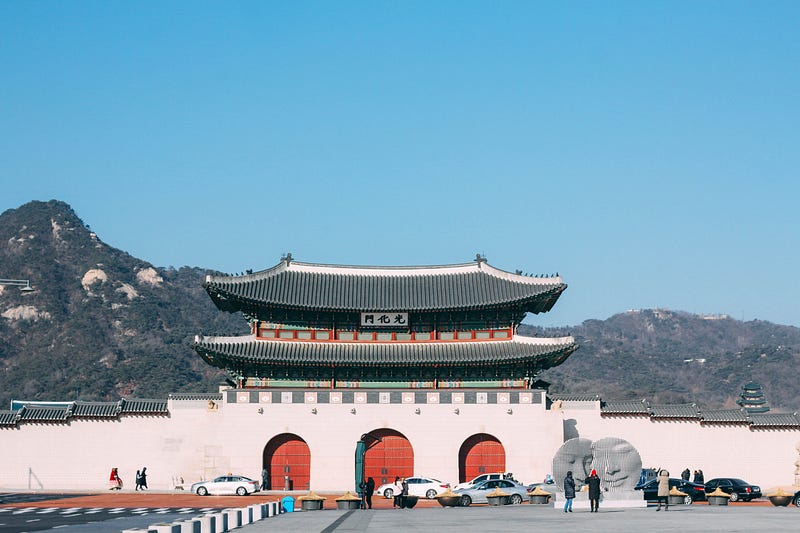
Photo by pan zhen on Unsplash


Crypto, stablecoins, CBDCs

During the conference, MOEF Minister Choo and FSC Vice Chairman Kim will kick off the event with welcome remarks, followed by a keynote speech from IMF’s Managing Director, Kristalina Georgieva. Spanning over two days, the conference will include seven sessions, covering a diverse range of topics. These sessions will delve into various aspects of digital money, such as practical use cases of digital currencies, regulatory approaches to cryptocurrencies, and discussions on stablecoins and central bank digital currencies (CBDCs).

The conference will feature prominent financial officials in both its opening and closing sessions. On the first day, Thursday, a distinguished panel, including IMF Chief Georgieva; Stefan Ingves, the former Governor of Sveriges Riksbank; FSC Vice Chairman Kim; David E. Rutter, the Founder of R3; and Shin Hyun-song, the Economic Adviser at the Bank of International Settlements (BIS), will discuss the opportunities and challenges facing digital money.

The final session on Friday will see another group of high-level financial authorities sharing their expertise and insights. This session will include BOK Governor Rhee; Eddie Yue, the Chief Executive of the Hong Kong Monetary Authority; Serey Chea, the Governor of the National Bank of Cambodia; and Veerathai Santiprabhob, the former Governor of the Bank of Thailand. Their discussion will focus on regulatory policies surrounding digital currencies.


Live-streaming scheduled

The two sessions of this conference will be accessible to a global audience as they will be live-streamed on the BOK’s official YouTube channel. This provides an opportunity for interested individuals from around the world to tune in and gain insights into the evolving landscape of digital money and its regulatory environment.


More to Read
View All
Policy & Regulation·

Mar 11, 2025

Thailand’s SEC expands list of approved cryptocurrencies to include stablecoins

Thailand's Securities and Exchange Commission (SEC) has approved the leading U.S. dollar stablecoins USDT and USDC, expanding its list of approved cryptocurrencies within the Southeast Asian country.Photo by Tarun Ottur on UnsplashListing on regulated exchanges The approval was announced in a statement published on the SEC website on March 6. It means that Tether’s USDT and Circle’s USDC can now be listed on regulated exchanges in Thailand. The regulator had arrived at its decision to add the two stablecoins following a public consultation process regarding regulatory changes. Those changes were finalized last month and will now proceed to go into effect on March 16. The two stablecoins join five cryptocurrencies that had previously been approved. These include Bitcoin (BTC), Ethereum (ETH), Ripple (XRP) and Stellar (XLM). Certain cryptocurrencies are also being used for the testing of payment settlement through the Bank of Thailand’s Programmable Payment Sandbox.   A regulatory sandbox is a controlled environment testing ground for products and services developed within the private sector. Back in June of last year, the Southeast Asian country’s central bank launched an enhanced regulatory sandbox focused on programmable payments.  USDT issuer Tether responded to the addition of its stablecoin within the approved cryptocurrency list, stating: “This approval enables USD₮ to be traded within the country, facilitating its listing on regulated exchanges and paving the way for USD₮ to be accepted for payments, which advances the region’s leadership in digital asset innovation.” Tether CEO Paolo Ardoino said that the company sees value in the Thai market and with that, it intends to continue to explore ways to broaden its service offering within Thailand. He added:  “We are committed to supporting the long-term success and adoption of stablecoins in Thailand and look forward to contributing to the growth of the country’s digital asset ecosystem by fostering a strong and sustainable stablecoin infrastructure.” Stablecoin market growth According to DeFi data aggregation platform DefiLlama, the stablecoin market now stands at $227 billion in terms of market capitalization. This represents a 68% increase by comparison with the size of the market in 2023. It indicates that stablecoin adoption is on an upward growth trajectory. Digital assets are being used in many instances to facilitate international payments and remittances, particularly in emerging markets. In Europe, American investment bank JPMorgan recently forecasted that the introduction of the Markets in Crypto-Assets (MiCA) regulation will drive euro-pegged stablecoin growth.  Meanwhile, in the United States, S&P Global Ratings recently identified that a current lack of stablecoin regulation is acting as a barrier to broader institutional use. The company anticipates adoption growth once regulatory clarity has been achieved. Vlad Tenev, CEO of commission-free investing platform Robinhood, stated last month on Yahoo Finance’s Opening Bid podcast that stablecoin legislation will be passed in the U.S. in 2025. Tenev believes that applying a 4% interest rate to stablecoins would lead to a greater rate of adoption.

news
Web3 & Enterprise·

Sep 12, 2023

Sejong Telecom and Hyosung TNS to Collaborate on Real Estate Security Tokens

Sejong Telecom and Hyosung TNS to Collaborate on Real Estate Security TokensSejong Telecom said Tuesday that it has signed a business deal with Hyosung TNS, the infrastructure and finance arm of South Korean conglomerate Hyosung Group, to boost the profitability of its real estate investment service BBRIC and collaborate in security token offering (STO) services.Photo by Tierra Mallorca on UnsplashIntegrated servicesUnder the deal, Sejong Telecom will integrate the BBRIC platform into NFTtown — Hyosung TNS’ portal service dedicated to providing information, news, and educational content on non-fungible tokens (NFTs). BBRIC aims to expand its user base and modes of marketing by promoting its investment products, events, and services within NFTtown’s fractional real estate investment channel.Furthermore, users can conduct their transactions in a secure and convenient manner through BBRIC without paying intermediary fees. This promotion strategy is expected to ultimately increase profitability, BBRIC said.“Through this deal, we will create an ecosystem where anyone can readily find and compare information on fractional investments and invest accordingly,” said Park Hyo-jin, Head of Sejong Telecom’s blockchain division. “BBRIC will diversify its promotional and sales channels to create real estate financial investment products that are not only stable and reliable but also accessible to a wide range of customers.”Hyosung TNS’ venturesHyosung TNS is a leading player in the automated teller machine (ATM) market both in Korea and overseas. It operates in 46 countries, supplying a variety of financial automation solutions. NFTtown is part of the company’s blockchain endeavors, through which it plans to provide information about various security tokens, including real estate.

news
Policy & Regulation·

Jun 21, 2023

Korean Financial Watchdog: Investor Protection Boosts Crypto Market

Korean Financial Watchdog: Investor Protection Boosts Crypto MarketLee Bok-hyun, Governor of the South Korean Financial Supervisory Service (FSS), addressed the issue of investor protection measures in the cryptocurrency market during his speech at the fourth Blockchain Leaders’ Club in Seoul. According to a report by local news agency News1, Governor Lee emphasized that these measures would not hinder the market but instead establish a positive cycle by increasing market confidence and driving industry growth.Photo by Joshua Miranda on PexelsCrypto user protectionTo underscore the importance of safeguarding users in the crypto industry, Governor Lee referred to recent incidents such as the collapse of stablecoin Terra and the failures of Silvergate and Silicon Valley Bank. He highlighted how these examples demonstrate the need for protective measures as the influence of the crypto market extends beyond the financial sector and impacts the real economy.Governor Lee further emphasized the FSS’s commitment to maintaining ongoing communication with the crypto industry and adapting the regulatory system to accommodate the changing landscape. He stated that the FSS would assist the industry in establishing its own self-regulatory system, which includes monitoring suspicious transactions and transparent procedures for virtual asset listing. Additionally, the FSS plans to collaborate with industry insiders to prevent misunderstandings when formulating relevant rules and regulations.Governor Lee also touched on the Virtual Asset User Protection Bill, stating that he expects to see the final draft this summer as it is currently undergoing a legislative process in the National Assembly. He highlighted the government’s commitment to improving market order and minimizing investor losses before the law’s implementation. The government is taking a “same risks, same regulation” approach to prevent regulatory arbitrage and establish effective monitoring systems for virtual asset transactions and on-chain data.Unfamiliar but importantMeanwhile, Lee Yong-woo, a member of the opposition Democratic Party of Korea (DPK), echoed the importance of establishing and improving a regulatory framework for the cryptocurrency industry. He drew parallels between the current situation and the dot-com bubble era, emphasizing the significance of not disregarding the potential of the crypto market due to unfamiliarity.Communication channelLawmaker Lee expressed hope that the Blockchain Leaders’ Club would contribute to shaping a stable crypto market by providing opportunities to listen to the opinions of market participants, which can then be reflected in managing and revising laws and regulations.Today’s event, hosted by News1, saw the gathering of lawmakers, government officials, crypto industry leaders, and academics. Among the participants were People Power Party Lawmaker Yun Chang-hyun, the top executives of the five major Korean crypto exchanges (Upbit, Bithumb, Coinone, Korbit, and Gopax), and the CEO of blockchain gaming company Wemade.

news
Loading