Top

Korea’s KFTC launches blockchain-powered loan service for public servants

Policy & Regulation·November 22, 2023, 5:42 AM

The Korea Financial Telecommunications and Clearings Institute (KFTC) today launched a new blockchain-based loan service tailored specifically for public servants. This initiative is a collaborative effort with the Government Employees Pension Service (GEPS) and involves five banks: BNK Kyongnam Bank, Busan Bank, Woori Bank, Kwangju Bank and Jeonbuk Bank.
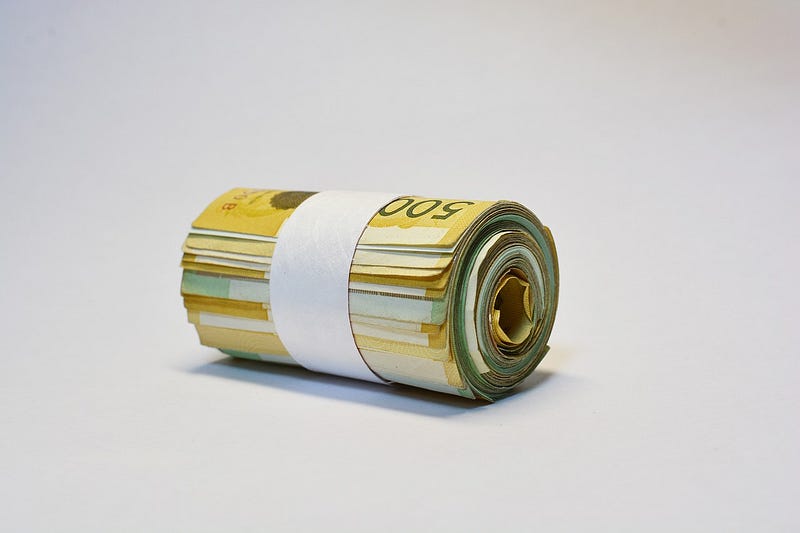
Photo by REDioACTIVE on Pixabay


Simplified loan process

Administered by GEPS, this loan program offers loans up to KRW 50 million (approximately $38,600) to government employees based on their projected retirement benefits and years of service. Leveraging the joint financial blockchain system, KFTC has established an infrastructure to issue and verify digital loan recommendation letters, simplifying the loan application process for public servants.

Up until now, the loan application process has been cumbersome, requiring government employees to obtain a recommendation letter from GEPS and physically submit it at a bank branch. The new service streamlines this process by allowing them to apply for loans at bank branches or through mobile banking using digitized recommendation letters.


More banks to join

KFTC and GEPS are set to increase the number of participating banks, allowing government employees to access loan services at a total of 10 banks. Furthermore, KFTC and GEPS intend to introduce additional financial products that utilize recommendation letters and verification processes underpinned by blockchain technology.

The plan indicates that starting early next year, five additional banks will participate in this initiative. These banks are KB Kookmin Bank, Nonghyup Bank, Daegu Bank, Hana Bank and Korea Post.

In a statement, KFTC stated its plans to further expand identification verification services within the financial sector, aiming to streamline the application processes for various financial products, including deposits and loans.


More to Read
View All
Web3 & Enterprise·

Nov 03, 2023

Korean crypto exchange Upbit adds one-second interval charts

Korean crypto exchange Upbit adds one-second interval chartsSouth Korea’s largest cryptocurrency exchange, Upbit, now offers one-second interval charts for its users.Dunamu, the blockchain and fintech company behind Upbit, announced on Friday (local time) that it has introduced a one-second interval feature to Upbit’s “original” charts. This makes Upbit the first Korean cryptocurrency exchange to offer this functionality.Photo by m. on UnsplashResponding to user demandUpbit has rolled out this one-second interval feature in response to user demand. This addition facilitates a broader range of investment strategies, allowing Upbit users to fine-tune their decisions based on their investment preferences. Now, the time frames available on Upbit are 1 second, 1 minute, 3 minutes, 5 minutes, 10 minutes, 15 minutes, 30 minutes, 1 hour, 4 hours, 1 day, 1 week and 1 month.A representative from Upbit said that they have incorporated the one-second interval feature into their original charts to provide users with quick and easy access to virtual asset price information for their investments. The official added that the company will remain committed to fostering a user-friendly and comfortable trading environment.Available on both web and mobileUsers can access the one-second interval feature on both the web and app versions of Upbit. To utilize this feature, they can select the “1s” time frame on the original charts found under the “Exchange” tab of Upbit.

news
Markets·

Nov 28, 2025

Upbit suffers $30M breach, overshadowing Dunamu’s major merger announcement

South Korea’s largest crypto exchange, Upbit, suffered a security breach on Nov. 27 that resulted in the theft of 44.5 billion won ($30.4 million) in digital assets, all taken from the exchange’s hot wallets. The stolen tokens were all Solana-based, and Upbit CEO Oh Kyoung-suk said in a statement that no users will incur losses, as the company will cover the full amount with its own reserves.Photo by FlyD on UnsplashHot-wallet breach hits 24 tokensThe exchange said in a statement that the compromised tokens were transferred to an unknown external wallet at around 7:42 p.m. UTC on Nov. 26. In total, 24 cryptocurrencies were affected, all within the Solana ecosystem. The stolen assets ranged from infrastructure tokens such as Solana (SOL) to staking-related assets like Jito (JTO), along with the stablecoin USD Coin (USDC) and memecoins including Bonk (BONK), Moodeng (MOODENG), and Official Trump (TRUMP). According to Oh, the breach was followed by an emergency security review of the affected networks and wallets. He added that all remaining assets were moved to cold storage to prevent further unauthorized transfers. Oh also said the exchange is working to trace the stolen assets and block on-chain movements wherever possible, noting that Solayer (LAYER) tokens worth 2.3 billion won ($1.6 million) have already been frozen. Upbit is also reaching out to relevant projects and institutions for assistance. This marks Upbit’s second theft case. The first took place on Nov. 27, 2019, exactly six years ago to the day, according to News1. Authorities focus on Lazarus’ involvementFinancial authorities are investigating the incident, and North Korea’s Lazarus Group is being treated as the leading suspect, the Maeil Business Newspaper reported. Lazarus is also believed to have been behind the 58 billion won ($40 million) worth of Ethereum (ETH) stolen from Upbit in 2019. A government official told the paper that the latest breach did not appear to stem from a server intrusion but may have involved a stolen administrator account, allowing the attackers to impersonate internal staff and move assets—similar to the method used in the 2019 case. Security analysts echoed that assessment. One investigator said the stolen funds moved through exchange wallets before being mixed, a pattern often linked to Lazarus. He added that mixers, which are prohibited in Financial Action Task Force (FATF)-member jurisdictions, make tracing difficult and that attackers typically route assets through countries outside that framework, further pointing to North Korea. Following the incident, Upbit suspended deposits and withdrawals for all assets and said services will resume once security is fully verified. The halt has also affected trading dynamics on the exchange, with CryptoQuant CEO Ki Young Ju noting that retail investors are fueling altcoin spikes as arbitrage bots remain offline. Dunamu, Naver set $6.8B growth planThe security crisis struck at a particularly sensitive moment for Upbit’s operator, Dunamu, overshadowing what was intended to be a celebratory corporate milestone. On that same day, Dunamu, Naver, and Naver Financial held a joint press conference to outline their global expansion strategy. Dunamu brings its blockchain and crypto infrastructure, Naver contributes its position as Korea’s dominant search engine, and Naver Financial adds its payment platform serving 34 million users. The event came after reports that Naver Financial and Dunamu had approved a merger plan through a comprehensive share swap, with the ratio set at 1 to 2.54. The three companies said they will combine their respective strengths to invest 10 trillion won ($6.8 billion) over the next five years in building an ecosystem centered on Web3 and artificial intelligence (AI).During the press conference, Naver CEO Choi Soo-yeon said no decisions have been made on a Nasdaq listing for the newly combined Naver Financial–Dunamu entity or on whether it might eventually merge with Naver, according to TechM. She said dual listings remain a matter requiring national consensus. Choi also noted that while Naver Financial is a Naver subsidiary, Dunamu is the larger partner, and a later merger between the combined entity and Naver is unlikely.

news
Policy & Regulation·

Jun 01, 2023

Tokyo Government Launches Initiative to Support Security Token Businesses

Tokyo Government Launches Initiative to Support Security Token BusinessesThe Office of the Governor for Policy Planning under the Tokyo Metropolitan Government made an announcement yesterday regarding its new initiative aimed at promoting the issuance of security tokens.Photo by Ben Cheung on PexelsBlockchain-based security tokensGiven the growing interest in blockchain technology, which allows for decentralized peer-to-peer transactions, various applications have emerged within the financial sector. Notably, blockchain-based security tokens hold significance as they possess the potential to promote retail investments and reshape startup financing. This potential largely stems from the fact that these tokens can be issued in smaller denominations than traditional securities, facilitating direct connections between issuers and investors.Promoting growthIn an effort to broaden this market, the Tokyo government undertakes this initiative to foster the growth of security token issuance. This endeavor is expected to stimulate the development of various use cases for security tokens, as well as facilitate the widespread exchange of valuable expertise and insights into potential challenges within this sector.Financial supportIn accordance with the Financial Instruments and Exchange Act and the Specified Joint Real Estate Ventures Act, the Tokyo government will introduce subsidies for Tokyo-based businesses involved in security token-related activities. This initiative aims to provide financial support to businesses by covering a portion of the expenses associated with token issuance. Eligible expenses that can be subsidized by the government include platform usage, consultation, and system development costs.Under this program, the Tokyo government will offer financial assistance by funding up to half of the project-related expenses, with startups eligible for up to two-thirds. The maximum grant amount per project is set at 5 million yen ($36,000). Businesses can apply for these subsidies starting from May 31, 2023, with the application window remaining open until February 29, 2024. Although applications can be submitted at any point during this period, the window will close once the allocated budget is exhausted.

news
Loading