Top

Mt.Gox creditors start to confirm receipt of first repayments

Web3 & Enterprise·December 28, 2023, 12:39 AM

It's been nearly ten years since the infamous collapse of the Japanese bitcoin exchange Mt. Gox, with some creditors of the defunct business now claiming to have finally received their long-awaited repayments.

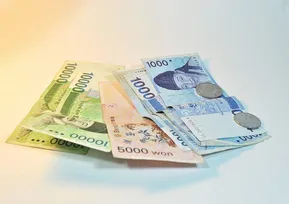
https://asset.coinness.com/en/news/4346d9aa835c4c2b13bbb89f118f5c81.jpg
Photo by Su San Lee on Unsplash

Subreddit payment confirmations

Testimonies shared on the Mt.Gox creditor subreddit and a dedicated Telegram channel reveal that certain payments, in the form of Japanese yen, have been distributed to creditors who opted for PayPal as their preferred mode of receipt.


Excitement marked the early stages of this repayment process. Users on Reddit joyfully shared their experiences, with one exclaiming:

"I got money!! I just got my initial payment via Paypal!!"

This development comes after Mt.Gox rehabilitation trustee, Nobuaki Kobayashi, had previously extended the repayment deadline from Oct. 31, 2023, to Oct. 31, 2024. However, last month, Kobayashi informed creditors that certain cash repayments would be initiated before the year's end. Despite efforts to expedite the process, the sheer volume of creditors and the complexities involved mean that repayments will continue into 2024.


The collapse of Mt.Gox in early 2014 triggered global regulatory responses and initiated a nearly decade-long bankruptcy and corporate rehabilitation process. The exchange fell victim to a series of hacks between 2011 and 2014, leaving a lasting impact on the cryptocurrency landscape.


The commencement of repayments has been hanging over the crypto market for many years, with many fearing that the process may have a dampening effect on the bitcoin unit price, given that funds are being distributed in Japanese yen and bitcoin.


Earlier this year, the U.S. government indicted two Russian nationals for laundering funds stolen from Mt.Gox, shedding light on the enduring legal ramifications stemming from the exchange's demise.


Double payment glitch

However, it appears the process encountered some glitches, as other Reddit posts indicated that a few creditors received double payments via PayPal, adding a new layer of complexity to the already intricate Mt. Gox saga.


Reddit users, such as u/rlycreativename, have shared emails they claim to have received from the Mt.Gox Rehabilitation Trustee. The emails acknowledge a system issue leading to inadvertent double transfers and legally obligate recipients to return the surplus amount.


While some users have complied with the request and returned the duplicated funds, others have expressed hesitancy, citing the historical challenges creditors faced in obtaining their money. The situation has evoked discussions on Reddit, with users debating whether the Trust deserves a swift return, considering the prolonged struggle creditors endured to reclaim their funds.


While it may be tempting for some creditors to hold on to the duplicate payment, such a decision may only serve to heap more misery on long-suffering Mt.Gox creditors. The recent case of Jatinder Singh and Thevamanogari Manivel would be very relevant for creditors to consider.


Singh was a customer of well-known digital assets platform Crypto.com. In 2021 the firm inadvertently transferred $10 million to his account. Singh conspired with Manivel to withdraw and keep the funds. A community corrections order of 18 months has been imposed on Manivel in Australia while Singh will be sentenced in February.



More to Read
View All
Policy & Regulation·

Nov 04, 2025

Hong Kong SFC opens door to global order book integration for digital assets

At Hong Kong FinTech Week 2025, Securities and Futures Commission (SFC) Chief Executive Julia Leung outlined plans to link Hong Kong’s crypto market with global liquidity. She announced that licensed virtual asset trading platforms (VATPs) will be allowed to share a global order book with their overseas counterparts. According to a statement published on the SFC’s website, this step will enable local investors to access international markets more efficiently, improving price discovery and competitiveness. Leung added that more initiatives are on the way to connect local brokers directly to global liquidity networks. This latest connectivity push comes as Hong Kong considers new guardrails for crypto holding companies such as digital asset treasuries (DATs), which hold cryptocurrencies as strategic assets.Photo by Manson Yim on UnsplashSFC points to regulatory gaps for digital asset treasuriesThe state-owned newspaper Wen Wei Po reported that Securities and Futures Commission (SFC) Chairman Kelvin Wong noted the current lack of regulations governing listed companies operating as DATs and the limited understanding of such entities. Chairman Wong added that firms seeking to list in Hong Kong as DATs would need to persuade both the SFC and the Hong Kong Stock Exchange (HKEX) of their suitability. For companies already listed, he urged investors to remain alert to the potential risks involved. This regulatory concern over crypto investing companies emerges as Hong Kong simultaneously presses ahead with its ambition to become a leading hub for digital finance. City advances on e-HKD and tokenizationIn line with that ambition, the Hong Kong Monetary Authority (HKMA) unveiled its e-HKD Pilot Programme Phase 2 Report in an Oct. 28 press release. The report outlines the potential benefits of its central bank digital currency (CBDC), the e-HKD, and tokenized deposits, noting that public feedback on both concepts has been broadly positive. The program's second phase involved 11 pilot projects led by various consortiums. These projects explored retail use cases, emphasizing the e-HKD’s commercial viability and scalability. Key focus areas included the settlement of tokenized assets, programmability, and offline payments. Participants in the program included Aptos Labs, the Boston Consulting Group (BCG), Hang Seng Bank, Standard Chartered, and BlackRock. Based on the report's findings, the HKMA stated it would initially prioritize the e-HKD’s application in wholesale or large-value payments, leveraging its credit risk–free nature as a central bank liability. Concurrently, the authority plans to continue studying potential retail and corporate applications, aiming to lay the groundwork for broader implementation by the first half of 2026. Survey shows strong investor appetiteAmong the program’s participants, Aptos Labs, Boston Consulting Group (BCG), and Hang Seng Bank reported accelerating interest in tokenized funds. A survey they conducted found that 61% of retail investors in Hong Kong and mainland China planned to double their exposure. Held between May and June 2025 among more than 500 retail fund investors, the survey tracked sentiment and appetite for tokenized products. Mainland participants showed particularly strong demand for cross-border access. The findings also detailed differing motivations among Hong Kong investors. Active traders expect to lift tokenized fund allocations from 10% to 26%, attracted by round-the-clock trading and greater flexibility. Wealth transfer planners indicated an expected expansion from 5% to 16%, highlighting programmable fund structures for tailored trusts and transparent oversight. Long-term investors aim to raise exposure from 8% to 25%, citing instant liquidity and the ability to use tokenized assets as loan collateral. Mainland investors projected their allocations would climb from 11% to 24%, reportedly viewing tokenized funds as a practical route around capital restrictions. The survey noted that programmable features could support dynamic allocation across Hong Kong products, the onshore use of profits, and smoother cross-border transfers. BCG commented that the survey outcomes align with Hong Kong's measured advance in crypto oversight, pointing to the city’s stablecoin regime that came into force in August. The Hong Kong Monetary Authority (HKMA) has signaled, however, that licensing under that regime will not begin until early next year. The ongoing development of the e-HKD and the prospective regulation of digital-asset treasuries point to Hong Kong’s broader strategy of integrating digital finance into its mainstream economy. Together, these initiatives underscore a cautious yet steady effort to position the city as a global center for digital finance. 

news
Web3 & Enterprise·

May 09, 2024

Nibiru Chain forges ahead with expansion into Asia

Nibiru Chain, a layer-1 blockchain and smart contract ecosystem, is venturing into the Asian market with key appointments poised to drive growth in gaming, DeFi, NFTs and real-world assets (RWAs). Crypto sector expertiseYura Nam and Nicholas Lo have been appointed to lead growth and business development efforts in the region. Seoul, South Korea-based Nam is a former Head of StarkNet Asia. She has extensive experience hosting conferences, meetups and other events. The crypto sector professional has been an active member of the Korean blockchain community Nonce, a distributed network of independent businesses and individuals dedicated to blockchain. Lo previously served as Asia Pacific (APAC) Growth Manager at Yuga Labs, the creator of the Bored Apes Yacht Club NFTs.  Based in Hong Kong, he brings with him a diverse background, having worked as an analyst at JPMorgan and spearheaded Asia expansion for various exchanges. He has a wealth of expertise and insight into the Asian Web3 landscape.  Jonathan Chang, Nibiru Chain's COO, expressed excitement about the new additions to the team, highlighting their deep understanding of the Asian markets and Web3 ecosystem. He emphasized their role in fortifying Nibiru's foothold in the region, particularly through their proven track record in relationship building and execution of growth strategies.Photo by Shubham Dhage on UnsplashMultifaceted expansion strategyThe expansion strategy is multifaceted, incorporating marketing, community engagement and business development initiatives to establish a strong local presence and drive adoption. Nibiru's focus extends to key markets such as Korea, Japan, India, Southeast Asia (SEA) and Chinese-speaking countries. Plans include hiring local community leads and nurturing relationships with regional stakeholders and businesses. Nicholas Lo will concentrate on solidifying Nibiru's presence in pivotal APAC markets. His role at Nibiru involves cultivating relationships with major protocols, ecosystem dApps, gaming entities, financial institutions and local partners. Lo will also collaborate with Asian media outlets to enhance exposure for Nibiru's layer-1 offerings, targeting verticals spanning gaming, DeFi, NFTs and RWAs. Meanwhile Yura Nam will leverage her partnership and event planning experience to bolster the platform's expansion efforts. Her seven years in the financial services sector equip her with a nuanced understanding of partnerships, sponsorships and event management within Asia, serving to strengthen Nibiru's ties in the region. VC FundingThe company's ambitious growth plans received a significant boost with a successful $12 million funding round earlier this year, attracting investments from prominent venture capital firms such as Kraken Ventures, ArkStream, NGC Ventures, Master Ventures, Tribe Capital and Banter Capital. This funding follows a previous seed round in April 2023, which raised $8.5 million, valuing the project at $100 million at the time. In a further effort to bootstrap growth in April, the project announced $15 million in developer grants to incentivize ecosystem growth. $5 million of that is being ring-fenced for the Asian region. Silicon Valley-headquartered Nibiru Chain officially unveiled its public mainnet in March. With a focus on a robust smart contract ecosystem offering high throughput and top-tier security, the project aspires to position itself as the preferred platform for builders in several blockchain sectors, particularly blockchain-based gaming. At the time of writing, the project’s native NIBI token was trading at $0.2932, according to data from crypto project data aggregator CoinMarketCap.

news
Markets·

Jan 09, 2024

The coming crypto bull run ‘an Asian story’

Australian venture capitalist and founder of MHC Digital Group, Mark Carnegie, is optimistic about bitcoin's potential for a bullish trend, while believing that Asia will be the real force driving the market beyond the exchange-traded fund (ETF) approval hype in the United States.Photo by Hans Eiskonen on Unsplash$50,000 bitcoin retestIn a recent interview with CNBC, Carnegie expressed his belief that bitcoin is "clearly primed for a bit of a run and a retest to $50,000." The bitcoin unit price stood at around $43,600 at the time of the interview. At the time of writing, it’s weighing in at $46,773. While there’s likely to be considerable resistance in the leading cryptocurrency getting past the psychologically important $50,000 level, the digital asset is certainly heading in the direction that Carnegie had predicted. Looking ahead, Carnegie shared his short-to-medium-term outlook, stating:"So my feeling is short term, long, medium term, which is, you know, 30 to 90 days, probably a retrace." This suggests that Carnegie anticipates a positive trajectory for bitcoin in the coming months, likely as an initial response to a spot bitcoin ETF approval in the U.S. Last week a report from Singapore-based digital asset financial services firm Matrixport speculated that spot bitcoin ETF applications would be rejected as they have been over the past few years. Market risk factorsHowever, he also voiced concerns about the current state of the U.S. equity markets and potential recession indicators. Reflecting on the recent miss on payrolls, Carnegie commented:"I feel like that miss on payrolls last week makes me feel like there's a big flip. And everyone's going to start panicking about a recession." Despite the uncertainty in traditional markets, Carnegie remains optimistic about bitcoin's performance. When asked about the specific impact on cryptocurrencies, he admitted, "How's that going to affect crypto? I don't really know." In a blog post published last Friday, Arthur Hayes, the CIO of Hong Kong-based family office Maelstrom, similarly points to market turbulence in the short to medium term while remaining bullish on bitcoin over the longer term. An Asia-powered bull runCarnegie highlighted the influence of spot bitcoin ETFs and suggested inflows, noting that there are more net flows from Asia than the U.S. He stated:“You could easily see $50 - $100 billion in net new flow out of Asia this year, and if that happens..!” He mentioned the anticipation of approximately $5 billion waiting to come into the U.S., characterizing it as substantial but perhaps not as impactful as expected in the short term. "It's an Asian story this time round,” Carnegie claimed. Carnegie also expressed a preference for bitcoin over Ethereum in the current financial landscape. He stated:"Bitcoin feels more solid to me at the moment. So on a relative basis, I can talk like I can talk to you. I feel like for the next little while, Bitcoin feels better to me than Ethereum." Mark Carnegie's positive outlook on bitcoin's potential rally to $50,000 aligns with his preference for bitcoin over Ethereum in the current market conditions, despite concerns about the broader economic landscape.  

news
Loading