Top

Worldcoin launches in Singapore post India hiatus

Web3 & Enterprise·December 29, 2023, 12:53 AM

Digital identity and financial network Worldcoin, the cryptocurrency project co-founded by OpenAI CEO Sam Altman, has revealed its expansion into Singapore.

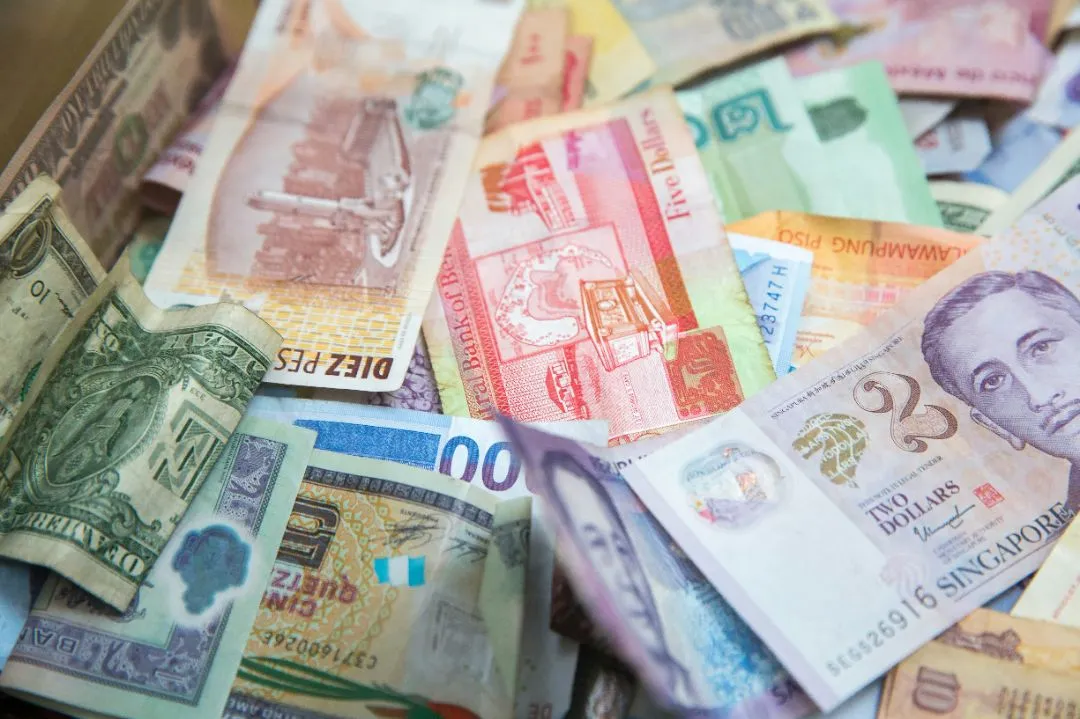
https://asset.coinness.com/en/news/c28bfca1a03524a7dd1bdbc249433bd0.jpg
Photo by Meriç Dağlı on Unsplash

Five Orb-scanning locations

Following the successful launch of World ID 2.0 and the open-sourcing of the Worldcoin iris recognition pipeline in mid-December, the project now offers World ID verifications in Singapore through the Orb, its custom hardware device. The product launch in the Southeast Asian city-state comes hot on the heels of Worldcoin pausing its activities in India.


According to a blog post published by the project on Wednesday, Singaporeans can now avail themselves of World ID verifications at five locations through the Orb, the iris-scanning device that forms a crucial part of the project's identity verification process.


Adding to its presence in Singapore, Tools for Humanity (TFH), a Berlin-headquartered project contributor and the lead developer behind Worldcoin, has become a member of two prestigious startup and tech associations in Singapore: ACCESS and the Singapore Fintech Association (SFA). Through these associations the project’s developers are seeking to further embed Worldcoin within the region's technology ecosystem.


Expanding global footprint

Expanding its global footprint, World ID verifications are not limited to Singapore alone. The project has also extended its services to Seville and Bilbao in Spain. Moreover, in South America, World ID verifications in Chile have expanded to Concepcion, Curico and Viña del Mar, joining Santiago. Meanwhile, Argentina achieved a notable milestone, setting a national record with over 10,000 verifications in a single day. In Japan, Fukuoka on Kyushu Island now joins new locations in Tokyo for proof of personhood verification via World ID.


Earlier in December, Worldcoin introduced World ID 2.0, an upgrade that builds upon its existing "proof of personhood" protocol. This upgrade introduces "Apps, Levels, and a series of core improvements" to the protocol launched earlier in the year. The accompanying apps enable World ID integration with various services, including Reddit, Discord and Shopify.


Market challenges

It's worth noting that despite these positive steps being taken to expand the Worldcoin global footprint, the company has faced challenges in certain markets also. It emerged in recent days that it has temporarily halted its services in India, France and Brazil.


Despite the temporary pause, World App continues to gain popularity in India, where thousands download the app each week. The Worldcoin Foundation explained that Orb-verified proof of personhood services has been scaled back temporarily as they work on developing a safe and orderly process to meet the increasing demand for World ID in India. Sources close to Worldcoin suggest a relaunch in India is anticipated in 2024.


Despite its expansion, Worldcoin has faced criticism since its launch. Reports from August indicated that German regulators had been scrutinizing the project since 2022, while French officials raised concerns about the legality of collecting biometric data.


The authorities in Kenya suspended the activities of Worldcoin within the country a few months ago, pending a review by public agencies in respect of security and data protection. Earlier this month, Tiago Sada, head of product for Tools for Humanity, tried to allay privacy concerns on the basis of the product’s anonymity. Sada stated:

“You can use it completely anonymously; the only thing you’re doing is proving you’re unique.”

More to Read
View All
Policy & Regulation·

Apr 26, 2023

Korean Lawmakers Make Progress on Virtual Asset User Protection Bill

Korean Lawmakers Make Progress on Virtual Asset User Protection BillOn Tuesday, the subcommittee for legal deliberations under the South Korean National Assembly’s National Policy Committee reached a consensus during the first review of the Virtual Asset User Protection Bill, according to Yonhap Infomax.©Pexels/Andrea PiacquadioFirst review phaseThe bill is undergoing a two-phase review process before being legislated. During the first phase, the primary focus was on safeguarding customer assets and preventing unfair transactions. The second phase is expected to concentrate on market order regulations, including the issuance and disclosure of virtual assets.Application of Capital Markets ActSeveral stipulations were included in the approved draft of the Virtual Asset User Protection Bill during the initial review phase. These stipulations include prioritizing the application of the Capital Markets Act to virtual assets that are classified as securities, while excluding central bank digital currencies (CBDCs) from the definition of virtual assets to avoid any potential confusion. The bill also seeks to impose compensatory damages and penalties for any unfair trading practices, and establish a virtual asset committee responsible for investigating any unfair transactions in the digital asset market.The virtual asset committee will also engage in preliminary deliberations regarding the management, supervision, and monitoring of the digital asset market. The committee will carry out tasks assigned to it by the Financial Services Commission (FSC). Furthermore, the Bank of Korea has been granted the right to request data from virtual asset operators since virtual assets, although not currencies, are necessary to consider when establishing monetary credit and financial stability policies.No class action systemHowever, the introduction of a class action lawsuit system was not adopted, and details about inspecting virtual asset operators will be stipulated in a presidential decree rather than a law.Second review phaseFor the second review phase, the FSC will report several matters to the National Assembly. These will involve tasks such as establishing a regulatory framework for stablecoins, security tokens, and utility tokens. In addition, the agency will be responsible for creating a regulatory system for virtual asset valuation, advisory, and disclosure services, as well as an integrated computerized system that provides reliable and reasonable information on digital assets. The FSC will also explore ways to enhance the business conduct discipline of cryptocurrency operators by commissioning research from external organizations.Additionally, the FSC and the Financial Supervisory Service will work on supporting virtual asset exchanges to establish uniform standards for the circulation supply of virtual assets. The regulatory bodies will also enforce the requirement for transparent disclosure and strict internal control on virtual asset operators. Moreover, regulations will be developed to enhance virtual asset usability and remove any obstacles that may impede the development of innovative real-life services.

news
Policy & Regulation·

Oct 22, 2025

Singapore launches BLOOM initiative to advance digital finance infrastructure

The Monetary Authority of Singapore (MAS) has unveiled a new initiative aimed at enhancing the nation’s financial infrastructure through the use of stablecoins and tokenized commercial bank money. Announced on Oct. 16, the project, known as BLOOM, short for Borderless, Liquid, Open, Online, Multi-currency, brings together 16 financial sector participants, including Anchorage Digital, Ant International, Circle, Coinbase, and DBS Bank. According to MAS, BLOOM is open to additional participants through a registration form available on its official website.Photo by Jason Leung on UnsplashBuilding on Project OrchidBLOOM operates under Project Orchid, a digital Singapore dollar initiative launched in 2021 to explore potential applications of central bank digital currency (CBDC) in strengthening Singapore’s financial ecosystem. Through BLOOM, it will examine use cases involving G10 and Asian currencies, covering both domestic and cross-border payments, as well as wholesale financial transactions. The project’s focus includes coordinating interoperability between different networks to enable the distribution and clearing of settlement assets. It will also explore automated compliance checks and study methods to make wholesale settlements more efficient and cost-effective. Artificial intelligence (AI) agents are expected to play a supporting role, executing transactions automatically within predefined limits and regulatory parameters. Expanding stablecoin usage in SingaporeThe MAS initiative comes shortly after the listing of XSGD, a Singapore dollar–backed stablecoin, on the U.S.-based crypto exchange Coinbase on Oct. 1. XSGD is issued by StraitsX, a digital payments provider, and is fully backed by reserve assets held with DBS Bank and Standard Chartered. Stablecoin payments have gained traction in Singapore’s retail sector as well. StraitsX recently began supporting settlements in USDT and USDC through OKX Pay. Consumers can use SGQR codes at participating GrabPay merchants to make everyday purchases, such as coffee, with transactions settled directly in Singapore dollars into merchant accounts. Rising local interest in digital assetsSingapore’s growing engagement with digital assets reflects a broader trend of public interest. A report from ApeX Protocol, cited by Cointelegraph, ranked Singapore as the world’s most “crypto-obsessed” nation, awarding it a composite score of 100. The ranking considered ownership rates, adoption growth, search activity, and ATM availability. The study found that 24.4% of Singapore’s population holds cryptocurrency, ahead of the United Arab Emirates (UAE), which scored 99.7 despite a 25.3% ownership rate. In a separate development, Channel News Asia reported that three Singaporeans have been implicated in a large-scale fraud scheme linked to Cambodia’s Prince Group. The U.S. Department of Justice recently confiscated 127,271 Bitcoin tied to the operation—the largest seizure in its history. Following the investigation, the U.S. Department of the Treasury’s Office of Foreign Assets Control imposed sanctions on the three individuals as well as 17 Singapore-registered entities. The sanctions block access to any property in their possession and prohibit U.S. persons from engaging in transactions with them, citing risks to U.S. national security and foreign policy interests. 

news
Policy & Regulation·

Aug 26, 2023

Binance Takes P2P Service Measures in Response to Sanctioned Russian Banks

Binance Takes P2P Service Measures in Response to Sanctioned Russian BanksGlobal crypto exchange Binance has removed the option for users to conduct transactions via sanctioned Russian banks on its peer-to-peer (P2P) platform, a decision that comes on the heels of a Wall Street Journal exposé published earlier this week, shedding light on the platform’s involvement in facilitating the movement of funds for Russian users.Previously, Binance’s peer-to-peer service featured five Russian banks under sanctions as a method for ruble transfers between users. However, the company swiftly acted to address potential compliance concerns. Fittingly, this latest news was also broken by the Wall Street Journal on Friday.Dmitry Sidorov on PexelsSailing too close to the windWhen approached regarding the omission of these banks, a Binance spokesperson stated: “We regularly update our systems to ensure compliance with local and global regulatory standards. When gaps are pointed out to us, we seek to address and remediate them as soon as possible.”The Wall Street Journal’s article outlined how Binance’s peer-to-peer platform facilitated ruble-to-crypto trades that frequently involved the sanctioned Russian banks, with Rosbank and Tinkoff Bank being prominent examples.These trades often utilized layers of intermediaries to convert funds from these banks into Binance balances, as detailed by various company resources, user screenshots, and messages in official chat groups. Despite these revelations, Binance’s exchange had continued to handle significant volumes of ruble trading, according to data compiled by digital asset research firm CCData.US DoJ probeBinance’s activities in Russia could potentially contribute to its ongoing legal challenges in the United States. The US Justice Department (DoJ) has been probing the company’s actions for potential violations of American sanctions on Russia. In response to such concerns, the Binance spokesperson emphasized:“Binance aims to diligently comply with the global sanctions rules and enforces sanctions on people, organizations, entities, and countries that have been blacklisted by the international community, denying such actors access to the Binance platform.”WorkaroundsTraders, however, had reportedly found workarounds to the bank removals, as observed in the official Telegram chat group for Russian clients. Many shared that they could still engage with sanctioned banks by selecting alternative payment methods and then manually inputting their Rosbank or Tinkoff bank details.Earlier this year, an investigative report by CNBC alleged that employees of the company had told it that Binance staff regularly helped Chinese customers to bypass Know Your Customer (KYC) controls in order to access the platform. More recently, another report, once again by the Wall Street Journal, found that business in China was booming, which surprised many given that China banned crypto trading within the country in 2021.It’s apparent that the company is reacting to regulatory and legal pressures in taking the decision to make these changes to its P2P service. Perennial crypto critic US Senator Elizabeth Warren took to X (formerly Twitter) on Friday, stating:“I rang the alarm about sanctions evasion by Russia using the crypto platform Binance — and urged [the DoJ] to investigate potentially false statements it made to Congress. We need stronger crypto regulations to rein in illicit finance.“

news
Loading